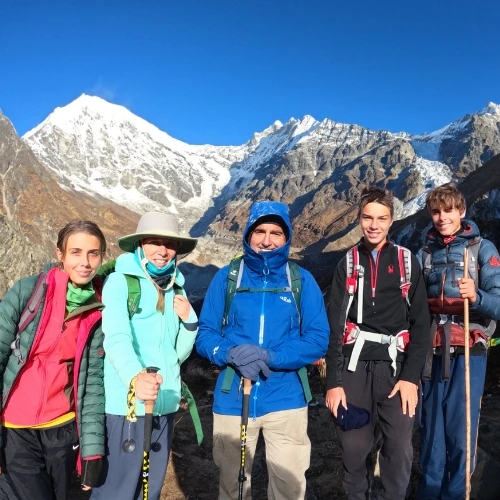
Deciding between the Annapurna Base Camp Trek vs Annapurna Circuit Trek is a big choice. Both routes offer world-class vistas and deep cultural immersion. But the two paths feel very different once you start walking. On one hand, the Annapurna Base Camp (ABC) trek takes you into the heart of the mountains. You walk into a giant bowl of rock and ice. Tall peaks stand on all sides of you. This trek is shorter and steeper, and gets you close to the high mountains in just a few days.
Meanwhile, the Annapurna Circuit is a long journey around the whole mountain range. You do not just go to one spot, but walk through different landscapes. You start in green forests, then you walk into a dry desert that looks like Tibet. This route is higher too. You must cross Thorong La Pass at 5,416 m, which is much higher than the highest point on the ABC trek, which is 4,130 m at Annaourna Base Camp itself.
If you are still confused, don’t worry. In this guide, we compare the difficulty and the views for both the Annapurna Base Camp and the Annapurna Circuit Trek trails. We will help you pick the path that fits your fitness and your schedule.
What is the difference between Annapurna Base Camp and Annapurna Circuit Trek?
The main difference between these two treks is the route. The Annapurna Base Camp (ABC) trek is a "there and back" route. You walk straight into a mountain bowl and return the same way. It is shorter and stays at a lower altitude.
On the contrary, the Annapurna Circuit is a loop. You walk around the entire mountain range and finish in a different place than where you started. It takes more time and goes much higher. While ABC focuses on one big mountain view, the Circuit offers a wide variety of landscapes and local cultures across the Annapurna range.
Feature
Annapurna Base Camp (ABC)
Annapurna Circuit
Trek Distance
110 km to 115 km
160 km to 230 km
Duration
7 days to 12 days
14 days to 16 days
Highest Point
4,130 m (Annapurna Base Camp)
5,416 m (Thorong La Pass)
Difficulty
Moderate
Moderate to Difficult
Scenery
Deep valleys and close-up mountain walls
Green forests, river gorges, and dry deserts
Best For
Trekkers with limited time
Trekkers who want a long, varied adventure
Route Details
Direct path into the Annapurna Sanctuary
A full loop around the Annapurna Massif
Culture
Mainly Gurung and Magar villages
Lower: Hindu, and Upper: Tibetan Buddhist villages
Mountains View
Annapurna I, Machhapuchhre, South Annapurna
Annapurna II, III, IV, Dhaulagiri, Manaslu
Highlights
Standing in the center of 8,000 m peaks
Crossing Thorong La Pass and visiting Muktinath
Confused between ABC and the Annapurna Circuit?
Talk to our experts about difficulty, duration, altitude, scenery, and choosing the right trek.
The trek to Annapurna Base Camp takes you into a high-altitude basin in the Annapurna Sanctuary. It is a natural bowl shape surrounded by peaks over 8,000 m. The specialty of the ABC trek is the rapid transition from rhododendron forests to alpine glacial moraine. Along the route, you stay in traditional Gurung villages like Ghandruk and Chhomrong, where the local culture is still very much alive. Because the highest point is 4,130 m, this journey is a great choice if you want big mountain views without the extreme altitude of other long routes. It is a direct and powerful way to experience the heart of the Annapurna in a shorter time.
Annapurna Circuit Trek Overview
Among the many destinations for trekking in Nepal, the Annapurna Circuit is quite iconic. It is a long journey that circles the entire Annapurna Massif. This trek is famous for its incredible variety, taking you from green subtropics to the high-altitude desert within the Annapurna Conservation Area. The highlight of the Annapurna Circuit Trek is crossing the Thorong La Pass at 5,416 m, which is one of the highest trekking passes in the world. You walk through two distinct river valleys: the Marsyangdi and the Kali Gandaki. Along the way, you pass through Manang and Mustang, where you see ancient monasteries and prayer flags that reflect the region’s deep Buddhist roots. This trek is the best choice if you want to see how the landscape, climate, and culture change completely as you move from one side of the mountains to the other.
Which is Harder, the Annapurna Circuit or Base Camp?
The Annapurna Circuit trek is significantly more difficult than the Annapurna Base Camp Trek. This is because of its extreme altitude and longer duration. On the circuit, you must cross the Thorong La Pass at 5,416 m, where oxygen levels are much lower, and the risk of altitude sickness is higher. The trek often lasts over two weeks, requiring you to maintain a high level of physical energy for many days in a row across rocky and sometimes snowy terrain. Also, the Circuit demands superior endurance and mental resilience because you are far from a major town for a longer period.
Meanwhile, the Annapurna Base Camp trek reaches a maximum altitude of 4,130 m and usually takes only a week to complete. While the base camp route has many steep stone stairs that can be hard on your knees, it does not have the same sustained cold or thin air as the circuit.
The Annapurna Circuit is best for experienced hikers seeking a real mountain challenge and who can spend at least two weeks on the trail. It is ideal for those who enjoy different landscapes and want to see the high-altitude deserts in the Manang and Mustang regions.
Likewise, if you are a fit beginner or have limited time, the Annapurna Base Camp trek is a better option. This trek allows you to experience a stunning mountain sanctuary, surrounded by peaks like Annapurna I, without crossing a high-altitude pass.
Culture and Local Experience During the Annapurna Base Camp and Annapurna Circuit Treks
The Annapurna Base Camp trek cultural experience centers around Gurung villages. As you climb through Ghandruk and Chhomrong in the Annapurna region, you will get to see stone architecture and ancient terraced hillsides. These communities are famous for their history as Gurkha soldiers, and you can visit local museums that showcase their unique dress, tools, and Buddhist traditions. Because the trail is a “sanctuary," the local people maintain a deep spiritual connection to the peaks, often following ancient rules that forbid bringing certain foods, such as meat, into the sacred mountains.
Similarly, the Annapurna Circuit offers a much wider cultural shift, as you move from lower valleys influenced by Hinduism to the upper sections of Manang, influenced by Tibetan Buddhism. In the upper sections, the landscape is dotted with long mani walls, colorful prayer flags, and ancient monasteries, such as the one in Braga. You will notice the architecture change to flat-roofed stone houses designed for the dry, windy climate of the rain shadow. The people here, such as the Thakali in the Kali Gandaki Valley, have a long history as traders, and their culture reflects a mix of mountain survival and high-altitude commerce.
That being said, the Annapurna Circuit provides a richer cultural experience than the ABC because it includes more ethnic groups and traditions. While the base camp trek focuses mostly on the Gurung people, the circuit allows you to see how different groups have adapted to vastly different environments. For trekkers interested in how geography shapes human life, the longer route offers a deeper understanding of the Himalayan way of life.
Scenery and Landscapes on the Annapurna Base Camp vs Circuit Treks
The scenery on the Annapurna Base Camp trek is focused and intense, leading you through lush rhododendron forests and bamboo groves. As you climb, the narrow valley opens into the Annapurna Sanctuary, surrounded by a ring of 7,000 m and 8,000 m peaks. Standing at the base camp, you get a 360-degree view of giant walls of ice and rock, including the famous south face of Annapurna I and the pointed peak of Machhapuchhre. The landscape feels intimate and enclosed, as if you are standing right in the heart of the mountains.
In contrast, the Annapurna Circuit trek offers a much wider variety of landscapes because it circles the entire mountain massif. You start in the green, subtropical lowlands with terraced rice fields and waterfalls before entering the high-alpine pine forests of Manang. As you cross the Thorong La Pass at 5,416 m, the scenery shifts dramatically into the dry, wind-sculpted desert of the Mustang region. This trek is famous for its "rain shadow" effect, where one side of the mountains is deep green, and the other is starkly brown.
The Annapurna Circuit is better for scenery, especially during the best time for trekking, like spring, and if you enjoy constant change and epic transitions. While the Base Camp trek provides a powerful, up-close look at the high peaks, it stays mostly within the same green valley until the very end. The Circuit, however, feels like several trips in one because the view transforms every few days. You get to see the world's deepest gorge, the Kali Gandaki, the high-altitude desert of Mustang, and the massive snow fields of the Thorong La Pass, making it the superior choice for lovers of diverse natural beauty and the stunning views of the Annapurna region.
Trek Route Overview of Annapurna Base Camp and Annapurna Circuit Trek
The Annapurna Base Camp trek route is quite direct to the mountains. First, you arrive in Kathmandu and drive to Pokhara the next day. The drive continues on the next day till Hile, from where the trek begins to Ulleri via Tikhedhunga. The trek takes you past the Modi Khola River through rhododendron forests and bamboo groves as you make way to Ghorepani. The next day, you climb Poon Hill and then reach Tadapani.
The midway point of the trek route starts from Chhomrong, to Bamboo, and reaches Deurali. From here, the high-altitude alpine environment begins. You will then climb Machhapuchhre Base Camp and finally arrive at Annapurna Base Camp. The return route is somewhat similar, but faster, as you reach Bamboo directly from ABC. You then arrive at Jhinu Danda and, after relaxing a bit in the natural hot springs, you will drive to Pokhara. Keep in mind that to access these trails, you must obtain an Annapurna Conservation Area Permit.
The Annapurna Circuit Trek follows a massive horseshoe path that begins with a drive from Kathmandu to Besisahar. Your trek starts in the green lowlands of Jagat and winds through the narrow canyons of the Marsyangdi River. As you pass through Dharapani and Chame, the vegetation changes from lower vegetation to alpine pine forests. You reach Upper Pisang and the broad valley of Manang, where the landscape becomes a high-altitude desert.
From Yak Kharka, you climb toward Thorong Phedi to prepare for the highest point of the journey. Crossing the Thorong La Pass at 5,416 m is the ultimate challenge before you drop down into the sacred town of Muktinath. The return path is quite different, so the route first leads to Jomsom and then down to the natural hot springs of Tatopani. Your final climb takes you to Ghorepani for the sunrise at Poon Hill before you descend to Pokhara to finish the adventure.
Which Trek Should You Choose: the Annapurna Base Camp Trek or the Annapurna Circuit Trek?
The Annapurna Base Camp Trek vs the Annapurna Circuit Trek is a dilemma for trekkers deciding which trek to choose in the Annapurna region. The choice between these two treks is entirely up to you and depends on your available time. For example, if you have less than 10 days to explore, you cannot choose the Annapurna Circuit Trek, so the ABC trek is the best option. Furthermore, if you are also looking for a classic mountain adventure but don’t want to undertake a long, high-altitude, long-distance tough trek, then you should choose the ABC trek.
On the other hand, if you want a total change in scenery every few days, the ACT is your clear pick. Choose this trek if you have two weeks or more and want to see how the landscape changes from tropical forests to a dry, Tibetan-style plateau.
The Circuit is more of a cultural journey through different ethnic villages, but it is also more physically demanding. You must be prepared for the thin air at Thorong La Pass, which is over 1,000 m higher than the base camp. Ultimately, both trails offer a premier Himalayan experience. and fun adventure in their own right.
Can I combine both the Annapurna Base Camp and Annapurna Circuit trek into one big adventure?
Yes, you can combine both base camp and circuit trek into one long adventure. However, you need to be wary of time, and need at least 18-20 days. This complete Annapurna adventure usually starts with the circuit. First, you will pass through the Marsyangdi Valley, then reach its highest elevation, the Thorong La Pass at 5,416 m. From there, you will drop back to Muktinath, but instead of finishing the trek, you will reach Tatopani, and then Ghorepani.
Have Questions About Your Trek?
Get quick answers about routes, costs, permits, difficulty, or travel dates from our trekking team before you book.
From Ghorepani, you will now join the main trail of the Annapurna Base Camp Trek. Combining these routes is a major physical challenge. You will cover over 200 km. It is a great choice if you want to see every side of the mountains in one trip, but you must have a high level of fitness and plenty of time for rest.
Written by
Karan GurungExecutive Director
Hello, I’m Karan Gurung, a passionate mountaineer from Nepal with over 15 years of experience exploring the majestic peaks of the Himalayas. I grew up surrounded by towering mountains; my love for adventure and the thrill of high-altitude trekking have shaped my life to the next level. For me, the mountains are more than just a place to trek, and I believe they are a source of inspiration, a connection to nature, and a way of relaxing your mind and soul with peace. I’m always here to share my experiences, travel tips, and stories from my adventures to help others appreciate the beauty of the Himalayas in Nepal through articles and blogs. Whether you're an experienced trekker or someone new to the mountains, I’m here to guide and inspire you for your first or next adventure in Nepal!
Mount Annapurna I is 8,091 m (26,545 ft) above sea level, the 10th-highest mountain in the world. Located in north-central Nepal within the Annapurna...
As of June 2026, exactly 572 climbers have successfully reached the summit of Annapurna I. This updated figure comes directly from Nepal's Department...
How far do you actually have to walk to complete the legendary Annapurna Circuit? The total Annapurna Circuit Trek distance usually spans between 160...


.webp)
.jpg)
.jpg)
.jpg)
.jpg)
.jpg)
.webp)



.webp)
.webp)