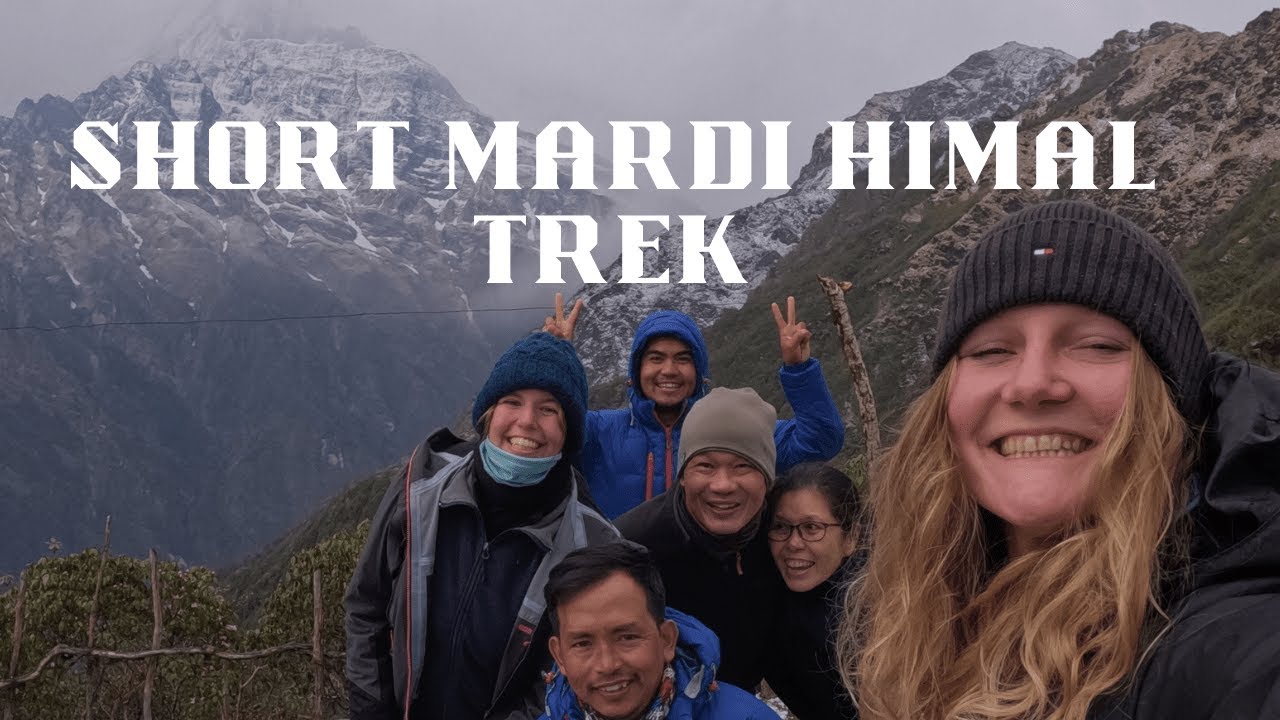
Mardi Himal Trek 9 Days

Quick Facts
  • Trip Duration9 Days
  • Destination Nepal
  • Difficulty Level Moderate
  • Maximum Altitude 4,500 m (Mardi Himal Base Camp)
  • Activity Trek
  • Starts/Ends Kathmandu / Kathmandu
  • Group Size 1 - 16
  • Transportation Overland Drive
  • Best Season Spring (March - May) & Autumn (September - November)
  • Accommodation Teahouses
  • Avg. hours of walk/day 6-8 hours
  • Comfort Basic
  • Interest option Adventure trekking, Himalayan peaks, and technical mountaineering experience

Mardi Himal Trail Psychology

How You Feel During the Trek

Anticipation → Patience → Awe → Nervousness → Triumph → Relief

  • Anticipation: You start in the humid forest with high energy. The climb is steep from the first step, but the shade keeps you focused on your pace.
  • Patience: You walk through mossy trees with limited views. The repetitive movement creates a rhythm that tests your mental discipline as you wait for the trees to thin.
  • Awe: The world opens up at Badal Danda. You walk along a narrow spine above the clouds, which makes you feel as if you are in a trance.
  • Nervousness: The air is thin, and the temperature drops sharply. You prepare for the pre-dawn climb while managing the physical discomfort of the high altitude.
  • Triumph: You reach the View Point as the sun hits Machhapuchhre. The physical exhaustion vanishes because the scale of the mountains occupies your entire mind.
  • Relief: Your knees feel the impact of the stone stairs. You move quickly toward lower elevations, feeling a sense of completion and a deep need for rest.

Emotions You May Feel

  • Calm
  • Curious
  • Surprised
  • Proud
  • Thankful

How Your Mind Changes

  • Focus: The steep start requires all your mental energy.
  • Release: The forest opens to reveal the massive Annapurna range.
  • Vulnerability: The thin ridge line exposes you to the elements.
  • Clarity: The cold mountain air at 4,500 m sharpens your senses.
  • Pride: You look back at the long ridge you just conquered.

Connection & Solitude Ratio:

  • Connection: 60% (PoKhara, Dhampus, and Pritam Deurali)
  • Solitude: 40% (Low Camp, High Camp, and Mardi Himal Base Camp)

Why You'll Love This Trip

  • Climb the steep ridge to 4,500 m.
  • See the south face of Machhapuchhre.
  • Walk through dense, ancient rhododendron forests.
  • Sleep in high-altitude teahouses on ridges.
  • Avoid the crowds of Annapurna Base Camp.
  • Watch the sunrise from the high Himalayas viewpoint.
  • Navigate narrow paths above the clouds.
  • Support local tea shops in quiet villages.
  • Enjoy the closest view of Annapurna South and Himchuli.

Mardi Himal Trek Overview

"It is not the mountain we conquer, but ourselves." — Sir Edmund Hillary

The Mardi Himal Trek is a high-altitude ridge walk in the Annapurna region. You begin your climb from 1,650 m at Dhumpus to reach Mardi Himal Base Camp at 4,500 m. The trail is known for its steep ascent through rhododendron forests that open into alpine meadows. You get clear views of Machhapuchhre and Annapurna South without the massive crowds found on other routes. But the terrain is rugged, so you need to be in good physical shape.

You must navigate narrow paths that stay on the spine of the mountain. This positioning offers a unique perspective where the mountains feel closer than they do from the valley floor. Safety is a priority because the elevation rises rapidly after Badal Danda. You need to pace yourself to avoid altitude sickness. Likewise, you must carry a windproof jacket because the weather on the exposed ridge can turn cold within minutes.

The route is fully supported by local teahouses that offer basic food and warmth. You are required to have a licensed guide for your safety in 2026. You also need the ACAP, just like the Annapurna Base Camp Trek and the Annapurna Circuit Trek. You should prepare for six to seven hours of walking each day on stone stairs and dirt paths. Meanwhile, the trail's relative quiet makes it a top choice for those who prefer a peaceful mountain experience.

Flow of Journey

The Mardi Himal Trek begins in the busy streets of Kathmandu, where you prepare for the trek, and then travels to the lakeside city of Pokhara. From there, the trail quickly climbs away from the lowlands, which starts with a gentle hike from Dhampus to the quiet ridge of Pritam Deurali. As you move deeper into the mountains, the landscape shifts from beautiful rhododendron and oak forests at Low Camp to the dramatic, open alpine meadows of Badal Danda. By the time you reach High Camp, the dense canopy is left behind, replaced by a narrow, grassy spine that offers a front-row seat with the great view of Annapurna South and the majestic "Fishtail" peak.

The adventure reaches its peak with a challenging pre-dawn ascent from High Camp, which navigates a frozen ridge to reach the 4,500 m Mardi Himal Base Camp just as the sun hits the Himalayas. After standing at the base of these vertical walls, the journey turns downward, retracing the ridge before dropping steeply into the traditional Gurung culture of Landruk village. The trek concludes with a scenic drive back to Pokhara, where you will spend the night, followed by a return trip along the Trisuli River to Kathmandu. This loop effectively bridges the gap between the wild, high-altitude ridges of the Annapurna region and the warm, terraced valleys below.

Itinerary

Day1
  • Drive Distance:5.8 km (Tribhuvan International Airport to Thamel)
  • Drive Duration:20-25 minutes
  • Sleep Elevation:1,400 m
  • Overnight Place:Kathmandu
  • Day's Difficulty:Gentle

We will meet you at Tribhuvan International Airport for your Mardi Himal adventure. Our representative waits at the arrivals gate with a Nature Excursion sign. We drive you through the busy streets of Kathmandu to your hotel in Thamel. Along the way, you will get a glimpse of Kathmandu life and see different streets, shops, and even the sacred Pashupatinath from a distance. This neighborhood serves as the hub for trekkers. You have time to rest or explore the local markets.

We gather for a pre-trip briefing in the evening. Our team checks your trekking gear and discusses the final route details for the Mardi Himal trek. We ensure you have the correct permits for the Annapurna Conservation Area. You can buy any missing equipment at nearby shops. We conclude the day with a delicious dinner at your hotel before heading to bed for an overnight stay.

Included activities:

  • Arrive at the airport and transfer to your hotel.
  • Rest or explore Thamel's local markets.
  • Gather for a pre-trip briefing to review your gear.
  • Meet with the trek crew and finalize trekking permits.
Trek Briefing time
Trek briefing
Welcome at International Airport
Day2
  • Meals:Lunch, Dinner
  • Accommodation:Hotel
  • Drive Distance:200 km
  • Drive Duration:6-7 hours
  • Sleep Elevation:830 m
  • Overnight Place:Pokhara
  • Day's Difficulty:Gentle

We depart from Kathmandu early in the morning for the long journey west. Our driver navigates the PrithviHighway, which winds along the Trishuli River. You see terraced fields and small roadside towns during the journey. We stop for lunch at a riverside restaurant. But be prepared for traffic near the city exits and ongoing road construction zones.

We reach Pokhara by late afternoon. Our vehicle drops you at your hotel near Phewa Lake. You can walk along the lakeside or enjoy a boat ride before sunset. Likewise, the city offers many cafes for a relaxedevening. We recommend early rest to prepare for the start of the trek tomorrow. Our team manages all the logistics for this transit day. We handle the highway tolls and coordinate the luggage transfer to your lakeside hotel.

After resting for a bit, we will walk around Fewa Lake in the evening. You can take part in boating and even visit Tal Barahi Mandir, which is in the middle of the lake. After about half an hour, you can either return to your hotel or enjoy a musical evening in the lake surroundings. Get ready for the overnight after having a delicious dinner at your hotel.

Included activities:

  • Board a scenic tourist bus early for the drive to Pokhara.
  • Observe the Trisuli River and the pack hills along the highway.
  • Arrive in Pokhara and check into your lakeside hotel.
  • Stroll around Phewa Lake and enjoy the mountain reflections.
At Hotel at Pokhara
Dinner At Pokhara hotel
Driving to Pokhara
Phewa Lake
Riding a boat on Phewa Lake
short break
Day3
  • Meals:Breakfast, Lunch, Dinner
  • Accommodation:Teahouse
  • Trek Distance:5-6 km
  • Drive Distance:50–55 km
  • Trek Duration:2-2.5 hours
  • Drive Duration:1-1.5 hours
  • Sleep Elevation:2,100 m
  • Overnight Place:Pritam Deurali
  • Day's Difficulty:Gentle

We begin our journey from Pokhara at 8:00 AM after breakfast. Our drive follows the Hemja road, where we pass terraced fields and see the first views of the Annapurna Range and Machhapuchhre. Dhampus is the starting point of the Mardi Himal Trek. Today, we move from Dhampus to Pritam Deurali on a gentle trail. We walk through thick rhododendron forests and reach the Pothana check post after about an hour. We stop here to register our permits before continuing our climb through the woods.

We will continue hiking for another 60 to 75 minutes until we reach Pritam Deurali. Here, we spend the rest of the day and enjoy our lunch and dinner at the teahouse. This village offers a clear view of Annapurna South, Hiunchuli, and the fishtail shape of Machhapuchhre. Meanwhile, we can look back to see the distant Pokhara valley below us. The atmosphere is quiet, and the air begins to feel cooler as we settle in for the night.

Included activities:

  • Drive to Dhampus via the Hemja road and the terraced fields.
  • Hike a gentle trail through thick rhododendron forests.
  • Register your permits at the Pothana village check post.
  • Reach Pritam Deurali for lunch and panoramic mountain views.
Dhampus
lower dhampus
Pothana Check Post
Pritam Deurali
Way to Dhampus
Day4
  • Max. Altitude:2,900 m/9,514 ft
  • Meals:Breakfast, Lunch, Dinner
  • Accommodation:Teahouse
  • Duration:6 hours
  • Trek Distance:7 km
  • Trek Duration:6 hours
  • Sleep Elevation:2,970 m
  • Overnight Place:Low Camp
  • Day's Difficulty:Moderate

We start our morning with a hot breakfast while watching the sun hit the peaks from Pritam Deurali. The trail begins with a short flat section before we enter a deep, silent forest. We climb a gradual ascent through a dense mix of rhododendron, oak, maple, and birch trees. You will see Himalayan bamboo and thick moss covering the ancient trunks. After three to four hours of steady walking, we reach Forest Camp (Kokar), where we stop for our midday lunch.

Our team leaves Forest Camp and tackles a much steeper section of the trail. This part of the ridge is a continuous climb that takes two to three hours, depending on our pace. We navigate through ferns and twisted roots as the forest begins to change its character. Our destination, Low Camp, is tucked away within the heavy timberline. Although the views are still limited by trees, the air is crisp, and we can feel the altitude increase as we prepare for our dinner.

Included activities:

  • Ascend through a dense forest of oak, maple, and bamboo.
  • Lunch at Forest Camp after three hours of steady walking.
  • Tackle a steep uphill climb through ancient, mossy trees.
  • Arrive at Low Camp to enjoy the crisp mountain air.
Between pitam deurali and low camp
hotel at rest camp
Low Camp
Rest Camp
way to low camp
Day5
  • Max. Altitude:3,585 m/11,762 ft
  • Meals:Breakfast, Lunch, Dinner
  • Accommodation:Teahouse
  • Duration:5-6 hours
  • Trek Distance:5 km
  • Trek Duration:4 hours
  • Sleep Elevation:3,580 m
  • Overnight Place:High Camp
  • Day's Difficulty:Moderate to Hard

On the 5th day of trekking to Mardi Himal, we climb out of the forest early as the trail shifts from gradual slopes to a steep vertical push. For the first 90 minutes, we navigate the last of the dense rhododendron thickets until we break above the treeline at Badal Danda. This ridge point serves as a natural balcony with clear views of Annapurna South, Hiunchuli, and the massive wall of Lamjung Himal. We pause here to catch our breath and watch the clouds float below the ridge line. The landscape changes instantly from green canopy to open alpine meadows.

We then follow a steep, narrow spine that leads toward the high-altitude lodges. There are no more large trees here, only stunted alpine scrub and hardy grass. The path stays directly on the ridge, making Machhapuchhre look large enough to touch as we get closer. We reach High Camp after another two hours of focused hiking and check into our teahouse for lunch. You have the entire afternoon to rest and watch the light change on the faces of the surrounding peaks.

Included activities:

  • Climb steeply through the forest to reach the Badal Danda balcony.
  • Observe the massive peaks and clouds from above the treeline.
  • Follow a narrow alpine spine toward the high-altitude lodges.
  • Rest at High Camp while watching the sunset over the Himalayas.
Badal Danda
High Camp
Morning sunrise from Badal Danda
Rhododendron
Trekkers on Badal Danda
Way to High Camp
Yak shelter
Day6
  • Max. Altitude:4,500 m/14,764 ft
  • Meals:Breakfast, Lunch, Dinner
  • Accommodation:Teahouse
  • Duration:7-8 hours
  • Trek Distance:13 km
  • Trek Duration:8 to 9 hours
  • Sleep Elevation:8 to 9 hours
  • Overnight Place:Low Camp
  • Day's Difficulty:Challenging

Today is a special day for our hike to Mardi Himal, because today we will reach our destination. We wake at 3:00 AM to begin our push toward the highest point of the trek. We use headlamps to light the narrow, frozen path and carry energy bars to fuel the steep climb. The trail consists of a relentless series of stone stairs along a sharp ridge that leads to the Upper View Point.

We reach this vantage point just in time for majestic views of the mountains and sunrise, when the first light hits the Annapurna massif and the jagged peak of Machhapuchhre. After a short break to witness the landscape, we continue along an even narrower spine toward the Mardi Himal Base Camp at 4,500 m. We stand at the base of the mountain, taking in the vertical rock walls and glacial ice. The air is thin here, and the silence is only broken by the wind on the ridge.

After experiencing the scale of the high Himalayas, we carefully retrace our steps down the exposed path to High Camp. We stop at our lodge for a late, warm breakfast to regain our strength. Once we pack our gear, we descend further back through the alpine zone. We will spend the night at Low Camp.

Included activities:

  • Ascend the frozen ridge at dawn toward the Upper View Point.
  • Reach Mardi Himal Base Camp at 4,500 m for sunrise views.
  • Retrace your steps to High Camp for a warm, late breakfast.
  • Descend the steep alpine trail to sleep at Low Camp.
Annapurna Ranges
Annapurna South and Himchuli
High Camp
Mardi Himal View Point
Mardi Himal Base Camp
Way to Mardi Base Camp
Day7
  • Max. Altitude:822 m/2,697 ft
  • Meals:Breakfast, Lunch, Dinner
  • Accommodation:Hotel
  • Duration:3-4 hours trek & 1-2 hours drive
  • Trek Distance:8 km
  • Drive Distance:40 km
  • Trek Duration:5 hours
  • Drive Duration:2 to 3 hours
  • Sleep Elevation:830 m
  • Overnight Place:Pokhara
  • Day's Difficulty:Moderate

We begin our final descent through the cool, shaded forest of Low Camp. Our team retraces the same path we climbed days ago, winding through the mossy rhododendrons until we reach Forest Camp. At this junction, we split from the main ridge trail and turn back to civilization. The path becomes a very steep descent that drops rapidly through the timberline. We navigate a series of tight switchbacks and stone steps that test our knees, but the rising oxygen levels make breathing easier as we lose altitude.

Our trek concludes as we enter Landruk, a large and traditional Gurung and Magar village built into the hillside. You will see impressive stone-built houses and wide terraced fields that stretch down toward the Modi Khola river. After a short walk through the village streets, we meet our vehicle for the journey back to Pokhara. The drive takes approximately two to three hours, passing through local settlements and winding mountain roads. We finish the day back in the city, where you can enjoy a hot shower and celebrate the completion of your trek.

Included activities:

  • Descend through the mossy rhododendron forest back to Forest Camp.
  • Tackle the steep switchbacks down to the valley floor.
  • Explore the traditional stone houses and terraces of Landruk village.
  • Drive back to Pokhara for a hot shower and celebration.
Hotel at rest camp
trekkers on landruk
view from hotel at rest camp
Way to landruk
Day8
  • Max. Altitude:1,400 m/4,600 ft
  • Meals:Breakfast, Dinner
  • Duration:6-7 hours
  • Drive Distance:6-7 hours
  • Drive Duration:6-7 hours
  • Sleep Elevation:200 km
  • Overnight Place:Kathmandu
  • Day's Difficulty:Gentle

We leave the lakeside behind and begin our 200 km journey back to the capital. Our drive follows the Prithvi Highway, a winding mountain road that hugs the banks of the Trisuli River. You will see the heavy flow of the river below us, where rafters often navigate the rapids.

We pass through bustling roadside towns like Dumre and Mugling, where we stop for a local lunch. The scenery is a mix of green hills, small waterfalls, and local markets selling fresh produce and river fish. Our team continues the climb toward the Kathmandu Valley, passing the steep switchbacks of Naubise. As we reach the Thankot check post at the valley’s edge, the air changes, and the city skyline comes into view.

We navigate the busy streets to drop you off at your hotel in the heart of the city. This drive marks the end of our adventure, taking us from the quiet peaks of Mardi Himal back to the vibrant energy of Kathmandu. You can spend the evening reflecting on the journey or doing some last-minute shopping in Thamel.

Included activities:

  • Depart Pokhara and drive along the scenic banks of the Trisuli River.
  • Stop for a local lunch in the bustling roadside town of Mugling.
  • Climb through the steep switchbacks of Naubise to enter the Kathmandu Valley.
  • Transfer to your hotel in Thamel for relaxation and farewell dinner
drive to pokhara
Jeep ride
trekkers on pokhara way
way to pokhara
Day9
  • Meals:Breakfast
  • Drive Distance:6 km
  • Drive Duration:30 to 45 minutes (Hotel to Airport)

Our team will arrange your final transfer to Tribhuvan International Airport based on your flight schedule. We ensure you arrive at the terminal 3 hours before your departure to complete check-in and security procedures smoothly. As we drive through the morning streets of Kathmandu, you have one last look at the bustling city that served as the gateway to your Himalayan journey. We assist with your luggage and bid you a warm farewell at the departure gate. Your trek with us concludes here, but the memories of the Mardi ridge and the sunrise from the top stay with you.

Get ready for your Himalayan adventure with our all-in-one planning guide. We’ve put together a downloadable PDF featuring the 9-day Mardi Himal route, scenic elevation maps, and a pro-trekker packing list. This guide allows you to visualize your daily climb and prepare for the high-altitude trek to the Mardi Base Camp. Click the button below to download our expert itinerary and book the Mardi Himal trek today.

Download Pdf

Route Map

Mardi Himal Trek 9 Days map

Cost Details

Includes

  • Airport pick-up and drop-off services during the arrival and departure dates
  • Transportation: Kathmandu - Pokhara and to Kathmandu, both ways on a tourist deluxe bus
  • Transportation from Pokhara to Dhampus on a private vehicle (trek start point) and driving back to Pokhara from Landruk (trek end point) by sharing a local jeep
  • 2 nights in a hotel in Pokhara with complementary breakfast (Hotel Silver Oaks)
  • All mountain-based standard rooms during the Mardi Himal trek
  • Full-board meals (breakfast, lunch, and dinner), main course from the menu, during the Mardi Himal trek
  • Government-licensed, friendly, English-speaking 'Nature Excursion’s experienced native guide with his meal, salary, transportation, insurance, and other necessary equipment (you will get an assistant trek guide group of 6 or more trekkers)
  • Sherpa/Porter to help with your luggage (1 porter for two trekkers, luggage weight limit is 10 kg per trekker)
  • Trekking Information Management System (TIMS) card fees
  • Annapurna Conservation Area Permit (ACAP) fees
  • Snacks (cookies) and seasonal fresh fruit every evening, as per the availability during the Mardi Himal trek
  • Water purification tablets for safe drinking water
  • The medical kit box carried by the guide, including dimox 
  • An Oximeter to measure your pulse and Oxygen level
  • All government, local taxes, and official expenses
  • Rescue operation arrangement in case of complicated health condition (incurring charges should be covered by your travel insurance)
  • Souvenir: A company t-shirt
  • Trek achievement company certificate after the trek completion
  • Farewell dinner in Kathmandu at Nepali Cultural Restaurant after the trek completion (complimentary)

Excludes

  • International flight costs
  • Nepal entry visa fee at Tribhuwan International Airport (TIA) (15 Days USD 25–30, 30 Days USD 40–50, and 90 Days USD 100–10)
  • Hotel accommodation and meals in Kathmandu
  • Extra-night accommodation and meals in Kathmandu and Pokhara 
  • Personal expenses, such as shopping, hot and cold drinks: (tea-coffee, coke/fanta/sprite/juice), hard drinks: (beer/wine/vodka), hot shower, laundry, massage, wifi, battery re-charge, extra porter, etc
  • Personal clothing and gear
  • Travel insurance, which has to cover high-altitude emergency rescue and evacuation 
  • Additional costs due to delays caused by circumstances beyond our control, like landslides, itinerary modifications due to safety concerns, weather conditions, illness, changes in government policies, and strikes
  • All the costs and expenses that are not listed in the include section
  • Tips for guides and porters (Expected)

Mardi Himal Trek 9 Days pictures and video

Mardi Himal Trek

Clients Reviews

  • Very helpful

    One of the best group to travel with. All the guides and porters were very helpful and friendly. Emanuel was the best guide and was always there whenever you needed anything.
    Praveen, Ashish and not to forget Enil’s energy was unmatched. They were amazing people who made Nepal feel like home and made sure we don’t feel like legit tourists

    Sangathya V
    Sangathya VIndiaMay 01, 2026
    TripAdvisor
  • Beautiful scenery in Nepal is the people!

    What makes the trip so memorable was the whole team, our guide Emmanuel, very professional and patiently explained everything to us, our porters: Arjun, Pravin, and Nar who always encouraged me to move forward slowly, don’t give up!!!
    Will definitely introduce to all my friends to book this!!!!
    Beautiful scenery in Nepal is the people!

    ChihChieh L
    ChihChieh LTaiwanApr 14, 2026
    TripAdvisor

Useful Information

Mardi Himal Weather Pattern

The Mardi Himal Trek transitions through diverse ecological zones, from the mesmerizing subtropical valleys near Pokhara to the rugged alpine ridge of the Base Camp. Since the trail starts at approximately 1,650 m (Dhampus) and peaks at 4,500 m, the weather shifts rapidly. Preparing for these variations ensures you remain comfortable as you move from the humid forests to the exposed, windy ridge.

Low Altitudes (Dhampus / Pritam Deurali)

  • Winter (Dec–Feb): 4°C to 14°C
  • Spring (Mar–May): 16°C to 26°C
  • Summer (Jun–Aug): 19°C to 29°C
  • Autumn (Sep–Nov): 13°C to 24°C

Mid Altitudes (Low Camp / Forest Camp)

  • Winter (Dec–Feb): -4°C to 8°C
  • Spring (Mar–May): 7°C to 18°C
  • Summer (Jun–Aug): 11°C to 21°C
  • Autumn (Sep–Nov): 8°C to 16°C

High Altitudes (High Camp / Mardi Base Camp)

  • Winter (Dec–Feb): -14°C to 2°C
  • Spring (Mar–May): -5°C to 9°C
  • Summer (Jun–Aug): 4°C to 12°C
  • Autumn (Sep–Nov): -3°C to 10°C

Best Season For Mardi Himal Trek

Choosing the right season, like spring and autumn, for the Mardi Himal Trek is crucial for witnessing the beautiful "Fishtail" peak and safely navigating the narrow ridge. You must consider how seasonal visibility and temperature affect your experience as you climb toward the Base Camp.

Spring (March to May):

Spring is the peak trekking season for the Mardi Himal trekDuring this season, the temperatures are pleasantly mild at the lower camps, though you will still encounter crisp air at High Camp. You find the trails bustling with life, and the early morning clarity offers breathtaking views of Annapurna South and Machhapuchhre before the afternoon clouds roll in.

Autumn Season (September to November):

During the autumn season, you enjoy the sharpest visibility and most stable weather, which is vital for the exposed hike between High Camp and Base Camp. The deep blue skies offer a perfect backdrop for photography, and the predictable conditions make it the safest window for reaching the 4,500 m mark. While the nights at High Camp can be freezing, the crystal-clear mountain panoramas are at their absolute best.

Things Trekkers Should Know Before Doing the Mardi Himal Trek

You must prepare for a steep and relentless climb. The trail is moderate but demands high physical stamina because you gain altitude quickly. You should start cardio training, such as running or swimming, at least 2 months before your departure. Meanwhile, break in your trekking boots to avoid blisters on the stone stairs. Your fitness level determines your comfort, so do not underestimate the daily five to six hours of walking on uneven ground.

Your packing list must prioritize warmth and safety. You need a down jacket and a sleeping bag rated for -10°C (14°F) because teahouse blankets are often thin. Also, you must carry a headlamp for the pre-dawn hike from High Camp to the View Point. You should bring water purification tablets or a filter since plastic bottles are restricted in higher sections. Meanwhile, you must carry enough cash in Nepali Rupees because there are no ATMs on the ridge.

You are legally required to trek with a licensed guide in 2026. You also need two specific permits: the Annapurna Conservation Area Project (ACAP) and the Trekkers' Information Management System (TIMS) card. These cost approximately USD 37 for foreigners and are checked at multiple points. You must have travel insurance that covers emergency helicopter evacuation up to 5,000 m. Likewise, you should carry four passport-sized photos for your permit applications in Pokhara or Kathmandu.

Meals and Accommodation in Mardi Himal Trek

Your stay in Kathmandu and Pokhara includes a hotel with modern amenities, but note that hotel accommodation in Kathmandu isn’t included in the cost of Mardi Himal Trek package with us. These rooms feature attached washrooms and reliable service to ensure you rest well before the trail. We arrange these accommodations to provide a balance of comfort and convenience. But once you begin the trek, the lodging becomes functional and basic. You will sleep in wooden or stone teahouses that prioritize shelter over luxury.

meal at mardi himal trek

The teahouses offer small, clean rooms with twin beds and foam mattresses. You may have a private washroom at lower elevations, but shared facilities are standard at High Camp. We prioritize the best available lodges to give you a cozy environment. Likewise, the bedding is well-maintained. Also, we provide you with a sleeping bag because the thin walls do not block the mountain chill.

You receive three meals a day based on the local teahouse menus. You eat breakfast and dinner at your overnight lodge, while lunch is served at a stop along the trail. For breakfast, you can choose from eggs, porridge, toast, or Tibetan bread. Lunch and dinner options include pasta, noodles, and the traditional Dal Bhat. We recommend Dal Bhat because it provides the best energy for steep climbs. Also, you should use purification tablets to treat the tap water before drinking.

What Makes Mardi Himal Trek Different From Other Annapurna Region Treks?

The Mardi Himal Trek is a unique ridge walk that stays on the spine of the Annapurna region of Nepal. Most Annapurna routes follow river beds and climb up toward a bowl. On this trail, you walk above the treeline for several days with constant views of Annapurna on both sides. This positioning gives you a closer look at the south face of Machhapuchhre. But the path is narrower and much steeper than the traditional circuits.

The Mardi Himal route still remains less developed and quieter than the popular Ghorepani or Ghandruk routes. You will not find large villages or noisy tourist hubs at the higher elevations. Instead, you stay in small clusters of teahouses that offer a more intimate mountain experience. You can stand at 4,500 m within just three or four days of walking. Likewise, the rapid transition from jungle to alpine desert is incredible.

You experience a 2026 trekking environment that emphasizes solitude and preservation. Unlike the stone-paved stairs of the Annapurna Circuit trek, the Mardi trail is often a dirt path through ancient rhododendron forests. It feels more like a wilderness expedition than a commercial trek. Also, the perspective of the Annapurna range is completely different. You see the peaks lined up in a row rather than surrounding you in a circle. This makes it the best choice if you want a short, intense journey without the crowds.

The Changing Landscape Zones You Cross During the Mardi Himal Trek

You start in the subtropical zone where the air is warm, and the vegetation is thick. The lower trail winds through terraced fields and oak forests filled with ferns and moss. As you climb toward Forest Camp, the landscape transitions into a dense rhododendron forest. These trees dominate the middle elevations and bloom with red or pink flowers in the spring.

But the canopy remains closed, so you walk in the shade for several hours. This zone is humid and home to diverse bird life and langur monkeys. It is wise to pack appropriate clothing like thin t-shirts and trekking pants for this weather. The trees disappear quickly as you reach Badal Danda and move into the alpine zone. Here, the landscape becomes a rugged ridge covered in short grass and hardy shrubs.

You walk on the spine of the mountain with the valley floor far below on both sides. Meanwhile, the soil turns to rock and ice as you approach the Base Camp at 4,500 m. The massive peaks of the Annapurna range loom directly ahead without any trees to block the view. Likewise, the temperature drops sharply in this exposed, high desert.

What’s the Difference Between Mardi Himal Base Camp and Mardi Himal Viewpoint?

CategoryMardi Himal View PointMardi Base Camp
Altitude4,200 m (13,779 ft)4,500 m (14,763 ft)
Time from High Camp2 to 3 hours8-9 hours (round trip)
Trail ConditionSteep, well-marked stairsNarrow, rocky, and exposed ridge
Crowd LevelModerate to High (at sunrise)Very Low
View QualityBest for a wide mountain rangeClosest view of Mardi and Machhapuchhre
Physical DemandChallengingVery High / Technical

The Geological Formation of the Sharp Ridge Seen Near the Mardi Himal Base Camp

The ridge leading to the Mardi Himal Base Camp is a classic example of a "knife-edge" arête. This geological feature formed through the intense erosional power of glaciers on both sides of the mountain spine. Over thousands of years, moving ice carved deep cirques into the rock, which sharpened the remaining center into a narrow ridge. Today, you walk along this thin crest where the land falls away steeply into the Modi Khola and Mardi Khola valleys.

Mardi Himal Base Camp

The rock itself consists mostly of metamorphic rocks such as slate, phyllite, and schist. These materials are part of the Greater Himalayan Sequence and were pushed upward by the collision of the Indian and Eurasian plates. Because these rocks are layered, they fracture easily under the pressure of freezing and thawing water. This process, known as frost wedging, constantly breaks the surface into the sharp, jagged fragments you see underfoot. Meanwhile, the rock's dark color absorbs heat during the day, accelerating its weathering.

The sharp verticality of the ridge is maintained by the high rate of tectonic uplift in the Annapurna region. The mountains are still rising, but the heavy monsoon rains and glacial meltwater erode the slopes at an equal pace. This balance prevents the ridge from widening and keeps the path narrow and precarious. Likewise, the lack of vegetation at 4,500 m means there are no root systems to bind the soil. You are looking at a raw, active landscape that continues to change with every season.

Equipments

HEAD

  • Sun hat or scarf
  • Winter hat or insulating hat or wide-brimmed hat
  • Headlight with extra battery

FACE

  • Sunscreen
  • Sunglass with UV protection
  • Face and body wipes
     

HANDS

  • Lightweight gloves
  • Lightweight winter gloves

BODYY

  • Hiking shirt
  • Long-sleeved shirt
  • Hooded rain jacket
  • Fleece jacket
  • Lightweight cotton pants
  • T-shirt (bring lightweight wool)
  • Polypropylene underwear
  • Down jacket (available for rent in Kathandu)
  • Sweater
  • Waterproof jacket and pant

FOOTWEAR

  • Hiking boots
  • Thick wool shocks (take an extra pair of thick wool shocks)

ESSENTIAL GEARS

  • Backpack or day back (size depends on whether you take a porter or not)
  • Thermal bottle
  • Water purification
  • Trekking pole
  • Sleeping bag (-20 degreis sleeping bag is best in high altitude trekking)

TOILETORIES

  • Medium size drying towel
  • Toothbrush
  • Toothpaste
  • Biodegradable bar soap
  • Nail clippers

PERSONAL ACCESSORIES

  • Money
  • Watch
  • Cell phone
  • Camera

EXTRA ITEMS

  • First aid kit
  • Extra password photos and photocopies of password
  • Notebook and pen
  • Binoculars

Mardi Himal Trek 9 Days FAQs

  • Q1. Is Mardi Himal trek easy?

    The Mardi Himal trek is moderate to difficult. This trek is suitable for beginners, but requires good physical fitness. It is also a good option for trekkers seeking a new trekking experience and is equally ideal for family trekking packages.

  • Q2. Is Mardi trek safe?

    The Mardi Himal trek is one of the safest treks with a short route but steep mountain curves. It is less well-known than other famous trekking routes in Nepal. With the help of experienced and professional guides, you can complete this trek safely. They will help you navigate the tough sections of the trail.

  • Q3. Which month is best for the Mardi Himal trek?

    For the best Mardi Himal trekking experience, we recommend going in March, April, May, October, November, and December. These are the best times of year as this stunning views of mountains like Hiunchuli, Annapurna, and Machapuchare, and to catch the sunrise from the summit.

  • Q4. Is there network in Mardi Himal?

    Yes, there is a network on the Mardi Himal trail. However, it may not be reliable all the time because most of the trail goes through dense forests. Likewise, there can be areas where there is no network at all.

  • Q5. Do I climb Mardi Himal during the trek?

    No, you do not climb Mardi Himal during the trek. Mardi Himal Base Camp is the highest point on this trek. Although it doesn't reach the summit, the Mardi Himal trek offers stunning mountain views in the Annapurna region.

  • Q6. Which permits are necessary for the Mardi Himal Trek?

    For the Mardi Himal trekking, a TIMS (Trekkers' Information Management System) card and an Annapurna Conservation Area Project (ACAP) permit are needed. Your travel agency handles the permit process on your behalf. You do not need to pay any additional fees for them, as they are included in our package cost.

  • Q7. Is the Mardi Himal trek appropriate for beginners?

    The Mardi Himal trek in Nepal is appropriate for beginners with a decent fitness level, as it offers a shorter route and well-maintained forest trails. However, because the trek reaches an elevation of 4,500 m, you must ascend slowly and stay hydrated to prevent altitude sickness symptoms, such as headaches or nausea.

  • Q8. Why should I hire an experienced guide for the Mardi Himal trek instead of hiking solo?

    Hiring an experienced guide for the Mardi Himal trek ensures your safety through accurate navigation, real-time weather monitoring, and prompt response to altitude sickness. They also provide deep insights into local Gurung culture, secure the best tea house accommodations, and help you navigate areas where you need a permit to explore.

  • Q9. What is the official process to secure a permit for the Mardi Himal trek routes?

    To obtain a permit for the Mardi Himal trek entry, you must visit the Nepal Tourism Board office to buy the Annapurna Conservation Area Project (ACAP) card and Trekkers' Information Management Systems (TIMS) card by submitting your passport copies and passport-sized photographs.

  • Q10. How many days does it take to reach Mardi Himal Base Camp from Pokhara?

    It generally takes about 3 to 4 days from Pokhara to reach Mardi Himal Base Camp. A standard and best itinerary involves driving from Pokhara to Kande or Dhampus on day one, trekking through Forest Camp and High Camp, and making the final push to Base Camp on day three or four before beginning the descent.

You may also like

SimilarPackages