The Annapurna Base Camp Trek is a 13-day tea-house trek from Kathmandu to the 4,130 m amphitheatre under Annapurna I (8,091 m). The same route is often sold as the Annapurna Sanctuary Trek. You walk through Gurung and Magar villages, sleep at Ghorepani for the Poon Hill sunrise (3,210 m), then continue via Chhomrong and Machhapuchhre Base Camp to Annapurna Base Camp.
This 13-day itinerary is the full ABC trek with gradual acclimatization; slower and safer than 7- or 8-day versions. You walk 5–7 hours a day on a moderate trail of stone stairs, rhododendron forest, and glacial valleys. Spring (March–May) and autumn (September–November) give the clearest views. Packages include ACAP, a licensed guide, porter, and meals on the trail.
Quick Facts
Trip Duration13 Days
Destination Nepal
Difficulty Level Moderate
Maximum Altitude 4,130 m (Annapurna Base Camp)
Activity Trek
Starts/Ends Kathmandu/Kathmandu
Group Size 1 - 16
Transportation Drive Kathmandu-Pokhara-Hile and Jhinu Danda-Pokhara-Kathmandu
Best Season Spring (March to May) & Autumn (September to November)
Accommodation Hotel + Teahouse/ Lodge
Avg. hours of walk/day 5 to 7 hours
Recommended For Active beginners and experienced trekkers
The 13-day Annapurna Base Camp trek begins in Kathmandu. After arrival, you’ll explore busy streets, colorful markets, and enjoy shopping in Thamel. Day 2 is a 6–7 hour tourist-bus drive to Pokhara along the Trishuli and Marshyangdi valleys. In Pokhara, enjoy the calm Phewa Lake, Tal Barahi Temple, and the lively lakeside market. From Pokhara, the trek starts in Hile, passing through Ulleri and Ghorepani.
You’ll walk through rhododendron and enjoy mountain views. A sunrise hike to Poon Hill gives sweeping views of Dhaulagiri, Annapurna South, Machhapuchhre, and Hiunchuli. Tadapani and Chhomrong villages offer a glimpse of local Gurung life amid stunning landscapes. The next day, you’ll visit the Himalaya Hotel, which is quite popular among locals, as it is the last stop before the hike towards base camp.
The journey continues through suspension bridges, forests, and waterfalls toward Machhapuchhre Base Camp and then Annapurna Base Camp, surrounded by towering snow-capped peaks. On the way down, you trek to Bamboo and Jhinu Danda, where hot springs offer a relaxing stop. A scenic drive returns you to Pokhara for lakeside exploration before heading back to Kathmandu for a farewell dinner in Thamel. Each day of this 13-day ABC trek offers adventure, mountain views, serene lakes, and cultural villages, making the trek memorable.
Why You'll Love This Trip
Spend a night at Annapurna Base Camp.
Relax in the natural hot springs of Jhinu Danda.
Watch a beautiful sunset at Phewa Lake in Pokhara.
Trek from lush subtropical forests and waterfalls to barren hills, glaciers, and high mountains.
Follow trails through the Annapurna Conservation Area.
Take on an adventurous trek to the base of Mount Annapurna, the world’s tenth-highest peak.
Experience dramatic landscapes, warm hospitality, vibrant culture, and scenic villages.
Gurung villages at Ghorepani, Tadapani, and Chhomrong
Itinerary
Day1
Meals:N/A
Accommodation:Hotel
Drive Distance:5.8 km
Drive Duration:20-30 minutes
Sleep Elevation:1,400 m
Overnight Place:Kathmandu
Day's Difficulty:Gentle
When you arrive at Tribhuvan International Airport, a Nature Excursion representative will meet you holding a sign with your name. They will take you to your hotel in a private vehicle. During the ride, you will travel along Airport Road and pass busy streets that reflect local life in Kathmandu. Watch for colorful shops and street vendors, along with the city's lively atmosphere.
As you travel, you can also see the famous Pashupatinath Temple. This is one of the holiest Hindu temples in Nepal, dedicated to Lord Shiva. Located next to the Bagmati River, the temple is a UNESCO World Heritage Site and offers a peaceful contrast to the vibrant streets around it.
In the evening, we will meet for a briefing to introduce you to your mountain guide and to discuss the plan for the Annapurna Base Camp trek. We will also provide a returnable down jacket and sleeping bag for your journey. You'll stay overnight in Kathmandu.
Included activities:
Drive to your hotel in Thamel.
Day2
Meals:Breakfast
Accommodation:Hotel
Drive Distance:200 km
Drive Duration:6-7 hours
Sleep Elevation:830 m
Overnight Place:Pokhara
Day's Difficulty:Gentle
Our journey to Pokhara begins early in the morning, around 6:45 AM, with a scenic 6-7 hour drive from Kathmandu. We’ll travel through the Trishuli and Marshyangdi river valleys, passing terraced fields and traditional villages, including Malekhu, known for its fresh fish dishes. On clear days, we might catch glimpses of the majestic Manaslu and Lamjung Himal. As we near Pokhara (830 m), the Annapurna Range comes into view, providing a breathtaking backdrop.
Upon arriving in Pokhara, we’ll check into our hotel. After a brief rest, we’ll head outside to explore the lakeside area, which is calming and beautiful. A local favorite is the charming lakeside market, where you can find handmade crafts and try delicious street food such as momo (dumplings) and sel roti (rice doughnuts).
If we have time, we might enjoy boating in Phewa Lake, where locals often recommend visiting Tal Barahi Temple, situated on an island in the lake. We can also stroll along the shore to see the vibrant sunset reflecting off the water. After a fulfilling day of exploration, we’ll return to our hotel for our overnight stay, enjoying the serene atmosphere of this magical place.
Included activities:
Leave Kathmandu for a scenic 6–7-hour drive to Pokhara.
Drive through the Trishuli and Marshyangdi valleys.
Reach Pokhara, check into the hotel, and enjoy first views of the Annapurna Range.
Explore the lakeside market and enjoy local food.
Optional activities:
Take a boat on Phewa Lake, visit Tal Barahi Temple.
Day3
Meals:Breakfast, Lunch, Dinner
Accommodation:Teahouse
Trek Distance:4-6 km
Drive Distance:90 km
Trek Duration:2-3 hours
Drive Duration:3-4 hours
Sleep Elevation:2,050 m
Overnight Place:Ulleri
Day's Difficulty:Gentle
After breakfast beside Phewa Lake, we drive from Pokhara to Nayapul, taking about 3-4 hours through green hills, riverside settlements, and terraced farmlands. The road follows the Bhurungdi Khola, providing views of fields and rural village life.
We check trekking permits in Birethanti before continuing to Hile on a rougher road. Weather permitting, you might see distant views of the Himalayan peaks, including Annapurna South and Machhapuchhre.
From Hile, our trek begins with a gentle uphill climb for about 20 minutes to Tikhedhunga, passing small settlements along the way. The trail then steepens toward Ulleri, with stone staircases and steady uphill walking, and takes roughly 1.5 hours.
By afternoon, we arrive at Ulleri (2,050 m), a traditional Magar village. After checking into the teahouse, we have lunch and rest, then explore the village and take in views of Annapurna South and Hiunchuli.
Included activities:
Enjoy breakfast beside Phewa Lake in Pokhara.
Drive from Pokhara to Nayapul.
Begin trek from Hile with a gentle 20-minute uphill climb to Tikhedhunga.
Arrive at Ulleri, have lunch, rest, and explore the Magar village.
Day4
Meals:Breakfast, Lunch, Dinner
Accommodation:Teahouse
Trek Distance:8-10 km
Trek Duration:4-5 hours
Sleep Elevation:2,874 m
Overnight Place:Ghorepani
Day's Difficulty:Moderate
We begin the day between 7:00 AM and 8:00 AM, after breakfast in Ulleri, gradually leaving behind the stone staircases that define the earlier section of the trek. Today’s trail climbs steadily but more gently, weaving through dense forests of rhododendron, oak, pine, birch, juniper, maple, and wild orchids.
In spring, the woods bloom with red and pink flowers, and morning mist adds a mystical feel. The trail goes through Banthanti and Nagethanti, where trekkers can pause for tea or lunch. Depending on our timing, we may stop at Nagethati or continue to Ghorepani for lunch.
Ghorepani is a traditional Magar village in a scenic mountain landscape. Upon arrival in Ghorepani, we can explore the local area and learn about its history. According to locals, Ghorepani's history is closely tied to the ancient salt trade routes, which are said to mean “horse water”. This refers to caravans that once stopped here.
Ghorepani is famous for its hospitality and stunning views of the Himalayas. From the village, the snow-capped peaks of Annapurna South, Hiunchuli, Nilgiri, Machhapuchhre (Fishtail), and the Dhaulagiri range loom above the hills. In the afternoon, the mountains often shine with golden hues, hinting at the spectacular sunrise at nearby Poon Hill.
Included activities:
Pause for a tea break at Banthanti.
Trek gently through rhododendron forests.
Stroll around the traditional Ghorepani village.
Day5
Meals:Breakfast, Lunch, Dinner
Accommodation:Teahouse
Trek Distance:11-12 km
Trek Duration:6-7 hours
Sleep Elevation:2,590 m
Overnight Place:Tadapani
Day's Difficulty:Moderate
Today is a special day as we wake up early to begin our hike to Poon Hill Viewpoint (3,210 m). Poon Hill is famous for its wide panoramic views of the Annapurna region. The goal is to reach the view tower before sunrise, so we start our hike at around 5:00 AM. We also start early to reach the viewpoint before other trekkers, securing a good spot to view the sunrise. The trail is steep and climbs stone stairs for about 40-45 minutes.
We pay NPR 50 each at the ticket barrier before climbing alongside other trekkers, equally eager to watch the sunrise from the Poon Hill View Tower. We reach the viewpoint early in the morning, so during this time, thick grey clouds cover the peaks. As the dawn approaches, we wait patiently. The surrounding cafe is filled with other trekkers and hikers. By around 8:00 AM, the sun rises, but the mountains are still hidden, creating a majestic atmospheric glow. But as the sun rises, the sunrise turns Dhaulagiri, Annapurna South, and Hiunchuli golden. We can also see Nilgiri, Machhapuchhre (Fishtail), and the long Dhaulagiri range. Further, in spring, the hills below glow with blooming rhododendron flowers.
After about half an hour of clicking photos and soaking in the view, we descend to Ghorepani for an early-morning breakfast and a bit of relaxation. Now that breakfast is over, we begin our trek towards Tadapani. First, the trek climbs gently to Thapla Danda, an amazing viewpoint from which we get stunning glimpses of Dhaulagiri, Annapurna I, III, South, Hiunchuli, Nilgiri, and other mountain ranges.
After Thapladanda, we walk on a mix of gentle flat trails and short uphill sections for about 15 minutes. Then we descend steeply through Deurali and continue down to Nagethati, where we stop for lunch. We then follow a narrow and steep downhill path to a river. From there, we climb uphill for 30 to 40 minutes and finally reach Tadapani. The Gurung and Magar communities reside in Tadapani. Upon arrival, we settle into our lodge and spend the night with included meals, resting after a full and memorable day in the Himalayas.
Included activities:
Wake up early and hike steeply to Poon Hill View Tower for sunrise.
Descend to Ghorepani for a warm breakfast and a short rest.
Climb gently to Thapla Danda and enjoy sweeping mountain views.
Trek downhill through Deurali, stop for lunch at Nagethati.
Day6
Meals:Breakfast, Lunch, Dinner
Accommodation:Teahouse
Trek Distance:9 km
Trek Duration:5-6 hours
Sleep Elevation:2,340 m
Overnight Place:Chhomrong
Day's Difficulty:Moderate
Today, our trail to Chhomrong from Tadapani starts with a steep descent through dense forests of rhododendron, maple, and oak. The air is fresh and cool as we walk beneath dense green canopies. We keep an eye out for leeches along the way, especially in damp sections of the forest. As we descend, we pass through small villages and reach Chuile. From Chuile, the trail continues steeply downhill for about an hour through beautiful terraced fields. The landscape opens up, and we pass several farms before reaching the Kimrong River. We cross the bridge and take a short break before starting our uphill climb.
After crossing the river, the trail climbs gradually with a mix of steep and flat sections. We walk up toward Ghurjung, a beautiful Gurung village surrounded by hills and farmland. We also pass Top Danda, also known as Telescope Hill, along the way. From Ghurjung, the walk becomes a relatively easy uphill climb. The final 40 minutes include gradual ups and short steep stretches as we approach Chhomrong. After covering a significant change in altitude, we finally reach Chhomrong and settle in for the night. From here, we enjoy views of the surrounding peaks and rest after a long but rewarding day on the trail.
Included activities:
Pass through Chuile village and trek downhill across terraced fields.
Cross the Kimrong River bridge and climb gradually to Ghurjung.
Finish with an easy uphill walk to reach Chhomrong for the night.
Day7
Meals:Breakfast, Lunch, Dinner
Accommodation:Hotel
Trek Distance:14 km
Trek Duration:7-8 hours
Sleep Elevation:2,900 m
Overnight Place:Himalaya Hotel
Day's Difficulty:Moderate
We begin our trek from Chhomrong towards the Himalaya Hotel early in the morning. Today’s trek is quite tough, physically challenging, with steep ups and downs and long hours of hiking. The first part of the Annapurna Base Camp Trail today drops sharply down through stone stairs to Chhomong Khola, from where we reach the Annapurna Conservation Area Project Permit (ACAP) checkpoint. We check our permits and continue trekking along the river until we reach the long suspension bridge.
From here, we begin a steep uphill climb on stone stairs toward Lower Sinuwa and then Upper Sinuwa. The same stair-filled trail continues for a while, testing our legs and stamina. From Upper Sinuwa, we walk through dense forest filled with rhododendron, oak, pine, juniper, maple, and bamboo. After about two hours of walking from Upper Sinuwa, we reach Bamboo, where we stop for lunch.
We then continue our hike through dense bamboo forests to reach Dovan. Later, we follow a mix of forest and stone trails. As we approach the Himalaya Hotel, the surroundings grow peaceful. Just before reaching the hotel, we pass a small temple dedicated to Lord Shiva, beside thousands of beautiful waterfalls cascading down the cliffs. Upon reaching the Himalaya Hotel, we settle in for the night and rest after a long and demanding day on the trail.
Note: Beyond Chhomrong, the surrounding settlement is considered holy, so meat is not served in the teahouses. Horses and Donkeys are also used only until Dovan.
Included activities:
Descend sharply down stone stairs to Chhomrong Khola and check permits.
Cross the long suspension bridge and climb steep stone stairs to Upper Sinuwa.
Walk through dense rhododendron, oak, and bamboo forests to reach Bamboo for lunch.
Pass Dovan, a Shiva temple, before settling at the Himalaya Hotel for the night.
Day8
Meals:Breakfast, Lunch, Dinner
Accommodation:Teahouse
Trek Distance:10 km
Trek Duration:6-7 hours
Sleep Elevation:4,130 m
Overnight Place:Annapurna Base Camp
Day's Difficulty:Challenging
After breakfast, we begin one of the most important and rewarding days of our 13-day ABC Trek as we move toward Annapurna Base Camp 4,130 m, the highest point of our journey. The trail climbs gradually, at times steeply, toward Hinku Cave. From there, we carefully cross glacier and landslide sections before reaching Deurali. Just after Deurali, we pass through an area where falling rocks or snow can occur, so we walk with extra caution.
From Deurali, we can clearly see the natural image of Gautam Buddha formed on the opposite side of a large hill. The trail then becomes gently flat before gradually climbing to Machhapuchhre Base Camp (MBC), our lunch stop. Although called a base camp, climbing Machhapuchhre is prohibited, but from here we enjoy breathtaking close-up views of the iconic fishtail peak.
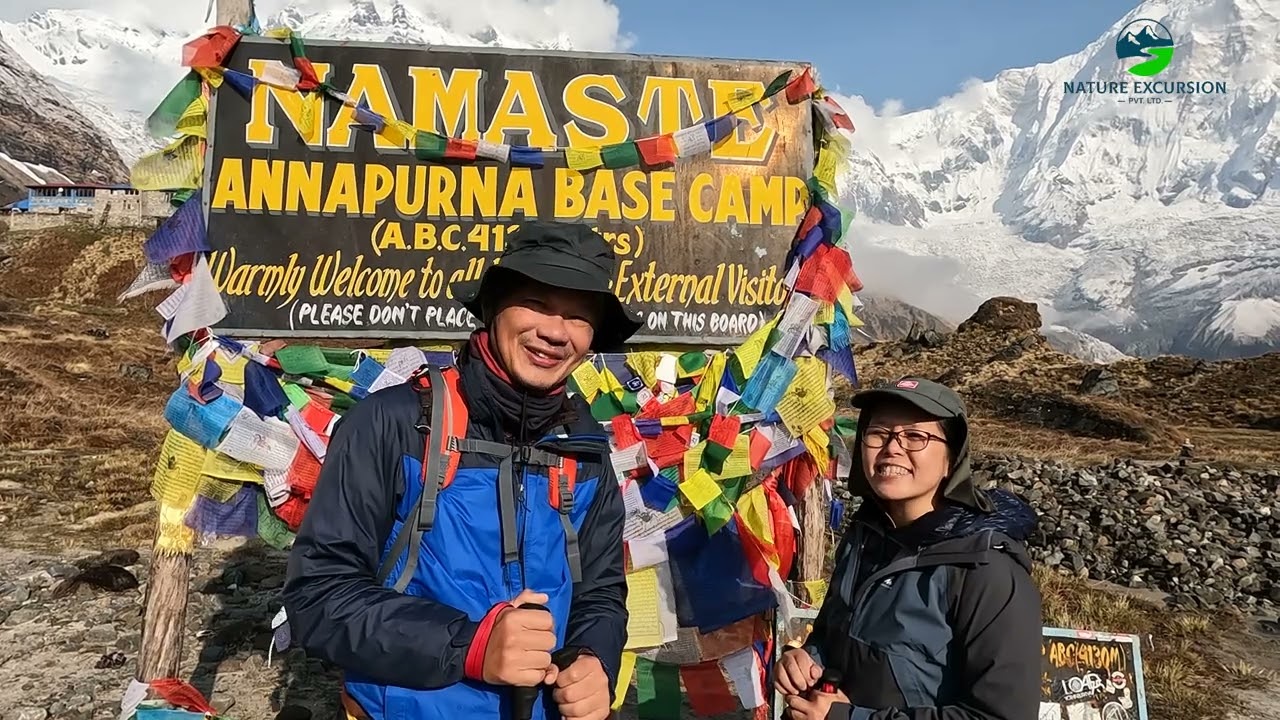
At MBC, we are surrounded by massive snow-capped mountains in every direction. We witness a full 360-degree wide view of Annapurna I, II, III, IV, Gangapurna, Machhapuchhre, Annapurna South, and Hiunchuli. After lunch, we continue with a gentle uphill walk toward ABC. Just before the teahouses, we stop to take photos at the Annapurna Base Camp signboard.
Upon arrival, we settle into our lodge and take time to explore the area. We can see the glacier right next to the teahouses, reminding us that we are truly in the heart of the Himalayas. If the weather remains clear, we enjoy an unforgettable sunset as golden light reflects off the surrounding peaks. Tonight, we rest in the base camp itself, surrounded by towering mountains on all sides.
Included activities:
Climb gradually and steeply toward Hinku Cave.
Cross glacier and landslide sections carefully.
Pass the rockfall area with extra caution.
Reach Machhapuchhre Base Camp for lunch.
Walk gently uphill and photograph the Annapurna Base Camp signboard.
Day9
Meals:Breakfast, Lunch, Dinner
Accommodation:Teahouse
Trek Distance:15 km
Trek Duration:8 hours
Sleep Elevation:2,110 m
Overnight Place:Bamboo
Day's Difficulty:Challenging
The ninth day of our ABC trek begins at ABC with a mesmerizing sunrise over Annapurna I. The golden light illuminates the surrounding snowy mountains, and we can take in the view over a wonderful breakfast.
After breakfast, we begin our descent toward Bamboo. We follow the same trail back, but the landscape looks different as we walk downhill through the vast glacial basin. We gently descend toward Machhapuchhre Base Camp.
We continue descending from MBC, through Deurali, and Dovan. The trail passes quietly along the Modi Khola river. We lose almost 1,700 m in elevation, which suggests the descent is long but steep, so we must be careful on our footing.
By afternoon, after passing through forested and rocky sections, we will arrive at Bamboo. We will unwind after a long, rewarding descent, and after a quick dinner, we head to bed early.
Included activities:
Wake up early and watch the sunrise over Annapurna I.
Enjoy breakfast with mountain views.
Descend toward Machhapuchhre Base Camp.
Follow the trail past Deurali and Dovan.
Reach Bamboo, relax, and sleep early.
Day10
Meals:Breakfast, Lunch, Dinner
Accommodation:Teahouse
Trek Distance:11 km
Trek Duration:5-6 hours
Sleep Elevation:1,780 m
Overnight Place:Jhinu Danda
Day's Difficulty:Moderate
After breakfast, we leave Bamboo and begin our walk toward Jhinu Danda. The day begins with a steep ascent, then flattens into sections through dense bamboo and rhododendron forests. We climb up to Upper Sinuwa and retrace the same trail toward Chhomrong.
From Upper Sinuwa, we descend steeply to the riverside, walking through beautiful forest. Then we cross the river and begin another steep uphill climb toward Chhomrong, passing Khuldighar, where there is an experimental sheep farm.
From Chhomrong, we descend very steeply toward Jhinu Danda, so we walk carefully to avoid slipping. Jhinu is an ideal place to stop and relax after several days of trekking. After check-in, we visit the natural hot springs located near the river.
The local community charges NPR 250 for entry. We soak in the warm water and let our tired muscles relax. After enjoying the hot springs, we return to our lodge and stay overnight.
Included activities:
Ascend through dense bamboo and rhododendron forests to Upper Sinuwa.
Climb steeply past Khuldighar sheep farm toward Chhomrong.
Walk carefully downhill from Chhomrong.
Relax in Jhinu hot springs.
Day11
Meals:Breakfast, Lunch
Accommodation:Hotel
Drive Distance:60 km
Drive Duration:2-2.5 hours
Sleep Elevation:830 m
Overnight Place:Pokhara
Day's Difficulty:Gentle
After breakfast at Jhinu Danda, we begin our scenic drive back to Pokhara. The road winds through quiet villages and lush green landscapes, offering one last view of rural Nepal’s beauty. We drive past Birethanti and follow the Modi Khola valley before joining the main highway toward the Pokhara Valley. The journey changes from mountainous terrain to warm lowland scenery, which feels refreshing after days in the high Himalayas.
Upon reaching Pokhara, we have plenty of free time to explore this lively lakeside city. Pokhara is known for its peaceful setting beside Phewa Lake and stunning distant mountain views, including Annapurna and Machhapuchhre on clear days.
Popular spots include the Tal Barahi Temple on Phewa Lake, accessible by boat; the serene Shanti Stupa (Peace Pagoda) with panoramic views; and the Gupteshwor Mahadev Cave near Davis Fall. You can stroll along the lakeside, enjoy a café meal, or visit local markets and temples before resting in town.
Included activities:
Enjoy views along the Modi Khola valley during the journey.
Explore the lakeside area of Pokhara.
Visit Tal Barahi Temple, Peace Pagoda, and Gupteshwor Cave.
Relax at a café or walk along Phewa Lake.
Day12
Meals:Breakfast, Dinner
Accommodation:Hotel
Sleep Elevation:1,400 m
Overnight Place:Kathmandu
Day's Difficulty:Gentle
Today, we will depart Pokhara at 7:30 AM aboard a comfortable tourist bus. The journey back to Kathmandu will take us along a well-maintained highway, offering stunning views of the landscape. As we travel, you'll have the chance to admire the beauty of the hills and valleys surrounding us. Once we arrive in Kathmandu, we’ll take you to your hotel, allowing you some time to rest, unpack, and freshen up after the journey.
In the afternoon, you can explore nearby attractions and soak up the city's vibrant atmosphere. A stroll through Thamel offers window-shopping and a chance to discover local crafts, souvenirs, and delightful cafes. In the evening, we invite you to join us for a farewell dinner, where you can share memories of your trip and enjoy delicious local cuisine with your fellow travelers.
Included activities:
Travel by tourist bus from Pokhara to Kathmandu.
Explore Thamel and browse local shops and cafés.
Relax at your hotel after arrival.
Join a farewell dinner in the evening
Day13
Meals:Breakfast
As your 13 Days Annapurna Base Camp Trek comes to an end, we at Nature Excursion bid you a heartfelt farewell. It is a bittersweet moment as we say goodbye to you. We hope you felt Nepal to be your second home for nearly two weeks. We hope the memories of the Himalayas, warm smiles, and shared journeys stay with you for a lifetime. Our airport team will drop you off at the international airport terminal gate according to your departure time. Make sure to pack your stuff carefully and don't leave anything behind. We hope you enjoyed your trek with us and that you will return soon.
Ready to stand in the heart of the Himalayas? Download our detailed 13 Days Annapurna Base Camp Trek itinerary to see daily routes, elevations, highlights, walking hours, and what to expect each day. Plan smarter, prepare better, and know exactly how your adventure unfolds from Kathmandu to Annapurna Base Camp.
Curious: The trek starts with a drive from Kathmandu to Pokhara. During your scenic journey and even after arriving at Pokhara, you will feel curious about the trek.
Peaceful: The initial stretch of the trek from Pokhara to Ghorepani is quite calming. The view from the top of Poon Hill is stunning and peaceful.
Energized: The steep climbs from Tikhedhunga to Ulleri and from Thapla Danda to Tadapani are challenging but energizing, making you excited for what comes next.
Immersed: Trekking through rhododendron forests and bamboo groves, through Bamboo village, you become fully immersed in the stunning Himalayan scenery and local culture.
Tested: The trek from Chhomrong to Himalaya Hotel and Annapurna Base Camp is tough, with steep stairs, glacial sections, and altitude challenges that test your endurance and focus.
Relief:Descending from Annapurna Base Camp to Jhinu Danda, relaxing in the hot springs, and driving back to Pokhara provide great relief, as your hard work is done and you can finally rest.
Reflective: The final days in Pokhara and Kathmandu, along with farewell moments, invite reflection. You reflect on challenges and cultural experiences and feel fulfilled by the journey.
Emotions You May Feel
Excited
Determined
Awe
Gratitude
How Your Mind Changes
Start: You feel curious and excited.
Middle: You face challenges and become determined.
Near Base Camp: You focus fully and feel strong progress.
At the highest point: You are in awe and reflective.
Coming back: You feel peaceful and thankful.
Confidence Level: Gradual confidence builder with steady milestones.
Solitude Level: 35% (Deurali, Machhapuchhre Base Camp, Annapurna Base Camp)
Route Map
Annapurna Base Camp Trek Cost 2026
The 13-day Annapurna Base Camp Trek is priced by group size. The cost of one traveller is US$1,116; a group of 11–16 is US$816 per person. The package includes the ACAP permit, Kathmandu–Pokhara tourist bus, licensed guide, porter (10 kg), tea-house meals on the trail, and two hotel nights each in Kathmandu and Pokhara.
You need an extra budget for the Nepal visa, international flights, lunch and dinner in the cities, hot showers, charging, snacks, and tips.
Airport pickup and drop-offservices during the arrival and departure dates on a private vehicle (car, Jeep, Hiace, or Tourist Deluxe Bus) as per the group size
Transportation from Kathmandu to Pokhara and to Kathmandu on a deluxe tourist bus
Pokhara-Nayapul (private vehicle) and Jhinu / Ghandruk Phedi - Pokhara (sharing jeep or local bus)
2 nights in a hotel in Kathmandu, including breakfast
2 nights at a hotel in Pokhara with breakfast
9 night's mountain-based standard accommodation during the trek
All healthy meals during the trek: lunch, breakfast, and Dinner main course from the menu (9 breakfasts, 9 lunches, and 8 dinners)
Government-licensed, well-English-speaking Nature Excursion's native guide. An assistant guide group of 6 or more trekkers
Strong porters to help with your luggage (luggage weight limit is 10 kg per trekker)
Guide and porter meals, wages, transportation, insurance, and other necessary expenses are covered by the company.
For safe drinking water, Nature Excursion provides water purification tablets.
Snacks (cookies) and seasonal fresh fruit every day
Annapurna Conservation Area Permit(ACAP) fees
All government, local taxes, and official expenses
The guide carries a first-aid kit containing Diamox (a preventive measure for altitude sickness).
An oximeter to check your pulse and oxygen level in your body.
We can provide a sleeping bag and a down jacket upon request. Has to return after the trek.
Appreciation certificate after the completion of the trek.
Company T-shirt and Cap
Either a farewell or a welcome dinner at the Nepali cultural restaurant.
Assisting in any emergency evacuation or rescue due to uncertainty or any serious health condition (funded by your travel insurance).
Excludes
International flight costs
Nepal entry visa fees at Tribhuvan International Airport
Excess luggage charges (weight limit is 10 kg per trekker)
Extra-night Hotel in Kathmandu and Pokhara (due to early arrival, late departure or, in case of an early return from the trek, then the scheduled itinerary)
Lunch and dinner in Kathmandu and Pokhara, except farewell dinner in Kathmandu
Personal expenses (phone calls, laundry, bar bills, hot and cold drinks, Wi-Fi, battery recharge, extra porters, mineral water or boiled water, hot showers, etc.)
Tips for guides and porters (recommended)
Annapurna Base Camp Trek pictures and video
Departure Dates
These Annapurna Base Camp Trek departures are for travellers joining a group. Choose a date and book your trip.
Had a good experience with nature excursions and team , Emmanuel and his team helped and guided us in abc trek
I
Ishwarya KIndiaMay 01, 2026
Good roundtrip including trekking and Chitwan
A year ago, we contacted Natured Excursion about the short Annapurna trek. The answer was good and then we mentioned our other plans like visiting Chitwan, Patan, Pokhara. They mentioned that they also could arrange this for us. So it ended in a roundtrip made for us. We had a good time in Nepal. Karan was our guide for the trek, and Probin the porter. After the trek they arranged as promised the bus to Chitwan and then from Chitwan back to Kathmandu. All went smooth. We really enjoyed our trip.
Brenda dUnited StatesApr 25, 2026
Useful Information
ABC Trail Weather Variations
The 13-day Annapurna Base Camp Trek passes through dramatic climatic zones in just a few days. It begins in the warm subtropical valleys near Pokhara, where temperatures are mild, and vegetation is dense. As we ascend through Ghorepani, Tadapani, and Chhomrong, the climate becomes cooler and forested with rhododendron, oak, and pine.
Higher up, beyond Deurali and Bamboo, we enter alpine zones with thin air and colder winds. Finally, we reach the glacial amphitheater of Annapurna Base Camp at 4,130 m, where nights are freezing, and daytime temperatures are chilly, especially when strong winds blow across the mountains.
Low Altitudes (Pokhara-Ghorepani)
Winter (Dec–Feb): 50 °F to 32 °F (10 °C to 0 °C)
Spring (Mar–May): 77 °F to 50 °F (25 °C to 10 °C)
Summer (Jun-Aug): 86 °F to 68 °F (30 °C to 20 °C)
Autumn (Sept–Nov): 73 °F to 45 °F (23 °C to 7 °C)
Mid Altitudes (Tadapani-Chhomrong)
Winter (Dec–Feb): 32 °F to 14 °F (0 °C to -10 °C)
Spring (Mar–May): 59 °F to 32 °F (15 °C to 0 °C)
Summer (Jun-Aug): 68 °F to 50 °F (20 °C to 10 °C)
Autumn (Sept–Nov): 55 °F to 28 °F (13 °C to -2 °C)
High Altitudes (Himalaya Hotel-Annapurna Base Camp)
Winter (Dec–Feb): 14 °F to -4 °F (-10 °C to -20 °C)
Spring (Mar–May): 32 °F to 23 °F (0 °C to -5 °C)
Summer (Jun-Aug): 59 °F to 41 °F (15 °C to 5 °C)
Autumn (Sept–Nov): 32 °F to 14 °F (0 °C to -10 °C)
Best Season for Annapurna Base Camp Trek
The best times for the 13-Day ABC Trek are spring (March to May) and autumn (September to November). These months offer the most stable weather, clear skies, and excellent mountain visibility.
Spring (March to May):
Spring is perfect for trekkers who want to enjoy the natural beauty along the entire 13-day route. Rhododendron forests bloom between 2,000 and 3,000 m vibrantly, while lower valleys are lush and green. Clear skies and mild temperatures make long hiking days comfortable, and early mornings often reveal spectacular views of the Annapurna range and Machhapuchhre. Snow may still cover some high passes, adding a scenic difference without making trails overly difficult.
Autumn (September to November):
Autumn is often viewed as the most favorable season for a full ABC trek. After the monsoon, air quality improves, creating crisp, sharp views of Annapurna I, Machhapuchhre, Dhaulagiri, and surrounding peaks. Lower trails are dry and firm, while higher elevations remain cool but manageable. Days are comfortable for walking, and nights at high camps can drop below freezing. With minimal rainfall, clear skies, and stable temperatures, autumn is ideal for first-time trekkers and experienced trekkers alike.
Micro-Climate Zones on the 13-Day ABC Trek
The ABC trek passes through several distinct landscapes. The forested section on lower altitude to high alpine zones near the base camp itself. Because of this variation, the weather can change quickly, and areas that are close together can feel very different. These changes in local weather phenomena are called microclimates.
You will first notice this phenomenon above Deurali. Along the deurali to the ABC stretch, the valleys become narrow and pass near glaciers. Cold air from the glaciers flows down the slopes as strong winds. The narrow valleys act like funnels, increasing wind speed and strength. This wind can make the area feel much colder than the actual elevation.
However, Bamboo village feels much warmer than you expect. This is due to the dense bamboo, which blocks the wind and traps sunlight. The air stays warmer and calmer under the trees. The warm atmosphere here makes trekkers feel comfortable, which is why teahouses are almost always fully booked.
Similarly, Annapurna Base Camp feels much colder than Machhapuchhre Base Camp, even at similar elevations. ABC is above the treeline with no trees or vegetation to block the wind. Snowfields and glaciers nearby make the air colder. The valley shape at ABC allows cold air to settle, while MBC is more sheltered. These factors make ABC feel much chillier than MBC. These are some of the microclimate zones you will encounter during the 13-day ABC trek.
Annapurna Base Camp Trek Difficulty and Altitude Sickness
The 13-Day Annapurna Base Camp Trek is moderate to challenging. The trek features long walking days, steep ascents, stone staircases, river crossings, and occasional rocky sections. Daily walking ranges from 5 to 7 hours, and some sections, particularly above 3,000 m, are physically demanding. While trails are well marked and teahouses provide support, you must prepare for changing weather and varied terrain, and should carry a daypack containing essentials.
Because the trek reaches high elevations, altitude sickness is a risk, especially above 2,500 m. Symptoms may include headache, nausea, dizziness, or fatigue. Gradual acclimatization, hydration, and careful monitoring are essential. Below is a detailed daily elevation chart with gain and loss to highlight where altitude risks are higher:
Day
Route
Sleep Altitude (m)
Elevation Gain (m)
Elevation Loss (m)
Altitude Risk Notes
1
Kathmandu Arrival
1,400
0
0
No risk; low altitude
2
Kathmandu → Pokhara (Drive)
830
0
570
Gentle drive; no risk
3
Pokhara → Hile → Ulleri
2,050
1,220
0
uphill mostly, low risk
4
Ulleri → Ghorepani
2,874
824
0
Moderate; gradual climb; mild risk
5
Poon Hill → Tadapani
2,590
100
384
Moderate; short, high ascent to Poon Hill; mild risk
6
Tadapani → Chhomrong
2,340
200
450
Moderate; mostly downhill; low risk
7
Chhomrong → Himalaya Hotel
2,900
560
300
acclimatization needed, high risk
8
Himalaya → MBC→ Annapurna Base Camp (ABC)
4,130
1,230
0
Challenging; high altitude; high risk
9
ABC → Bamboo
2,110
0
2,020
Challenging descent; low risk
10
Bamboo → Jhinu Danda
1,780
300
630
Moderate; mostly downhill; low risk
11
Jhinu → Pokhara (Drive)
830
0
950
Gentle drive; no risk
12
Pokhara → Kathmandu (Drive)
1,400
570
0
Gentle drive; no risk
13
Departure
-
0
0
No risk; trek ends
Annapurna Base Camp Trek Vs Everest Base Camp Trek
Lower than Everest at 4,130 m, no Lukla flight, tea-house lodges. This is the 13-day Kathmandu-to-Kathmandu itinerary.
Meals and Accommodation Option in Annapurna Base Camp Trek
In Pokhara, we will book you into a three-star hotel with modern amenities and an attached washroom. Accommodation on the Annapurna Base Camp trek is basic but clean and comfortable. We book you the best available rooms, single or double occupancy, as needed.
The room is small and includes a private or shared washroom. The interior is simple in the room, and the bedding will be neat. You will receive a blanket, but it may not be sufficient to keep you warm, so we recommend carrying a sleeping bag as well.
Breakfast, lunch, and dinner are included during the Annapurna Base Camp trek. All meals will be served according to the lodge's menu. We have breakfast and dinner at the same lodge where we stay, and lunch en route.
The menu offers a variety of options, so you will not have difficulty making a choice. Boiled drinking water is available at all lodges. You can sterilize it with a water purification tablet for double safety before drinking.
For breakfast, options include oats, muesli, toast with jam, eggs, sausage, fruit, porridge, thukpa, roti with vegetables, and paratha. For lunch and dinner, you can order noodles, pasta, momo, dal bhat, burgers, pizza, porridge, thenduk, and more. You can buy snacks and bars along the trail in the tea shops.
7 days Annapurna Base Camp Trek Vs 13 days ABC Trek
The 7-day ABC trek is short and fast-paced. This itinerary is designed primarily for trekkers with limited time and covers only the trek's main highlights. You will only pass through key villages like Jhinu Danda, Deurali, and immediately reach Machhapuchhre and Annapurna Base Camp itself. In this short trek, you will walk for longer hours each day to reach a high altitude quickly. Because of the rapid ascent, the trek is more physically demanding and leaves little room for rest or side explorations.
The 13-day Annapurna Base Camp Trek takes a slower, more relaxed approach. It allows trekkers to gradually gain altitude, reducing the risk of altitude sickness and making the journey safer. The longer itinerary provides extra time to rest, enjoy scenic viewpoints, and explore local villages and culture along the route. Daily walking hours are moderate, making it suitable for beginners, moderate trekkers, and those who want a more immersive experience.
Feature
7-Day ABC Trek
13-Day ABC Trek
Trek Duration
7 days
13 days
Pace
Fast, challenging
Moderate, comfortable
Acclimatization
Limited
Excellent, includes gradual ascent & rest days
Altitude Sickness Risk
Higher
Lower
Scenery & Villages
Fewer stops
More stops, better exploration
Physical Demand
Very high
High but manageable
Suitable For
Experienced trekkers with limited time
Beginners, moderate trekkers, or those prioritizing safety
Flexibility
Low
High
Overall Safety
Moderate
High
What Makes the 13-Day Annapurna Base Camp Trek Safer Than Shorter Itineraries?
The 13-day Annapurna Base Camp trek is safer than shorter itineraries because it builds in enough time for your body to adapt safely to high altitude. Gradual ascent, rest days, moderate daily effort, recovery periods, and extra flexibility all work together to reduce the risk of serious problems such as acute mountain sickness, exhaustion, or injury. Here are a few reasons, explained in more detail.
Gradual acclimatization
A 13-day ABC trek, compared to a short trek, allows you to take slow, steady ascents, giving your body more time to acclimate to higher altitudes. While rapid, relentless climbs on shorter itineraries increase the risk of altitude sickness, the 13-day trek is perfect for exploring and ensures safe altitude acclimation.
Lower Daily Trekking Distances
The major advantage of choosing a longer itinerary is that it breaks the trek into shorter daily hikes. This reduces fatigue and tiredness, which are major contributors to accidents and falls, and reduces injuries.
Better Recovery Time
Extra days in the ABC 13-day trek mean built-in rest days or lighter trekking days. You will arrive at the teahouse early or trek more slowly, which supports recovery. Adequate rest reduces the risk of fatigue-related injuries and helps hikers stay alert on challenging sections of the trail, such as steep descents or river crossings.
Delays Flexibility
Mountain weather can change quickly. A 13-day plan includes extra days to wait out storms, landslides, or flight delays. This helps avoid dangerous trekking conditions. Shorter plans may leave hikers rushing, increasing the risk of hypothermia, accidents, or missed evacuation opportunities.
Still unsure which trek to choose?
ABC or Everest, 7 days or 13 days, send your dates and fitness on WhatsApp. A Nature Excursion travel expert will reply with a clear pick.
Q1. Do you need a guide for the Annapurna Base Camp trek?
Solo trekking to Annapurna Base Camp is not permitted; you must obtain a trekking permit through a trekking company or a guide. Trekking with a guide is not only safe but also enriches the experience, allowing you to understand the local culture, customs, and flora and fauna.
Q2. How long does it take to hike to Annapurna Base Camp?
Walking days on the trail are usually 7–9 if you start near Pokhara. This package is 13 days Kathmandu to Kathmandu: two city days, Poon Hill, a night at Annapurna Base Camp (4,130 m), Jhinu hot springs, and a buffer for the bus. Use the 7-day Annapurna Base Camp Short Trek if you are already in Pokhara and accept a faster climb.
Q3. How difficult is the Annapurna Base Camp trek?
The Annapurna Base Camp trek is considered moderate to difficult. The trekking route has many ascents and descents, so you have to be fit to join this trek. The trail is not offbeat but involves steep and uneven sections. 5 to 7 hours of trekking is needed every day.
Q4. Is Annapurna Base Camp harder than Everest Base Camp?
No, the Annapurna Base Camp trek is not harder than the Everest Base Camp trek. The elevation gain is also lower on the Annapurna Base Camp trek, and the trail is much better maintained than on the EBC trek.
Q5. What fitness level do you need for Annapurna Base Camp?
You have to be fit enough to walk and have good stamina for the Annapurna Base Camp trek. Every day, the trail covers approximately 12-15 km on foot. Likewise, services along the Annapurna Base Camp Trail are limited, so you should be mentally prepared for minimal facilities.
Q6. Which is better, Annapurna Base Camp or the Circuit Trek?
They are two distinct treks in the Annapurna region. The Annapurna Base Camp Trek walks into the sanctuary and ends at 4,130 m. The Annapurna Circuit Trek is a longer crossing over Thorong La and is harder. Choose ABC for a moderate tea-house trek with Poon Hill and a night at base camp; choose the annapurna circuit if you want a full Annapurna loop.
Q7. Can kids do Annapurna Base Camp Trek?
Yes, kids can do Annapurna base camp trek with us. If you are planning to trek with minors or toddlers, let us know in advance. We will make the necessary arrangement for you to have a smooth trek with your kids.
Q8. Where can I get the best view of the Annapurna range on the ABC Trek?
Annapurna Base Camp (4,130m) offers the best views of the Annapurna range, surrounded by peaks like Annapurna I, Annapurna III, and Machhapuchhre in a stunning 360-degree panorama. Unlike Poon Hill's distant sunrise views, ABC provides an unforgettable up-close experience of these majestic Himalayan mountains.
Q9. What permits are required for the Annapurna Base Camp Trek?
For the Annapurna Base Camp Trek, trekkers typically require the Annapurna Conservation Area Permit (ACAP). This permit is required for entry into the Annapurna Conservation Area Project, which helps protect the local environment. It’s advisable to secure this permit before starting the trek, typically through a local agency or at designated offices in Nepal.
Q10. Is 13 days itinerary enough to minimize altitude sickness during the ABC trek?
Yes, a 13-day itinerary for the Annapurna Base Camp (ABC) trek is generally sufficient to help minimize the risk of altitude sickness. This helps you adjust gradually, provided you follow the ascent guidelines and monitor how your body feels during the trek.
Q11. How much does the Annapurna Base Camp Trek cost in 2026?
This 13-day guided package is US$1,116 for one person and US$816 per person in a group of 11–16, including ACAP, guide, porter, trail meals, and Kathmandu–Pokhara buses. Visa, international flights, city meals, and tips are the extra cost.
Q12. Is the Annapurna Sanctuary Trek the same as the Annapurna Base Camp Trek?
Yes. Annapurna Sanctuary is the glacial basin where base camp sits. Operators use both names for the same walk to 4,130 m. This 13-day itinerary is our full ABC / sanctuary trek.
Q13. What is the best time for the Annapurna Base Camp Trek?
The best time to travel Annapurna Base Camp Trek is autumn (October to November) and spring (March to April) as this season has stable weather, clear views, and dry trails. October and November is highly recommended as you can see the clear view of Annapurna and Machhapuchhre. However March and April is perfect if you want to experience the colorful rhododendron bloom on way to Ghorepani and Tadapani. Skip June–August unless you accept cloud, leeches, and hidden peaks. December–February is possible because ABC has no high pass, but sanctuary lodges thin out and nights at 4,130 m run well below freezing; not recommended for the first time traveller.
Price per personUS$1116US$1250(All-inclusive price)


-1771901100-120d65b3.webp)


-1771901475-1a1cb54e.webp)




.webp)


