How Can You Safely Trek on the Khopra Danda Route?
Although the Khopra Danda Trek doesn’t take you to extreme altitude, ensuring your safety should always be a top priority. Similarly, the trek route requires proper preparation and awareness, especially as you walk through two major high-altitude points: Khopra Danda (3,660 m) and Khayer Lake (4,620 m). Even though the trek takes you through moderate altitudes, the two destinations add to the overall difficulty.
On the day of the Khopra Danda and Khayer Lake trek, trekkers should be more cautious about the risk of altitude sickness. Thus, understanding how your body reacts and taking preventive measures is essential during this section. To safely trek at high altitudes on the Khopra Danda route, follow a few key precautions. Stay well-hydrated by drinking at least 2 liters of water daily, avoiding smoking and alcohol, and maintaining a slow and steady pace rather than rushing.
Furthermore, having an experienced guide can make the journey to Khopra Danda safer as they can help with the trek route, monitor your condition, and handle emergencies if needed. Likewise, weather awareness and route knowledge are major factors in trekking safety. Always check weather forecasts before heading out on each day’s trek and be prepared for sudden changes.
Accommodation & Meals during the Khopra Danda Trek
Accommodation
Accommodation on the Khopra Danda trek offers a unique, authentic local experience, as it is a community-based trek. Local families run the teahouses here with basic yet comfortable lodging. Rooms are generally twin-bedded with wooden furniture, thin mattresses, and wool blankets. Likewise, toilets are mostly shared and squat-style at higher elevations. Additionally, Wi-Fi, charging, and a hot shower incur extra costs.
While the trekking section includes simple accommodations, your stay in major cities like Kathmandu and Pokhara is more comfortable in three-star hotels. There, you get modern amenities and a relaxing environment before and after the trek.
Meals
Meals during the Khopra Danda trek are simple, nutritious, and designed to support trekkers at higher altitudes. Although menus may be simpler, the meals are filling and suitable for trekking conditions, ensuring you stay energized throughout your journey on the Khopra Danda route.
Breakfast Options:
- Porridge (oat or millet-based)
- Tibetan bread with jam, honey, or peanut butter
- Chapati with eggs
- Pancakes
- Muesli with milk
- Tsampa porridge
Lunch and Dinner Options:
- Dal Bhat
- Noodle soups (Thukpa)
- Fried rice or fried noodles
- Momo (Dumplings)
- Garlic soup
Khopra Danda Trek Weather Variation
While planning the Khopra Danda Trek, understanding the weather patterns is crucial, as conditions vary significantly with altitude, season, and time of day. As you move from subtropical villages to alpine ridges like Khopra Danda (3,660 m) and further to Khayer Lake (4,620 m), you will experience multiple microclimates throughout the journey. Another important factor to consider is that the Khopra route is less crowded and more remote than popular trails. Thus, weather conditions can feel more severe on the route due to limited infrastructure and fewer sheltered stops.
Low Altitudes (Nayapul to Ghandruk):
- Winter (Dec-Feb): 41°F to 59°F
- Spring (Mar-May): 50°F to 68°F
- Autumn (Sept-Nov): 53°F to 71°F
Mid Altitudes (Tadapani to Dobato):
- Winter (Dec-Feb): 23°F to 50°F
- Spring (Mar-May): 41°F to 59°F
- Autumn (Sept-Nov): 41°F to 59°F
High Altitudes (Khopra Danda to Khayer Lake):
- Winter (Dec-Feb): 14°F to 41°F
- Spring (Mar-May): 32°F to 50°F
- Autumn (Sept-Nov): 28°F to 50°F
Considering the seasonal temperatures at each altitude, spring (March to May) and autumn (September to November) are ideal seasons for the Khopra Danda Trek. The time offers stable weather, clear skies, and the best visibility of the Annapurna and Dhaulagiri ranges.
Spring adds an extra beauty with blooming rhododendron forests, while autumn provides crisp air and clear mountain views after the monsoon clears the atmosphere. Winter (December to February) is suitable for experienced trekkers who can handle cold temperatures and possible snow. On the other hand, the monsoon season (June to August) is less favorable due to heavy rainfall, leeches, and limited visibility.
Why Khopra Danda is the Best Alternative to other Annapurna Treks
The Annapurna region is one of Nepal’s most popular trekking destinations, with iconic trekking routes. But surprisingly, the Khopra Danda trek is gaining popularity as one of the best alternatives to the traditional Annapurna Base Camp and Poon Hill Trek. Here’s why Khopra Danda is the best alternative to other Annapurna Treks:
Less Obstructed Mountain Views:
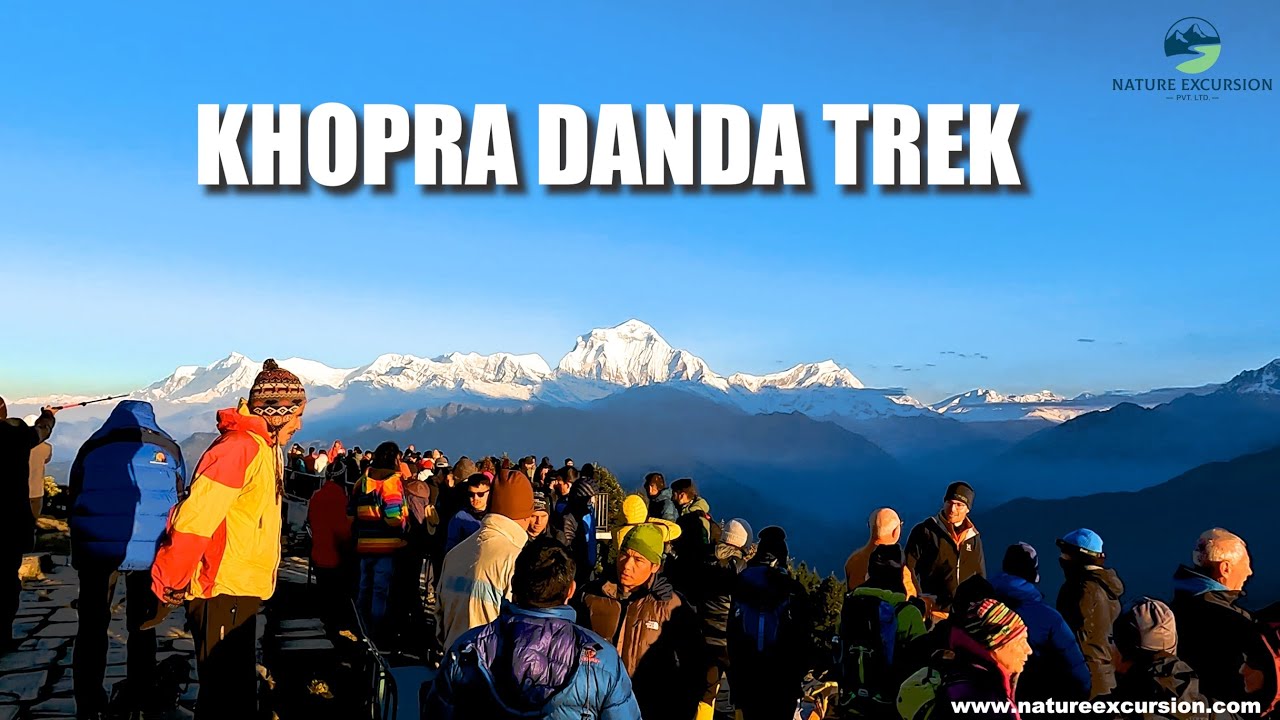
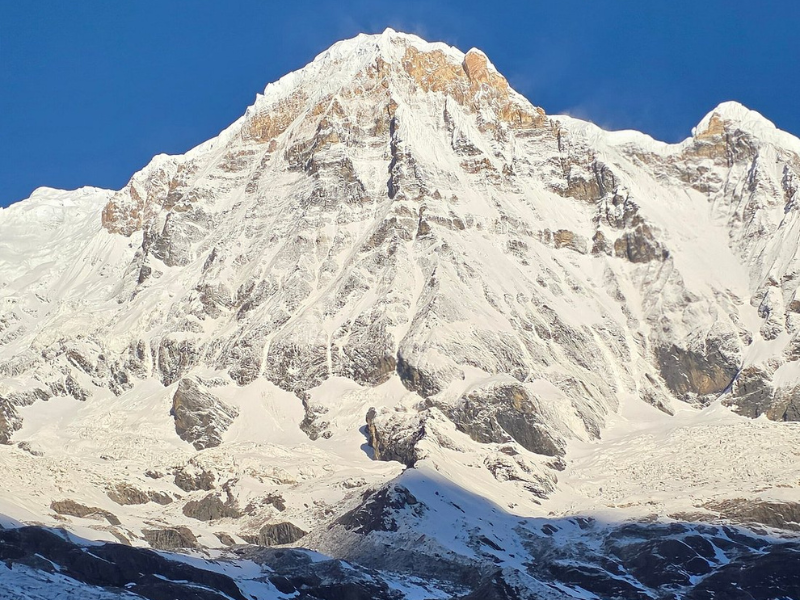
Khopra Danda sits at 3,660 m on an open ridge, with the most stunning view in the entire Annapurna region and without the crowds. Uninterrupted 180° views of Dhaulagiri (8,167 m), Annapurna South (7,219 m), Hiunchuli (6,441 m), Nilgiri (7,061 m), and Tukuche Peak without blocking your camera shot is the best aspect of the trek. Besides, sunrises and sunsets from Khopra Ridge are even more stunning than from other viewpoints in the region, due to fewer crowds.
Off the Beaten Path
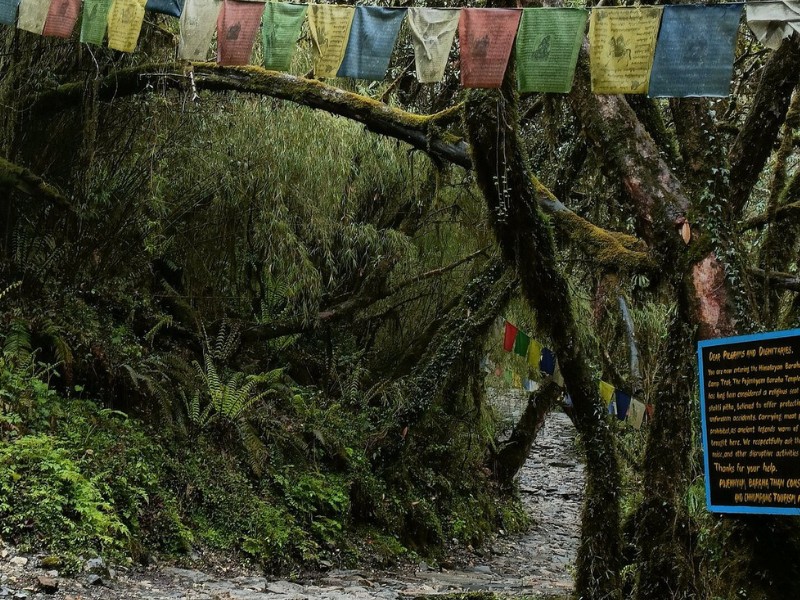
One of the biggest reasons why the Khopra Danda trek is the best alternative to other treks in the Annapurna region is its off-the-beaten-path nature. Unlike the trails of Annapurna Base Camp and Ghorepani, this route sees fewer trekkers, allowing you to enjoy peaceful walks through forests, ridges, and remote villages without heavy crowding.
| Factors | Annapurna Circuit | Annapurna Base Camp | Poon Hill | Khopra Danda |
| Annual trekkers | 70,000+ | 50,000+ | 100,000+ | 5,000-8,000+ |
| Trail crowding | High | High | Very High | Very Low |
| Teahouse waiting times | Long | Moderate | Long | Short |
| Permit queues | Long | Moderate | Long | Minimal |
The Perfect Difficulty Sweet Spot
The Khopra Danda Trek is an ideal mid-level difficulty adventure, longer and more stunning than Poon Hill, but less physically demanding and time-consuming than Annapurna Base Camp or the full Circuit. Thus, the trek is ideal for first-time high-altitude trekkers wanting a real challenge.
More Budget-Friendly
The Khopra Danda Trek is less commercialized, so teahouse prices are lower than on the ABC or Circuit routes. So, the trek provides more experience with less money.
| Item | Annapurna Base Camp / Circuit Price | Khopra Danda Price |
| Plate of Dal Bhat | NPR 700-1,000 | NPR 400-600 |
| Room Per Night | NPR 500-1,000 | NPR 300-500 |
| Cup of Tea | NPR 150-250 | NPR 80-150 |
| Hot Shower | NPR 400-600 | NPR 200-300 |
Khopra Danda Trek Vs other routes in the Annapurna region
Each route in the Annapurna region offers a unique experience, so choosing one trek can be challenging. Popular options like the Annapurna Base Camp (ABC), Annapurna Circuit, Poon Hill, along with Mardi Himal are well-known and frequently visited. Whereas the Khopra Danda trek is a less commercialized alternative to those treks. Besides, the five routes are worth comparing, which is as follows:
| Factor | Khopra Danda Trek | Annapurna Base Camp | Annapurna Circuit | Poon Hill Trek | Mardi Himal Trek |
| Duration | 8-12 days | 10-12 days | 12-18 days | 3-5 days | 5-7 days |
| Crowd Level | Low (peaceful and less crowded) | High (very popular) | Moderate to High | High (especially sunrise hike) | Moderate to High |
| Maximum Altitude | 4,500 m (Khayer Lake) | 4,130 m (ABC) | 5,416 m (Thorong La Pass) | 3,210 m (Poon Hill) | 4,500 m (Mardi Base Camp) |
| Difficulty Level | Moderate | Moderate | Challenging | Easy to Moderate | Moderate |
| Scenery | Panoramic ridge views, remote landscapes | Close-up mountain amphitheater | Highly diverse landscapes | Forests and sunrise viewpoints | Ridge trails with close mountain views |
| Cultural Experience | Strong (community-based lodges) | Moderate | High (diverse cultures) | Moderate | Moderate |
| Unique Highlight | Khopra Ridge & Khayer Lake | Annapurna Sanctuary | Thorong La Pass | Sunrise from Poon Hill | Close-up views of Machhapuchhre |
| Physical Preparation Needed | Moderate | Moderate | Moderate to High | Minimal | Moderate |
| Best For | Offbeat, peaceful trekking experience | Classic Himalayan trek | Long adventure & variety | Short scenic trek | Short adventure with mountain views |
Viewpoints Between Chistibung and Khopra Most Trekkers Miss
The trail from Chistibung to Khopra Danda is one of the most scenic and underrated sections of the entire trek. Most trekkers just walk this section, trying to reach the lodge at the top as quickly as possible. As a result, they miss some of the most beautiful spots on the trek.
Viewpoint 1: The First Forest Gap
After half an hour of trek from Chistibung, the trees suddenly open up and give you an open view. From there, you can see the deep valley far below and the first golden light touching the mountains above. Most trekkers miss this because they leave in the dark or just after sunrise, when they are not yet looking for views. But, you stop here, turn around, and look south. The valley view from this spot is something you will not see from anywhere else on the trek.
Viewpoint 2: The Shoulder With the Dhaulagiri View
About halfway through the forest climb, the trail crosses a small ridge to the west. Local guides sometimes call it “the shoulder.” From here, you can see Mount Dhaulagiri, one of the tallest mountains in the world, from a completely different angle than most photos show. But the view lasts only about two minutes as you walk through, so if you are not paying attention, you miss it entirely.
Viewpoint 3: The Night Sky Flat
Another viewpoint that trekkers on the Khopra Danda journey miss is a sky view, which is the most unforgettable of all. About a 10 to 15-minute walk east of the Khopra Danda settlement, there is a flat open area with absolutely nothing around it. On a cloudless night with no moon, the Milky Way appears above you. Most trekkers miss this because after a long day of walking uphill, they eat dinner and go straight to bed.

.webp)
.webp)
.webp)
.webp)
.webp)


.jpg)
 India
India Spain
Spain

-(1).webp)

