Everest Base Camp Trek - 14 DaysEverest Base Camp Trek - 14 Days

Everest Base Camp Trek - 14 Days

Join our native guides on an adventurous journey to the base of Mount Everest, the highest mountain in the world. For 14 days, forget about the world and get close to nature. Live a simple lifestyle and relearn to be comfortable with less during the Everest base camp trek with us.

Quick Facts
  • Trip Duration14 Days
  • Destination Nepal
  • Difficulty Level Strenuous
  • Maximum Altitude 5,545 m (Kala Patthar)
  • Activity Trek
  • Starts/Ends Kathmandu / Kathmandu
  • Group Size 16
  • Transportation Domestic flight (Kathmandu-Lukla-Kathmandu)
  • Best Season Spring (March to May) & Autumn (September to November)
  • Accommodation Hotel + Teahouse/ Lodge
  • Avg. hours of walk/day 5 to 7 hours
  • Comfort Basic + Comfort
  • Interest option Nature, Adventure, and Wildlife

EBC Trail Psychology

How You Feel During the Trek

Calm → Curiosity→ Push→ Breakthrough→ Awe→ Reflection

  • Calm: EBC Trek begins with a flight to Lukla from Kathmandu, where you find yourself surrounded by peaceful rivers, pine forests, and mountain views that provide calmness. 
  • Curiosity: When you enter Namche Bazaar, your mind naturally becomes more alert and excited due to being suddenly surrounded by new sights, sounds, and experiences. 
  • Push: As you slowly climb toward Tengboche, Dingboche, and Lobuche, the air gets thinner, and the paths get steeper. As a result, the trek begins to test your lungs and your patience.
  • Breakthrough: When you get close to Gorakshep, you’re already exhausted from many days of trekking. But instead of feeling exhausted, you start to feel stronger and more determined, knowing you are getting closer to your destination. 
  • Awe: As you stand at Everest Base Camp and Kala Patthar, the icefalls, the glaciers, and the surrounding mountain peaks make you feel speechless with their majesty.
  • Reflection: As you walk back to Lukla after finishing the EBC trek, your body is tired, but your mind is full of reflections on the fantastic journey you’ve completed. 

Emotions You May Feel

  • Proud
  • Thankful
  • Surprised
  • Calm

How Your Mind Changes

  • Start: You feel relaxed
  • Middle: You try harder
  • Near Base Camp: You feel strong and focused
  • At the top points: You feel amazed
  • Coming back: You feel peaceful
  • Confidence Level: This trek makes most people feel much more confident by the end.

Connection & Solitude Ratio:

  • Connection Level:60% Namche, Tengboche
  • Solitude level: 40% quiet, reflective high-altitude zones (Dingboche-Gorakshep)

Why You'll Love This Trip

  • You’ll experience an adventurous journey to the base of the highest mountain in the world within 14 days. 
  • Experience the mountain lifestyle and get to know the Sherpa community closely, and experience their hospitality. 
  • Come across a wide range of flora & fauna as you will be trekking within the Sagarmatha National Park.
  • Immerse yourself in the cultural richness of the Everest region and visit ancient monasteries like Tengboche and small stupas along the pathways. 
  • Walk through different scenery from dense rhododendron forests, verdant hills, suspension bridges, rivers, glaciers, and moraines. 
  • Witness stunning, diverse landscapes and tempting mountain views, including Mount Everest, Lhotse, Nuptse, Ama Dablam, Makalu, and Thamserku. 
  • Enjoy side hikes to Hotel Everest View, Nagarjuna Hill, Kala Patthar, and, if time allows, Khumjung village.
  • You’ll walk beside the Khumbu Glacier and see the Khumbu Icefall near Everest Base Camp.​

Everest Base Camp Trek Introduction

Everest Base Camp is not the end, but the beginning of a journey to find the beauty of nature and the strength of the human spirit.”

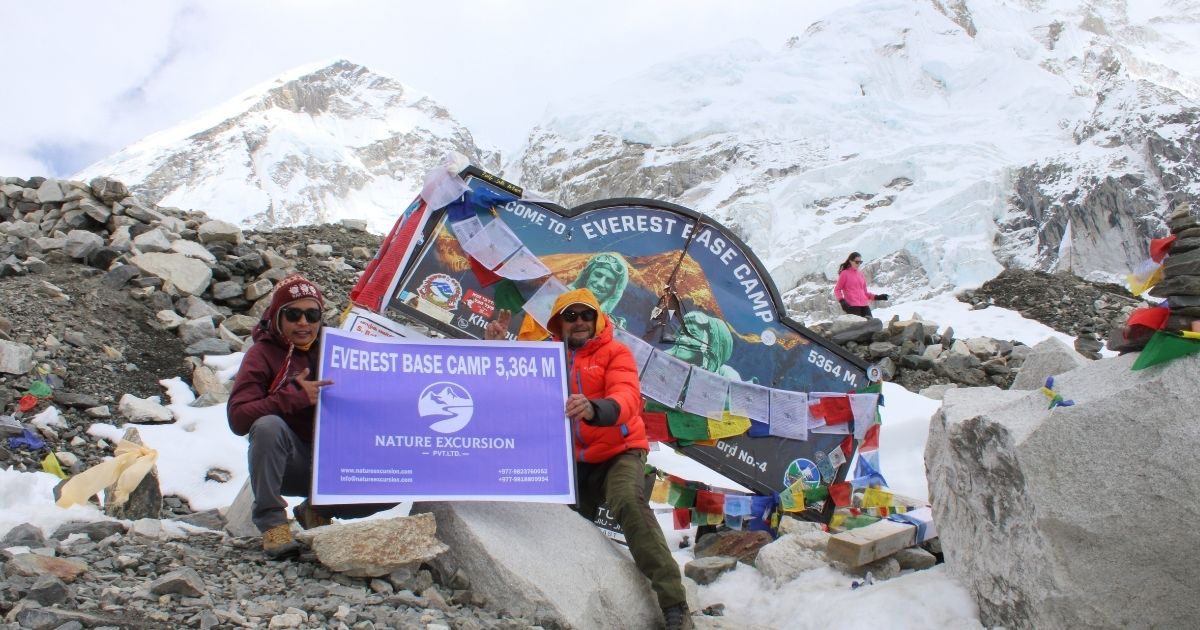
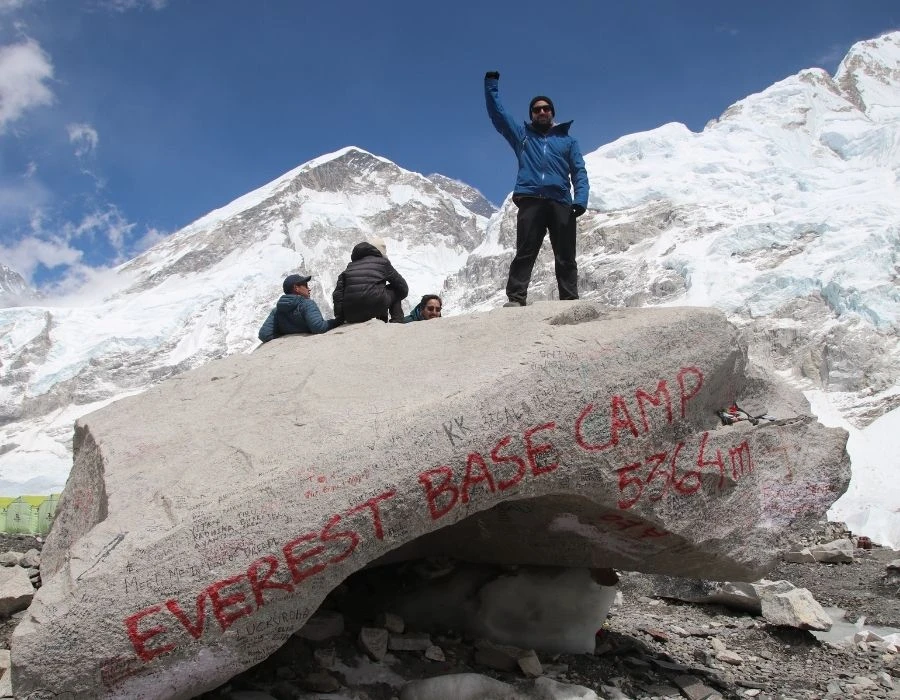
The Everest Base Camp Trek is no doubt a bucket-list activity for most people around the globe that takes us to the base of the world’s highest peak, Mt.Everest. The trek to Everest Base Camp retraces the footsteps of  New Zealander Sir Edmund Hillary and Tenzing Norgay, the first people to climb Mount Everest. The route passes through the Khumbu Valley and reaches up to an elevation of 5,545 m at Kala Patthar and 5,364 m at Everest Base Camp. 

From dense forests and suspension bridges to following the river to glacier valleys, the Mount Everest Base Camp Trek showcases the region’s beauty. Nature lovers will find the trek especially remarkable. The entire route lies within Sagarmatha National Park, a UNESCO World Heritage Site where rare animals such as musk deer, snow pigeons, and snow leopards live in quiet solitude. 

While this trek is known for adventure and thrill, travellers go way beyond it. With adventure, you will experience the mountain lifestyle and get to know the Sherpas and other local communities closely. Their kindness and hospitality add more character to the Everest Base Camp trek. The route passes through Sherpa villages of Namche Bazaar, Tengboche, and Dingboche, where prayer wheels spin in the winds. Yet, beyond the famous landmarks, the Khumbu has lesser-known gems such as the Mani Stone Library. It lies above Khumjung village and is used by locals for meditation and morning prayers. 

The Everest region is home to many mountains that you can see. You will be literally in the ocean of mountains and hills throughout the trip. Some of the notable snow-capped mountains you get to see along the EBC trekking route are Mt Everest (8,849 m), Lhotse (8,516 m), Ama Dablam (6,812 m), and Thamserku (6,608 m). Similarly, the region has lesser-known wonders, such as the blue-ice cavities of the Khumbu Icefall, which spread into the Imja Glacier Valley. 

Reaching Everest Base Camp is the highlight of the trek. Standing at the foot of the world’s highest mountain, surrounded by glaciers and colorful tents of mountaineers preparing for the summit of Mount Everest, is awe-inspiring. Yet, even here, one lesser-known area makes the experience even more special: a few minutes above Base Camp lies the “Silent Plateau”. It is a natural ridge that provides a peaceful view of the Khumbu Icefall. 

Flow of 14 Days Everest Base Camp Trek 

The journey to Everest Base Camp Trek begins as soon as you land in fresh mountain air in Lukla. The first part of the trek isn’t that hard; instead, it gives your body time to warm up. After Lukla, the route passes through forests, long suspension bridges, and small Sherpa villages with prayer flags, stone walls, and friendly locals. These first days around places like Phakding and the route to Namche are easier and help your body warm up. Thus, the initial phase of the journey provides the first real look at the tall hills, clear rivers, and traditional mountain life.

After Namche Bazaar, the trek becomes more serious as you climb higher each day. As you continue trekking, you pass through different landscapes, from hilltop monasteries and open valleys with fewer trees to rocky paths near glaciers. Reaching Base Camp and Kala Patthar is the high point of the trip, where you’ll feel quite uncomfortable due to thinner air. But as you descend, where breathing gets easier, colors return to the scenery, and the villages feel even more welcoming.

Itinerary

Day1
  • Meals:N/A
  • Accommodation:N/A
  • Drive Distance:5.8 km (Tribhuvan International Airport to Thamel)
  • Drive Duration:20-30 minutes
  • Sleep Elevation:1,400 m
  • Overnight Place:Kathmandu
  • Day's Difficulty:Gentle (no physical demand)

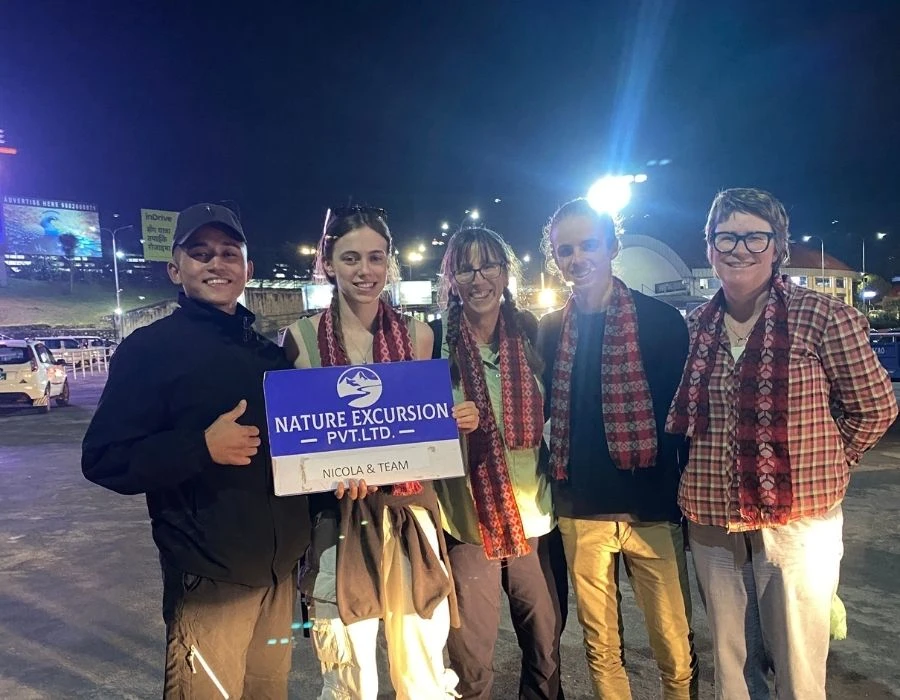
Upon arrival, a representative from Nature Excursion will stand in the arrivals area, holding a paging board with your name. Upon your arrival at Tribhuvan International Airport, our representative will welcome you and escort you to the hotel in a private vehicle. Upon arrival at the hotel, our team will assist you with your luggage and check-in. Once you are all settled in the hotel, rest and later explore the streets of Thamel (the tourist hub of Kathmandu).

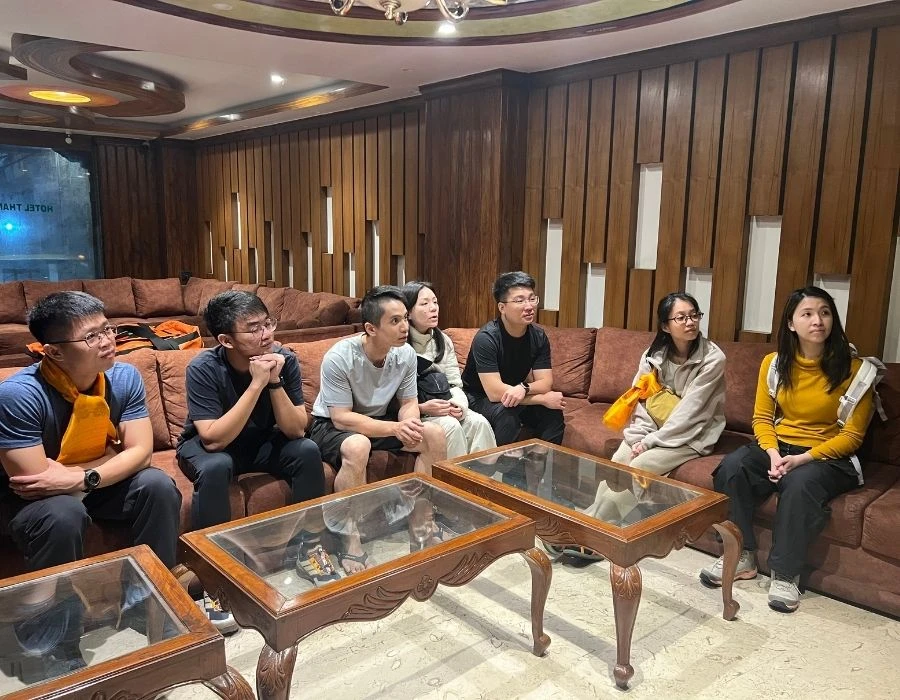
In the late evening, we will meet you at the office or specified location for a briefing. We will also introduce you to your mountain guide and brief you about the Everest region trek plan. You, with help from Nature Excursion, will then make all the necessary preparations for the Everest Base Camp trek on this day. Likewise, we’ll provide you with a returnable down jacket and sleeping bag for your journey. Stay overnight in Kathmandu city.

Included activities:

  • Arrival at Tribhuvan International Airport
  • Transfer to the hotel
  • Thamel Exploration
  • Meeting the Trekking team and debriefing 
Day2
  • Meals:Breakfast, Lunch, Dinner
  • Accommodation:Teahouse
  • Trek Distance:6.2 km
  • Trek Duration:3-4 hours
  • Flight Duration:35 minutes
  • Sleep Elevation:2,610 m
  • Day's Difficulty:Moderate

You will wake up and prepare to depart for your morning mountain flight. After breakfast, Nature Excursion will arrange your pickup and transfer to the airport. It will be a 35-minute thrilling fight with views of the Himalayas. If you get the left side’s window seat, you’ll get a view of Langtang Himal, Ganesh Himal, and the eastern ranges.

Upon landing in Lukla, the “gateway of the Khumbu region,” we will arrange your luggage and meet the porters who will support us for the rest of the journey. You can have a tea or coffee break in between preparations at Lukla. Afterward, we’ll make our way towards Phakding. The trek descends to Chhepung via a well-marked path. 

After Chheplung, the route takes you through mountain-flat trails with stone steps and alleys. On the left side of there, we can see the Sherpa settlement in the remote area, and you’ll often wonder how people can build houses there and stay. Along the pathway, we’ll see 100-year-old monasteries carved from stone that will mesmerize you. 

Upon arriving in Thado Koshi, we see a huge hill with a monastery in a corner, where monks are meditating. View of Mt. Kusum Kangaru and a part of Kongde are also visible from Thado Koshi. As we get closer to Phakding, we pass through big rocks that add to the thrill of the Everest walk. Our day’s overnight stay and dinner are at Phakding. 

NOTE

The Lukla flight is the most common way to get to the gateway to the Khumbu Valley from Kathmandu. However, the flight to Lukla is greatly influenced by seasonal factors. During the peak season, including Spring (March to May) and Autumn (September to November), the flight to Lukla will be diverted from Kathmandu to Ramechhap due to high air traffic at Tribhuvan International Airport. As a result, travelers should drive 4-5 hours from Kathmandu to Manthali airport in Ramechhap district to board the Lukla flight. 

Included activities:

  • Morning Mountain Flight
  • Arrival in Lukla and meet up with the trekking team
  • Walk through the Sherpa settlement, stone steps, and mountain trails
  • Trek to Phakding
Day3
  • Meals:Breakfast, Lunch, Dinner
  • Accommodation:Teahouse
  • Trek Distance:10-12km
  • Trek Duration:5-6 hours
  • Sleep Elevation:3,440 m
  • Overnight Place:Namche Bazaar
  • Day's Difficulty:Moderately difficult

Wake up in the fresh mountain air, have a delicious breakfast, then continue the trek in the Everest region. Today’s trek to Everest Base Camp starts from Phakding towards Namche Bazaar. The trek begins on a flat mountain route, where we see numerous spinning wheels and prayer flags, adding to the trek’s beauty. As we cross the suspension bridge below Monjo, the trail transitions to ascend to Monjo. 

Crossing the suspension bridges, we reach Monjo, a notable stop where a checkpoint checks permits and all necessary documents. Our guide will register the permits at the police checkpost. After checking in, we’ll officially enter the Sagarmatha National Park zone. Crossing another suspension bridge after Monjo, we’ll get to Jhorsalle, our lunch point. 

After lunch, we’ll continue our way to Namche Bazaar. On the way, we reach Top Dadah, lying between Namche Bazaar and the Hillary suspension bridge. The specialty of the location is that it provides a first view of Mount Everest if the weather is clear. In addition, the final ascent to Namche Bazaar from the Hillary Suspension Bridge is totally steep, which is one of the challenging parts of the trek. Day’s overnight and dinner are at Namche Bazaar.

Included activities:

  • Trek to Namche Bazaar 
  • Crossing the famous Hillary Suspension Bridge
  • Sagarmatha National Park permit check-in
Day4
  • Meals:Breakfast, Lunch, Dinner
  • Accommodation:Teahouse
  • Trek Distance:3-4 km
  • Drive Distance:3-4 hours
  • Sleep Elevation:3,440 m
  • Overnight Place:Namche Bazaar
  • Day's Difficulty:Moderate

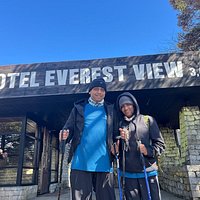
The fourth day is an acclimatization day on the trip to the Everest Base Camp. This is an excellent opportunity to go on side hikes and explore some other parts of the Everest region. Instead of just resting, we’ll go for a short hike above Namche Bazaar. First, we hike to the Hotel Everest View, which takes about an hour from Namche Bazaar. The hotel is the highest-elevation hotel in the world and is well renowned for offering views of Everest, Mt. Lhotse, and Mt. Nuptse. 

After the Everest View Hotel, we’ll head toward Syangboche Airstrip. The highlight of the day is a visit to Sagarmatha Next, an innovative organization working under SPCC to keep the Khumbu region clean by recycling plastic waste from the region. There, the representative will provide a brief overview of how waste is managed, along with their agenda and successes. Moreover, you can also buy the souvenirs made from recycled materials, which you can get at Kathmandu, but you must pay for them there. 

However, a visit to Khumjung is not included in the itinerary. Still, if time permits, we can visit the valley and the most iconic Khumjung monastery. At the monastery, we can see Yeti’s scalp, the area’s highlight. You can also visit Edmund Hillary School. After a day’s exploration, we’ll return to Namche Bazaar. On the way, stop at the Everest Photo Gallery and Sherpa Culture Museum. Watch locals go about their daily lives and enjoy the serenity of the mountains. Stay overnight at Namche.

Included activities:

  • Hike to Hotel Everest View
  • Visit to Syangboche Airport
  • Visit to Sagarmatha Next

Optional activities:

  • Visit to Khumjung Village and Monastery
  • Visit to the Everest Photo Gallery and the Sherpa Culture Museum
Day5
  • Meals:Breakfast, Lunch, Dinner
  • Accommodation:Teahouse
  • Trek Distance:9.2 km + 4.5 km to Pangboche
  • Trek Duration:5 hours + 1.5 hours to Pangboche
  • Sleep Elevation:3,860 m or 3,930 m
  • Overnight Place:Tengboche / Pangboche
  • Day's Difficulty:Moderately Difficult

After a pleasant acclimatization day at Namche Bazaar, we’ll continue our trek towards the Khumbu region. Leaving Namche Bazaar, we head to Tengboche monastery, which is initially flat and steep down to the river. As we start our trek, we’ll reach Siding within 15 minutes. Continuing the trek, the route passes through a flat path till Kyangjuma. 

Then, the route winds uphill and descends to Phungi Tanga, our lunch point. The village also has a checkpoint where we should check our permits. After lunch, we will cross a bridge and continue a steep walk through a lush forest to Tengboche village. The steep climb from Phungi Tanga to Tengboche is the same as Namche Bazaar’s final ascent.

If we stay at Tengboche, the day ends with a visit to Tengboche Monastery. But some trekkers prefer to trek to Pangboche for better acclimatization. If you also prefer Pangboche, the trek descends towards Pangboche. At Upper Pangboche, there is one of the oldest monasteries, lying 20 minutes away from Pangboche village, which you can visit. Day’s overnight is at Tengboche or Pangboche (as per trekker’s preference)

More about Tengboche Monastery

Tengboche monastery is said to be the oldest and biggest monastery in the region. You can also see a 16th-century-old footprint on the rock. In the early morning or afternoon (after 3 o’clock), monks from Tengboche Monastery perform rituals and ceremonies. These ceremonies are open to tourists visiting the area at no cost. However, if you want to contribute, you can leave some amount in the donation box.

Included activities:

  • Visit Tengboche Monastery
  • Optional Trek to Pangboche
  • Trek to Tengboche / Pangboche
Day6
  • Meals:Breakfast, Lunch, Dinner
  • Accommodation:Teahouse
  • Trek Distance:12 km from Tengboche / 7 km from Pangboche
  • Trek Duration:5-6 hours from Tengboche / 3.5 hours from Pangboche
  • Sleep Elevation:4,410 m
  • Overnight Place:Dingboche
  • Day's Difficulty:Moderately Difficult

If we stay at Pangboche, we must ascend to Dingboche, which takes about three and a half hours. Thus, we get to Tengboche at lunchtime. If we stay at Tengboche, we will begin our day with breakfast. We start our trek through dense rhododendron forests and descend to Deboche. On this part of the trail, we are likely to witness exotic wildlife such as the monal and musk deer.

Continuing the trek, the path descends to the Imja Khola, where we will cross a suspension bridge. We leave the tree line behind and can see a drastic change in the scenery. Walking by Somare and Orsho, we gradually ascend to Dingboche village. After reaching Dingboche, we’ll settle in an accommodation place and take a rest. The village has 22-25 Teahouses that make it look stunning. View of Mount Ama Dablam is close to the village, and Island Peak is also visible. Have a fulfilling dinner of local cuisine and spend the night in Dingboche.

Included activities:

  • Crossing the Imja Khola over the suspension bridge
  • Walk through Somare and Orsho
  • Dinner and Overnight Stay in Dingboche
Day7
  • Meals:Breakfast, Lunch, Dinner
  • Accommodation:Teahouse
  • Trek Distance:4 km
  • Trek Duration:3-4 hours
  • Sleep Elevation:4,410 m
  • Overnight Place:Dingboche
  • Day's Difficulty:Moderate

Today, after breakfast, we take our second acclimatization break in Dingboche village. On the day, we’ll go for a short hike to Nagarjuna Hill, also known as Nangkartshang viewpoint. Although we plan to get to the top of the hill today, we must return from the middle way if the weather is unsuitable. If the weather is favourable, we reach the Nangkartshang viewpoint.

The Nangkartshang viewpoint is well known for its majestic views of sunrise and sunset. Likewise, the viewpoint offers stunning sights of Island Peak, Makalu, Ama Dablam, Thamserku, Cholatse, Tabuche, and Lobuche. Similarly, the sight of small lakes below Ama Dablam is also visible from the viewpoint. After enjoying views from the top of the hill, we’ll return via the same route we took to get there. In the remaining day, you can explore Dingboche village. There is also a cafe in Dingboche village where you can have coffee and bakery items if you are craving. Stay overnight at Dingboche.

Included activities:

  • Acclimatization Break
  • Hike to Nagarjuna Hill (Nangkartshang Viewpoint)
  • Exploring Dingboche Village
Day8
  • Meals:Breakfast, Lunch, Dinner
  • Accommodation:Teahouse
  • Trek Distance:8.5 km
  • Trek Duration:4-5 hours
  • Sleep Elevation:4,940 m
  • Overnight Place:Lobuche
  • Day's Difficulty:Challenging

After breakfast, we leave Dingboche and trek forward towards Lobuche. We start with a short, steep ascent, followed by a gradual up-and-down with fields for pasture, to reach Thukla. As we reach Thukla, we’ll have lunch there. The trail to Lobuche village is quite steep and crosses a glacier field from there, so we have to refuel ourselves before heading up.

After lunch, we continue our walk towards Thukla Pass. The route to Thukla Pass is a steep, 45-minute track considered the most difficult part of the trek. After the steep track, we reach Thukla Pass. The top of the Thukla Pass features a memorial to climbers who previously climbed in the Everest region and have lost their lives. The memorable site is like the grave of climbers and trekkers in the area. 

Further, we walk past these memorial tombstones and follow a rugged route to Lobuche village. Upon reaching Lobuche, check into your accommodation. However, note that Lobuche has comparably fewer options for the previous settlement place. Get a taste of local cuisine during dinner and have a good rest. Stay overnight in Lobuche, close to Lobuche Peak.

Included activities:

  • Trek to Lobuche 
  • Steep ascent and gradual up-and-down trek to Thukla.
  • Pass through Thukla Pass
Day9
  • Meals:Breakfast, Lunch, Dinner
  • Accommodation:Teahouse
  • Trek Distance:15 km
  • Trek Duration:7 hours
  • Sleep Elevation:5,164 m
  • Overnight Place:Gorak Shep
  • Day's Difficulty:Challenging

It is a big day for us, so be sure to have a fulfilling breakfast. We will finally reach Everest Base Camp today. Leaving Lobuche village, we will follow a rocky pathway along the Khumbu Glacier. Similarly, we will pass the Italian Research Center, Pyramid, at 4,970 m, and continue up to Gorak Shep. Similarly, Gorakshep is the highest place to rest, where we can witness 360-degree views of the mountains of the Everest range. At Gorakshep, we’ll have lunch and leave our backpacks, and we’ll make our way to Everest Base Camp. 

From Gorak Shep, we’ll be trekking through the Khumbu glacier moraine and crossing glacial streams. Khumbu Glacier is considered the biggest glacier in the Everest region. The trail further up is steep and rocky. Once we reach Everest base camp, the view of Khumbu Icefall and the surrounding mountains will welcome us. Your previous days’ struggle and hassle finally come with a grand reward. Be sure to wait in turns to click photos in the renowned Everest Base Camp rock during peak season.

We will spend some time looking around and taking pictures. After this, we trek back to Gorak Shep. If you still prefer to go to Kala Patthar for the sunset, you can head to the viewpoint. For a sunrise view, we must hike to Kala Patthar early in the morning in cold air, so some trekkers prefer the sunset view, which is just as mesmerizing. But we also understand you’ll be tired after a long day, so we won’t force you to hike to Kala Patthar the same day. Gorakshep is our overnight stop for the day.

Included activities:

  • Trek along the Khumbu Glacier
  • Trek to Everest Base Camp
  • Optional Sunset Hike to Kala Patthar
Day10
  • Meals:Breakfast, Lunch, Dinner
  • Accommodation:Teahouse
  • Trek Distance:18 km
  • Trek Duration:8-9 hours
  • Sleep Elevation:3,930 m
  • Overnight Place:Pangboche
  • Day's Difficulty:Challenging for the early hike to Kala Patthar and moderate for the descent to Pangboche.

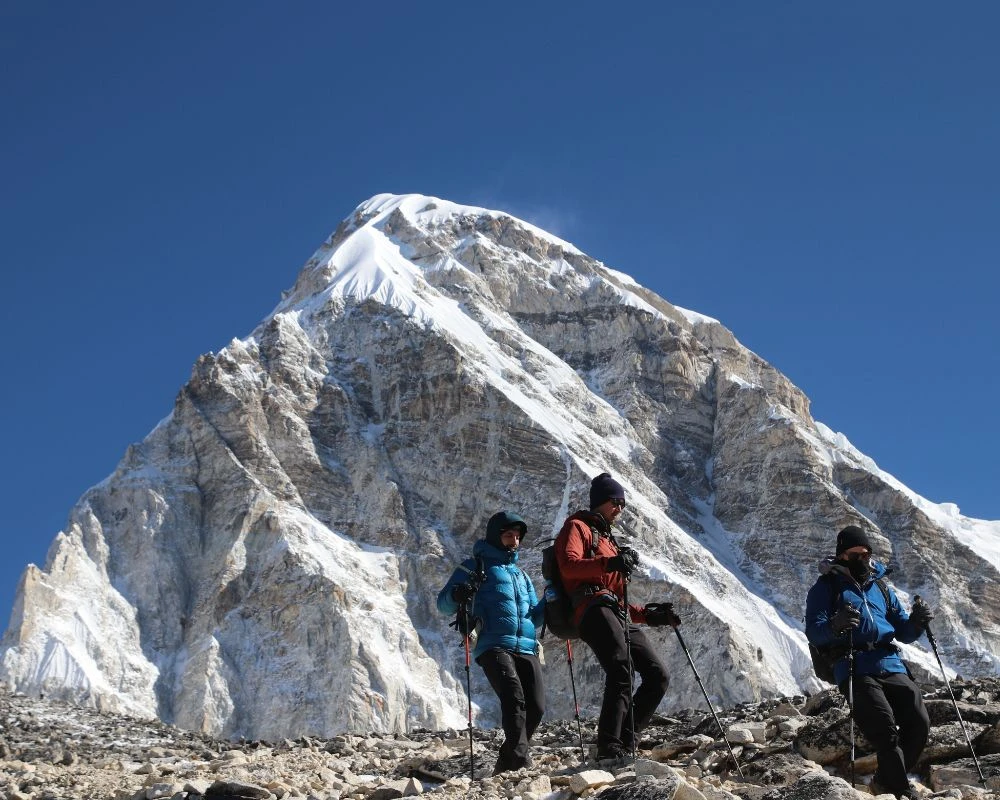
Today, we will touch the highest point of our Everest Base Camp Trek. Early in the morning, we will hike to Kalapatthar. It is a viewpoint from where we can see stunning sights of Mount Everest, Ama Dablam, Nuptse, Pumori, Cholatse, Lulu, Lingtren (a mountain in China), and many other mountains. Likewise, we will witness one of the most gorgeous sunrises of our lives from Kala Patthar. After seeing the sunrise at Kalapatthar, we will retrace our steps to Gorakshep for breakfast.

Later, we will trek back along the path until reaching Pangboche. Like earlier, the trail goes past Lobuche and Pheriche villages and descends ultimately to Pangboche. However, the trek is all downhill, so we should take care of our ankles and knees. We’ll have Lunch either in Thukla or Pheriche. Upon reaching Pangboche, settle in an accommodation place, rest, have dinner, and stay overnight at Pangboche.

Included activities:

  • Hike to Kala Patthar for sunrise view
  • Return to Gorak Shep for breakfast
  • Trek Back to Pangboche
Day11
  • Meals:Breakfast, lunch, Lunch
  • Accommodation:Teahouse
  • Trek Distance:10 km
  • Trek Duration:5-6 hours
  • Sleep Elevation:3,440 m
  • Overnight Place:Namche Bazaar
  • Day's Difficulty:Moderate

As usual, the day starts with a hearty breakfast. After breakfast, we will ascend to Tengboche village via the rhododendron forests from Pangboche. We’ll then follow the same route as back then to Namche Bazaar. On the way, we pass by small villages and cross suspension bridges. The trek includes a mix of ascent and descent sections, with views of the surrounding mountains.

Upon reaching Namche, take a rest and relive all those memories of Everest. Be sure to visit the local markets and collect some souvenirs from the Everest trek. If you arrive on Saturday, you can visit the famous Saturday Market in Namche. In the Saturday Market, Sherpas gather from surrounding areas to showcase their agricultural products and electronic or trekking accessories for sale. After visiting or shopping, have dinner in Namche. Consequently, settle in an accommodation place. Stay overnight in Namche.

Included activities:

  • Breakfast and Departure from Pangboche
  • Trek back to Namche Bazaar
  • Rest and refresh at Namche
  • Explore Namche Market
Day12
  • Meals:Breakfast, Lunch, Dinner
  • Accommodation:Teahouse
  • Trek Distance:16 km
  • Trek Duration:7-8 hours
  • Sleep Elevation:2,840 m
  • Overnight Place:Lukla
  • Day's Difficulty:Moderate

Begin the trek back from Namche Bazaar after having a fulfilling breakfast. The trek from Lukla to Namche Bazar marks the final day of the Everest Base Camp Trek in Nepal. Descend steeply and walk through the dense forests. Cross numerous suspension bridges and villages. The route is totally descending till we reach the Hillary suspension bridge. As we approach Monjo, the route becomes steep. At Monjo, we’ll check out of Sagarmatha National Park. 

Continuing the gentle walk, we will reach Phakding, our lunch spot for the day. From Phakding, the route to Lukla is an uphill walk via Ghat village. The route crosses the Dudh Koshi River many times on the way. Upon reaching Lukla, settle into an accommodation, have local cuisine for dinner, and stay overnight.

Included activities:

  • Breakfast and Departure from Namche Bazaar
  • Trek Through Villages and Suspension Bridges
  • Check out the Sagarmatha National Park
  • Overnight at Lukla.
Day13
  • Meals:Breakfast and Farewell dinner
  • Accommodation:Hotel
  • Drive Distance:134 km if we drive to Kathmandu from Manthali
  • Flight Duration:35 minutes to Kathmandu / 25 minutes to Manthali
  • Drive Duration:4-5 hours if we fly to Manthali from Lukla
  • Sleep Elevation:1,400 m
  • Overnight Place:Kathmandu
  • Day's Difficulty:Gentle

After breakfast, make all the preparations for the departure. Be sure to check all your belongings before leaving. However, if the client wishes to celebrate their trip with a trekking team including a guide and a porter for one last day in the Himalayas, they can stay an extra day there. If not, we will take an early morning flight back to Kathmandu. Depending on the season, you’ll either fly to Kathmandu or Manthali.

Our team from Nature Excursion will drop you at your hotel upon landing in Manthali or Kathmandu. The remaining day is for you to rest and shop. We will meet you in the evening at a designated hotel to have a farewell dinner. This will be the last night’s stay in Kathmandu. Have a good night’s sleep and make necessary preparations for departure on the following day.

Day14
  • Meals:Breakfast
  • Drive Distance:5.8 km
  • Drive Duration:20-30 minutes
  • Day's Difficulty:Gentle

Our airport team will drop you off at the international airport terminal gate at your flight departure time. Make sure to pack your stuff carefully and do not leave anything behind. Nature Excursion will arrange a private vehicle to take you to the Kathmandu International Airport. Our staff will handle all logistics to ensure a smooth, stress-free departure. We hope you have a great time trekking with us and look forward to meeting again. Save journey.

Download Pdf

Route Map

Everest Base Camp Trek - 14 Days map

Cost Details

Includes

  • Airport pickup and drop-off services on a private vehicle (car, jeep, or luxury bus) as per group size during arrival and departure times
  • Both-way domestic flight tickets (Kathmandu-Lukla-Kathmandu) with airport departure taxes
  • 11 nights’ accommodation during the trek 
  • All healthy meals during the trek (12 breakfasts, 11 lunches, and 11 dinners)
  • Government-licensed, well-English-speaking Nature Excursion’s native guide with his meals, salary, flight cost, insurance, and other necessary equipment. We provide an assistant trek guide for groups of 6 or more trekkers.
  • Porter to help with the trekker’s luggage. Two trekkers can share one porter; the luggage weight limit is 10 kg per trekker.
  • You can store non-essential stuff in your hotel or Nature Excursion’s store
  • 2 nights in a hotel in Kathmandu before and after the trek.
  • For safe drinking, Nature Excursion Pvt. Ltd. provides water purification tablets.
  • Snacks (cookies) and seasonal fresh fruit, as per availability.
  • Khumbu, Pasang Lhamu Rural Municipality entry fees
  • Sagarmatha National Park entry permit fees
  • All government, local taxes, and official expenses
  • A first-aid Kit with Diamox (preventative measures to avoid altitude sickness) is carried by the guide. An oximeter to check your pulse and oxygen level in your body.
  • We provide a sleeping bag and a down jacket, as requested. Has to return after the trek.
  • Appreciation certificate after the completion of the trek.
  • Farewell dinner at the end of the trek
  • Assisting in any emergency evacuation or rescue due to uncertainty or any serious health condition (incurring charges should be covered by your travel insurance).

Excludes

  • Nepal entry visa fees vary depending on how long you want to stay in Nepal (USD 30 for 15 days, USD 50 for 30 days, and USD 125 for 90 days).
  • Excess luggage for the Lukla flight.
  • Your meals and hotel in Kathmandu due to an early arrival, a late departure, or an early return from the trek than the scheduled itinerary.
  • Your personal clothing and gear.
  • Personal nature expenses like- energy bars, hot and cold drinks, laundry, internet, battery recharged, hot showers, extra porters, etc.
  • Your travel insurance, which covers your emergency evacuation,
  • Extra expenses which are not listed in the include section
  • Additional costs due to delays caused by circumstances beyond our control, like landslides, itinerary modifications due to safety concerns, weather conditions, illness, changes in government policies, and strikes
  • Tipping for your guide, porter, and driver.

Everest Base Camp Trek - 14 Days pictures and video

Mt Everest Base Camp Trek | Trekking To Everest Base Camp In Nepal | Travel Video 2023

Departure Dates

Select a Departure Month
Start DateEnd DatePriceAvailability 
Start DateFrom: SundayMar 01, 2026End DateTo: SaturdayMar 14, 2026PricePrice Per PersonUS$1455AvailabilityAvailabilityAvailable
Start DateFrom: SundayMar 08, 2026End DateTo: SaturdayMar 21, 2026PricePrice Per PersonUS$1455AvailabilityAvailabilityAvailable
Start DateFrom: MondayMar 09, 2026End DateTo: SundayMar 22, 2026PricePrice Per PersonUS$1455AvailabilityAvailabilityAvailable
Start DateFrom: FridayMar 13, 2026End DateTo: ThursdayMar 26, 2026PricePrice Per PersonUS$1455AvailabilityAvailabilityAvailable
Start DateFrom: SaturdayMar 14, 2026End DateTo: FridayMar 27, 2026PricePrice Per PersonUS$1455AvailabilityAvailabilityAvailable
Start DateFrom: SundayMar 15, 2026End DateTo: SaturdayMar 28, 2026PricePrice Per PersonUS$1455AvailabilityAvailabilityAvailable
Start DateFrom: MondayMar 16, 2026End DateTo: SundayMar 29, 2026PricePrice Per PersonUS$1455AvailabilityAvailabilityAvailable
Start DateFrom: FridayMar 20, 2026End DateTo: ThursdayApr 02, 2026PricePrice Per PersonUS$1455AvailabilityAvailabilityAvailable
Start DateFrom: SaturdayMar 21, 2026End DateTo: FridayApr 03, 2026PricePrice Per PersonUS$1454AvailabilityAvailabilityAvailable
Start DateFrom: SundayMar 22, 2026End DateTo: SaturdayApr 04, 2026PricePrice Per PersonUS$1455AvailabilityAvailabilityAvailable
Start DateFrom: MondayMar 23, 2026End DateTo: SundayApr 05, 2026PricePrice Per PersonUS$1455AvailabilityAvailabilityAvailable
Start DateFrom: FridayMar 27, 2026End DateTo: ThursdayApr 09, 2026PricePrice Per PersonUS$1455AvailabilityAvailabilityAvailable
Start DateFrom: SaturdayMar 28, 2026End DateTo: FridayApr 10, 2026PricePrice Per PersonUS$1455AvailabilityAvailabilityAvailable
Start DateFrom: SundayMar 29, 2026End DateTo: SaturdayApr 11, 2026PricePrice Per PersonUS$1455AvailabilityAvailabilityAvailable
Start DateFrom: MondayMar 30, 2026End DateTo: SundayApr 12, 2026PricePrice Per PersonUS$1455AvailabilityAvailabilityAvailable

Since we organize private treks, feel free to choose your own dates. Make sure your travel plans match the itinerary, including arrival and departure in Kathmandu. The weather in Lukla can delay flights, so add at least two buffer days after the trek.

Clients Reviews

  • Great Company for hiking in Nepal

    Raju, Karan and the team were prompt and responsive to our queries right from beginning during our planning discussions. We were group of 5 friends having different preferences and queries but Karan and Raju helped with all information and suggestions. During trek, Raju and two porters went great lengths to help few of us first timers with moral and any medical issues. They were flexible right from the beginning till the end and catered to all of our needs. I would highly recommend this team for any hiking trip in Nepal as they are knowledgeable, flexible and great support.

    Sachin J
    Sachin JIndiaDec 01, 2024
    TripAdvisor
  • EBC & Island peak with Gurung brothers (Nature Excursion)

    This was my first visit to nepal. Thanks to Karan, with whom i was in touch via WhatsApp, for planning the trek to Island Peak and EBC. The brothers duo Karan and Raju, made sure my trek was completed smooth and safe, they were very hospitable, and knew every route and people around the camps. Very friendly and helpful team. I never felt any kind of issue in all my 16 days of trekking. They also arranged a separate mukthinath and manakamana tour on my request. Which again was a solo trip. flawless management in every aspect. I will definitely continue to do more treks and tours with them.

    VIMAL K
    VIMAL KIndiaNov 13, 2023
    TripAdvisor

Useful Information

What is the difficulty of the Everest Base Camp Trek, and what are the possibilities of altitude sickness?

The Everest Base Camp trek is moderate in terms of difficulty. For every trekker, the difficulty of the Everest Base Camp trek can vary depending on their fitness level. Here are the factors that make the trek to EBC difficult: 

Varied Terrain from Forest Area to Rocky Tracks

You will follow uneven, rugged mountainous terrain during the EBC trek. The trail goes through forests and foothills before ascending above treeline and continuing through barren, rocky tracks and glacier moraines. Some sections, particularly the climb up to Namche Bazaar, feature a series of steep switchbacks that increase the trek’s difficulty. Likewise, the trek itself often takes you along narrow mountain paths with steep drops, making it challenging. 

Elevation Change from 2,840 m to 5,545 m

Altitude is another challenge of the EBC Trek. On the trek, elevation changes every day. The trek begins above 2,500 m and reaches up to 5,545 m, so there is undoubtedly a risk of altitude sickness. As you climb higher, the oxygen level in the air decreases, which makes it hard to breathe and adjust to the changed temperature. To minimize the risk, trekkers should follow a slow ascent, ensure proper acclimatization days, hydrate, and acclimate their bodies. Our guide will constantly remind you to drink water. If you feel any discomfort, feel free to share it with our guide.

14 Days Trek’s Length 

The trek to Everest Base Camp takes about 14 days. The total distance of the trek is around 130 kilometers (80 miles) round-trip. Likewise, trekkers should cover an average daily distance of 8-10 km, with a walking time of 5-7 hours. In addition, the EBC trek involves daily elevation gain and loss, which can be physically exhausting.

Unpredictable Weather

Unpredictable weather is another challenge on the trek to Everest Base Camp. At lower altitudes, you may experience hot and humid weather, especially in the summer months (June to August). Temperatures in the higher areas like Lobuche, Gorakshep, Base Camp, and Kala Patthar can drop below freezing, even in the middle of the trekking season (spring or autumn). Likewise, snow, rain, and strong winds are common. So, trekkers should check the weather forecast before starting each day’s trek. 

Still, if you are not sure whether the Everest base camp trek is the right trek for you, contact us, and we will help you figure it out.

How do I prepare for the Everest Base Camp Trek?

The thing that makes the Everest base camp trek possible for beginner trekkers is preparation. However, you do not have to do anything extreme in advance to prepare for the trek. Go on a few hikes and take regular long walks to get physically fit. Likewise, you can do cardio training or other activities such as swimming, cycling, or running. These activities will improve your stamina. Likewise, weight training will also help you.

Besides physical preparation, mental preparedness is significant. To mentally prepare, practice staying calm and set realistic goals. Instead of thinking about how difficult the terrain is, focus on the positive aspects, such as the stunning views and the sense of achievement. 

Accommodations and Meals During the Everest Base Camp Trek

Accommodation

Hotels are the accommodation points in Kathmandu. Generally, three-star hotels are included in the itinerary to ensure a comfortable stay. During the trek, the common accommodations are Teahouses/teahouses. We use a comfortable and clean Teahouse for overnight stays. Generally, the rooms are shared between two trekkers, but upon one’s request, we can book a single room for a solo trekker. In addition, the room in Himalaya has a clean blanket, a pillow, a comfortable mattress, and a table. 

Furthermore, Teahouses are much better at the start of the trek. However, once we go above Dingboche, expect small rooms with minimal decoration and shared washrooms. Charging and hot showers are available in most of the Teahouses, but may cost you extra money. So, have some Nepali cash on you during the trek. 

Note: A Single room is only available if you request it at the time of booking. Likewise, the cost also differs.

Meals

After long walks every day, you will need good food that not only fills you but also provides enough energy for the next day. Thankfully, the Everest Base Camp trek route offers decent meal options in every village, with menus offering many choices. You will find dal bhat, momo, noodles, Tibetan bread, thenduk, thukpa, shyakpa, eggs and fries, soups, and dhido in common in all places. At some places, you will also get pizza, burgers, and bakery items. Choose the food you intake wisely. Moreover, do not go for frozen meats or non-veg items all the time, as they are not fresh.

Note: Dal bhat is the holy grail. It is delicious and costs little. You will be full for the day, and it is high in nutritional value. 

Things you should know about our Everest base camp trek 14-day package

  • Airport Pickup/Drop: Airport pickup and drop-off are included in our 14-day Everest Base Camp trek package. Our team will take care of it and help you with the luggage. All the airport services will be provided as per our itinerary. 
  • Charging: You will have charging facilities along the Everest Base Camp Trail, but they will cost extra. You can carry spare batteries or a solar charger to minimize this expense. 
  • Communication/Internet: Most Teahouses offer WiFi at a small fee. Because of the area and elevation, the network will not be stable at all times. If you want to use the internet at a better price and with better connectivity, get a tourist SIM card. Our team will help you with it. 
  • Luggage: The duffel bag weight limit is 10 kg per person. Our porters carry duffel bags. You can get a day pack for yourself and put essentials in it. The day pack weight limit is 5 kg per person. 
  • Tip: Tips are a huge part of travel culture in Nepal. We do not include tips in the cost of our Everest Base Camp trek. Therefore, we request you tip our on-field crew (trek guide, drivers, tour guide, and porters) at the end of their service as per your wish. 
  • Travel Insurance: The Everest Base Camp trek is a high-altitude trek in a remote region. We suggest that our guests get travel insurance with air evacuation coverage in case of an emergency. 
  • ATM: Get Nepali cash to use during the trek in Kathmandu. You will need additional money to pay for services like hot showers, charging, and WiFi while trekking. On the Everest base camp trekking route, there is only one ATM in Namche Bazaar. 

A typical day on the Everest Base Camp Trek

Your day will begin early in the morning. After waking up, you’ll have a warm breakfast with options like porridge, eggs, tea, and coffee. Then you’ll prepare for the day’s trek while the porters carry your duffel bags. As you walk, your guide will inform you about the villages you pass through and the mountains you see along the route. Expect to see famous peaks like Ama Dablam, Lhotse, and, of course, Mount Everest from certain viewpoints.

After about 3 hours of trekking, we take a break for lunch. Lunch might be a simple but filling meal like dal bhat (lentil soup with rice), noodles, or sandwiches. After lunch, we continue walking to the day’s destination. The terrain can vary, with some sections being steep, rocky, or even snowy, so it’s essential to be prepared for different conditions. 

The day’s trek usually lasts between 5 and 7 hours, though some days may be shorter or longer depending on the terrain itinerary. By late afternoon, you’ll arrive at your destination for the day. Around 6:00 or 7:00 PM, dinner will be served. After dinner, trekkers generally gather in the common room for some social time. After some time, we must sleep to get proper sleep to continue our Everest journey.

EBC Weather Variations

Understanding the weather is crucial if you plan to trek to Everest Base Camp, as conditions can change significantly by season, altitude, and time of day. The trek to EBC passes through several climatic zones, from lush valleys to harsh, windswept high-altitude regions, and each section experiences different weather patterns. Here are the weather patterns of the area throughout the year:

Low Altitudes (Lukla to Namche Bazaar):

  • Winter (Dec-Feb): 23°F to 18.5°F
  • Summer (Mar-May): 45.5°F to 32°F
  • Autumn (Sept-Nov): 50°F to 41°F

Mid Altitudes (Dingboche to Lobuche):

  • Winter (Dec-Feb): 5°F to 23.5°F
  • Summer (Mar-May): 41°F to 32°F
  • Autumn (Sept-Nov): 50°F to 32°F

High Altitudes (Gorakshep to Everest Base Camp):

  • Winter (Dec-Feb): -4°F to 14°F
  • Summer (Mar-May): 14°F to 23°F
  • Autumn (Sept-Nov): 14°F to 5°F

Best Season for the Everest Base Camp trek

Spring and autumn are the best times for the Everest Base Camp trek. Both seasons offer ideal trekking conditions that increase the chance of the trek’s success.

Spring (March to May):
The weather is mild, with clear skies and moderate temperatures, which makes it ideal for trekking in the Everest region. While it can still be cold at higher altitudes, the conditions are generally stable, the rhododendron forest blooms, and you get excellent visibility of the mountains.

Autumn (September to November): 

This is peak season for the Everest Trek due to clear skies and dry weather after the monsoon. During the season, trekkers can experience comfortable temperatures, with cool mornings and evenings and pleasant daytime conditions. Moreover, it’s perfect for mountain views and an overall enjoyable trekking experience to EBC.

The “Yeti Region” Wind Corridor Between Dingboche and Lobuche

The location between Dingboche and Lobuche is one of the most interesting and unique sections of the Everest Base Camp trek. This part of the trek is often called the “Yeti Region” Wind Corridor, known for its strong winds, stunning views, and interesting legend.

Wind Corridor 

As trekkers walk from Dingboche to Lobuche, they pass through a valley that’s open to the forces of nature. Surrounded by tall peaks like Lhotse, Makalu, and Everest, this area creates wind tunnels. The wind funnels between these huge mountains, which makes it one of the windiest parts of the Everest trek, known as the wind corridor. When walking through the Wind Corridor, it’s important to dress warmly, even if it’s sunny when you start.

The Legend of the Yeti

The name “Yeti Region” derives from the famous legend of the Yeti, a mysterious creature known as the “Abominable Snowman.” In this area, many locals believe the Yeti roams the mountains. Locals say that the wind is so terrible because it is the breath of the Yeti that blows from the mountains and makes the wind blow.

Alternative Routes & Shortcuts Used by Locals

The Everest Base Camp Trek has a well-marked route, but locals also use alternative pathways and shortcuts to walk through the region. The shortcuts and alternative routes provide a unique perspective on the landscape and are the best way to avoid the crowds, save time, and experience a more peaceful, off-the-beaten-path adventure.

Note: The alternative routes are provided to give you in-depth information about the region, not to encourage you to take them. The route is risky and challenging, suitable only for locals, not trekkers.

Here is a brief overview of the Everest trail route that offers shortcuts. 

From Phakding to Namche Bazaar

One of the favourite shortcuts among Sherpas in the Everest region is between Phakding and Namche Bazaar. While the main route follows the Dudh Koshi River upstream, the alternative path takes you directly from Phakding through the forest uphill. This route is steeper and more challenging, but much quicker. Likewise, the route offers quite an experience, as most trekkers don’t use it due to its lesser-known, challenging nature.

The Jorsalle to Namche Bypass (Crossing the Bhote Koshi)

Another short route on the Khumbu trek is to cross the Bhote Koshi River from Jorsale, which allows hikers to avoid the busy trail that takes them far along the riverbank before reaching Namche Bazaar. This bypass involves a steep, narrow route but brings trekkers directly to the base of the Namche hill. Thus, the shortcut bypasses the long, winding path that the classical route follows.

The Lukla to Phakding Bypass

Another shortcut is used by locals traveling between Lukla and Phakding. Rather than taking the classical route along the river, locals often use an upper route that runs parallel to the Dudh Koshi. The pathway passes through dense forests and terraced fields. This shortcut bypasses most of the Dudh Koshi River Valley, providing trekkers with an immersive natural experience away from the crowds on the main route.

Is it possible to do a Last-minute booking for the Everest Base Camp trek?

Yes, Nature Excursion allows last-minute bookings for the Everest Base Camp Trek. To book the trek at the last minute, you have to send the full package cost with your basic information. You have limited time to prepare for the trek, and you must be available in Kathmandu one day before the trek begins. 

Kindly note that we do not do any refunds for last-minute bookings. If you fail to join the trip or leave it mid-trip, you will not receive any compensation from the company. 

    Everest Base Camp Trek - 14 Days FAQs

    • Yes, a beginner can climb to Everest Base Camp. But, it is not as easy as we think to trek for beginners. First-time trekkers must be physically and mentally fit to complete the trek. Still, with consistent fitness training months in advance, pacing oneself, listening to guides, and utilizing rest days make it possible to complete the journey even for a beginner.

    • The Everest Base Camp hike ranges from 12 days to 14 or longer. However, the itinerary is customizable, so you can tailor it as per your requirements. Likewise, there are options to include helicopter flights to shorten the trek and make it much more exciting. 

    • Yes, it is hard to breathe at Everest Base Camp compared to breathing at sea level. At EBC, the oxygen available in a single breath is roughly 50% less than what is available at sea level. This leads to potential altitude sickness symptoms like shortness of breath, headaches, and fatigue. 

    • In general, trekkers spend 20 to 30 minutes at Everest Base Camp to look around and take pictures. There is no tea house or Teahouse facility at the Everest base camp, so you descend to Gorakshep to spend the night. 

    • Usually, our Everest Base Camp Trek packages do not include an overnight stay at Base Camp. But if you wish to spend a night here, you can customize the package and let us know at the time of booking. For an overnight stay at the Base Camp, we must bring a tent and cooking items for the day, which incur an extra charge. 

    • Yes, the Everest Base Camp trek is totally worth doing. Regardless of the facilities along the trail, you will be challenging yourself every day. Your mind and body will come in tune. The beauty of the Himalayas will inspire you, and the lifestyle of the locals along the way will humble you. There is a lot to learn, discover, and achieve on the Everest Base Camp trek.  

    • Yes, kids can do the Everest base camp trek. If we turn the pages, we see many examples of toddlers and kids under 16 doing the Everest Base Camp trek with their parents.

    • Yes, a licensed guide is required for the Everest Base Camp (EBC) trek due to new 2023 Nepali regulations that have banned solo trekkers. However, local authorities in the Everest region refused to implement the national guide ban for independent trekkers. As a result, as of late 2023 and into 2024, the EBC trail remains an exception where solo trekking is allowed.

    • The Sagaramatha National Park permit and the Khumbu Pasang Lhamu Rural Municipality Permit are required for the Everest Base Camp Trek. Both cost around USD 30 per person and can be obtained in Kathmandu (at the Nepal Tourism Board office) and on the trail (at the Monjo checkpoint or Lukla).

    • Yes, Lukla Airport (Tenzing-Hillary Airport) is considered dangerous due to its high altitude and a short, sloped runway. Mountains surround the airport, and flights only operate in clear weather.

      Have more questions? Please visit the FAQ page

    You may also like

    SimilarPackages