Ama Dablam Base Camp Trek - 10 Days Itinerary

Quick Facts
  • Trip Duration10 Days
  • Destination Nepal
  • Difficulty Level Moderate
  • Maximum Altitude 4,600 m (Ama Dablam Base Camp)
  • Activity Trek
  • Starts/Ends Kathmandu / Kathmandu
  • Group Size 1 - 16
  • Transportation Domestic flight (Kathmandu-Lukla-Kathmandu)
  • Best Season Spring (March to May) & Autumn (September to November)
  • Accommodation Hotel + Teahouse/ Lodge
  • Avg. hours of walk/day 5 to 7 hours
  • Comfort Basic + Comfort
  • Interest option Nature, Adventure, and Wildlife

10 Days Ama Dablam Trail Psychology

How You Feel During the Trek

Curiosity → Calm → Effort → Humility → Wonder → Gratitude

  • Curiosity: At the start, you feel curious and a bit nervous. You walk through small Sherpa villages, always looking up to see when Ama Dablam will appear clearly.
  • Calm: After a day or two, your body finds a rhythm. You walk, eat, rest, and sleep, and your mind becomes quieter as you follow the river and forest trails.
  • Effort: As you go higher toward Pangboche and Ama Dablam Base Camp, each uphill section feels harder. You breathe more deeply and realize you must move slowly and focus on every step.
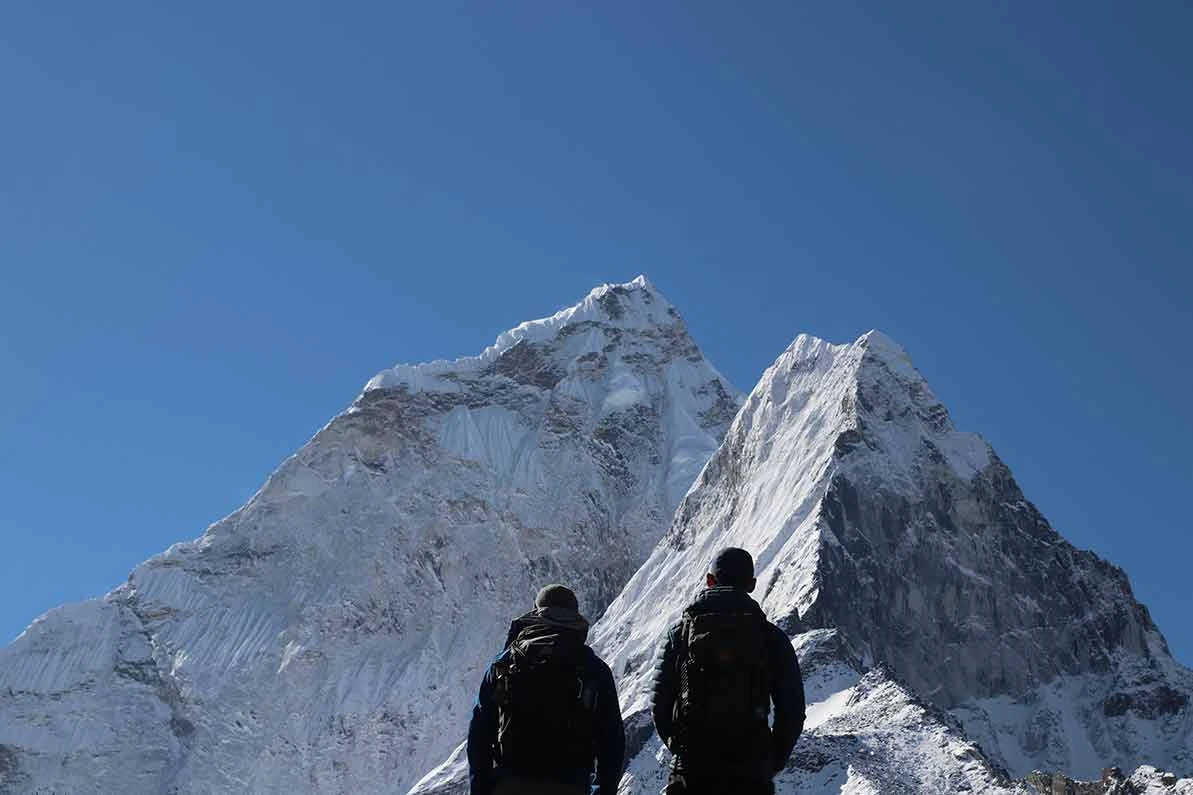
  • Humility: When Ama Dablam rises right above you, its steep faces and hanging glaciers make you feel small. You understand that the mountain is powerful, and you must respect the weather and your limits.
  • Wonder: Reaching Ama Dablam Base Camp, you feel pure amazement. The view is close, sharp, and beautiful, and you know very few people see the mountain from this angle.
  • Gratitude: On the way back down, your body relaxes, and your breathing gets easier. You feel thankful for the guides, the lodges, the clear days, and the time you spent near such a special peak.

Emotions You May Feel

  • Determined
  • Calm
  • Humbled
  • Thankful

How Your Mind Changes?

  • Start: You feel excited and a bit unsure about how hard the trek will be.
  • Midway (Namche–Pangboche): You get used to the slower pace and the thinner air, and you trust yourself more.
  • Approaching Ama Dablam Base Camp: You feel focused and strong, and you pay close attention to how your body feels.
  • At Ama Dablam Base Camp: You feel proud, quiet, and full of wonder as you stand close to the mountain.
  • While returning: You feel lighter and more relaxed, with simple, clear thoughts and a stronger belief in yourself.
  • Confidence Level: The Ama Dablam Base Camp trek is challenging but doable for fit trekkers, often leaving them feeling mentally tougher and more confident in handling altitude and long days.

Connection & Solitude Ratio:

  • Connection: 60% (Namche–Tengboche/Pangboche)
  • Solitude: (Above Pangboche and around Base Camp): 40%

Why You'll Love This Trip

  • Challenge yourself on the rugged trail with steep ascents, descents, and narrow paths.
  • Walk to the base of Mount Ama Dablam, enjoying views of the surrounding peaks and landscapes.
  • Explore the beauty of Sagarmatha National Park and see a variety of flora and fauna.
  • Interact with the Sherpa community and explore the rich mountaineering culture of the Khumbu region.
  • Cross the DudhKoshi River dozens of times on long, swaying suspension bridges.
  • Experience hiking on the majestic glaciers and high-altitude hills.
  • Enjoy majestic views of Ama Dablam, Mount Everest, Lhotse, Pumori, Nuptse, Thamserku, and many more.
  • Stay overnight in charming Sherpa villages like Phakding, Namche, and Pangboche and experience warm hospitality.

Ama Dablam Base Camp: 10 Days Overview

"The mountains are calling, and I must go," John Muir

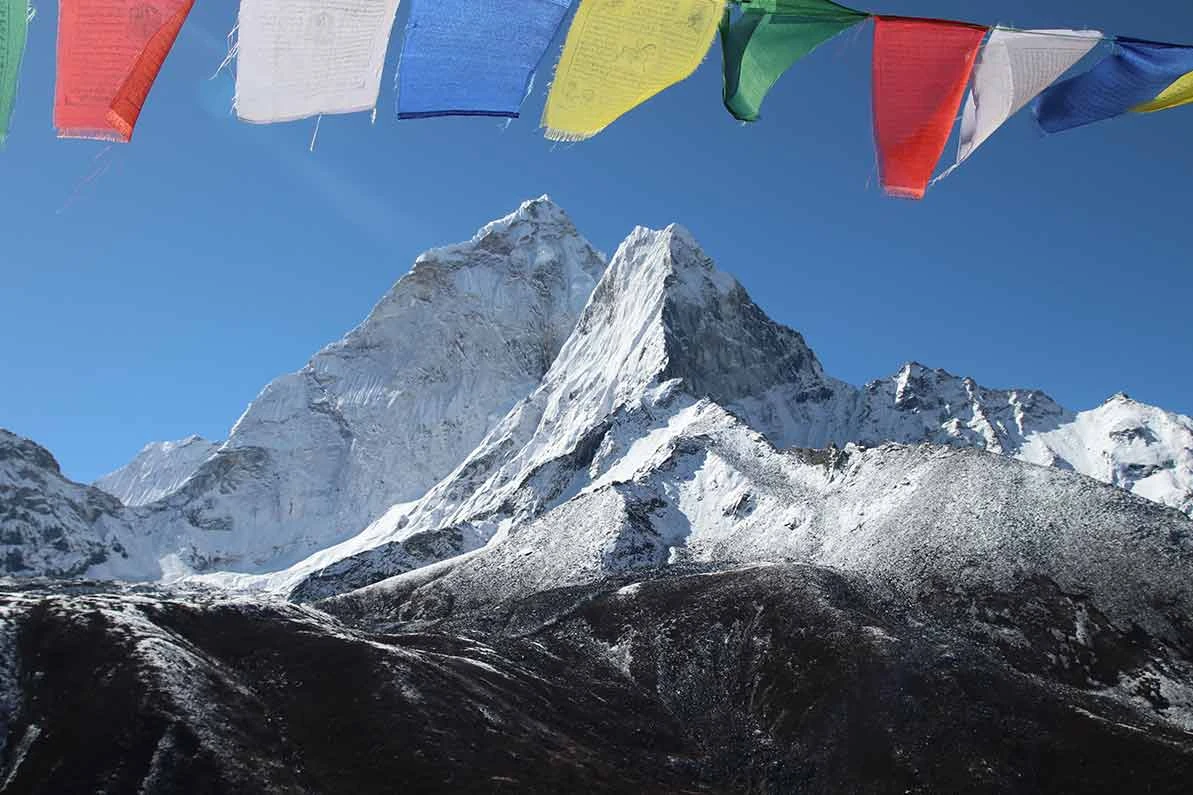
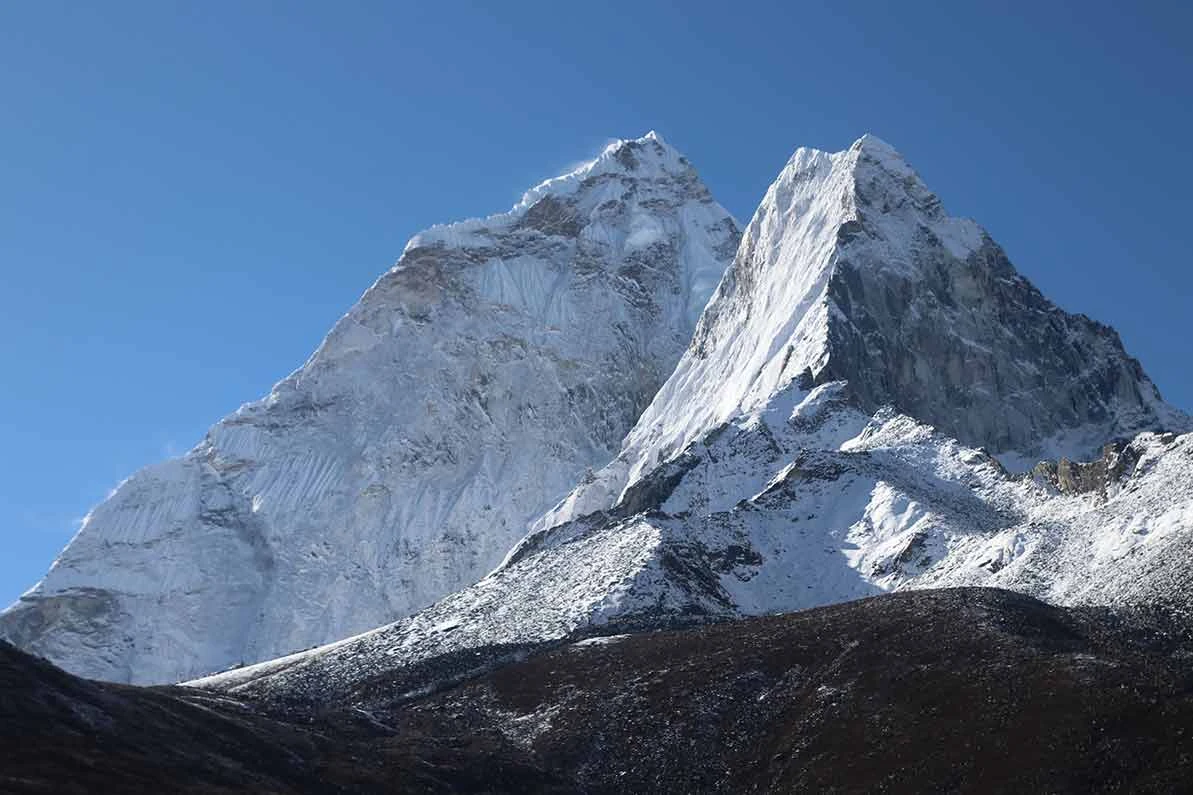
The famous saying resonates directly with the Ama Dablam Base Camp Trek. The Ama Dablam Base Camp Trek is a rewarding journey in Nepal’s Everest region that leads to the base of Ama Dablam, one of the most striking peaks in the Himalayas. Often called the “Matterhorn of the Himalayas” for its sharp, pyramid-like profile, Ama Dablam got its name from the Sherpa language, meaning “mother’s necklace,” a reference to the mountain’s long ridges that resemble a mother’s arms protecting the hanging glacier below.

The trek offers beautiful views of the Himalayas and passes through traditional Sherpa villages such as Phakding and Namche Bazaar. The route follows quieter paths above Namche, allowing trekkers to experience Khumbu culture and visit projects established by Sir Edmund Hillary. Along the journey, you will see wide mountain landscapes with frequent views of Everest and nearby peaks. This creates a high-altitude experience that mixes culture with stunning scenery.

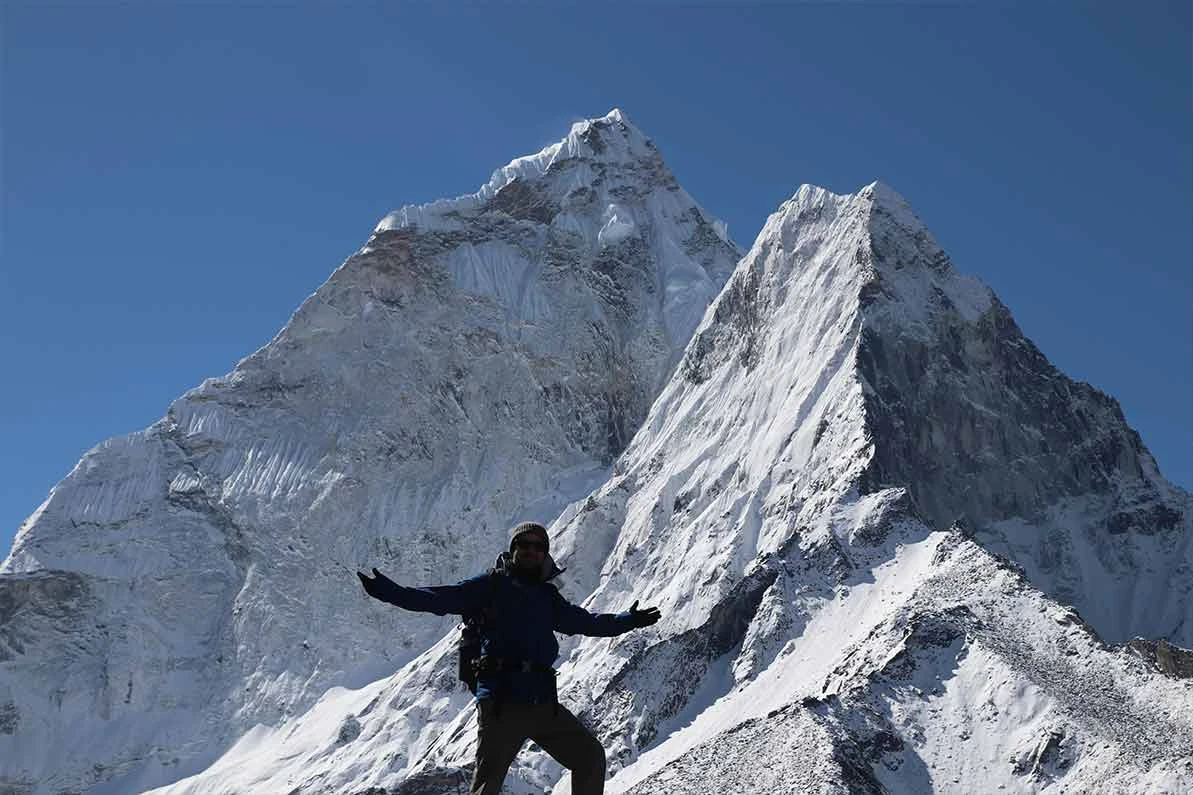
Beyond Pangboche, the trail branches off the main EBC route, and the atmosphere becomes quieter and calmer. At about 4,600 m, Ama Dablam Base Camp sits directly beneath the mountain’s dramatic southwest face, offering close-up views of Ama Dablam alongside Everest, Lhotse, and Thamserku. Unlike the crowds on the EBC trail, this trail is often shared with small climbing teams preparing for technical ascents. Therefore, you could get a rare glimpse into the world of mountaineering in a peaceful setting.

The Ama Dablam Base Camp Trek lasts 10 days and starts with a flight from Kathmandu to Lukla. It involves a gradual ascent through rhododendron forests and key stops at Phakding, Namche Bazaar, Tengboche, and Pangboche, one of the oldest Sherpa villages. The trek, which features wildlife such as snow leopards and red pandas, is moderately challenging and ideal for hikers seeking a culturally rich experience distinct from other popular treks.

Flow of Journey

The 10 Days itinerary, Ama Dablam Base Camp Trek in Nepal, starts in Kathmandu for gear preparation and team meeting, followed by a flight to Lukla, the gateway to the Khumbu. From the moment you land in Lukla, the Khumbu Valley trekking experience begins as you follow the Dudh Koshi River through pine forests and classic Sherpa settlements toward Namche Bazaar.

You will acclimatize in Namche Bazaar with hikes to Syangboche and the Everest View Hotel for views of Everest, Lhotse, and Ama Dablam. The trek continues to Tengboche monastery and then to Pangboche, taking a quieter side trail toward Ama Dablam. From Pangboche, it’s time to reach Ama Dablam Base Camp, where you get closer to the mountain. You will experience majestic views of the hills, ridges, and glaciers before returning to Pangboche for an overnight stay.

The journey then turns downhill, retracing through Deboche and Tengboche back to Namche, and on to Lukla via Monjo and Phakding, with time to enjoy Sherpa villages, bakeries, and forested river valleys along the way. A final scenic flight returns you to Kathmandu, where you celebrate with a farewell dinner and prepare for departure, carrying new confidence, gratitude, and vivid memories of Ama Dablam and the Khumbu.

Itinerary

Day1
  • Accommodation:Hotel
  • Drive Distance:5.8 km (Tribhuvan International Airport to Thamel)
  • Drive Duration:30 minutes
  • Sleep Elevation:1,400 m
  • Overnight Place:Kathmandu
  • Day's Difficulty:Gentle

After you arrive at Tribhuvan International Airport and complete your visa process, our team will greet you at the terminal with a warm namaste and a nameplate, then guide you to your vehicle. On the way to Thamel, you will get to see the iconic Pashupatinath from the road. After about 30 minutes, you will arrive at your hotel, where our staff will help you check in and settle in.

After checking in and resting a bit, you can take a leisurely walk through the heritage alleys of Thamel. While exploring, you will find hidden courtyards with prayer flags and small shrines not found on regular maps. If you need trekking gear, we will take you to local shops where the owners repair old rucksacks and share trekking stories.

As night falls, you'll return to the hotel for a brief meeting with the trekking crew and guide, who will discuss our itinerary. Overnight dinner and sleep await you as your adventure begins tomorrow.

Included activities:

  • Arrive at Tribhuvan International Airport.
  • Meet the team and drive to Thamel.
  • See local life and Pashupatinath on the way.
  • Check in and explore Thamel’s alleys and shops.
  • Meet the trekking crew and rest for the night.
Day2
  • Meals:Breakfast, Lunch, Dinner
  • Accommodation:Teahouse
  • Trek Distance:6.2 km
  • Trek Duration:3-4 hours
  • Flight Duration:35 minutes
  • Sleep Elevation:2,610 m
  • Overnight Place:Phakding
  • Day's Difficulty:Moderate

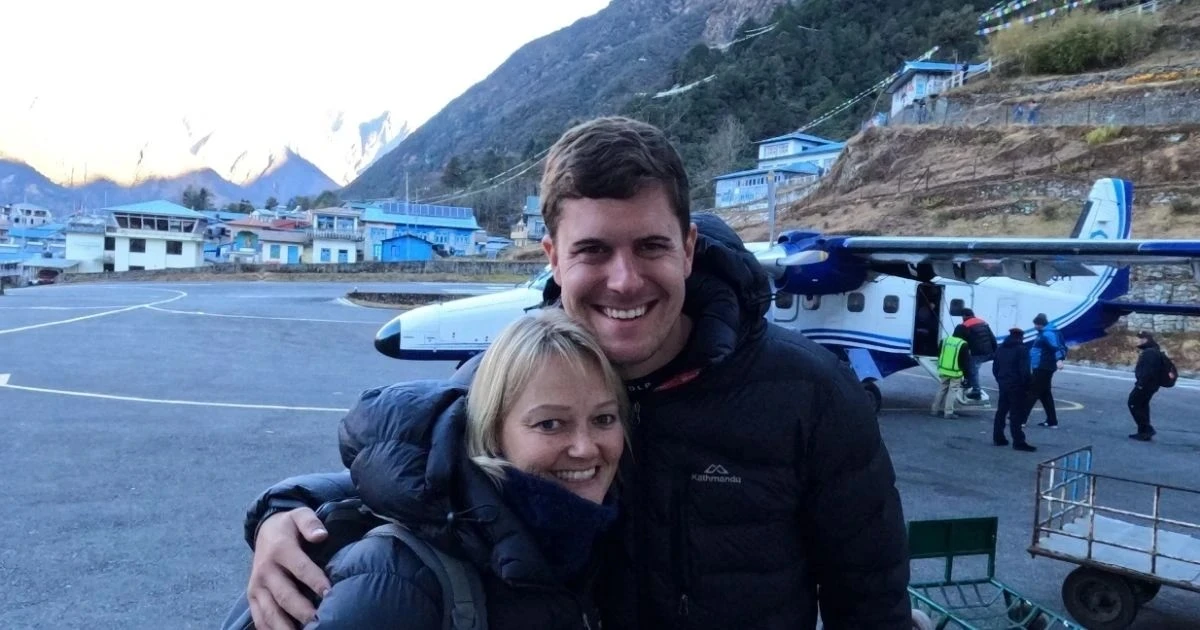
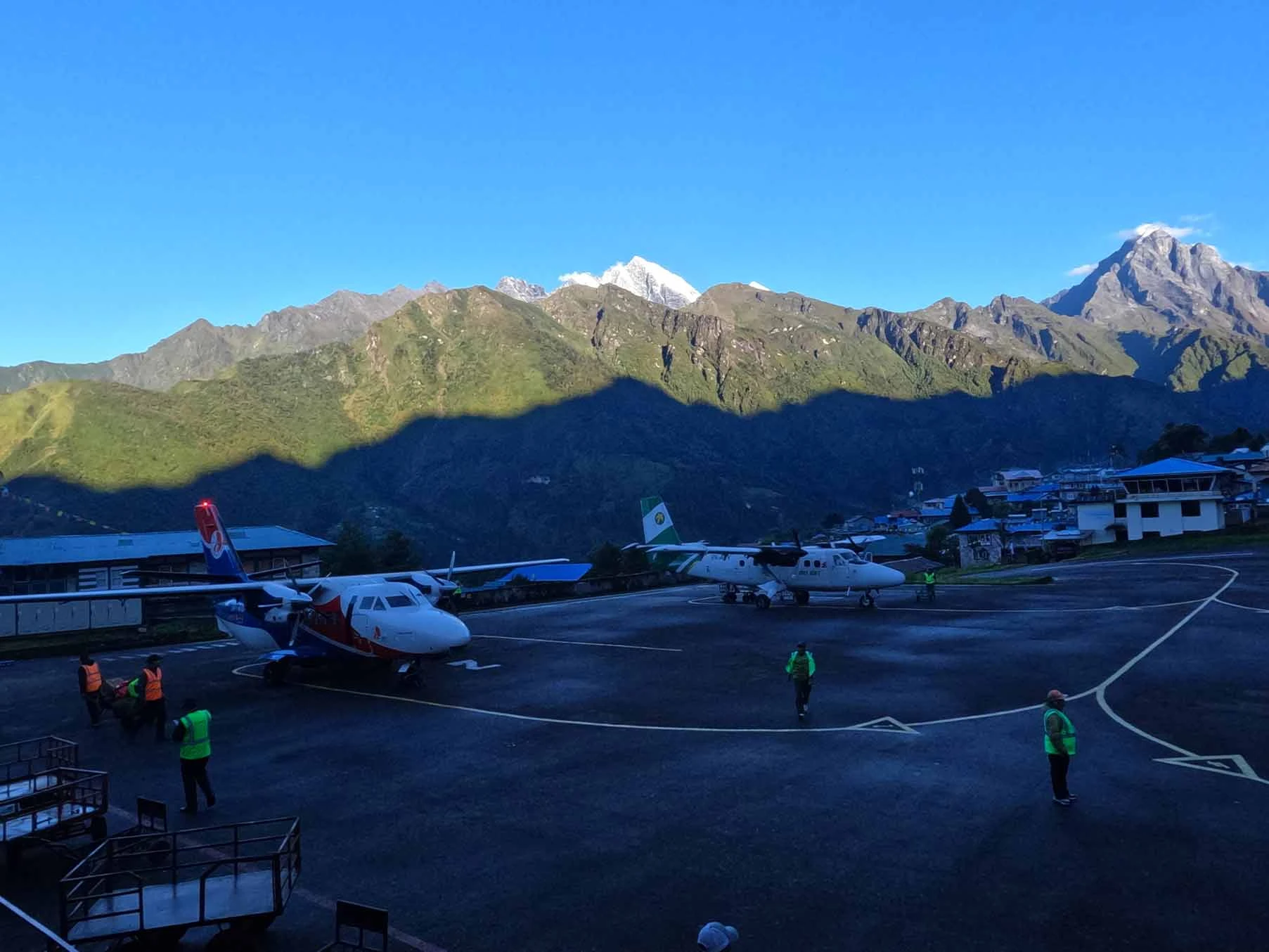
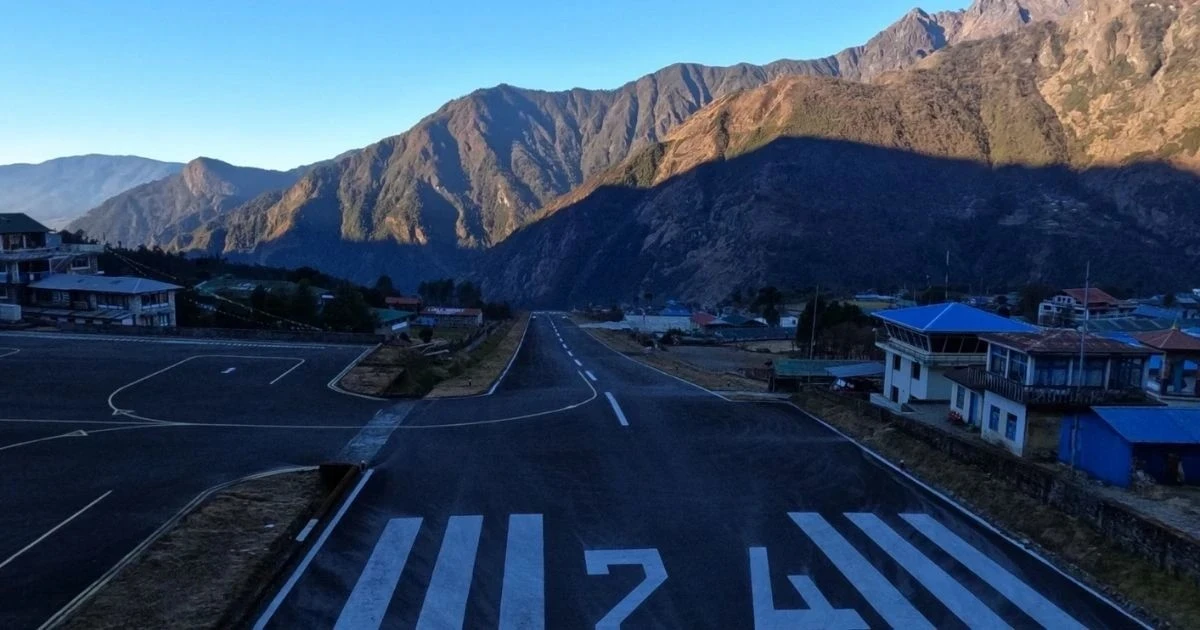
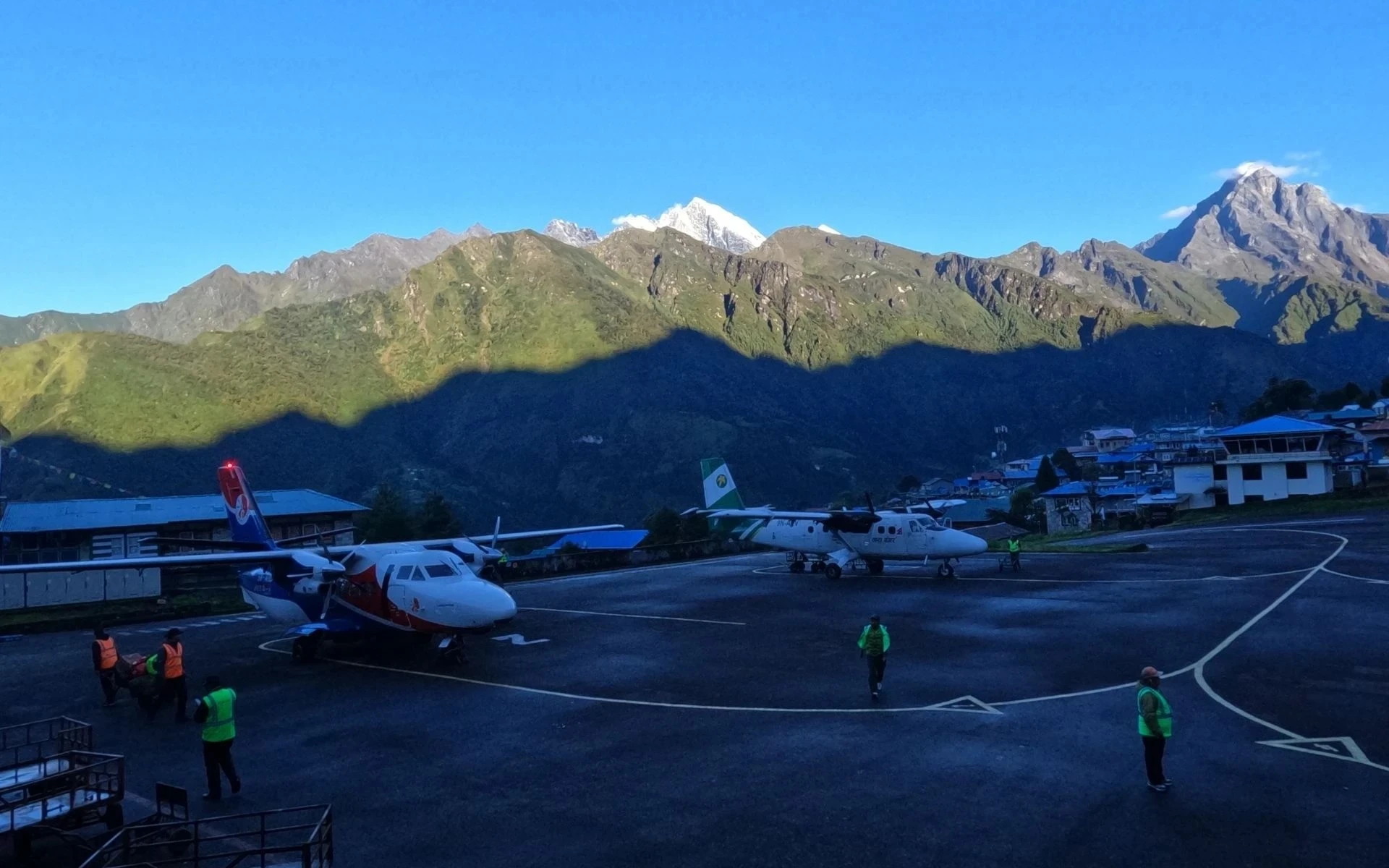
On the second day of the Ama Dablam journey, we take a short but memorable flight to Lukla. The views of the Khumbu hills, terraced villages, and surrounding mountains are among the thrilling highlights of our flight adventure. We will land at Tenzing-Hillary airport, which is perched on a narrow mountainside ridge. After a warm tea stop in the stone-lined alleys of Lukla, our trek begins on a gently sloping trail.

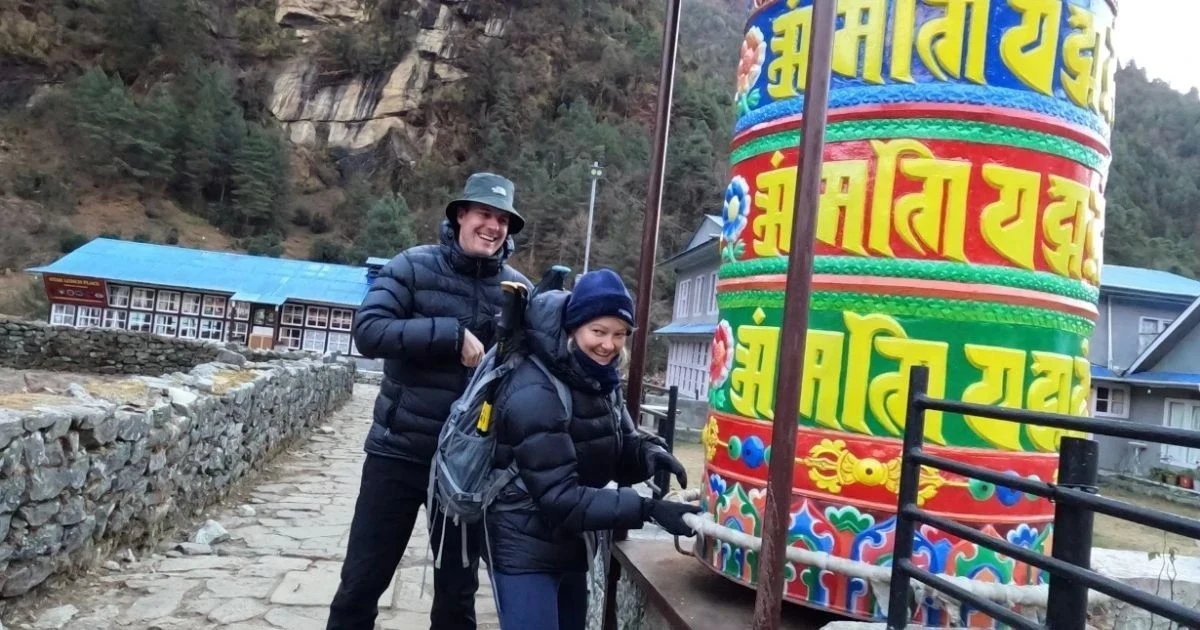
We will pass through the village of Chheplung, where traditional Sherpa homes and mani stone walls line the path. Next, we follow the Dudh Koshi River toward Thado Kosi. We will cross an early suspension bridge that gives us a clear view of Kusum Kanguru, a stunning ice-covered peak that locals proudly point out. From this point, the trail winds through the hamlet of Ghat, which is known for its long prayer walls, chortens, and spinning prayer wheels, marking our deeper entry into Sherpa Buddhist country.

As we approach Phakding, we will hear the river's sound grow louder. Along the way, the colorful prayer flags flutter above simple stone teahouses. After settling into our lodge and enjoying a meal, we can take a short evening walk to Rimishung Monastery, a quiet gompa with views over the Dudh Koshi valley at dusk. The night in Phakding offers a glimpse of Khumbu life: the sound of the dining-room stove, Sherpa conversations, and stars above the hills.

Note:

The Lukla flight is the most common way to reach the Khumbu Valley from Kathmandu. However, seasonal factors greatly affect the flight to Lukla. During peak seasons, which are Spring (March to May) and Autumn (September to November), flights from Kathmandu are often redirected to Ramechhap due to high air traffic at Tribhuvan International Airport. This means travelers must drive 4-5 hours from Kathmandu to Manthali Airport in Ramechhap to catch their Lukla flight.

Included activities:

  • Take a short scenic flight from Kathmandu to Lukla.
  • Land at the Tenzing-Hillary Airport and start the trek.
  • Walk through Chheplung village and follow the Dudh Koshi River.
  • Cross a suspension bridge with views of Kusum Kanguru on the horizon.
  • Arrive in Phakding, visit Rimishung Monastery at dusk.
Lukla Airport
Trek to phakding
Day3
  • Meals:Breakfast, Lunch, Dinner
  • Accommodation:Teahouse
  • Trek Distance:10-12 km
  • Trek Duration:5-6 hours
  • Sleep Elevation:3,440 m
  • Overnight Place:Namche Bazaar
  • Day's Difficulty:Moderate

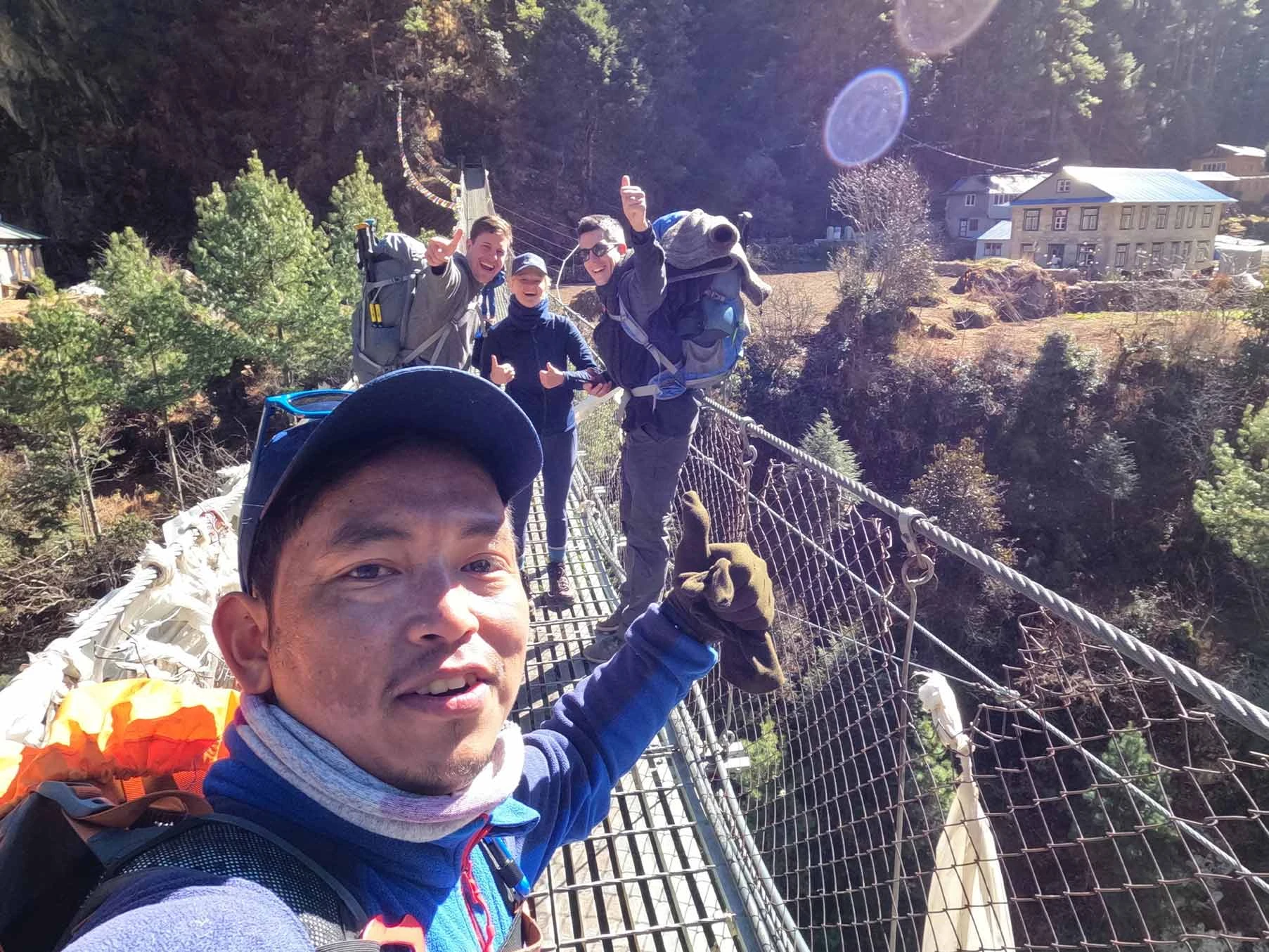
We wake up in Phakding and enjoy breakfast before starting our trek to Namche Bazaar. The Ama Dablam Base Camp trail follows the Dudh Koshi River, where we’ll see prayer flags, mani stones, and prayer wheels. We cross several suspension bridges, taking in the great views of the river canyon. As we approach Monjo, tall peaks like Thamserku and Kusum Kanguru come into view. We'll stop at the Sagarmatha National Park checkpoint to register our permit, marking our entry into this UNESCO World Heritage Site.

Next, we cross a high suspension bridge and descend to Jorsalle, the last settlement before the climb. We’ll have lunch in a pine forest before walking to the Dudh Koshi River and crossing the Edmund Hillary Suspension Bridge. After that, we reach Top Danda, where we can see Mount Everest and Lhotse on clear days. The final stretch involves a steep ascent through pine forests to Namche Bazaar, where we can check into a cozy teahouse for dinner and an overnight stay.

Included activities:

  • Walk along the Dudh Koshi River with prayer flags and mani stones.
  • Cross suspension bridges and register at the Sagarmatha National Park checkpoint.
  • Have lunch at Jorsalle and cross the Edmund Hillary Suspension Bridge.
  • Climb to Namche Bazaar and rest at a teahouse for the night.
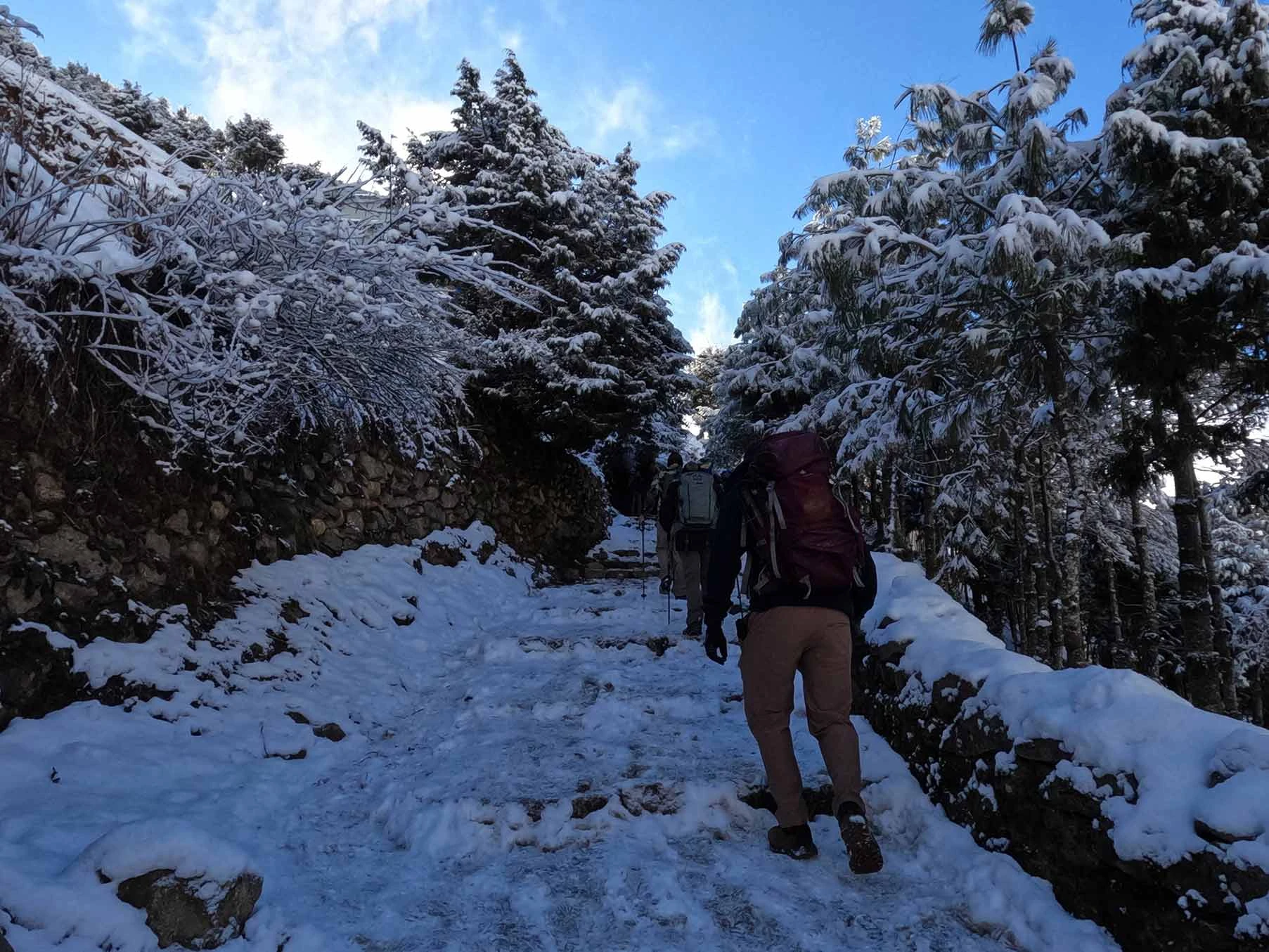
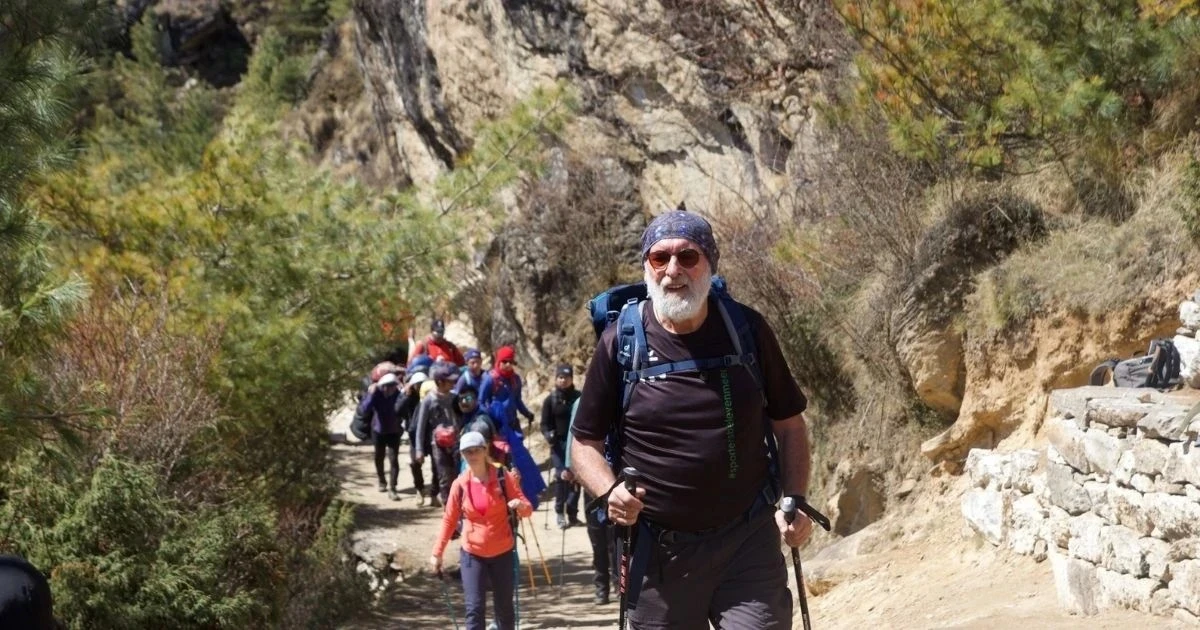
Trek trail to namche bazaar
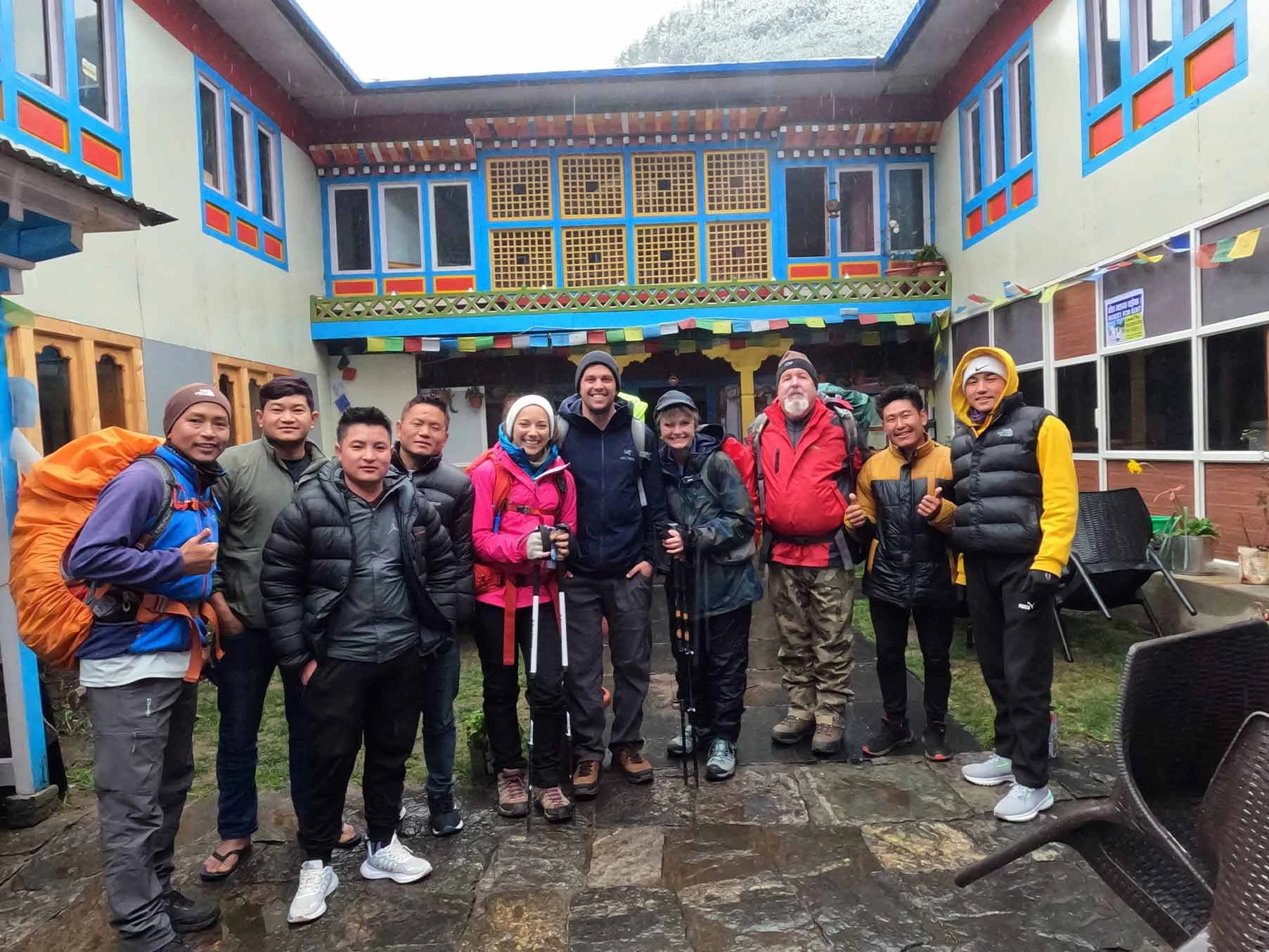
Our group on the way to namche
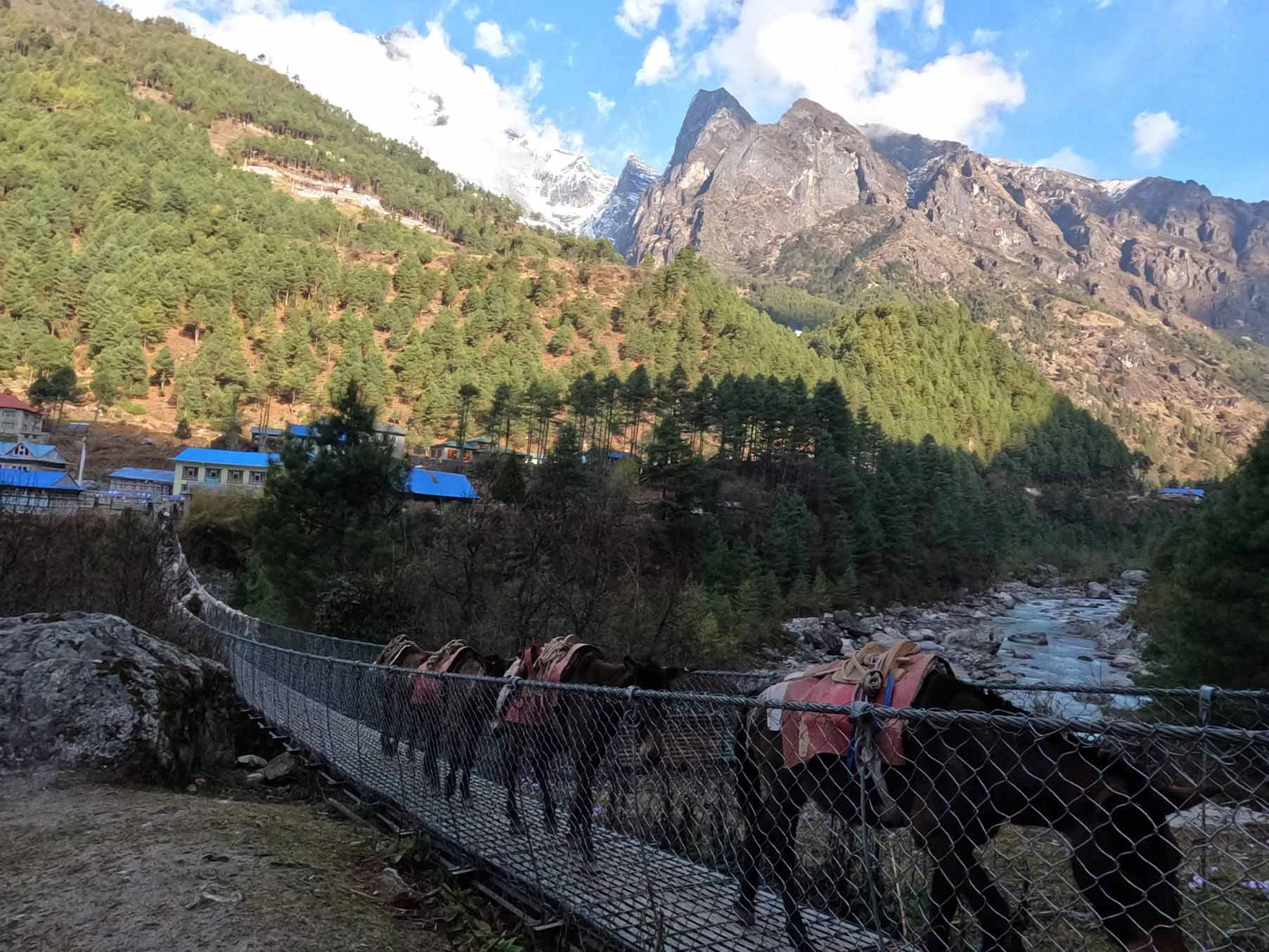
Trek from phakding to namche
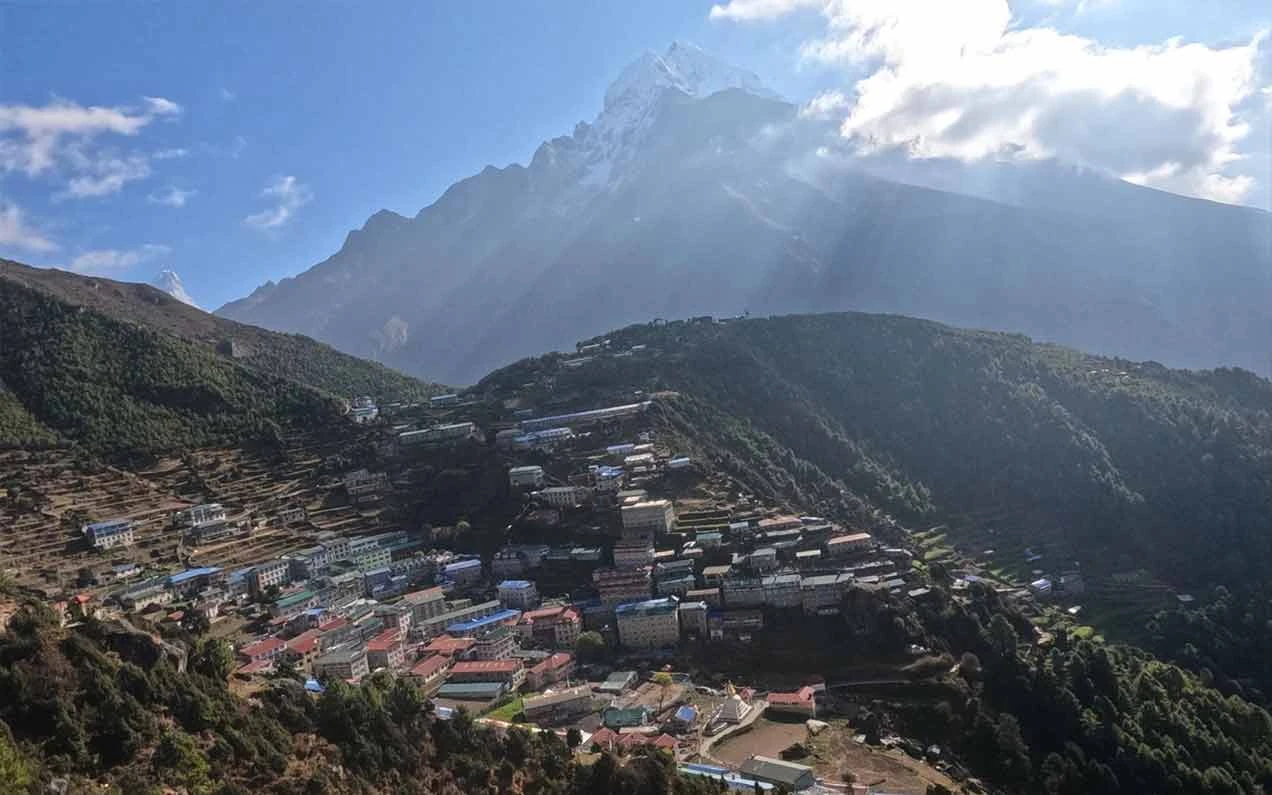
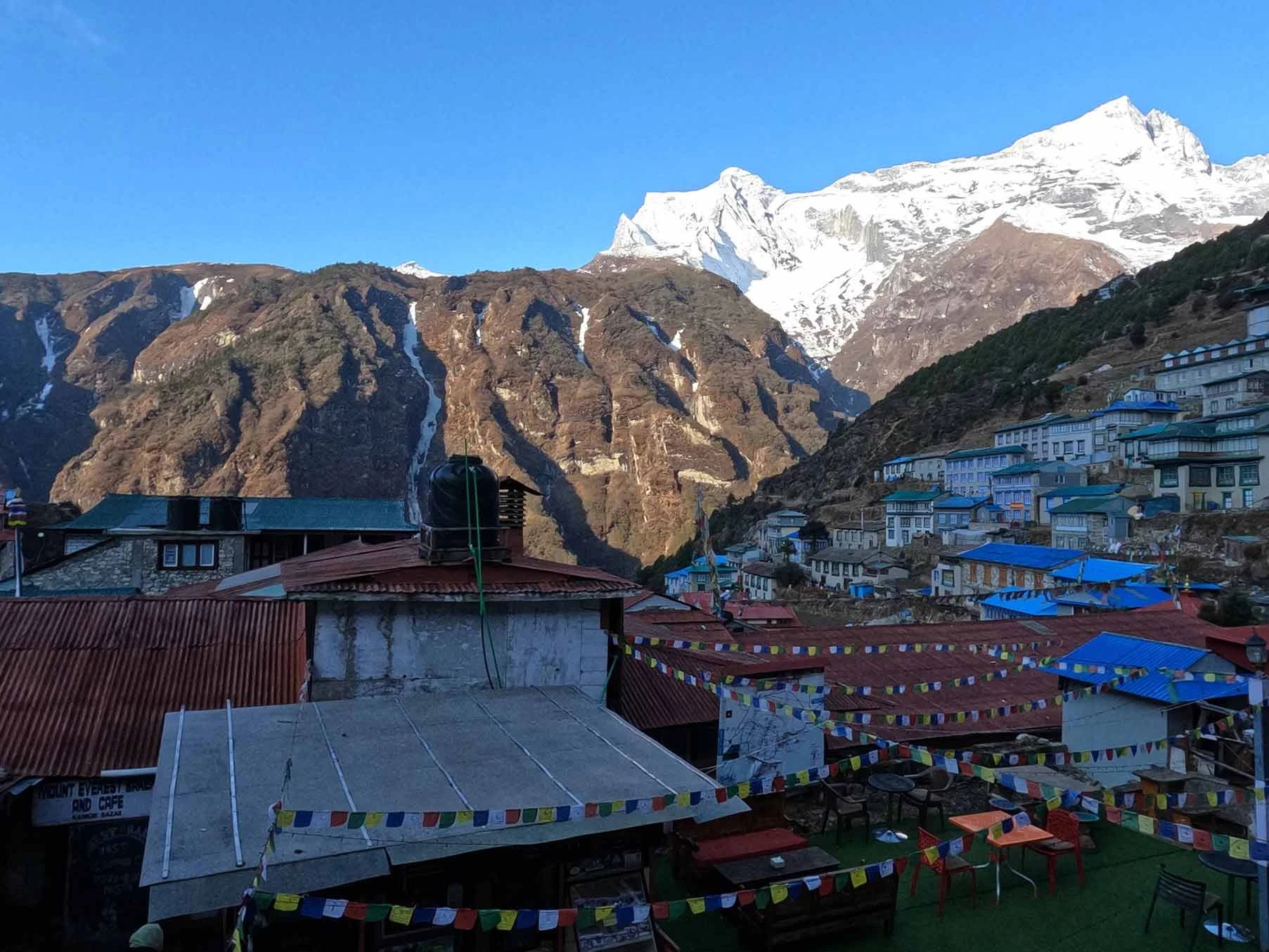
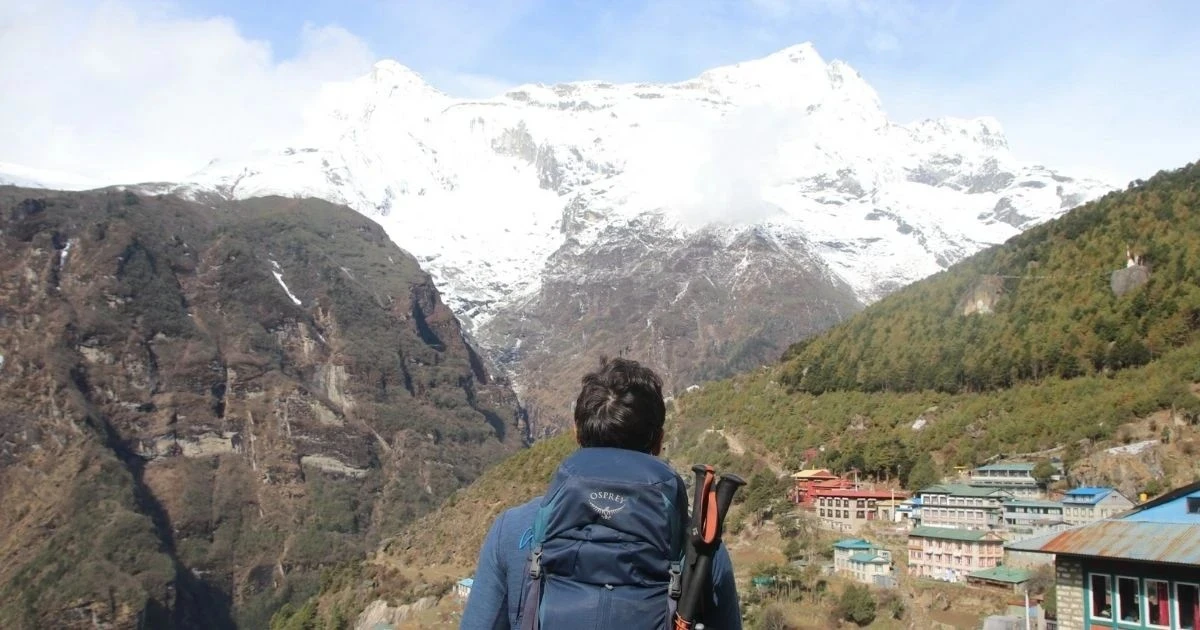
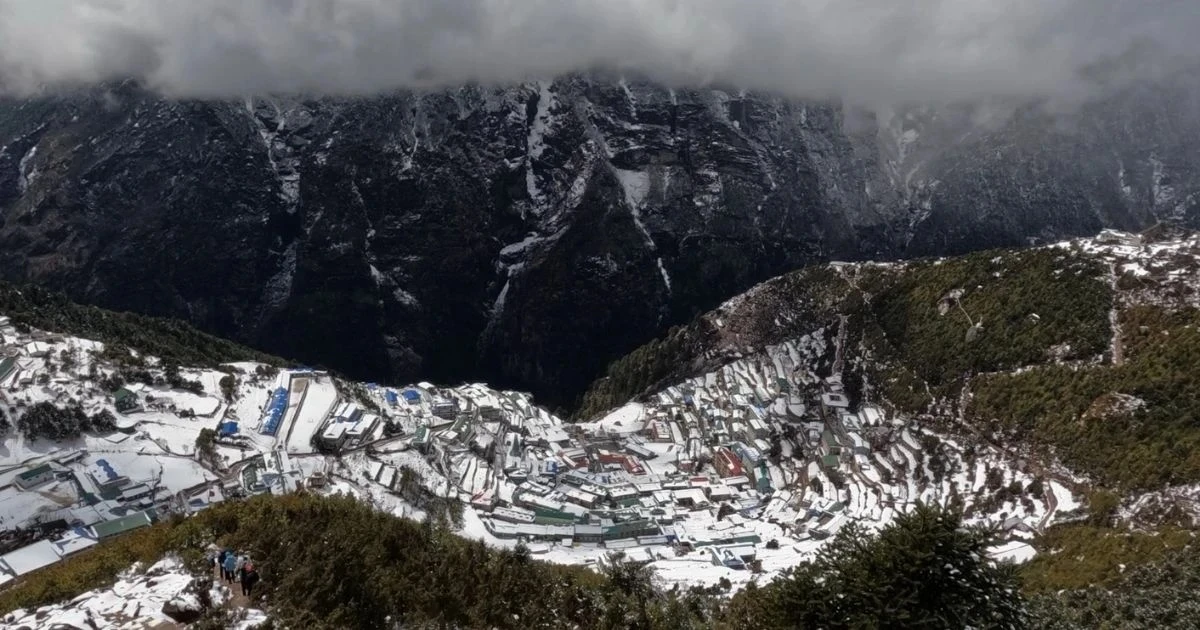
Namche from Top
Day4
  • Meals:Breakfast, Lunch, Dinner
  • Accommodation:Teahouse
  • Trek Distance:3-4 km
  • Trek Duration:3-4 hours
  • Sleep Elevation:3,440 m
  • Overnight Place:Namche Bazaar
  • Day's Difficulty:Moderate

Today marks our first day of acclimatization at high altitude in Namche Bazaar. After enjoying breakfast, we’ll set out to explore the area. We'll start with a hike to the Syangboche airstrip, where we can take in the beautiful scenery. We will see and hear cargo aircraft takeoffs and landings, surrounded by the majestic Khumbu mountains.

From there, we'll continue our ascent to the Everest View Hotel, which offers stunning views of Everest and the surrounding peaks. The trekking guide will assist with the acclimatization during the hike. Once at the hotel, we’ll spend some time soaking in the views before making our way back to Namche to explore the local area further.

We have many options for things to do in Namche. We can visit the Irish Pub, the Sagarmatha National Park Museum, or the Sherpa Cultural Museum. If it’s Saturday, you should check out the lively Saturday market, where vendors from around Everest sell their goods. If you prefer, you can take a rest day to help your body recover before trekking the next day. After a day of activities, we’ll return to our hotel for dinner. We will spend the night in Namche.

Included activities:

  • Enjoy breakfast and begin the acclimatization hike.
  • Walk to the Syangboche airstrip and watch small aircraft take off and land.
  • Continue to the Everest View Hotel for stunning views of Everest.
  • Return to Namche to visit the museums or the market, or to relax.
  • Have dinner and spend the night in Namche Bazaar.
Everest view point
Exploring everest view
Exploring namche bazaar
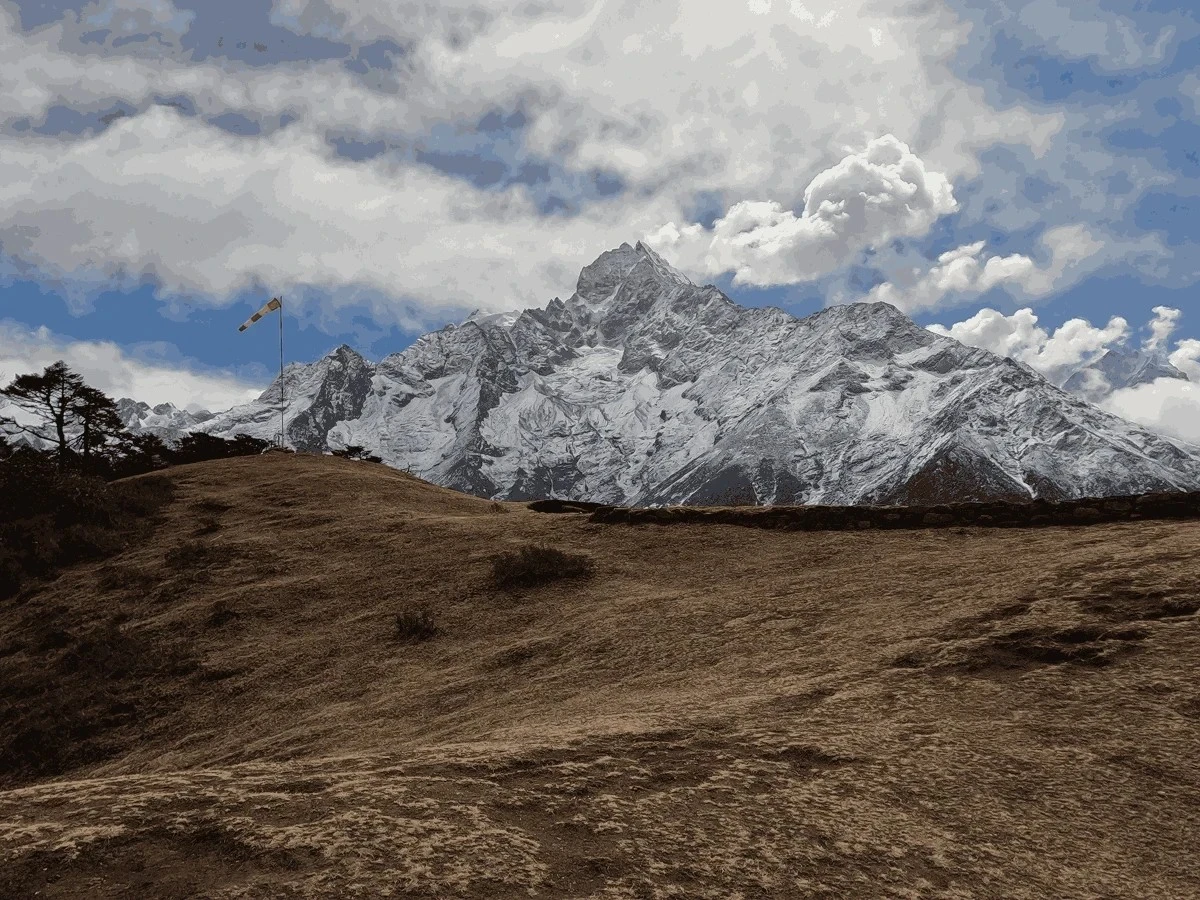
snow capped mountain
Day5
  • Meals:Breakfast, Lunch, Dinner
  • Accommodation:Teahouse
  • Trek Distance:13.7 km
  • Trek Duration:6.5 hours
  • Sleep Elevation:3,930 m
  • Overnight Place:Pangboche
  • Day's Difficulty:Moderate

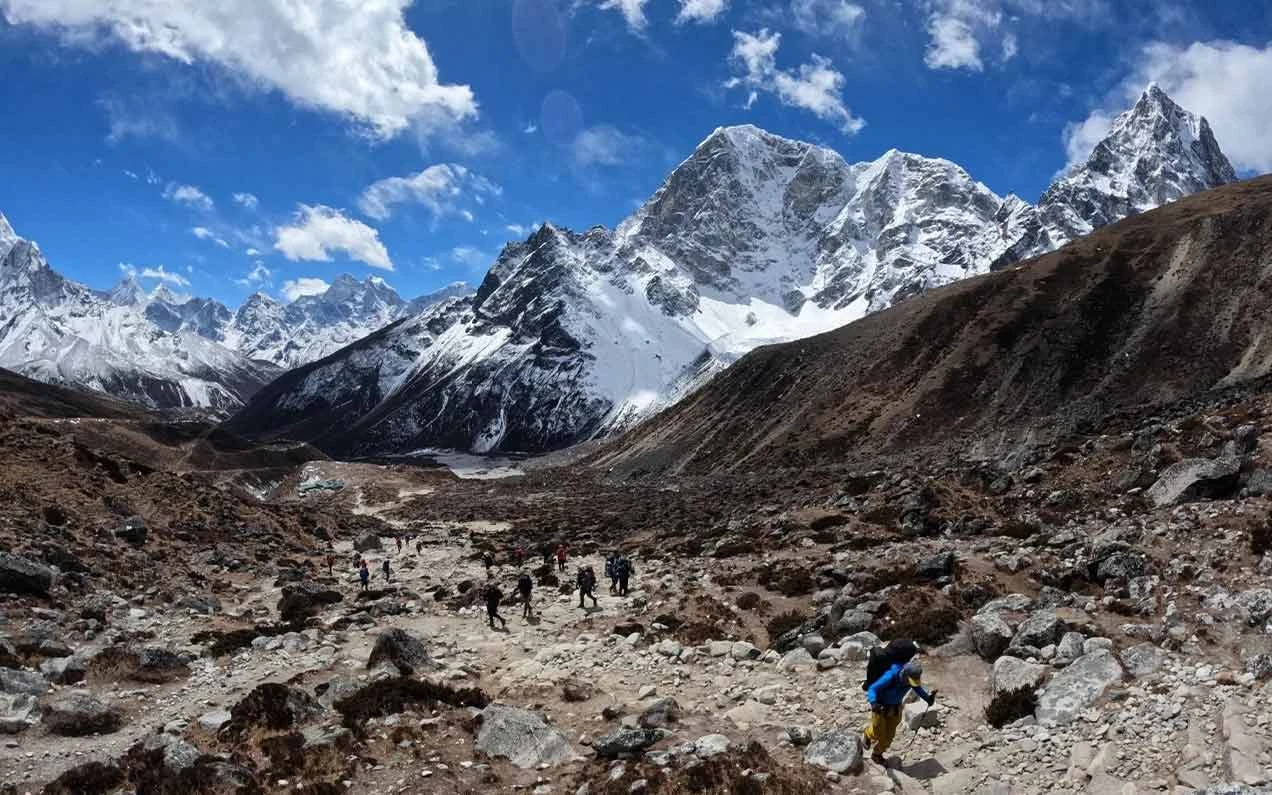
After waking up, we get refreshed and have breakfast. Then, we will prepare to leave for Pangboche after we finish breakfast in Namche. We will continue the walk towards higher elevations. Initially, we will follow the Dudh Koshi River and cross the suspension bridge above the river. Then, we will continue through the rhododendron forest with a mesmerizing view of the mountain peaks.

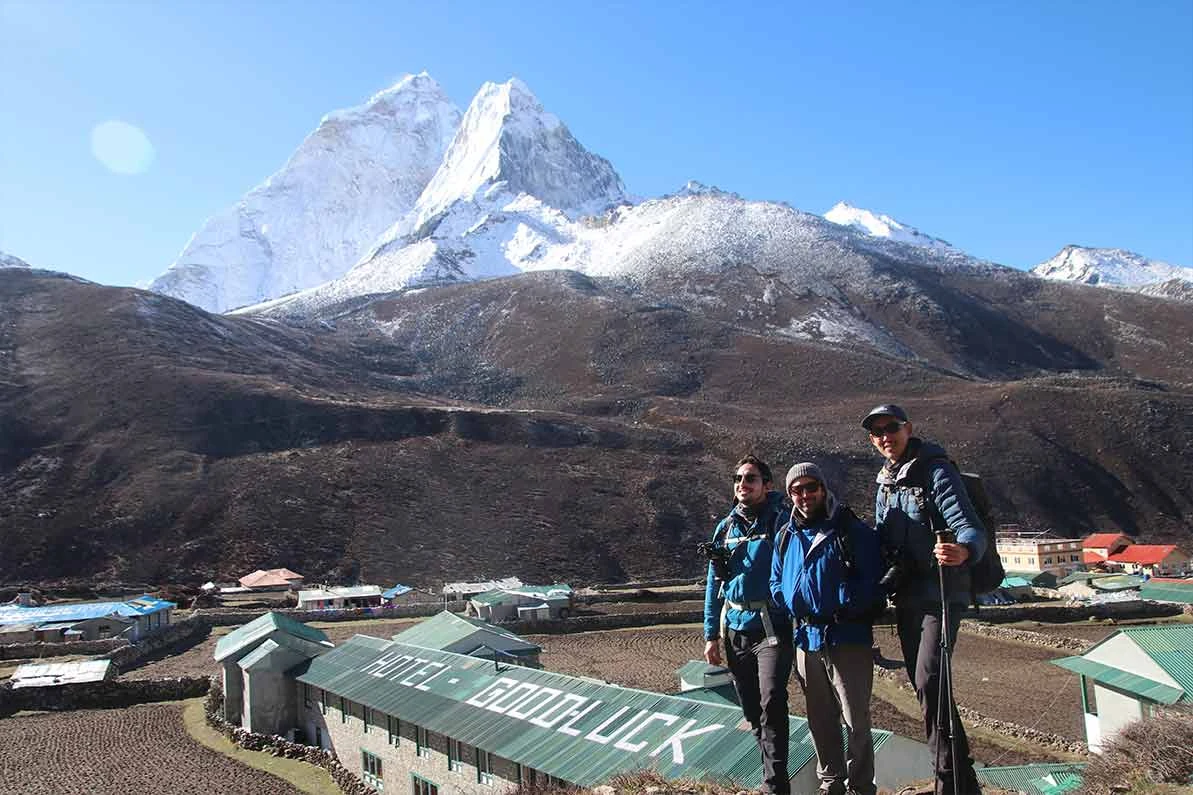
As the walk proceeds, we will reach Phortse Village and continue towards Pangboche. We can see Mount Ama Dablam in the distance. Continuing the walk, we will descend to the Imja Khola River, followed by an ascent to reach Pangboche. Pangboche is a small Sherpa village home to the Pangboche monastery. The monastery is home to Sherpa nuns, who teach young children. Once we reach Pangboche, we will stay at an accommodation where we can enjoy local cuisine for dinner. We will spend the night in Pangboche.

Included activities:

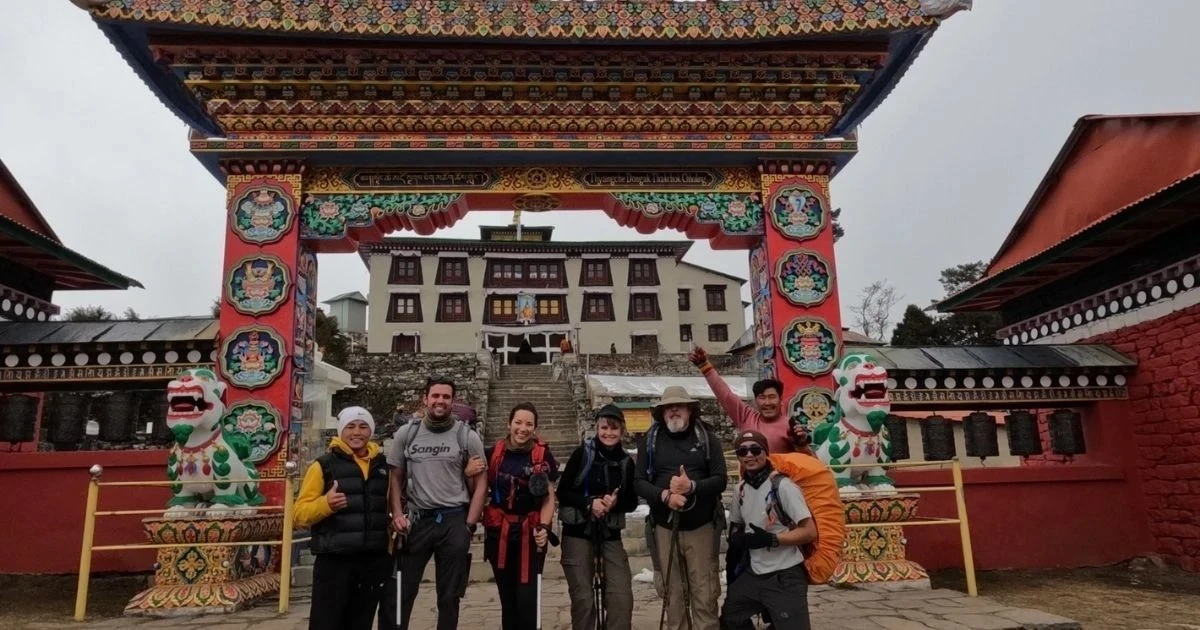
  • Visit Tengboche monastery.
  • Reach Pangboche for an overnight stay.
  • Cross suspension bridges over Dudh Koshi River.
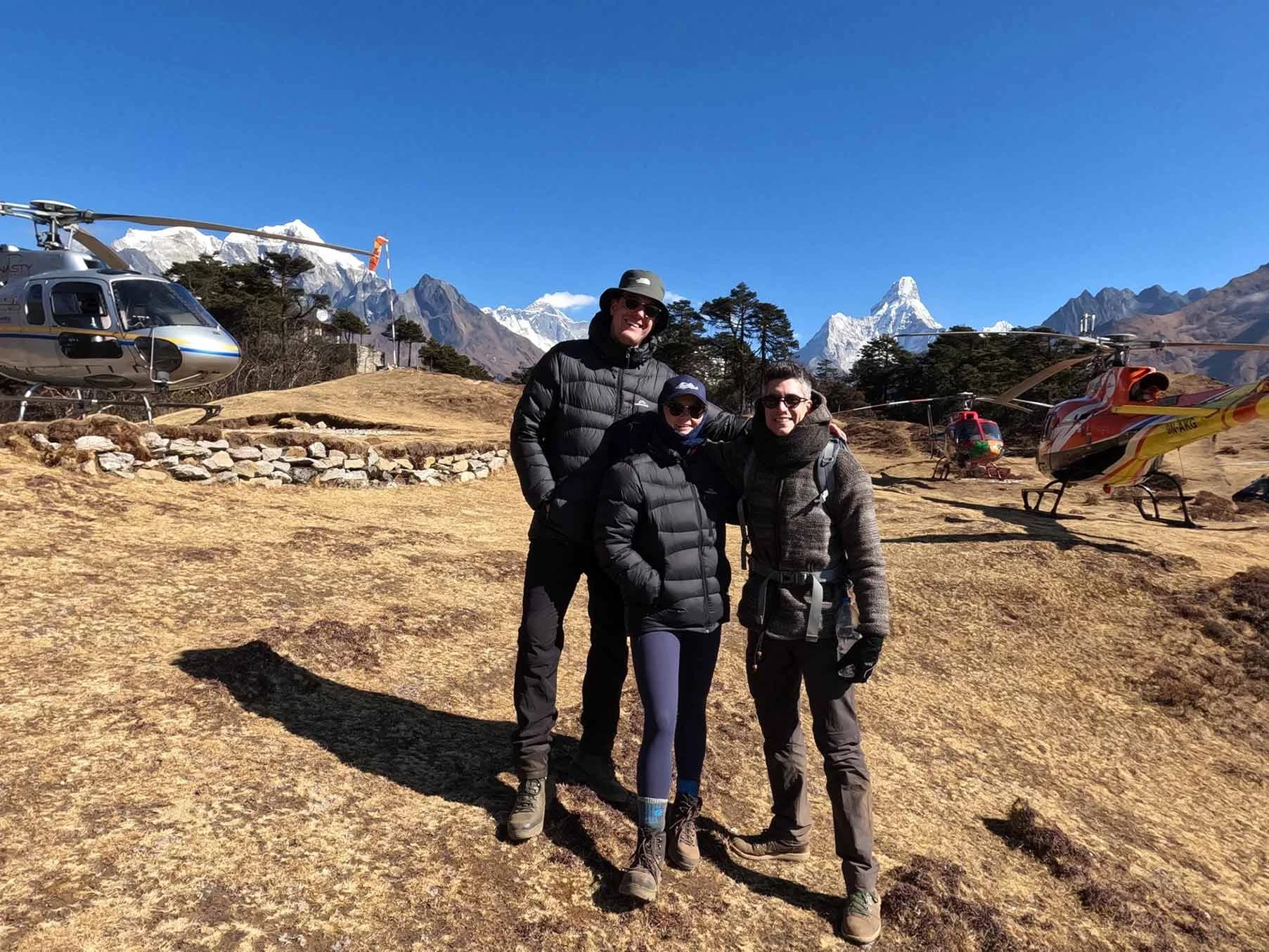
Our client on the way to ama dablam
View from the trek trail
Dingboche trail
On the way of Dingboche
Day6
  • Meals:Breakfast, Lunch, Dinner
  • Accommodation:Teahouse
  • Trek Distance:7-10 km
  • Trek Duration:7-10 hours
  • Sleep Elevation:3,930m
  • Overnight Place:Pangboche
  • Day's Difficulty:Challenging

Today is an exciting day for us as we finally reach Ama Dablam Base Camp from Pangboche. We leave the classic EBC trail and follow a quieter path that locals use to reach our destination. First, we pass above Pangboche, before dropping towards the Imja Khola trail, where we will see stone shelters and prayer flags fluttering in the wind. We cross the Imja River and follow an uphill trail through open pasture, passing a long mani wall, where we can hear the river.

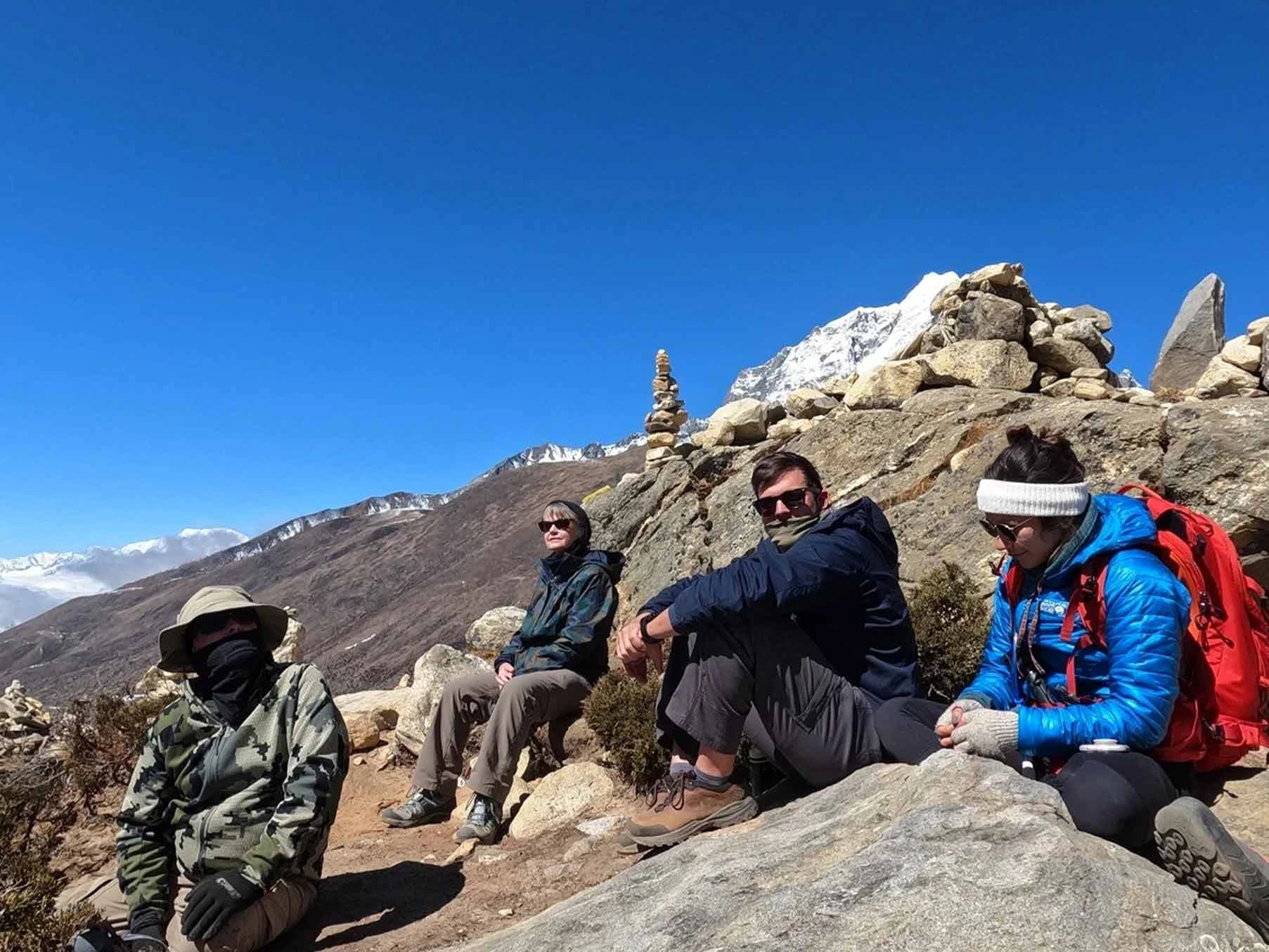
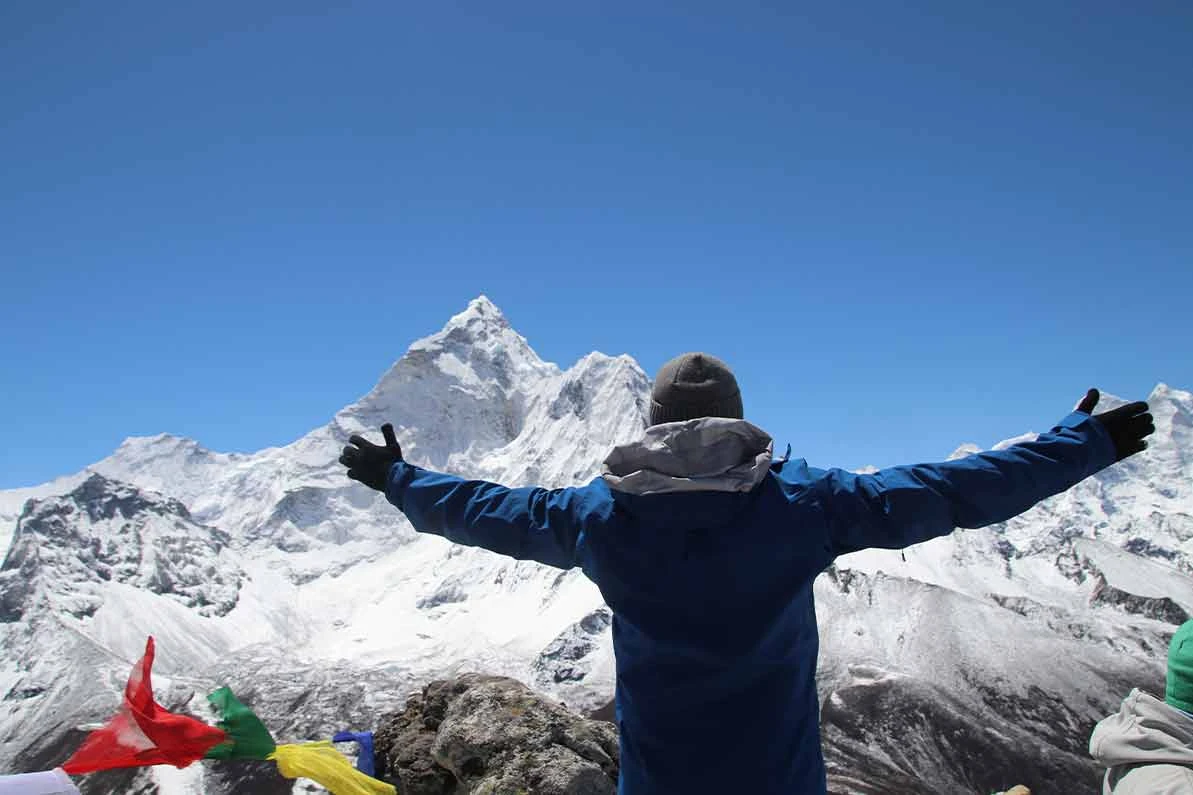
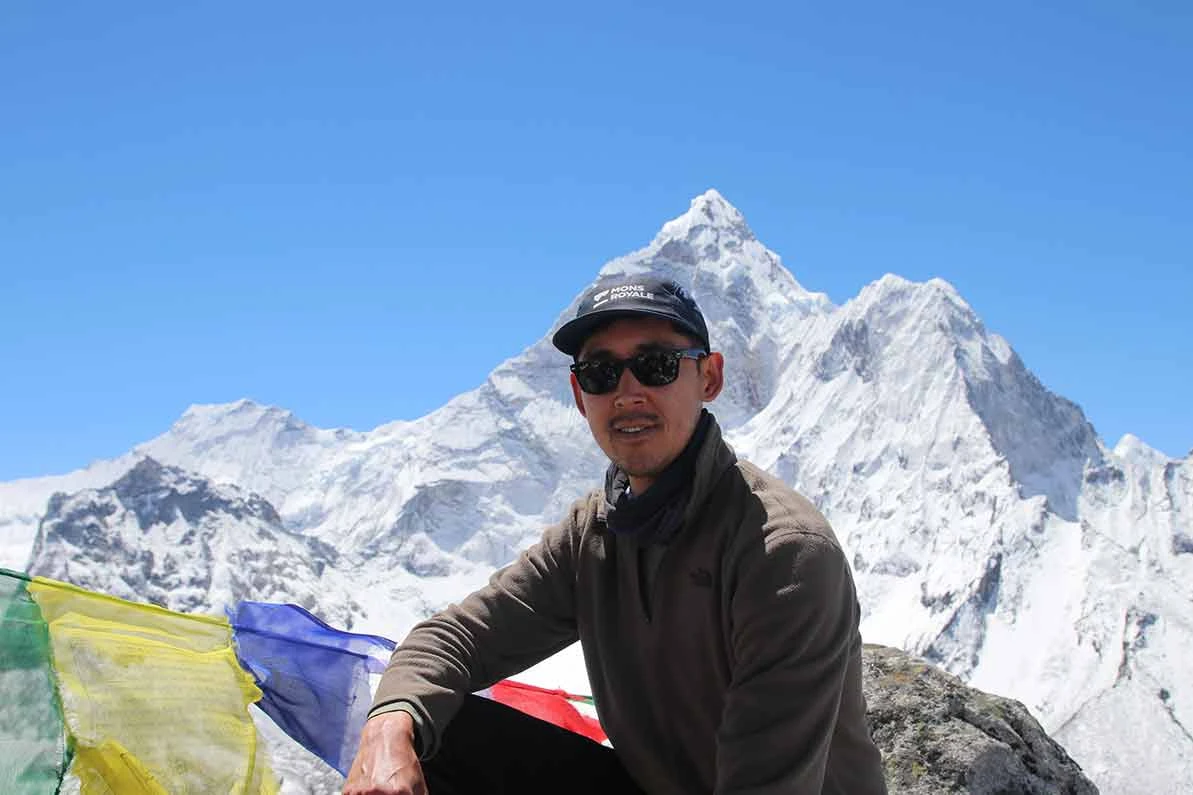
We take a short walk to a small glacial pond that herders use as a “weather mirror.” Then, we continue to Ama Dablam Base Camp, where the mountain looms above us. In spring, we might enjoy tea with climbing Sherpas and watch them prepare in camp. Reaching Ama Dablam is well worth it, after several days of hard treks through rough terrains, so cherish them as much as you can. After spending some time in the base camp, it’s time to descend. We now follow a slightly higher trail, which offers a clear balcony view of the Imja Valley and a majestic view of Ama Dablam, glowing above Lhotse and Everest. 

We return to Pangboche and have time to explore Upper Pangboche. We visit the old monastery for a brief blessing, then walk through narrow stone lanes lined with juniper trees, their stories woven into local legends. We also find small hidden chortens where villagers spin prayer wheels at dusk. In the evening, we will sit together and listen to each other's stories before heading to the teahouse for an overnight stay.

Included activities:

  • Pass Pangboche, cross Imja River with prayer flags.
  • Walk past the mani wall, visit the glacial “weather mirror.”
  • Reach Base Camp, admire peaks, watch Sherpas.
  • Descend to Pangboche, visit the monastery, and share stories.
Mount Amadablam
Mount Amadablam view
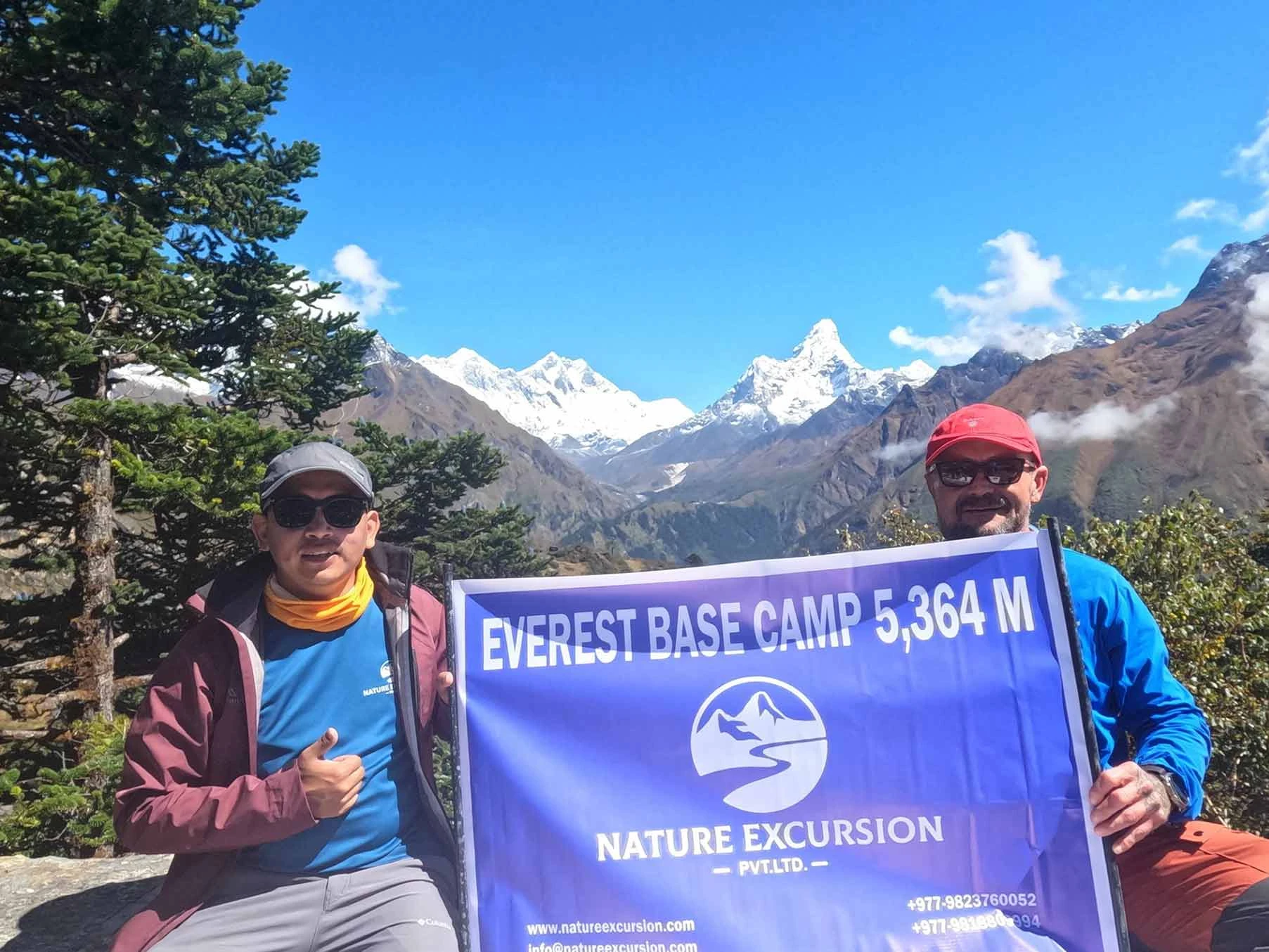
Client clicking pictures with mt.amadablam
Client posing with mt. amadablam
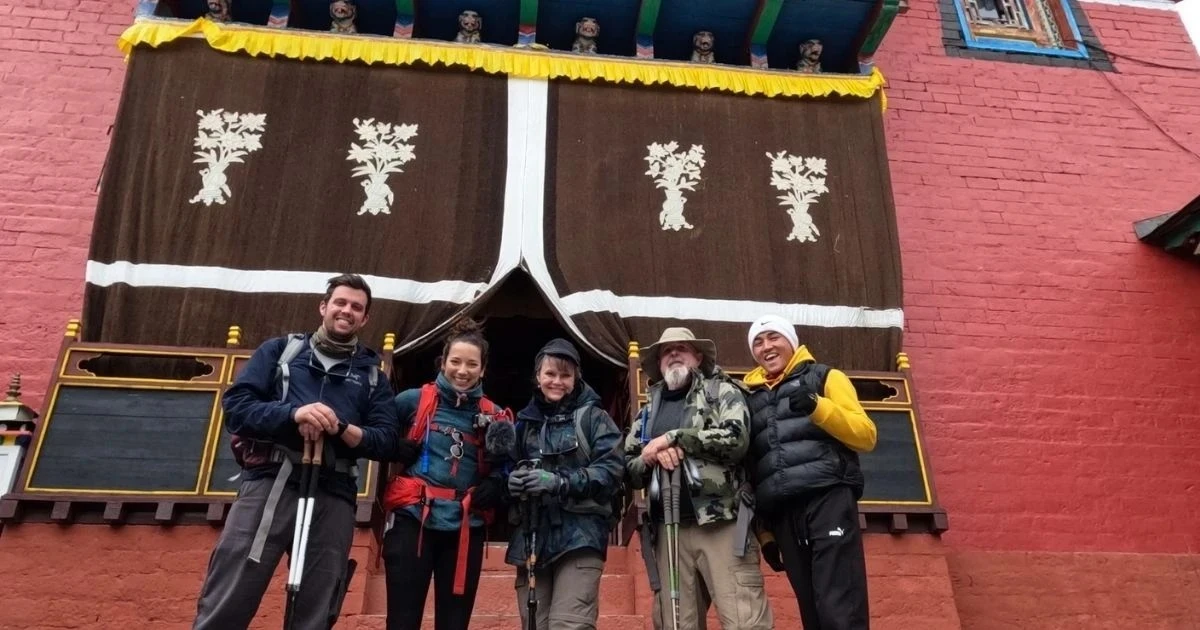
Our clients at amadablam
Day7
  • Meals:Breakfast, Lunch , Dinner
  • Accommodation:Teahouse
  • Trek Distance:10 km
  • Trek Duration:5-6 hours
  • Sleep Elevation:3,440 m
  • Overnight Place:Namche Bazaar
  • Day's Difficulty:Moderate

We continue our descent on the 10-Day Ama Dablam Base Camp Trek, and today we trek from Pangboche to Namche Bazaar. After several days at high altitudes, the lower elevation feels refreshing. Each breath brings the fresh scent of pine and damp earth. The trail weaves through birch and rhododendron, their twisted roots clinging to the slopes. Soon, we arrive at Deboche and the famous Tengboche Monastery. Here, colorful prayer flags flutter in the wind, and we can hear monks chanting along with the soft ringing of yak bells. We will explore the monastery for a bit and drink locally produced tea. The majestic Ama Dablam still shines, but it is far away from where we came from.

After a short pause, we continue our trek, which suddenly drops steeply down stone steps. We cross the bridge and enter the lower Khumbu region, surrounded by green forests and the sound of several birds. Phunki Tenga and other small Sherpa hamlets are new locations we cross before arriving at Namche Bazaar. We will visit different pubs, restaurants, bakeries, or can indulge in some shopping before checking in at the teahouse.

Included activities:

  • Continue descending from Pangboche to Namche Bazaar.
  • Breathe in fresh pine-scented air at lower altitudes.
  • Walk through birch and rhododendron forests to Deboche and Tengboche Monastery.
  • Explore the monastery, sip local tea, and enjoy views of Ama Dablam.
  • Descend steeply, cross bridges, and pass Phunki Tenga before reaching Namche Bazaar.
  • Visit pubs, bakeries, and shops before resting at the teahouse.
Day8
  • Meals:Breakfast, Lunch, Dinner
  • Accommodation:Teahouse
  • Trek Distance:16 km
  • Trek Duration:7-8 hours
  • Sleep Elevation:2,845 m
  • Overnight Place:Lukla
  • Day's Difficulty:Moderate

We will start our walk back from Namche Bazaar after a hearty breakfast, inspired by the beautiful views. Our descent will take us along steep paths through fragrant forests, filled with natural sounds. We’ll cross charming suspension bridges over rushing rivers, perfect for photos. The trail mostly goes down until we reach the Hillary Suspension Bridge, where we can take a moment to admire its impressive structure.

As we get closer to Monjo, the path steepens, reminding us of our incredible journey. At Monjo, we’ll exit Sagarmatha National Park, filled with great memories of nature’s beauty. After leaving the park, the trail will gently lead us to Phakding, where we’ll enjoy a well-deserved lunch in the peaceful village.

After lunch, we’ll trek uphill through Ghat village, where we'll get a glimpse of local life. We’ll cross the Dudh Koshi River several times, with stunning views at each crossing. Once in Lukla, we’ll check into our cozy lodging and enjoy a warm meal while sharing adventure stories under the Himalayan sky. After a fulfilling day, we’ll rest up for our flight the next day.

Included activities:

  • Start the walk from Namche Bazaar after breakfast.
  • Descend through forests and cross suspension bridges.
  • Exit the park at Monjo and reach Phakding for lunch.
  • Trek through Ghat village and cross the Dudh Koshi River.
  • Arrive in Lukla, eat dinner, and rest for the flight.
Day9
  • Meals:Breakfast, Farewell Dinner
  • Accommodation:Hotel
  • Flight Duration:30 Minutes flight
  • Overnight Place:Kathmandu

Today, we leave the Khumbu region and return to the capital Kathmandu. After breakfast, we’ll pack our things and prepare to depart from Lukla on an early-morning flight. Just like before, the bird’s eye views of the Khumbu mountains still feel stunning. Once we land, our Nature Excursion team will drop you off at your hotel for a well-deserved rest.

The rest of the day is yours to relax, do some last-minute shopping, or explore the lively streets of Thamel. In the evening, we’ll gather for a farewell dinner to celebrate the end of our adventure together. Enjoy your final night in Kathmandu and prepare for your journey home the next day.

Included activities:

  • Pack up in Lukla and take an early morning flight to Kathmandu.
  • Enjoy stunning aerial views of the Khumbu mountains.
  • Arrive in Kathmandu and rest at the hotel.
  • Spend the day relaxing or exploring Thamel.
  • Join a farewell dinner to celebrate the end of the journey.
Day10
  • Meals:Breakfast

Today is the day you leave Nepal, your second home for over a week. It's a bittersweet feeling, but we hope you enjoyed your stay in Nepal. Depending on your trip's departure schedule, our airport staff will drop you off at the international terminal gate. Packing should be done meticulously, with nothing left behind. Nature Excursion will arrange for a private car to transfer you to Kathmandu International Airport. Our personnel will handle the details to ensure a stress-free, seamless departure. We sincerely hope you enjoy your walk with us and that we cross paths again soon.

Join hundreds of adventurers on our 10-day Ama Dablam Base Camp Trek. Experience stunning Himalayan views, Sherpa culture, and close-up sights of the "Matterhorn of the Himalayas." Download the itinerary to discover why it's one of our top-rated packages for 2026.

Download Pdf

Cost Details

Includes

  • Airport pick-up and drop-off services on a private vehicle (car, jeep, or luxury bus) as per group size during arrival and departure times
  • Both-way domestic flight tickets (Kathmandu-Lukla-Kathmandu) with airport departure taxes
  • 8 nights’ accommodation during the trek 
  • All healthy meals during the trek (Breakfast, Lunch, Dinner)
  • Government-licensed, well-English-speaking Nature Excursion's native guide with his meals, salary, flight cost, insurance, and other necessary equipment. We provide an assistant trek guide for groups of 6 or more trekkers.
  • Porter to help with the trekker's luggage. Two trekkers can share one porter; the luggage weight limit is 10 kg per trekker.
  • You can store non-essential stuff in your hotel or Nature Excursion's store
  • 2 nights in a hotel in Kathmandu before and after the trek.
  • For safe drinking, Nature Excursion Pvt. Ltd. provides water purification tablets.
  • Snacks (cookies) and seasonal fresh fruit, as per availability.
  • Khumbu, Pasang Lhamu Rural Municipality entry fees
  • Sagarmatha National Park entry permit fees
  • All government, local taxes, and official expenses
  • A first-aid kit containing Diamox (a preventive measure for altitude sickness) was carried by the guide. An oximeter to check your pulse and oxygen level in your body.
  • We provide a sleeping bag and a down jacket as requested. Has to return after the trek.
  • Appreciation certificate after the completion of the trek.
  • Farewell dinner at the end of the trek
  • Assisting in any emergency evacuation or rescue due to uncertainty or any serious health condition (incurring charges should be covered by your travel insurance).

Excludes

  • Nepal entry visa fees vary depending on how much time you want to spend in Nepal ($25–15 days, $40–50 for 30 days, and $100–110 for 90 days)
  • Excess luggage for the Lukla flight.
  • Your meals and hotel in Kathmandu were delayed due to early arrival, late departure or early return from the trek than the scheduled itinerary
  • Your personal clothing and gear.
  • Personal expenses include energy bars, hot and cold drinks, laundry, internet, battery charge, hot showers, extra porters, etc.
  • Your travel insurance, which covers your emergency evacuation,
  • Extra expenses which are not listed in the include section
  • Additional costs due to delays caused by circumstances beyond our control, like landslides, itinerary modifications due to safety concerns, weather conditions, illness, changes in government policies, and strikes
  • Tipping for your guide and porter, 

Clients Reviews

  • Exceptional support, teamwork and genuine care from the team!

    This was my first Himalayan trek and couldn't have made it without the support of the whole team of Nature Excursion!
    Tharan, Bobby, Ashish and Ashirwad were there supporting us, encouraging ensuring we had a memorable ABC trek!
    Thank you for that!

    B
    Bhuvana FIndiaMar 31, 2026
    TripAdvisor

Useful Information

The "Silver Hut" Legacy: Trekking Through Living History

While most people just stare at the beautiful pyramid shape of Ama Dablam in the Everest region, there is actually a pretty cool secret history hidden there. Back in 1960, the famous Sir Edmund Hillary led a special mission called the "Silver Hut" Expedition. Along with a scientist named Dr. Griffith Pugh, they built a small, silver-colored metal lab right on a glacier at 5,800 m.

At the time, it was the highest place anyone from the outside world had ever lived for a long time. Researchers spent months there studying how the human body reacts to extreme cold and very little oxygen. Today, hikers can still visit the Mingbo Valley to see where this all happened. Even though the hut was taken down years ago, you can still feel the history of that site.

Similarly, the route they took was a bit different from the usual path. Instead of following the busy crowds toward Everest Base Camp, they trekked through the remote Mingbo Valley. They set up their main camp at 4,500 m and hauled all their gear up to the Silver Hut for the winter. They actually tried to climb the nearby mountain Makalu afterward, but the terrible weather and sickness forced them to turn back.

That being said, the work they did changed everything for high-altitude medicine. The things they learned about oxygen and the human body at 5,800 m even helped with future space research. And when you hike to the Mingbo Glacier today, you’re walking through a piece of history where science and adventure came together.

What is the Ama Dablam Base Camp Elevation and Altitude profile?

The Ama Dablam Base Camp trek begins in Kathmandu at 1,400 m. After a scenic flight from Kathmandu, you will arrive at Lukla, which is 2,845 m above sea level. As the trekking starts, you will reach Phakding (2,610 m). The following day, the trek moved towards Namche, located at an elevation of 3,440 m.

From Namche, you will head towards Pangboche, situated at 3,930 m. Walking further up, you will reach the main highlight of the trek, which is the Ama Dablam Base Camp, which lies at an altitude of 4,600 m, which is the highest elevation of this trek. While Mount Ama Dablam resides at an altitude of 6,812 m, the base camp is relatively at a lower altitude, where you will be heading. After the trek, you will return to Pangboche, then Namche, and finally Lukla for a scenic flight back to Kathmandu, marking the end of the journey.

What are the Meals and Food Options Available on the Ama Dablam Base Camp Trek?

After a tiring walk, trekkers need to replenish themselves with good food. Good food helps energize fellow trekkers to walk for 5-7 hours a day. The Everest region, including the Ama Dablam Base Camp trek, offers decent meal options for breakfast, lunch, and dinner. The major villages with dense settlements, such as Phakding, Namche Bazaar, and Dengboche, offer a variety of food options for travelers. The food options available for breakfast, lunch, and dinner are listed below:

  • Breakfast: Oatmeal, Bread, Chapati, Pancakes, Vegetable Curry, Eggs, Potatoes, Milk, Fruits, Soup
  • Lunch: Dal Bhat, Noodles, Mo: Mo, Pasta and Macaroni, Pizza, Sandwiches, Spaghetti, Burger, Tsampa, Tibetan Bread, Shakpa, and Thukpa are popular options.
  • Dinner: Dal Bhat, Fried Rice, Noodles, Dumplings (Mo: Mo), Pizza, Sandwiches, Burger, Pasta, Spaghetti, Macaroni, Potatoes, Thukpa, Yak Steaks with Chips, and Sherpa Stew are popular dinner options.

There are beverage options ranging from alcoholic to non-alcoholic drinks. However, it is not recommended to drink any alcoholic drinks as they can cause dehydration and make walking more difficult. Similarly, for non-alcoholic drinks, coffee should be limited because it can cause dehydration. It is necessary to choose wisely what to eat. Any stomach illness can cause problems during the trip. It is also recommended to omit meat as much as possible while ascending the Ama Dablam Base Camp map.

What Are the Altitude Sickness Risks and Safety Considerations on the Ama Dablam Base Camp Trek?

Ama Dablam Base Camp is situated at 4,600 m, so the main risk is altitude sickness. Normally, the risk of altitude sickness starts around 2,500 to 3,000 m and becomes more likely as you approach 4,000 m. The typical AMS symptoms include headache, nausea, dizziness, loss of appetite, fatigue, and sleep disturbance.

If these symptoms worsen rather than improve with rest, you must assume altitude is the cause. If mild AMS is ignored and you keep ascending, it can progress to serious, potentially fatal conditions like High-Altitude Pulmonary Edema (HAPE) or High-Altitude Cerebral Edema (HACE). In these conditions, symptoms worsen, including severe breathlessness at rest, confusion, difficulty walking straight, and pink, frothy sputum when coughing.

    To reduce risks on the Ama Dablam Base Camp trek, you need to follow safety principles. These include gradually ascending, limiting your altitude gain to 300–500 m per day, including rest days to acclimate, staying hydrated, avoiding alcohol and smoking, pacing yourself, and consulting a doctor about preventive medication like acetazolamide (Diamox) if you acclimate poorly.

    Due to the risk of altitude sickness, it is important to know the safety measures. One of the easiest ways is to monitor yourself and be willing to stop ascending or descending if you feel the symptoms are affecting you. If headaches, nausea, or dizziness worsen despite rest, stay at the same altitude or descend. 

    Seek immediate medical help for signs of HAPE or HACE (severe breathlessness, confusion, loss of coordination). To ensure safety on an Ama Dablam Base Camp trek, travel with an experienced guide, carry basic altitude medicines, have evacuation insurance for helicopter rescue, and avoid winter or heavy monsoon conditions

    How should I Prepare For a Trek to Ama Dablam Base Camp?

    "How should I prepare for the Ama Dablam Base Camp trek?" This is the first thing most people ask when they decide to head toward this famous peak. To be real, you’ll want to start getting ready at least a month before you leave. During this time, it’s a great idea to boost your fitness with cardio by running, swimming, cycling, or even regular jogging.

    Similarly, making small changes to your daily routine can help a lot. Skipping the elevator and taking the stairs, or just walking for 45 minutes every day, makes a huge difference once you're on the trail. Also, it’s worth noting that you’ll be carrying a pack, so doing some light weightlifting or strength training will help make those uphill climbs feel much easier.

    That being said, physical fitness is only half the battle. You really need a strong mindset, too. Walking on rough, steep ground for days can be tiring and even a bit annoying at times. To be real, things like basic food, simple rooms, or sudden weather changes can be a lot to handle. You just have to keep an open mind and be ready to adapt during your 10-day journey.

    Moreover, it’s a smart move to do a little homework on the area, the weather, and the local culture before you go. This gives you a good idea of what to expect, so nothing catches you off guard. Likewise, make sure you pack carefully so you have everything you need without having to rely on anyone else.

    Ama Dablam vs. Everest Base Camp Trek

    Aspect

    Ama Dablam Base Camp Trek

    Everest Base Camp Trek

    Typical Duration

    8–13 days

    12–15 days 

    Maximum Altitude

    4,600 m (Ama Dablam Base Camp)

    5,545 at (Kala Patthar)

    Difficulty

    Easy to moderate level

    Generally moderate to challenging

    Physical Demand

    Decent fitness required, suitable for beginners

    Higher fitness required, suitable for experienced trekkers.

    Key Highlights

    Close-up dramatic views of Ama Dablam's iconic pyramid shape; serene base camp; Tengboche Monastery; fewer crowds on side paths

    Majestic views from EBC, Kala Patthar, and a hike through the Khumbu glacier.

    Crowds

    Less crowded

    More crowded 

    Acclimatization

    Easier due to lower max altitude; still requires rest days (e.g., Namche)

    Tough due to higher altitude; built-in rest days (Namche, Dingboche) to reduce AMS risk

    Best For

    Amazing adventure in less time

    Iconic Everest experience

    10 Days Ama Dablam Base Camp Trek Weather Variations

    Weather conditions on the Ama Dablam Base Camp Trek vary significantly depending on altitude and season. It's crucial that you know how temperatures change as they ascend. The trek starts in the relatively mild lower valleys around Lukla and moves towards the colder, more exposed terrain near Ama Dablam Base Camp. Each section of the trek has distinct climatic conditions throughout the year. 

    Low Altitudes (Lukla to Namche Bazaar)

    • Summer (Jun -Aug): 10°C to 20°C (50°F to 68°F)
    • Winter (Dec–Feb): 4°C to -4°C (39°F to 25°F)
    • Spring (Mar–May): 10°C to 16°C (50°F to 61°F)
    • Autumn (Sept–Nov): 9°C to 17°C (48°F to 63°F)

    Mid Altitudes (Namche Bazaar to Pangboche)

    • Summer (Jun -Aug): 8°C to 18°C (46°F to 64°F)
    • Winter (Dec–Feb): -2°C to -10°C (28°F to 14°F)
    • Spring (Mar–May): 3°C to 10°C (37°F to 50°F)
    • Autumn (Sept–Nov): 2°C to 12°C (36°F to 54°F)

    High Altitudes (Ama Dablam Base Camp)

    • Summer (Jun -Aug): 0°C to 5°C (32°F to 41°F)
    • Winter (Dec–Feb): -8°C to -18°C (17°F to 0°F)
    • Spring (Mar–May): -3°C to 5°C (27°F to 41°F)
    • Autumn (Sept–Nov): -4°C to 7°C (25°F to 45°F)

    Best Seasons

    Spring and autumn are ideal seasons for high-altitude treks such as the Ama Dablam Base Camp, offering excellent conditions for a successful hike. During these seasons, the difficulty is minimized.

    Spring (March to May): The Spring Ama Dablam trek features clear skies and mild temperatures. Although it can be chilly at higher altitudes, the weather is generally stable. You'll get to enjoy beautiful rhododendron forests in bloom and stunning mountain views.

    Autumn (September to November): Autumn follows the monsoon season, resulting in clear skies and dry conditions. Trekkers enjoy comfortable temperatures, with cool mornings and evenings, making it ideal for taking in mountain views and a pleasant hike.

    Ama Dablam Base Camp Trek - 10 Days Itinerary FAQs

    • Q1. What permits do you need for the Ama Dablam Base Camp Trek?

      For the Ama Dablam Base Camp trek, you need a Sagarmatha National Park Entry Permit and a Khumbu Pasang Lhamu (Khumbu Rural Municipality) entry permit. Previously, trekkers also needed to acquire a Trekkers’ Information Management System (TIMS) card; it is no longer necessary.

    • Q2. How many days does the Ama Dablam Base Camp Trek usually take?

      The Ama Dablam Base Camp Trek usually takes about 8 to 13 days, though itineraries can range from 6 to 12 or more trekking days depending on the route and acclimatization stops.

    • Q3. Is the Ama Dablam trek more popular than the Island Peak trek in the Everest region?

      Yes, the Ama Dablam trek can be considered more appealing for many trekkers because it offers closer, dramatic views of Ama Dablam, a quieter trail with fewer crowds, and a more unique, less commercialized experience than the very busy Island Peak route.

    • Q4. How long does it take to climb Ama Dablam?

      Climbing Mount Ama Dablam takes approximately 28 to 32 days. First, it depends on the mountaineers: if they are ready to tackle all the challenges, it may take a few days or nearly 25 days. Weather, rest days, and the route chosen affect the duration of the climb. It depends entirely on the trekkers' abilities.

    • Q5. Is the Ama Dablam Base Camp Trek for beginners?

      The Ama Dablam Base Camp trek is rated moderate and is not recommended for complete beginners with low fitness. It requires 5–7 hours of walking daily on steep, rocky trails at altitudes of 4,570–4,600 m, where altitude sickness can occur. However, it can be suitable for motivated beginners with good fitness who have trained beforehand, and it includes acclimatization days and a slow pace.

    • Q6. Can you see Everest from Ama Dablam Base Camp?

      Yes, you can see Everest from Ama Dablam Base Camp on a clear day, as the trek lies in the Everest region and offers fine views of Everest and neighboring peaks from the base camp area.

    • Q7. How much does Ama Dablam climb cost?

      Ama Dablam is considered a glorious Himalayan peak, challenging and carrying a steep price tag. The total cost to trek Ama Dablam ranges from USD 1,000 to USD 1,500 per person. 

    • Q8. Is Ama Dablam Base Camp harder than Everest Base Camp?

      No, it is not. The trek to Ama Dablam Base Camp is shorter but has much steeper, more rugged climbs than EBC. The trail feels more "wild" and physically intense, whereas EBC is a longer, steadier grind at higher altitudes. That being said, because EBC stays above 5,000 m longer, it can actually be tougher on your breathing and recovery.

    • Q9. Is Ama Dablam a trekking peak?

      Ama Dablam is not classified as a trekking peak. It is a technical expedition peak that requires advanced climbing skills, experience with fixed ropes, and solid alpine rock and ice climbing ability. Hence, people substitute the Ama Dablam Base Camp if they want to get close to Mt. Ama Dablam first.

    You may also like

    SimilarPackages