Luxury Everest Base Camp Trek Cost Breakdown
The Luxury Everest Base Camp Trek demands a higher investment because it trades basic trail survival for high-end comfort and efficiency. Your package price covers the high logistical costs of premium eco-lodges, a private licensed guide, dedicated porters, and all high-altitude regional permits. But the most significant cost driver is the aviation setup, which includes your initial domestic flight to Lukla and the private or group-shared helicopter charter that flies you directly from Gorak Shep back to Lukla. This saves your body from the grueling return hike, but it requires an upfront deposit to secure the aircraft and premium room allocations. Meanwhile, you must account for mandatory high-altitude insurance and personal trail expenses, while noting that your initial accommodation in Kathmandu is completely excluded from the core trek package.
| Expense Category | Estimated Cost (2026) | Description & Details |
| Full Luxury Package Price | USD 3,200 to USD 4,800 | Total cost per person. Price depends heavily on your group size for the charter helicopter return. |
| Deposit Required | USD 500 | An advanced payment is required at the time of booking to lock in luxury lodge rooms and flight seats. |
| Aviation & Helicopter Return | USD 1,400 to USD 2,100 | Includes your regular flight to Lukla and a group-shared or helicopter flight from Gorak Shep back to Lukla. |
| Luxury Lodges & Food | USD 1,200 to USD 1,600 | Covers premium properties like Yeti Mountain Home with heated rooms, electric blankets, and premium menus. |
| Permits & Local Fees | USD 50 | Includes the Sagarmatha National Park entry and the Khumbu Pasang Lhamu regional permit. |
| Guide & Porter Support | USD 400 to USD 600 | Covers a licensed professional guide and private porters, including their trail insurance, food, and daily wages. |
| Travel Insurance | USD 150 to USD 250 | Mandatory personal policy that must explicitly cover high-altitude trekking and emergency helicopter evacuation up to 6,000 m. |
| Kathmandu Accommodation | Excluded | You must arrange and pay for your own hotel stay in Kathmandu before and after the trek. |
Does the Luxury Everest Base Camp Trek Reduce Altitude Risk?
The Luxury Everest Base Camp Trek reduces your overall exposure to altitude, but it does not lower the risk of Acute Mountain Sickness (AMS) during the ascent. Your uphill route is identical to a standard trek, meaning your body must still climb from 2,840 m at Lukla to 5,364 m at Base Camp over the same number of days. You face the exact same atmospheric pressure drops and thinning oxygen levels on the way up. But your choice of luxury accommodation helps your body fight off altitude stress much better than a standard trekker. Sleeping in heated rooms with electric blankets prevents hypothermia, reduces physical exhaustion, and allows for deeper sleep. This superior rest helps your body acclimatize more efficiently each night.

The true safety benefit of the helicopter trek happens at the highest point of the journey. Once you reach Gorak Shep at 5,140 m and visit Base Camp, you do not spend any more time in the extreme altitude zone. Standard trekkers must spend three more days walking back down through high-altitude settlements, keeping their bodies under constant atmospheric strain. You board a helicopter directly from Gorak Shep, which drops your altitude by thousands of meters in less than an hour. This rapid descent instantly relieves stress on your lungs and heart, preventing early symptoms of altitude sickness from developing into dangerous conditions.
Accommodation and Meals on the Luxury Everest Base Camp Trek?
The luxury Everest base camp trek includes the best accommodations available along the trail. We will book luxury lodges in all the villages where you will stop for the night. You will get a single or double room as per your choice. The rooms will have the perfect balance of contemporary and natural aesthetics. In Lukla, Phakding, Monjo, and Namche Bazaar, we have the luxury of Yeti Mountain Home Lodges for overnight stay.
Likewise, in Dingboche, we have Khumbu Resort, and in Lobuche and Gorak Shep, you might need to adjust a bit because the options aren't as good as in the lower villages. However, we will book the best place for you. You will get a spacious room with a private bathroom in all lodges. Additional facilities like charging, WiFi, and hot showers are included in the cost of the rooms, so you do not have to pay extra for these services.
Moreover, the menu will also have a wide variety. From typical Nepali dishes like dal bhat, dhido, momo, thukpa, curries, roti, and chow-min to sandwiches, pasta, pizza, porridge, etc, you will get many options to choose from. Likewise, a variety of beverages, snacks, and bakery items will be available.
Weather Variation of the Luxury Everest Base Camp Trek
The weather along the Everest Base Camp trail changes dramatically based on your altitude and the time of year. While you will spend your nights inside heated luxury lodges, your daytime trekking hours expose you to everything from warm subtropical valleys to freezing alpine zones. Spring and autumn offer the most predictable weather, which is vital for keeping your scheduled Lukla flights and return helicopter charters on time. Meanwhile, winter brings extreme sub-zero temperatures that can freeze water pipes, and summer brings heavy monsoon rains that frequently ground all mountain aviation.
Low Altitudes (Lukla / Phakding / Namche Bazaar)
- Winter (Dec–Feb): -5°C (23°F) to 10°C (50°F)
- Spring (Mar–May): 5°C (41°F) to 20°C (68°F)
- Summer (Jun–Aug): 11°C (52°F) to 25°C (77°F)
- Autumn (Sep–Nov): 2°C (36°F) to 18°C (64°F)
Mid Altitudes (Melunga / Dingboche)
- Winter (Dec–Feb): -12°C (10°F) to 5°C (41°F)
- Spring (Mar–May): -2°C (28°F) to 12°C (54°F)
- Summer (Jun–Aug): 5°C (41°F) to 16°C (61°F)
- Autumn (Sep–Nov): -5°C (23°F) to 14°C (57°F)
High Altitudes (Lobuche / Gorak Shep / Kala Patthar)
- Winter (Dec–Feb): -25°C (-13°F) to -5°C (23°F)
- Spring (Mar–May): -15°C (5°F) to 5°C (41°F)
- Summer (Jun–Aug): -2°C (28°F) to 10°C (50°F)
- Autumn (Sep–Nov): -12°C (10°F) to 6°C (43°F)
Best Season for Luxury Everest Base Camp Trek
Choosing the right time for your luxury trek is crucial because your comfort and your flight schedules depend entirely on the weather. While standard trekkers focus mostly on trail conditions, a luxury helicopter itinerary requires perfectly clear skies to ensure your aircraft can safely land and take off in the high-altitude zones. The Himalayas experience four distinct seasons, but only two specific windows provide the stable atmospheric conditions needed for a seamless luxury experience.
Spring season (March to May):
Spring is an exceptional window for this luxury trek because the weather is warm and the mountain trails are vibrant with color. As you walk through the lower valleys, pink and red rhododendron forests bloom against the backdrop of snow-capped mountains. The clear morning skies during these months ensure that your domestic flights to Lukla and your final helicopter return from Gorak Shep operate with minimal delays. But you must prepare for afternoon clouds to gather over the high passes, which is a normal seasonal pattern that rarely disrupts your luxury lodge comfort.
Autumn season (September to November):
Autumn is widely considered the absolute best time for the luxury helicopter trek due to its unmatched atmospheric clarity. The monsoon rains have just washed away the dust, leaving the air completely clean and offering sharp, crisp views of Mount Everest every single day. Temperatures are cooler than in spring, but the weather remains incredibly stable, creating the safest and most reliable flying conditions for your charter helicopter ride home. Also, the premium lodges are fully staffed and running at peak operational efficiency during this premier trekking window.
Why Trekkers Prefer a Helicopter Return After Everest Base Camp?
Trekkers prefer a helicopter return after reaching Everest Base Camp primarily to eliminate the grueling, repetitive four-day descent back to Lukla. By the time you reach Gorak Shep and stand at the base of the world's highest peak, your body has endured days of extreme physical exertion, freezing temperatures, and thin oxygen. Walking back down means retracing the exact same steps over rocky terrain, which places massive stress on your knees and joints.
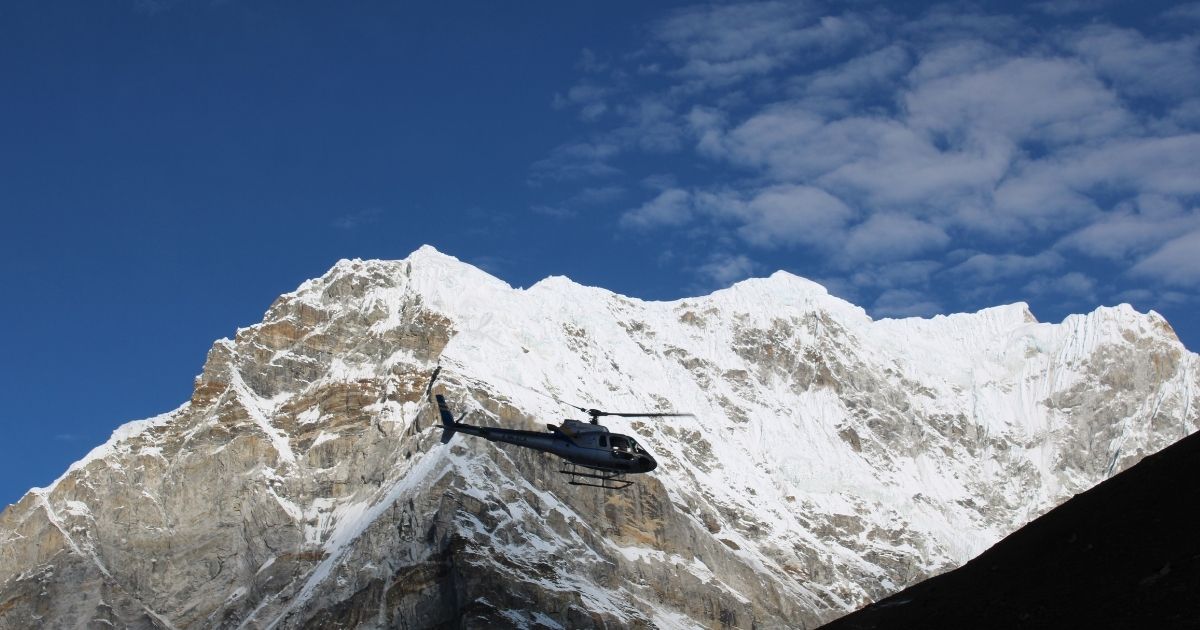
A helicopter flight from Gorak Shep directly to Lukla or Kathmandu compresses these exhausting days into a smooth, 30 to 90-minute journey. This option protects your physical health and completely avoids the mental fatigue of repeating the identical trail. Time efficiency and safety also drive this preference for the aerial exit. The standard return journey adds significant time to your itinerary, which is a major constraint if you have a tight holiday schedule in 2026.
Choosing the helicopter route allows you to complete the entire adventure and return home in under two weeks. Also, the weather in the Khumbu region can change rapidly, and regular commercial flights out of Lukla often experience delays or cancellations. Helicopters operate with more flexibility in variable mountain conditions, reducing your risk of getting stranded. Meanwhile, the flight offers an unmatched, close-up view of the Khumbu Glacier, Nuptse, and Ama Dablam, transforming a painful walk back into an exceptional highlight of your trip.
The Best Seats for Mountain Views During the Everest Helicopter Return
The front passenger seat next to the pilot offers the best views of your Everest on your return flight. This prime location features a massive, wrapping glass windshield that opens up an unobstructed 180-degree vista of the entire Himalayan chain. From this position, you can watch the dramatic approach to the Khumbu Glacier, Nuptse, and Ama Dablam without any structural pillars obstructing your view.
But this seat is highly competitive and depends entirely on weight distribution. The pilot must balance the aircraft's center of gravity for safe operation in thin mountain air, which means lighter passengers usually secure this coveted spot. The rear window seats on both the left and right sides are excellent alternatives if you are not placed in the front row. Airbus H125 helicopters feature large, transparent side windows that offer crisp, sweeping views of deep valleys and snow-capped peaks as you fly past.
The left side captures exceptional angles of the main Everest massif during the initial departure from Gorak Shep or Kala Patthar. Meanwhile, the right side offers incredible views of the surrounding ridges as the aircraft banks and descends the valley toward Lukla. To ensure fairness, reputable operators typically have passengers rotate seat positions between different legs of the flight, giving everyone a chance at a window seat.


-(1).webp)

.webp)

.webp)