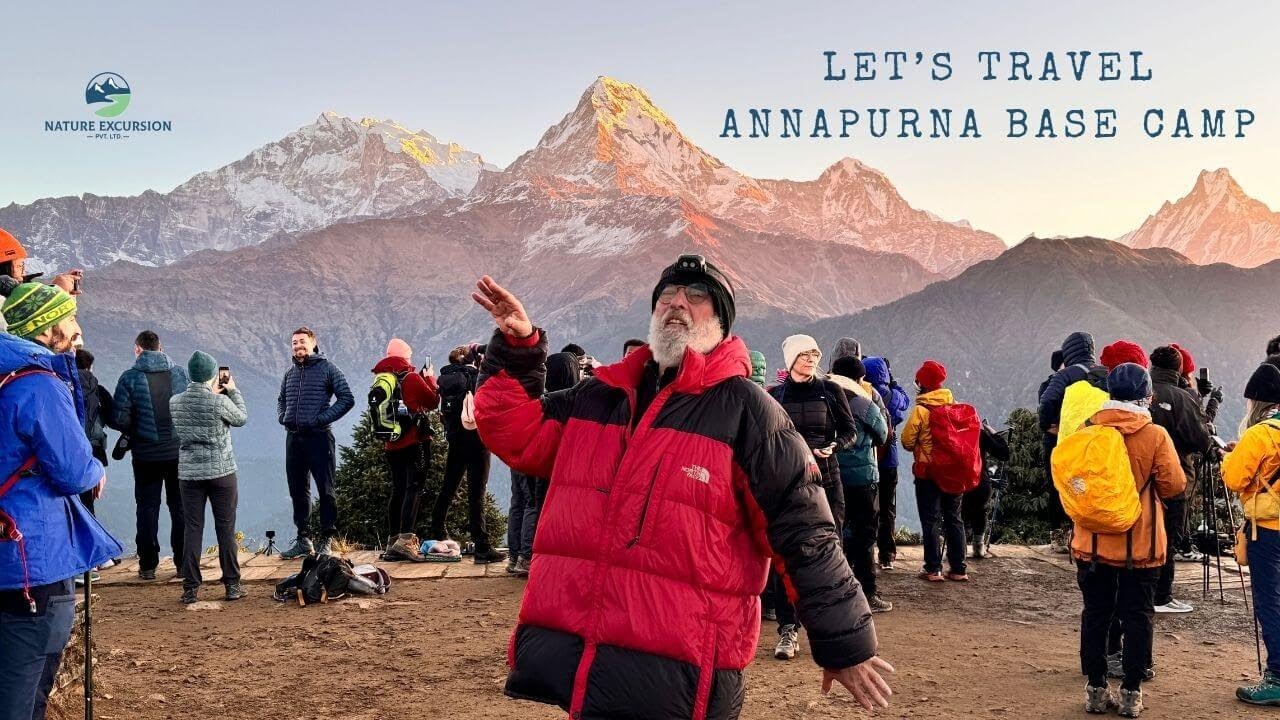
Annapurna Base Camp With Poon Hill Trek – 12 Days

The Annapurna Base Camp with Poon Hill trek is a scenic adventure that blends culture and stunning Himalayan views. This journey offers a perfect mix of lush forests, traditional villages and panoramic vistas from Poon Hill. Whereas the majestic  360-degree view from Annapurna Base Camp at 4,130 meters is something that will remain with you forever.

Quick Facts
  • Trip Duration12 Days
  • Destination Nepal
  • Difficulty Level Moderate
  • Maximum Altitude 4,130 m (Annapurna Base Camp)
  • Activity Trek
  • Starts/Ends Kathmandu / Kathmandu
  • Group Size 1 - 16
  • Transportation Drive from Kathmandu-Pokhara-Hile and Jhinu Danda-Pokhara-Kathmandu
  • Best Season Spring (March to May) and Autumn (September to November)
  • Accommodation Hotel + Teahouse/ Lodge
  • Avg. hours of walk/day 5 to 7 hours
  • Comfort Basic + Comfort
  • Interest option Wildlife, nature, culture, photography, adventure, etc

How You Feel During the Trek

Excited → Inspired → Challenged → Strong → Proud → Reflective

  • Excited: The trek begins in the lively streets of Pokhara before we drive to the trailhead. You feel a rush of energy as we leave the vehicles behind and take our first steps onto the stone paths of the foothills.
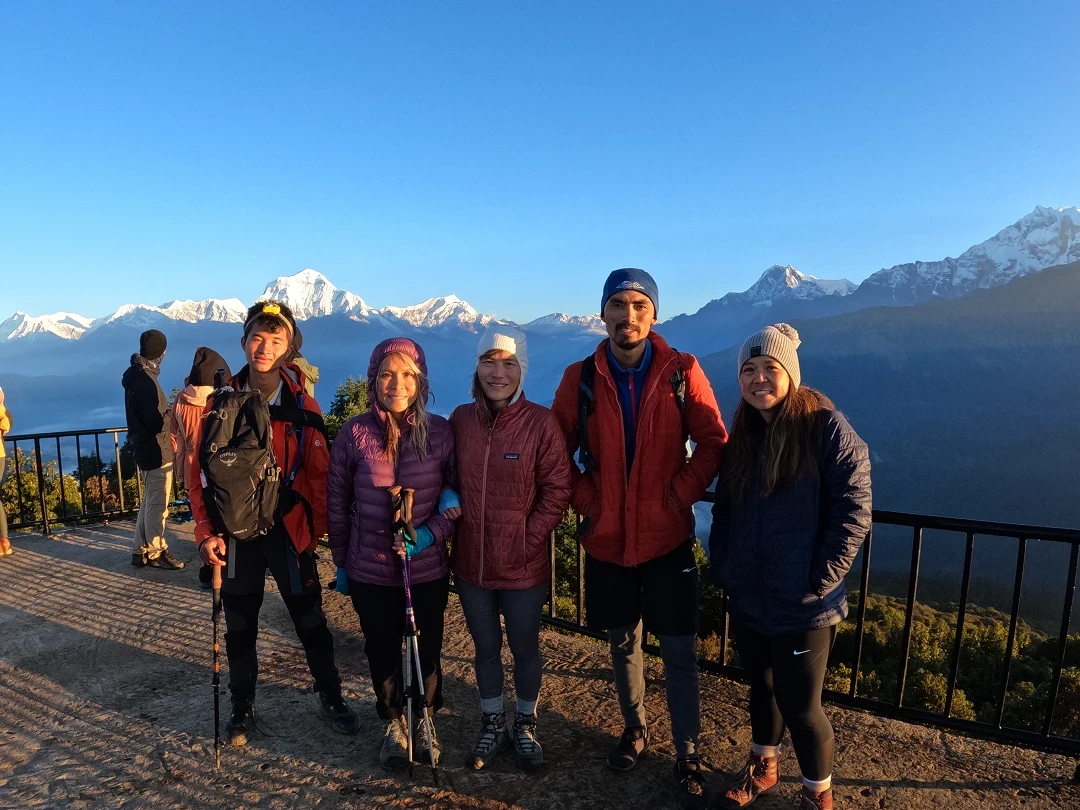
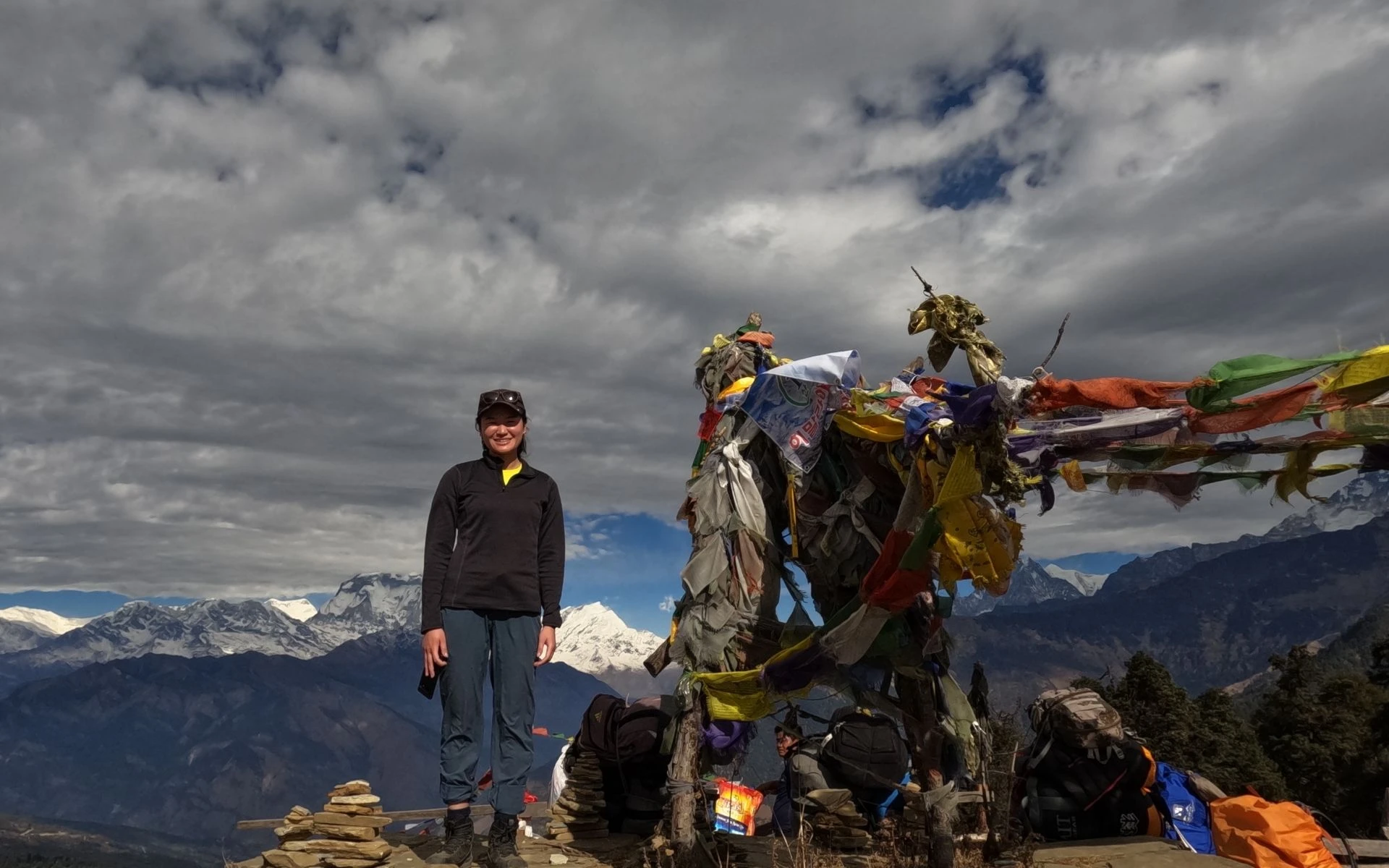
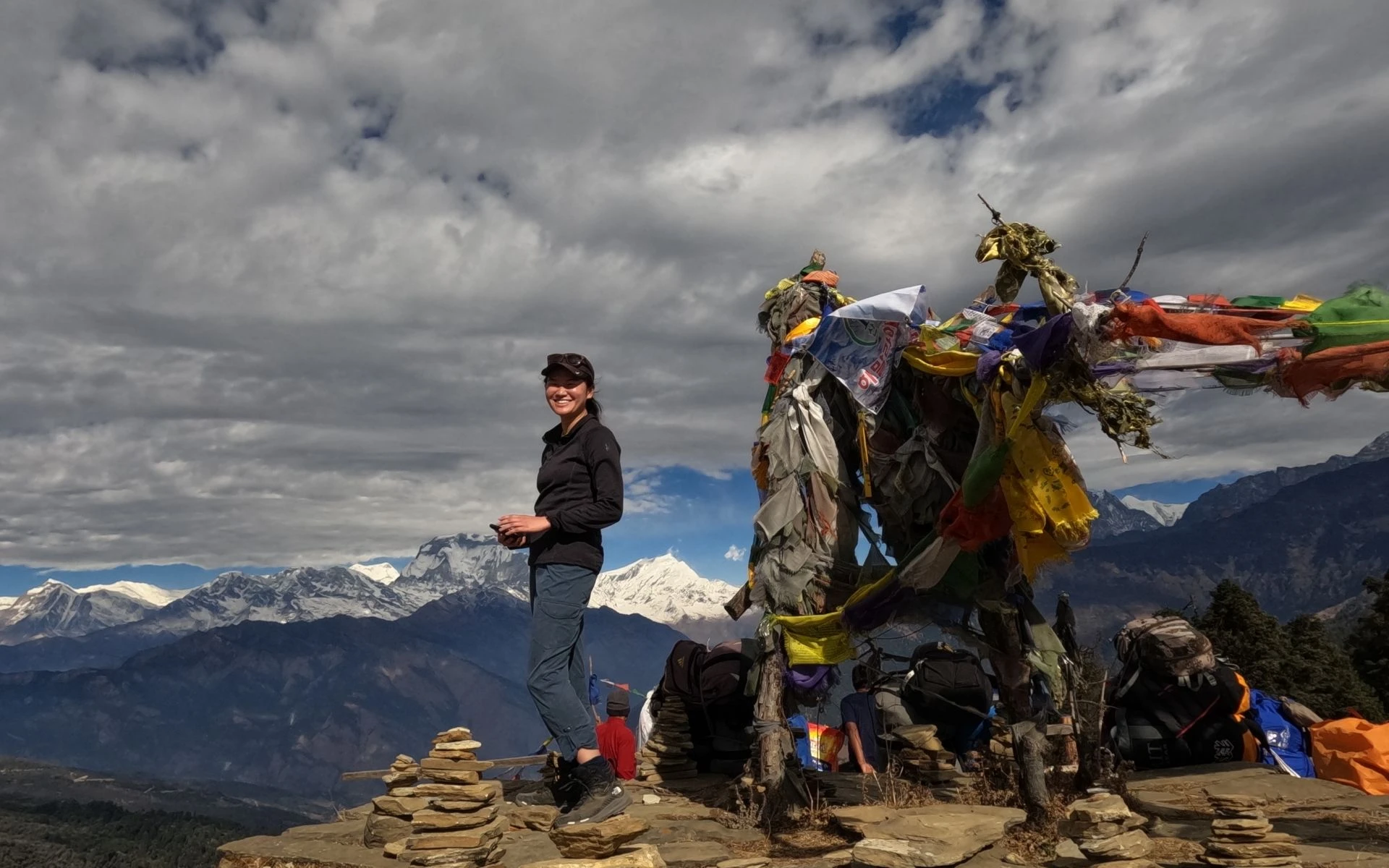
  • Inspired: Standing on Poon Hill at dawn changes your perspective. Seeing the sun hit the Dhaulagiri and Annapurna ranges creates a deep sense of wonder that fuels your hike for the next few days.
  • Challenged: The route from Tadapani to Chhomrong involves many steep stairs and river crossings. You may feel tired as the trail drops down only to climb back up, requiring mental focus to keep a steady pace.
  • Strong: As we pass through Deurali and head toward Machhapuchhre Base Camp, your body adapts to the thin air. You find a rhythm in your breathing and realize you can reach the heart of the mountains.
  • Proud: Reaching Annapurna Base Camp at 4,130 m is the peak of your effort. Looking at the 360-degree views of the high peaks, you feel a massive sense of achievement for walking every kilometer of the way.
  • Reflective: The long walk back down through Bamboo and Jhinu Danda allows you to process the journey. Relaxing in the natural hot springs helps your muscles and mind relax after the intensity of the high altitude.

Emotions You May Feel

  • Excited
  • Inspired
  • Challenged
  • Strong
  • Proud
  • Reflective

How Does Your Mind Change?

  • Start: You feel energetic.
  • Poon Hill: You feel inspired.
  • Middle: You feel tested.
  • Near Base Camp: You feel focused.
  • At the highest point: You feel proud.
  • Coming back: You feel calm.
  • Confidence Level: This trek builds high confidence by overcoming consistent physical hurdles.

Connection and Solitude Ratio

  • Connection level: 70% (Pokhara, Ghorepani, Chhomrong)
  • Solitude level: 30% (Himalaya, MBC, ABC)


Why You'll Love This Trip

Why You'll Love Annapurna Base Camp Trek via Poon Hill

  • Witness 360-degree sunrise views over the Himalayas from Poon Hill.
  • Trek through the enchanting woodlands of rhododendron, magnolia, and pine.
  • Experience the dramatic transition from sub-tropical hills to arctic glaciers.
  • Behold the grand panorama of Dhaulagiri, Manaslu, and the Annapurna range.
  • Visit the traditional villages of the indigenous Magar and Gurung tribes.
  • Venture into the scenic sanctuary at the heart of the Annapurna Massif.
  • Soak in the natural riverside hot springs of Jhinu Danda.
  • Admire the iconic "Fishtail" peak of sacred Mt. Machhapuchhre.
  • Stand at the foot of the world’s 10th-highest peak, Annapurna Mountain at Annapurna Base Camp.

Annapurna Base Camp With Poon Hill Trek Overview

"Climbing mountains so I can stay grounded."

The Annapurna Base Camp with Poon Hill trek is a top choice for travelers who want to see the high Himalayas without high-level climbing skills. This 12-day journey starts in the green foothills near Pokhara and climbs through thick forests of rhododendron and oak. This route is perfect for trekkers who want to slowly acclimate to the rising elevation. They will see 8,000-m peaks such as Annapurna I and Dhaulagiri as they move from the low valleys into the high alpine terrain.

The route includes the famous climb to Poon Hill, offering panoramic views of the mountain ranges. Before entering the deep river gorges leading to the base camp, they will spend time in authentic Gurung and Magar villages, including Tikhedhunga, Ghorepani, and Chhomrong. These communities offer a look into the local mountain lifestyle and provide a warm place to rest in traditional teahouses. Walking through these terraced hillsides lets us see how local people farm and live in this rugged landscape.

The final part of the trek leads into the Annapurna Sanctuary, a natural basin surrounded by a circle of giant peaks. This area is sacred to the local people, and the views of the South Face of Annapurna are unmatched anywhere else in Nepal. Along the way, they will pass landmarks like the Hinku Cave and the settlement of Machhapuchhre Base Camp before reaching ABC. If you are a hiker with moderate fitness, ready for steady climbs and long days on stone stairs, then this trek is ideal for you.

Flow of Journey

Our journey to Annapurna Base Camp via Poon Hill begins with a scenic drive from Kathmanduto the lakeside city of Pokhara, where the air turns fresh, and the peaks appear on the horizon. We move from the subtropical lowlands into the heart of the Annapurna conservation area, starting with the famous stone stairs of Ulleri. As we climb higher, the landscape shifts from the terraced farmland of Hile and Tikhedhungainto deep rhododendron forests that lead to Ghorepani.

The early hike to the Poon Hill viewpoint is a highlight, which gives a wide view of the Dhaulagiri and Annapurna ranges before we head through Tadapanitoward the high-altitude sanctuary. The second half of the trek takes us through the deep gorge of the Modi Khola River, passing the gateway village of Chhomrong, where the rock walls grow steeper. We enter the sacred inner circle of the mountains, moving past the forest settlements of Dovan and Bamboo before reaching Machhapuchhre Base Camp.

Finally, we arrive at the natural amphitheater of Annapurna Base Camp at 4,130 m. After standing at the foot of the massive South Face of Annapurna I, we begin a steady descent back toward the valley floor. The trip concludes with a relaxing soak in the riverside hot springs at Jhinu Danda and a final drive from Nayapul back to Kathmandu, marking the end of our Himalayan loop.

Itinerary

Day1
  • Max. Altitude:830 m
  • Accommodation:Hotel
  • Drive Distance:200 km
  • Drive Duration:6-7 hours
  • Day's Difficulty:Gentle

We begin the journey from Kathmandu at 7:00 AM. The vehicle moves along the Prithvi Highway as it winds alongside the Trishuli River. This stretch of road offers a look at the daily rhythm of rural Nepal. You will see farmers tending to terrace fields and local vendors selling stacked crates of oranges or bananas. We often spot groups of rafters hitting the white-water rapids below, which adds a bit of energy to the morning drive.

The route passes through bustling market towns like Malekhu, famous for its local river fish. We stop at a quiet riverside spot for lunch, enjoying the warmer, subtropical air. As we move past the junction at Mugling, the views shift toward the Marsyangdi River. If the sky is clear, we can see the jagged white peaks of Manaslu and Ganesh Himal in the distance. We reach the lakeside city of Pokhara by late afternoon. This gives us time to walk along the shores of Phewa Lake or organize our gear before the trek starts tomorrow.

Included activities:

  • Drive along the Trishuli River to watch white-water rafters.
  • Stop at Malekhu to see the local riverside fish markets.
  • Walk along Phewa Lake after arriving.
Day2
  • Meals:Breakfast, Lunch, Dinner
  • Accommodation:Teahouse
  • Trek Distance:4-6 km
  • Drive Distance:90 km
  • Trek Duration:2-3 hours
  • Drive Duration:3-4 hours
  • Sleep Elevation:2,050 m
  • Overnight Place:Ulleri
  • Day's Difficulty:Gentle

The day begins with a drive from Pokhara to the start of our trek. We travel for about 3 hours to 4 hours along the banks of the Bhurungdi Khola river. The road passes through small market towns and terraced fields where local farmers grow rice and mustard. After we clear the permit checkpost at Birethanti, the road becomes rougher as we approach Hile. A unique sight along this drive is the long suspension bridges that connect isolated hillside farms to the main road. If the sky is clear, we get our first glimpse of the pointed peak of Machhapuchhre in the distance.

From Hile, we begin the physical part of our journey with a 20-minute walk to Tikhedhunga. After crossing a small bridge, we face the most famous challenge of the day: the stone stairs of Ulleri. This section consists of more than 3,000 steps that climb steeply up the hillside. As we walk, we share the trail with mule caravans carrying supplies to the higher villages. We move at a steady pace to manage our energy, reaching the village of Ulleri at an elevation of 2,050 m by the afternoon.

Ulleri is a large, traditional Magar village with houses built from local stone and painted in bright colors. After we check into our teahouse, we can walk through the village to see the local school or watch the sunset over Annapurna South and Hiunchuli. The temperature here is mild during the day, usually around 15°C (59°F), but it cools down quickly once the sun drops behind the ridges. We spend the evening in the communal dining hall, eating a hot meal and preparing for the climb toward the rhododendron forests tomorrow.

Included activities:

  • Drive along the Bhurungdi Khola river.
  • Cross long suspension bridges that connect isolated hillside farms.
  • Climb over 3,000 stone steps to reach Ulleri.
  • Watch the sunset over Annapurna South in the evening.
Day3
  • Max. Altitude:2,874 m/9,429 ft
  • Meals:Breakfast, Lunch, Dinner
  • Accommodation:Teahouse
  • Duration:4-5 hours
  • Trek Distance:8-10 km
  • Trek Duration:4-5 hours
  • Sleep Elevation:2,874 m
  • Overnight Place:Ghorepani
  • Day's Difficulty:Moderate

We begin the trek from Ulleri by walking through a dense forest of oak and rhododendron trees. The trail climbs steadily, and we cross several small streams that flow over mossy rocks. In spring, these forests turn vibrant shades of red and pink as rhododendrons bloom. We listen for the calls of local birds and the distant sound of waterfalls as we move deeper into the hills.

The path takes us through the small settlement of Banthanti, where we stop to see the impressive views of the peaks above the treeline. We notice the air getting crisper and cooler as we gain elevation throughout the morning. The terrain remains mostly shaded by the canopy, which helps us conserve energy on the uphill sections. We share the trail with local porters and hikers from around the world as we approach the final ridge.

We reach the village of Ghorepani by the afternoon and check into a local teahouse at 2,860 m. This village is a major hub for trekkers and offers wide views of the Dhaulagiri and Annapurna mountain ranges. After we drop our bags, we spend time in the village center or rest by the wood-burning stove in the dining hall. We go to bed early to prepare for our sunrise hike to the top of Poon Hill tomorrow morning.

Included activities:

  • Trek through a vibrant rhododendron forest.
  • Stop at Banthanti and admire the surrounding views.
  • Meet local porters and share stories.
  • Get majestic views of Annapurna and Dhaulagiri from Ghorepani.
Day4
  • Meals:Breakfast, Lunch, Dinner
  • Accommodation:Teahouse
  • Trek Distance:11-12 km
  • Trek Duration:6-7 hours
  • Sleep Elevation:2,590 m
  • Overnight Place:Tadapani
  • Day's Difficulty:Moderate

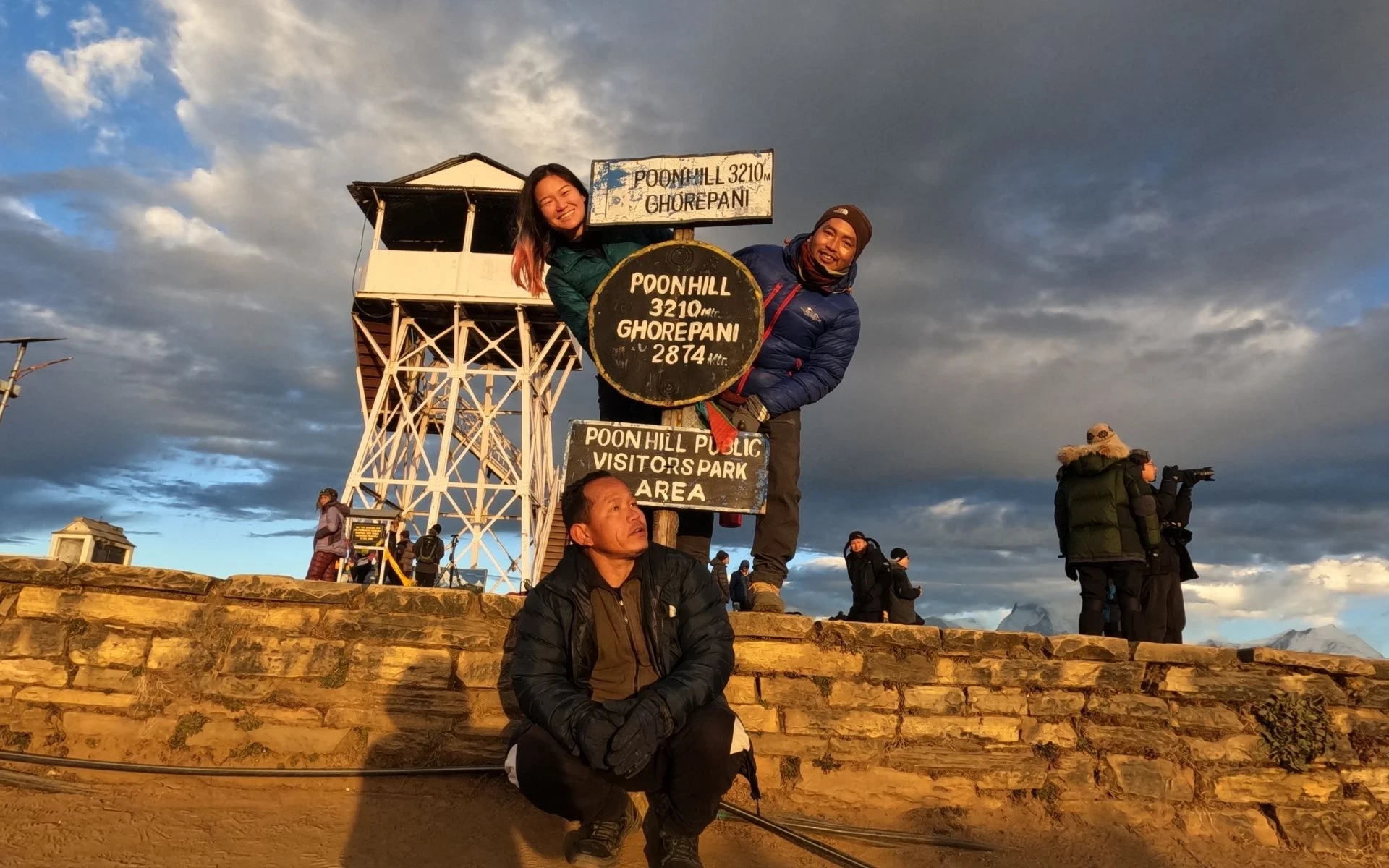
Our morning begins at 5:00 AM for the climb to the Poon Hill View Tower. The trail consists of steep stone stairs that take about 45 minutes to climb. We stop at the local ticket barrier to pay the NPR 50 entry fee before reaching the summit.

Standing at the top before dawn allows us to grab a warm drink from a small tea stall while we wait for the sun. When the light finally breaks, the peaks of Dhaulagiri and Annapurna South turn a bright gold. We also see the pointed summit of Machhapuchhre and the distant Ganesh Himal range.

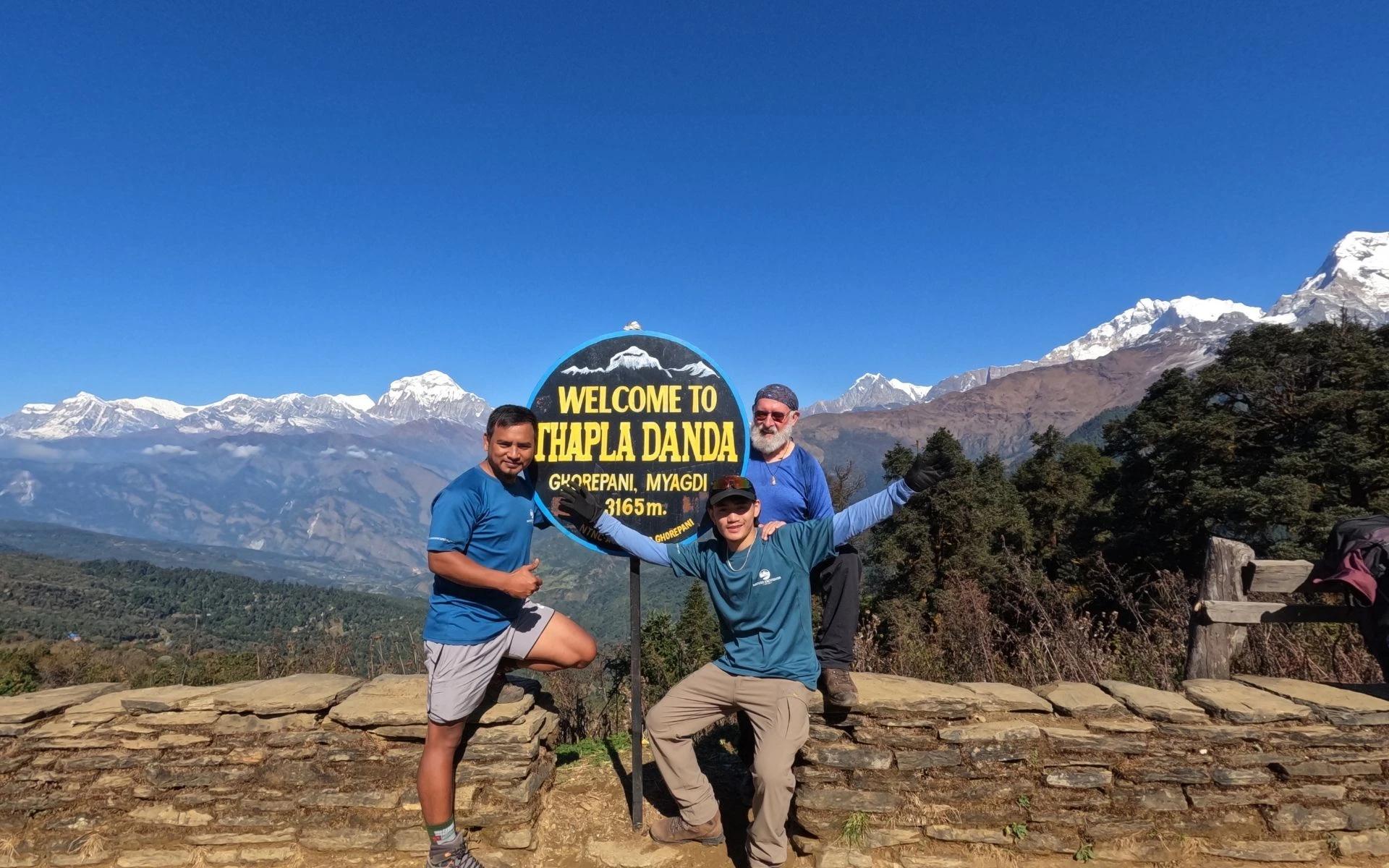
After we descend to Ghorepani for a hot breakfast, our team heads east toward the ridge at Thapla Danda. This area offers high-altitude views before we enter a thick forest of old-growth rhododendrons. We follow the trail through the narrow Deurali pass and move down into the mossy valley of Banthanti at 2,100 m.

The path crosses several wooden bridges over mountain streams that flow from the glaciers above. A final short climb brings us to our stop at Tadapani. This village sits on a high saddle that gives you a face-to-face view of the massive peaks across the valley.

Included activities:

  • Hike to Poon Hill View Tower for the sunrise.
  • View the golden peaks of Dhaulagiri and Annapurna South.
  • Trek through the Deurali pass and rhododendron forests.
  • Cross wooden bridges and climb a short ascent to reach Tadapani.
Day5
  • Meals:Breakfast, Lunch, Dinner
  • Accommodation:Teahouse
  • Trek Distance:9 km
  • Trek Duration:5-6 hours
  • Sleep Elevation:2,340 m
  • Overnight Place:Chhomorong
  • Day's Difficulty:Moderate

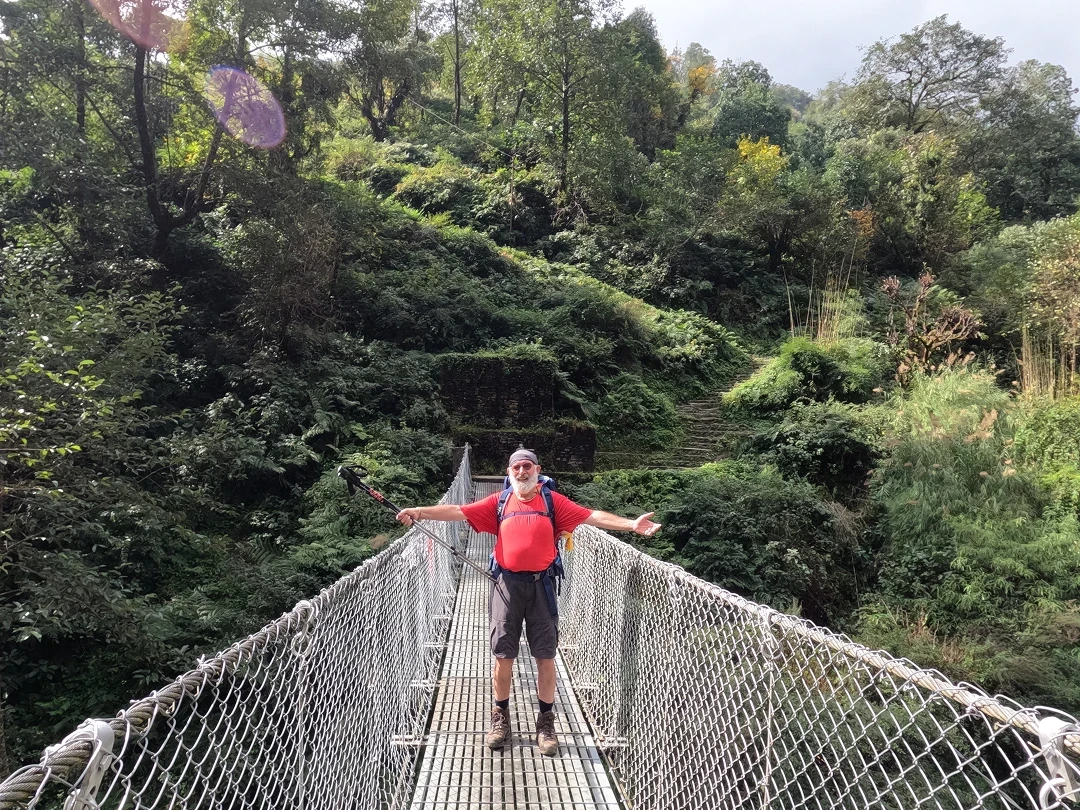
Our journey begins with a sharp descent through an ancient forest of rhododendron, maple, and oak trees. The ground here is often damp, so we watch our step for slippery roots and the occasional forest leech. We eventually reach the village of Chuile, where the trees thin out, revealing wide terraced farms. From Chuile, the trail drops steeply for another hour until we reach the banks of the Kimrong River. We cross a suspension bridge over the rushing water and take a rest before the landscape shifts from a deep forest to open farmland.

After the river, the trail turns upward. We climb through the village of Ghurjung, where we see local Gurung farmers working in millet or barley fields. A unique highlight of this section is Top Danda, also known as Telescope Hill. From this ridge, we can see the trail we just descended across the valley. The final walk toward Chhomrong is a mix of stone steps and flat paths. This village is the gateway to the Annapurna Sanctuary and sits on a massive hillside. We can look directly across the valley to see the trail leading toward the base camp.

Chhomrong is famous for its local bakeries, and the smell of fresh apple pie often fills the air in the afternoon. Since the village faces the mountain directly, we get an unobstructed view of Annapurna South and the sharp peak of Machhapuchhre. The altitude here is 2,340 m, and the temperature stays relatively mild during the day. In the evening, we settle into a teahouse to prepare for the even higher elevations of the sanctuary that we will enter tomorrow.

Included activities:

  • Descend through deep forests to the Kimrong Khola river.
  • Cross a suspension bridge to reach Ghurjung village.
  • Walk through terraced fields in the village of Chuile.
  • View the peaks of Machhapuchhre from Chhomrong village.
Day6
  • Meals:Breakfast, Lunch, Dinner
  • Accommodation:Teahouse
  • Trek Distance:11 km
  • Trek Duration:6-7 hours
  • Sleep Elevation:2,600 m
  • Overnight Place:Dovan
  • Day's Difficulty:Moderate

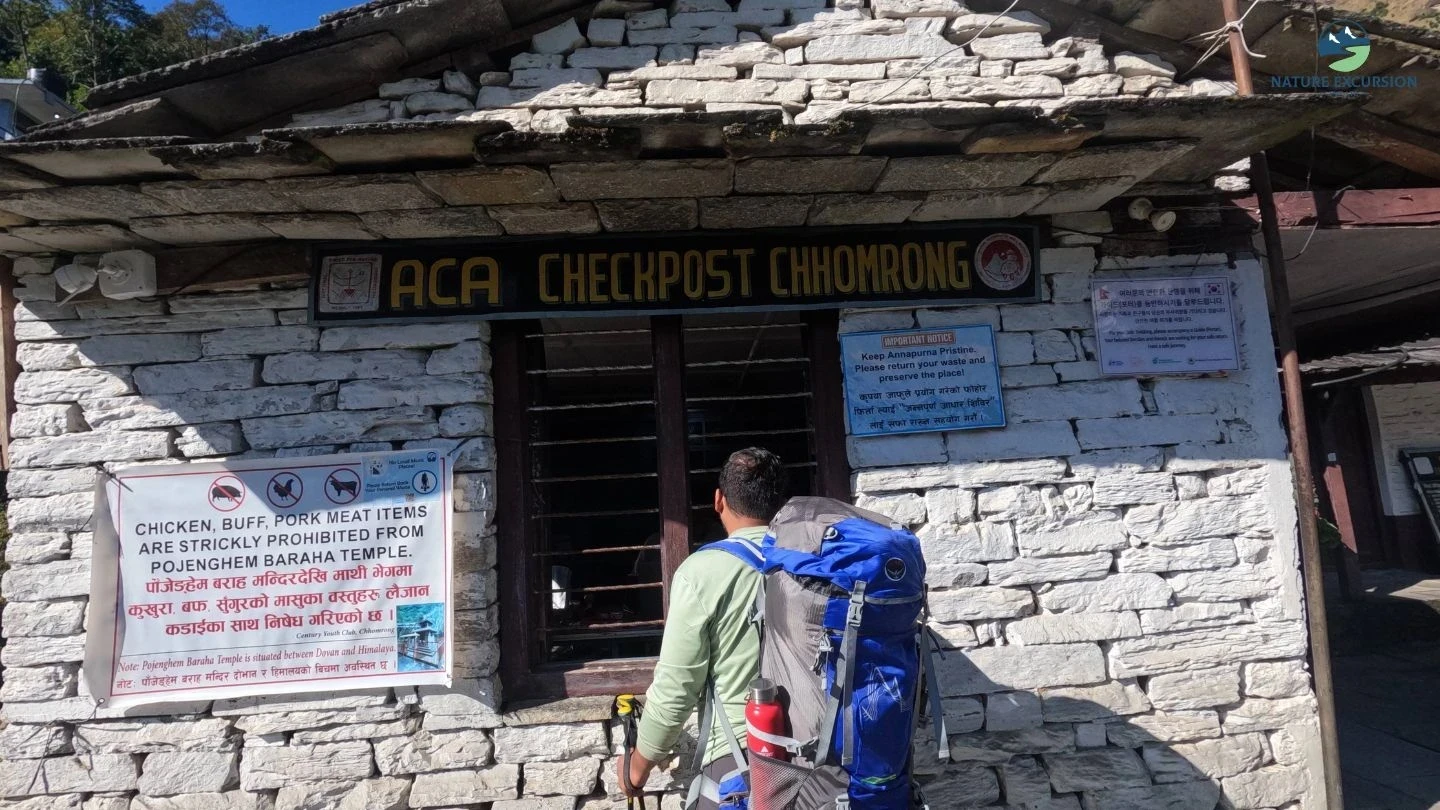
Today’s hike is physically challenging, with steep ups and downs and long hours. After a morning breakfast with beautiful Himalayan glimpses, we start moving towards today’s destination in Dovan. The day begins with a steep descent down the famous stone staircase of Chhomrong. Here we descend over 2,000 steps to the Chhomrong Khola River. As we descend, we arrive at the checkpost where we check our permits, including ACAP.

After crossing the suspension bridge, the trail turns sharply upward toward Sinuwa. From the ridge at Upper Sinuwa, we get a clear view of the deep valley ahead. A unique feature of this section is the transition into the “sacred” zone of the sanctuary. To respect the mountain deities, local custom forbids carrying meat or poultry beyond this point. Horses and donkeys also carry luggage only upto Dovan.

The trail continues through a thick, dense forest of rhododendron, oaks, pine, juniper, maple, and bamboo. We walk along the side of the mountain, high above the Modi Khola river. We pass through the settlement of Khuldighar and descend a series of steep stone steps to get there. After two hours of walking from Upper Sinuwa, we reach Bamboo at 2,310 m, where we stop for lunch. After lunch, we start our hike again through the bamboo and rhododendron forest. We reach the small settlement of Dovan by late afternoon. Overnight stay at Dovan.

Included activities:

  • Descend over 2,000 stone steps to the Chhomrong Khola river.
  • Check our permits like ACAP in the permit checkpost.
  • Pass through Khuldighar village before reaching Bamboo village.
  • Reach Dovan, surrounded by high rock walls and waterfalls.
Day7
  • Meals:Breakfast, Lunch, Dinner
  • Accommodation:Teahouse
  • Trek Distance:11 - 13
  • Trek Duration:5-6 hours
  • Sleep Elevation:3,700 m
  • Overnight Place:Machhapuchhre Base Camp
  • Day's Difficulty:Challenging

After breakfast, we leave Dovan and begin a steady climb toward the heart of the sanctuary. The trail passes through a thick forest before reaching a small temple dedicated to Lord Shiva. Nearby, we see a massive rock wall with thin waterfalls that locals call the "Thousand Waterfalls." After about 1 hour, we reach the Hinku Cave, a natural rock overhang that protected trekkers and porters in the years before teahouses existed. We then cross a section of old glacial debris and landslide area to reach Deurali at 3,200 m.

Between Deurali and our destination, the valley narrows significantly. We must walk quickly and carefully through a specific stretch known for rockfall and seasonal avalanches. A unique sight in this area is a natural rock formation on the opposite cliff that many people believe looks like the silhouette of Gautam Buddha. The path eventually flattens out as it follows the bed of the Modi Khola river. The final part of the day involves a gentle uphill climb through the alpine scrub to reach Machhapuchhre Base Camp (MBC).

At an elevation of 3,700 m, MBC sits in a high-altitude basin surrounded by massive peaks. From this spot, we get a full view of the Annapurna Massif, which includes Annapurna I, III, and IV, as well as Gangapurna and Hiunchuli. The most prominent peak here is Machhapuchhre, which looks like a sharp pyramid from this angle. The temperature drops rapidly here after sunset, often reaching -8°C (17.6°F) in November. We spend the night at a teahouse in Machhapuchhre Base Camp.

Included activities:

  • Pass through the Lord Shiva temple and the Thousand Waterfalls.
  • Reach Hinku Cave, and admire the surrounding view.
  • Trek through dangerous trekking trails, prone to landslides.
  • Admire the stunning mountain views from MBC.
Day8
  • Meals:Breakfast, Lunch, Dinner
  • Accommodation:Teahouse
  • Trek Distance:3 km
  • Trek Duration:2-3 hours
  • Sleep Elevation:4,130 m
  • Overnight Place:Annapurna Base Camp
  • Day's Difficulty:Challenging

We begin the final climb to ABC early in the morning, following a path that winds through high-alpine shrubs and frozen streams. The trail follows the lateral moraine of the South Annapurna Glacier, where the ground is a mix of packed dirt and loose gravel. We walk through the wide, open valley known as the "Gateway to the Sanctuary," where the towering walls of rock and ice make us feel small among the mountains.

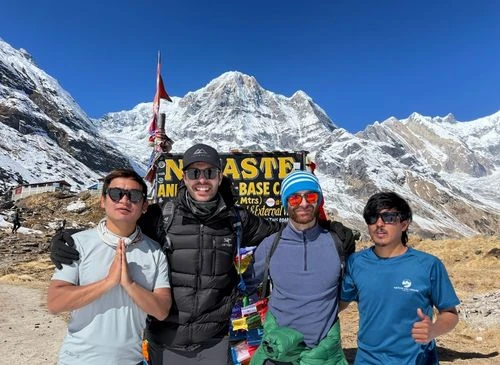
We reach the cluster of teahouses at Annapurna Base Camp by mid-morning, marked by a collection of colorful prayer flags and a memorial signpost. Standing at 4,130 m, we are at the center of a massive ring of ten peaks over 6,000 m, and the vertical South Face of Annapurna I. After arriving at Base Camp, we will immediately check into teahouses and acclimatize. In the late evening, we will click some stunning photos of the sunset and the surrounding golden mountains. In the evening, we have our dinner before going to sleep early.

Included activities:

  • Walk along the glacial moraine toward the heart of the sanctuary.
  • Pass through the natural gateway between Machhapuchhre and Hiunchuli.
  • Reach the high altitude basin at the foot of Annapurna I.
  • Explore the prayer flags and memorials at the base camp site.
Day9
  • Meals:Breakfast, Lunch, Dinner
  • Accommodation:Teahouse
  • Trek Distance:15 km
  • Trek Duration:8 hours
  • Sleep Elevation:2,110 m
  • Overnight Place:Bamboo
  • Day's Difficulty:Challenging

We start the morning at Annapurna Base Camp to watch the sun rise over the face of Annapurna I. At an elevation of 4,130 m, the air is thin and cold, but the light turns the massive 360-degree mountain wall a deep orange. A unique feature of this morning is the way the shadows retreat across the Annapurna South Glacier. After a warm breakfast, we begin our descent through the vast glacial basin. The trail leads us back down toward Machhapuchhre Base Camp at 3,700 m. Looking back, we get a final view of the "Sanctuary" before the high peaks are hidden by the valley walls.

The descent continues steeply as we pass through Deurali and Dovan. We follow the Modi Khola, which grows louder and faster as we descend. The trail shifts from high-altitude rock and ice back into the lush bamboo and rhododendron forests. We lose nearly 1,700 m in altitude today, which puts pressure on the knees. We suggest using trekking poles to help with the steep stone steps. Along the way, we might see the small shrines built into the Hinku Cave, where travelers in the past sought shelter from storms.

By the afternoon, we reach the settlement of Bamboo at 2,310 m. The air feels much thicker and warmer here than it did at the base camp. Bamboo is a quiet spot tucked deep in the valley where the sun sets early behind the high ridges. We spent the evening at a teahouse to rest our legs after the long downhill walk. This is one of the longest days of movement on the trek, covering 15 km. We enjoy a final group meal in the forest before heading to bed early.

Included activities:

  • Watch the sunrise over the massive south face of Annapurna I.
  • Descend the glacial moraine toward the Machhapuchhre Base Camp.
  • Pass the historic stone shelters at the massive Hinku Cave.
  • Trek through deep bamboo forests to reach the valley floor.
Day10
  • Meals:Breakfast, Lunch, Dinner
  • Accommodation:Teahouse
  • Trek Distance:11 km
  • Trek Duration:5-6 hours
  • Sleep Elevation:1,780 m
  • Overnight Place:Jhinu Danda
  • Day's Difficulty:Moderate

We leave Bamboo after breakfast and begin the trek toward Jhinu Danda at 1,780 m. The first part of the day is a mix of steep climbs and flat sections through the thick bamboo forest. We climb to the ridge at Sinuwa, where the forest opens up to show the deep valley of the Modi Khola. From here, we can look back and see the high peaks of the sanctuary one last time. We retrace our steps down to the river and then face the final steep climb back up the stone stairs to Chhomrong. Along this path, we pass the experimental sheep farm at Khuldighar, which was established to improve local wool production in the mountains.

After reaching Chhomrong, we begin a very sharp descent toward Jhinu Danda. The trail consists of thousands of stone steps, so we move slowly to protect our knees. Jhinu Danda is a small village perched on a high ridge above the river. Once we check into our teahouse, we head down a separate trail for 20 minutes to reach the natural hot springs on the riverbank. The local community manages these pools and charges an entry fee of NPR 250 per person.

The hot springs sit right next to the rushing glacial water of the Modi Khola. There are three stone-lined pools with different temperatures where we can sit and rest our tired leg muscles. A unique feature of this spot is the contrast between the hot steam of the pools and the cold spray from the river just a few meters away. After an hour in the water, we climb back up to the village. We spend our final night in the mountains here, enjoying a celebratory meal before our journey back to Pokhara tomorrow.

Included activities:

  • Pass the experimental sheep farm at the Khuldighar ridge.
  • Climb the famous stone staircase back into Chhomrong village.
  • Descend the steep hillside trail to reach Jhinu Danda.
  • Soak in the natural riverside hot springs of the Modi Khola.
Day11
  • Meals:Breakfast, Lunch
  • Accommodation:Hotel
  • Trek Distance:2-2.5 hours
  • Drive Distance:60 km
  • Drive Duration:2-2.5 hours
  • Sleep Elevation:830 m
  • Overnight Place:Pokhara
  • Day's Difficulty:Gentle

We start our morning with a final mountain meal at Jhinu Danda before we walk down to the Modi Khola river. Our team leads you across the long suspension bridge that hangs high over the water. On the other side, our private jeep waits at the Samrung station to begin the trip back to civilization. We follow the river valley along a gravel road that passes through small farming settlements and dense forests.

You can spot locals working in their terraced fields and children walking to school as we leave the high peaks behind. The air gets warmer, and the landscape turns a deep green as we descend toward the lower hills. Our drive continues through Birethanti, where we stop briefly to clear our trekking permits at the final checkpoint. From here, the road joins the main highway at Nayapul for a smoother ride into the Pokhara Valley.

We see the city skyline and the calm waters of Phewa Lake appearing in the distance. Once we arrive at our hotel, our team helps you settle in so you can enjoy your free time. You can choose to walk along the lakeside shops, visit the Tal Barahi Temple by boat, or simply relax at a nearby cafe. You also have plenty of time to visit local tourist spots like Mahendra Cave, Gupteshwar Cave, Davis Falls, etc. Overnight in Pokhara.

Included activities:

  • Leave Jhinu via private jeep.
  • Check permits near Nayapul.
  • Arrive at Pokhara hotel near Phewa Lake.
  • Explore Pokhara Valley by visiting Davis Falls, Mahendra Cave, and Gupteshwar Cave.
Day12
  • Meals:Breakfast, Dinner
  • Accommodation:Hotel
  • Drive Distance:200 km
  • Drive Duration:6-7 hours
  • Sleep Elevation:1,400 m
  • Overnight Place:Kathmandu
  • Day's Difficulty:Gentle

The drive from Pokhara to Kathmandu begins at 7:30 AM on a comfortable tourist bus. This 200 km journey follows the Prithvi Highway, which runs alongside the Trishuli River for much of the way. We will see local life along the roadside, which includes small market towns and colorful suspension bridges. As we climb over the final ridge into the Kathmandu valley, the view opens up to show the sprawling city below. We arrive in the capital by late afternoon and head straight to the hotel so you can rest after the long drive.

In the late afternoon, you have free time to explore the narrow streets of Thamel. This is a great chance to find local crafts or handmade paper products to take home. We recommend visiting a rooftop cafe to watch the sunset over the city rooftops. In the evening, we host a farewell dinner at a traditional restaurant. This is a special time for the group to gather and talk about the trek. We enjoy a final meal of local food together to celebrate the end of our adventure.

Note: Accommodation in Kathmandu is not included in our trek package. This allows you to choose a hotel that suits your preferences. You may select a 3-star, 4-star, or 5-star property depending on the level of comfort you desire at the end of the trek. But, if you would like us to arrange accommodation for you, we are happy to assist. Please let us know your preferences, and we will handle the booking.

Included activities:

  • Scenic drive from Pokhara to Kathmandu.
  • Afternoon shopping at Thamel
  • Enjoy a farewell dinner in the evening.

Our detailed guide to Annapurna Base Camp via Poon Hill provides the exact route and safety tips you need for a successful mountain journey. We include specific details on the stone stairs at Ulleri, sunrise timings at Poon Hill, and the best teahouses along the Modi Khola. You can use this resource to plan your packing and manage your daily trekking distances with confidence.

Download Pdf

Cost Details

Includes

  • Airport pickup and drop-off services during the arrival and departure dates on a private vehicle (car, Jeep, Hiace, or Tourist Deluxe Bus) as per the group size 
  • Transportation from Kathmandu to Pokhara and back to Kathmandu on a deluxe tourist bus
  • Transportation from Pokhara to Hile and from Jhinu Danda to Pokhara on a jeep
  • 2 nights at a 3-star hotel in Pokhara with breakfast
  • Mountain-based standard accommodation during the trek
  • All healthy meals during the trek: lunch, breakfast, and Dinner main course from the menu
  • Government-licensed, well-English-speaking Nature Excursion's native guide. An assistant guides a group of 6 or more trekkers 
  • Strong porters to help with luggage (luggage weight limit is 10 kg per trekker)
  • Guide and porter meals, wages, transportation, insurance, and other necessary expenses
  • Water purification tablets for safe drinking water.
  • Snacks (cookies) and seasonal fresh fruit every day
  • Annapurna Conservation Area Permit (ACAP) fees
  • All government, local taxes, and official expenses
  • First-aid kit, which includes Diamox (a preventive measure against altitude sickness)
  • An oximeter to check your pulse and oxygen level in your body.
  • Sleeping bag and a down jacket upon request. You must return after the trek.
  • An appreciation certificate after the completion of the trek.
  • Company T-shirt and Cap
  • Either a farewell dinner at a Nepali cultural restaurant
  • Assisting in any emergency evacuation or rescue due to uncertainty or any serious health condition (funded by your travel insurance)

Excludes

  • International flight costs
  • Nepal entry visa fees at Tribhuvan International Airport
  • Accommodation in Kathmandu
  • Extra-night Hotel in Kathmandu and Pokhara (due to early arrival, late departure, or, in case of an early return from the trek, then the scheduled itinerary)
  • Lunch and dinner in Kathmandu and Pokhara, except farewell dinner in Kathmandu
  • Personal expenses (phone calls, laundry, bar bills, hot and cold drinks, Wi-Fi, battery recharge, extra porters, mineral water or boiled water, hot showers, etc.)
  • Tips for guides and porters (recommended)

Annapurna Base Camp With Poon Hill Trek – 12 Days pictures and video

Ghorepani Poon Hill | Annapurna Base Camp | Mardi Himal

Departure Dates

Select a Departure Month
Start DateEnd DatePriceAvailability 
Start DateFrom: FridaySep 04, 2026End DateTo: TuesdaySep 15, 2026PricePrice Per PersonUS$1197AvailabilityAvailabilityAvailable
Start DateFrom: SaturdaySep 05, 2026End DateTo: WednesdaySep 16, 2026PricePrice Per PersonUS$1197AvailabilityAvailabilityAvailable
Start DateFrom: SundaySep 06, 2026End DateTo: ThursdaySep 17, 2026PricePrice Per PersonUS$1197AvailabilityAvailabilityAvailable
Start DateFrom: MondaySep 07, 2026End DateTo: FridaySep 18, 2026PricePrice Per PersonUS$1197AvailabilityAvailabilityAvailable
Start DateFrom: FridaySep 11, 2026End DateTo: TuesdaySep 22, 2026PricePrice Per PersonUS$1197AvailabilityAvailabilityAvailable
Start DateFrom: SaturdaySep 12, 2026End DateTo: WednesdaySep 23, 2026PricePrice Per PersonUS$1197AvailabilityAvailabilityAvailable
Start DateFrom: SundaySep 13, 2026End DateTo: ThursdaySep 24, 2026PricePrice Per PersonUS$1197AvailabilityAvailabilityAvailable
Start DateFrom: MondaySep 14, 2026End DateTo: FridaySep 25, 2026PricePrice Per PersonUS$1197AvailabilityAvailabilityAvailable
Start DateFrom: FridaySep 18, 2026End DateTo: TuesdaySep 29, 2026PricePrice Per PersonUS$1197AvailabilityAvailabilityAvailable
Start DateFrom: SaturdaySep 19, 2026End DateTo: WednesdaySep 30, 2026PricePrice Per PersonUS$1197AvailabilityAvailabilityAvailable
Start DateFrom: SundaySep 20, 2026End DateTo: ThursdayOct 01, 2026PricePrice Per PersonUS$1197AvailabilityAvailabilityAvailable
Start DateFrom: MondaySep 21, 2026End DateTo: FridayOct 02, 2026PricePrice Per PersonUS$1197AvailabilityAvailabilityAvailable
Start DateFrom: FridaySep 25, 2026End DateTo: TuesdayOct 06, 2026PricePrice Per PersonUS$1197AvailabilityAvailabilityAvailable
Start DateFrom: SaturdaySep 26, 2026End DateTo: WednesdayOct 07, 2026PricePrice Per PersonUS$1197AvailabilityAvailabilityAvailable
Start DateFrom: SundaySep 27, 2026End DateTo: ThursdayOct 08, 2026PricePrice Per PersonUS$1197AvailabilityAvailabilityAvailable
Start DateFrom: MondaySep 28, 2026End DateTo: FridayOct 09, 2026PricePrice Per PersonUS$1197AvailabilityAvailabilityAvailable

Clients Reviews

  • Abc trek

    Had a good experience with nature excursions and team , Emmanuel and his team helped and guided us in abc trek

    I
    Ishwarya KIndiaMay 01, 2026
    TripAdvisor
  • Outstanding Guides and Excellent Service

    We did the 9 days Annapurna trek with Taran and Aziz. And It was an amazing experience!
    Their patience, attention and knowledge was second to none.
    From the first contact with Karan, everyone in the company has been an absolute delight to deal with.
    We will come back next year for another trek!

    Alessandra Taylor
    Alessandra TaylorUnited KingdomApr 25, 2026
    Google

Useful Information

How do the Food and Accommodation in Annapurna Base Camp and Poon Hill differ?

In the lower foothills around Poon Hill, you’ll find a surprising amount of comfort that feels like a mountain getaway. Since villages like Ghorepani and Ulleri are better connected to supply routes, the tea houses often offer private rooms with attached bathrooms and even "luxury" perks like heated blankets or reliable Wi-Fi. The menus here are diverse, featuring everything from apple pie and fresh bakeries to yak steaks and diverse pasta dishes. It is common to find a cozy dining hall with a roaring wood stove where you can relax after a short walk.

As we move deeper into the Annapurna Sanctuary toward the Base Camp, the luxury fades into a more rugged, communal experience. Because the high-altitude lodges must fly in supplies by helicopter or carry them up on mule-back, the facilities become much simpler. At Machhapuchhre Base Camp (MBC) and Annapurna Base Camp (ABC), you will likely sleep in shared dormitories with basic plywood walls and use communal toilets. The menus shrink to high-energy staples like Dal Bhat, garlic soup to help with altitude, and simple noodle dishes. You won’t find attached bathrooms or meat dishes here, as tradition and logistics keep the high sanctuary mostly vegetarian and basic.

The cost also reflects this climb in altitude and effort. While a bottle of water or a plate of pasta might cost USD 3 in the lower Ghorepani area, the price can nearly double by the time we reach 4,130 m. At the base camp, you’ll pay a small fee for every extra, whether it’s USD 2 to charge your phone or USD 5 for a bucket of hot water to wash. It’s a trade-off: you leave behind the attached showers and fancy menus of Poon Hill for the raw, face-to-face experience with the world's highest peaks.

How Challenging is the ABC Via Poon Hill Trek compared to Individual Treks?

The ABC via Poon Hill Trek is significantly more demanding than either trek individually, as it combines high-altitude endurance with high-volume stair climbing. While a standalone trek to Poon Hill is a moderate 4-day to 5-day hike peaking at 3,210 m, the combined route forces your body to recover from thousands of stone steps before pushing into the thin air of the Annapurna Base Camp at 4,130 m. Combining them extends the duration to 10 or 12 days, which tests your physical stamina and mental resolve far more than a shorter individual trip.

The primary challenge lies in the foothills' repetitive "up and down" nature. On the Poon Hill section, you must climb over 3,000 steps just to reach Ulleri, followed by a steep descent into the Kimrong Khola and a subsequent climb to Chhomrong. Unlike the individual Annapurna Base Camp trek, which can be done more directly, this version adds significant cumulative elevation gain. By the time you reach the high-altitude glacial basin, your leg muscles have already handled several days of intense vertical movement.

Acclimatization is the final factor that makes this combined route more difficult. While the extra days spent hiking around Poon Hill help your body adjust to the altitude, you are still spending more consecutive nights above 2,500 m than you would on a shorter trek. This increases the risk of fatigue and altitude-related symptoms. However, for those with good cardiovascular fitness, the challenge is manageable and offers a more complete experience of the Annapurna region's varied climates and landscapes.

FeaturePoon Hill (Individual)ABC (Individual)ABC via Poon Hill
Max Altitude3,210 m4,130 m4,130 m
Duration4 to 5 Days7 to 8 Days10 to 12 Days
Total StepsModerateHighVery High
DifficultyEasy-ModerateModerate-HardModerate / Challenging

Authentic Gurung and Magar Culture and Village during the ABC Via Poon Hill Trek

During the Annapurna Base Camp via Poon Hill, we spend most of the time in the traditional Gurung and Magar villages. Our trek begins from the Magar settlement of Ulleri, where village architecture is quite unique. As we walk through the central hills toward Ghorepani, we see how these communities have adapted to the high altitude. You will notice the local schools and community centers that serve as the heart of village life. 

As we head toward Chhomrong, a large Gurung village, the cultural landscape changes. Chhomrong is the gateway to the Annapurna Sanctuary. This area is known for its Gurkha heritage, as many local men have served in the British and Indian armies. In villages like Ghurjung and Chhomrong, you will see traditional slate-roofed houses and Buddhist prayer flags waving in the mountain breeze. We recommend visiting the local bakeries or talking to the teahouse owners to learn about their seasonal migrations and mountain traditions.

Beyond the village of Sinuwa, we enter a sacred zone where ancient Gurung beliefs protect the natural world. Local customs forbid the carrying of meat or poultry products past this point to show respect for the mountain deities residing in the Annapurna Massif. This spiritual connection to the land is evident in the small shrines tucked away in places like Hinku Cave and the temple after Dovan. By staying in these locally run teahouses, we directly support the preservation of this heritage while experiencing the genuine hospitality that makes the Annapurna region famous.

How does the Annapurna Poon Hill Trek Differ From other treks in the Annapurna Region?

The Annapurna Poon Hill Trek is one of the most accessible routes in the Annapurna region. This trail is special because it reaches a manageable elevation of 3,210 m at Poon Hill. You see the sunrise over massive peaks like Annapurna South, Dhaulagiri, Machhapucchre, and Hiunchuli. You get these views without the risk of severe altitude sickness or extreme cold.

We often call this a short-and-sweet trek rather than focusing on the difficulty of the Poon Hill Trek. Over 4 to 5 days, you walk through rhododendron forests and terraced farms. You visit local Gurung villages, such as Ghandruk and Tadapani, to learn about their culture. This trek works well if you have a tight schedule or want a beginner experience in the Himalayas.

The trail is open to almost everyone. Active children and healthy seniors can enjoy the hike. The paths are well-kept, and the teahouses are comfortable. This makes it a great choice for families or solo travelers who want to enjoy Nepali hospitality.

Stunning Sunrise or Sunset View Point From Poon Hill

The Poon Hill trek at 3,210 m is one of the most rewarding spots in the Annapurna region. Most trekkers head up in the early morning to catch the sun as it hits the high peaks. You can see the massive walls of Dhaulagiri and Annapurna South turn from a pale blue to a bright, glowing orange.

The light spreads across the horizon, revealing other giants, such as Machhapuchhre and Nilgiri. It is a reliable spot for photography because the mountains feel close enough to touch. The walk to the top takes about an hour from Ghorepani through a rhododendron forest. If you visit in March or April, these trees bloom in shades of red and pink. We find that the sunset is just as quiet and beautiful as the sunrise, but with fewer crowds.

The sky often turns deep purple or red as the sun dips behind the white ridges. Whether you go for the first light or the last, the view shows you the true scale of the Himalayas without a difficult climb.

ABC via Poon Hill Trek Distance

The Annapurna Base Camp Trek via Poon Hill Trek follows a beautifully diverse trail that combines panoramic viewpoints, deep forests, and high alpine terrain. This route is about experiencing the full journey through traditional Gurung and Magar villages, rhododendron-covered hills, and dramatic glacial valleys.

Trekking Trail RouteDistance in Kilometers (km)Time in HoursSleep Altitude in Meters (m)
Kathmandu - Pokhara200 km drive7-8 hours822 m
Pokhara - Ulleri94-96 km3-4 hour drive & 2-3 hours walk2,050 m
Ulleri - Ghorepani8-10 km4-5 hours2,874 m
Ghorepani - Tadapani10 km6 hours2,590 m
Tadapani - Chhomrong9 km5-6 hours 2,340 m
Chhomrong - Dovan11 km6-7 hours2,600 m
Dovan - MBC11-13 km5-6 hours3,700 m
MBC - ABC32-3 hours4,130 m
ABC - Bamboo158 hours2,110 m
Bamboo - Jhinu115-6 hours1,780 m
Jhinu - Pokhara60 km drive2 and a half hours drive822 m
Pokhara - Kathmandu200 km drive7-8 hours drive1,400 m

Annapurna Base Camp via Poon Hill Weather Variations

The Annapurna Base Camp trek, combined with Poon Hill, is an adventure that takes you through a variety of landscapes and climates. It begins in the warm, low-altitude valleys around Pokhara and gradually ascends through cooler settlements, such as Ghorepani, before reaching colder regions from Deurali to Annapurna Base Camp. The trek reaches its highest point at Annapurna Base Camp, a majestic glacier camp situated over 4,100 m above sea level. So let’s take a detailed look at the change in weather and temperature from low altitude to high mountain range.

Low Altitudes (Pokhara-Ghorepani)

  • Winter (Dec–Feb): 50°F to 32°F (10°C to 0°C)
  • Spring (Mar–May): 77°F to 50°F (25°C to 10°C)
  • Summer (Jun-Aug): 86°F to 68°F (30°C to 20°C)
  • Autumn (Sept–Nov): 73°F to 45°F (23°C to 7°C)

Mid Altitudes (Tadapani-Chhomrong)

  • Winter (Dec–Feb): 32°F to 14°F (0°C to -10°C)
  • Spring (Mar–May): 59°F to 32°F (15°C to 0°C)
  • Summer (Jun-Aug): 68°F to 50°F (20°C to 10°C)
  • Autumn (Sept–Nov): 55°F to 28°F (13°C to -2°C)

High Altitudes (Dovan-Machhapuchhre Base Camp-Annapurna Base Camp)

  • Winter (Dec–Feb): 14°F to -4°F (-10°C to -20°C)
  • Spring (Mar–May): 32°F to 23°F (0°C to -5°C)
  • Summer (Jun-Aug): 59°F to 41°F (15°C to 5°C)
  • Autumn (Sept–Nov): 32°F to 14°F (0°C to -10°C)

Best Season for Annapurna Base Camp Trek via Poon Hill

The ideal seasons for the ABC Trek via Poon Hill are spring (March to May) and autumn (September to November). During these months, trekkers can enjoy the most stable weather, which significantly enhances the overall trekking experience.

Spring (March to May):

The spring months bring stable weather and warmer days to the Annapurna region. You can expect daytime temperatures between 10°C (50°F) and 20°C (68°F) in the lower sections, while nights at higher camps stay around -5°C (23°F). This is the best time to see rhododendrons and wildflowers in bloom across the hillsides. The forest paths are vibrant and full of life, making the climb to Poon Hill a colorful experience. Most days stay clear until late afternoon, giving you great views of the peaks.

Autumn (September to November):

The post-monsoon season offers the sharpest views and the most reliable trekking conditions. During these months, the dust has washed away, so the air feels fresh and visibility remains high for most of the day. Daytime temperatures range from 12°C (54°F) to 18°C (64°F), and the nights can drop to -10°C (14°F) near the base camp. Because the rain has stopped, the trails are dry and easy to walk on. This is the most popular time for trekkers because the sky stays deep blue, which provides a perfect backdrop for the mountain range.

Microclimate Transition from Rhododendron Forests to Glacial Basin

The transition from the rhododendron forests to the glacial basin on the Annapurna Base Camp trek is a journey through two distinct worlds. In the lower sections near Tadapani and Chhomrong, we walk through a "cloud forest" environment. The dense canopy of trees creates a layer of humid air, trapping it. This microclimate is perfect for epiphytes, which are plants like ferns and orchids that grow on other trees. Because the foliage is so thick, the wind rarely reaches the forest floor, which keeps the temperature stable and the ground damp. You will notice that even on a sunny day, the air inside the forest feels cool and heavy with moisture. 

As we climb toward the Machhapuchhre Base Camp, the trees begin to disappear. This change happens because the soil becomes too thin and the air too cold for large trees to survive. We enter the sub-alpine and alpine zones, where the microclimate is defined by exposure. Without the forest's protection, the wind strips moisture from the land and our skin. The rocks absorb heat from the sun during the day, which makes the air feel warm for a few hours. However, this heat escapes into the atmosphere as soon as the sun drops behind the peaks. This results in a rapid temperature drop of up to 15°C (59°F) in just one hour. 

In the final stretch to the glacial basin, the environment becomes a high-altitude desert. The basin acts as a natural bowl that catches cold air sinking from the surrounding 7,000 m and 8,000 m peaks. We see very little life here besides hardy moss and small shrubs that hug the ground to stay out of the wind. The "basin effect" means that, even on a clear day, the temperature stays near freezing because ice from the Annapurna Glacier cools the air from below. This creates a sharp contrast to the humid, vibrant life of the forests we left only two days prior.

Equipments

HEAD

  • Sun hat or scarf
  • Winter hat, insulating hat or wide-brimmed hat
  • Headlight with extra battery

FACE

  • Sunscreen
  • Sunglasses with UV protection
  • Face and body wipes

HANDS

  • Lightweight gloves
  • Lightweight winter gloves

BODYY

  • Hiking shirt
  • Long-sleeved shirt
  • Hooded rain jacket
  • Fleece jacket
  • Lightweight cotton trousers
  • T-shirt (bring lightweight wool)
  • Polypropylene underwear
  • Down jacket (available for rent in Kathandu)
  • Sweater
  • Waterproof jacket and trousers

FOOTWEAR

  • Hiking boots
  • Thick wool socks (take an extra pair of thick wool socks)

ESSENTIAL GEARS

  • Backpack or day pack (size depends on whether you take a porter).
  • Thermal bottle
  • Water purification
  • Trekking pole
  • Sleeping bag (-20-degree sleeping bag is best in high-altitude trekking)

TOILETORIES

  • Medium-sized drying towel
  • Toothbrush
  • Toothpaste
  • Biodegradable bar soap
  • Nail clippers

PERSONAL ACCESSORIES

  • Money
  • Watch
  • Cell phone
  • Camera

EXTRA ITEMS

  • First aid kit
  • Extra passport-sized photos and photocopies of passport
  • Notebook and pen
  • Binoculars

Annapurna Base Camp With Poon Hill Trek – 12 Days FAQs

  • Q1. What Permits do I need for the Annapurna Base Camp with Poon Hill Trek?

    To trek to Annapurna Base Camp via Poon Hill, you must obtain the Annapurna Conservation Area Project (ACAP) permit. Before, trekkers must also obtain a TIMS card, but recently it is no longer mandatory.

  • Q2. Is the Annapurna Base Camp with Poon Hill Trek safe?

    Yes, it’s considered a safe and well-managed trek, especially if you follow your guide’s advice and take your time to acclimatize. The trails are well marked,  and tea houses are available along the way. Just stay hydrated, go slow,  and enjoy the journey.

  • Q3. Can I get altitude sickness in the Annapurna Base Camp Trek via Ghorepani Poon Hill?

    It's rare to get altitude sickness in the Annapurna Base Camp Trek via Ghorepani Poon Hill. It's because you start trekking from Tikhedhunga, which is at an altitude of 1,480 m. Then, from Tikhedhunga, you trek to Ulleri, Ghorepani, Tadapani, Chhomrong, Dovan, Machhapuchhre Base Camp, and finally Annapurna Base Camp, gaining only 300 to 400 m per day. Also, your body gets time to acclimatize effectively to this pace.

  • Q4. What is the total duration of the Annapurna Base Camp Trek with Poon Hill?

    The trek typically takes around 10-14 days, depending on the route and pace. Some prefer a slower trek to enjoy the scenery and acclimate properly, while others go for a tighter schedule. We offer flexible itineraries to match your comfort level.

  • Q5. How challenging is the Annapurna Base Camp Hike with Poon Hill?

    It's moderate. You don't need technical skills, but you will be walking 5-7 hours a day on uphill and downhill trails. The altitude can make it feel tougher, but with proper pacing and preparation, it is very doable.

  • Q6. Are Guides Mandatory for the ABC via Poon Hill Trek?

    Yes, as of 2026, the Nepal government has strictly implemented a mandatory guide policy for all foreign trekkers in the Annapurna region, including the route to Annapurna Base Camp via Poon Hill. This rule means you are no longer legally allowed to trek as a "Free Independent Trekker" (FIT) and must be accompanied by a licensed guide registered with a recognized trekking agency.

  • Q7. Which Trek is Harder? ABC via Poon Hill or Annapurna Circuit Trek?

    The Annapurna Circuit Trek is significantly harder than the trek to Annapurna Base Camp via Poon Hill. While both routes are physically demanding, the Circuit is much longer and reaches a much higher altitude at Thorong La Pass, which stands at 5,416 m. This is over 1,200 m higher than Annapurna Base Camp. The Circuit requires crossing this high pass, where oxygen levels are nearly half of those at sea level.

  • Q8. Can I do Annapurna Base Camp via Poon Hill in Winter?

    Yes, you can trek to Annapurna Base Camp via Poon Hill in winter, but you must be prepared for freezing temperatures and potential trail closures. During December and January, daytime temperatures at lower elevations remain pleasant, but nighttime temperatures at the base camp can drop to -15°C (5°F) or -20°C (-4°F). Furthermore, the trail after Himalaya often gets covered in snow, and the chance of an avalanche between Deurali and MBC is high. So it's necessary that you travel with an experienced guide and a group.

  • Q9. How fit do I need to be for ABC via Poon Hill Trek?

    A basic level of fitness and stamina is enough. If you can walk for several hours a day with a light backpack, you are good to go. A bit of walking, hiking, or cardio before your trip can make a big difference.

  • Q10. Can a beginner successfully complete Annapurna Base Camp via Poon Hill Trek?

    Absolutely! Many first-time trekkers choose this route. As long as you are in good physical condition and respect high altitude, this trek is a great introduction to trekking in Nepal.

You may also like

Similar Packages