Langtang Gosaikunda Helambu Trek – 15 Days

5.0based on 3 reviews
Read reviews onTripadvisor
Quick Facts
  • Trip Duration15 Days
  • Destination Nepal
  • Difficulty Level Moderate
  • Maximum Altitude 4,984 m (Tserko Ri)
  • Activity Trekking
  • Starts/Ends Kathmandu / Kathmandu
  • Group Size 1 - 16
  • Transportation Drive Kathmandu –Syabrubesi by local bus and Sundarijal –Kathmandu by private vehicle
  • Best Season Spring & Autumn
  • Accommodation Teahouse/Lodge
  • Avg. hours of walk/day 5 to 9 hours
  • Comfort Basic + Comfort
  • Interest option Nature, Culture

Langtang Gosaikunda Helambu Trek Overview

"The mountains are calling, and in the valleys of Langtang and Helambu, you find the space to listen."

Popular trekking routes in Nepal can be very crowded, with long lines of trekkers, full teahouses, and noise replacing the peace of the mountains. As a result, meeting local people can feel less genuine, as many interactions become quick business transactions. The Langtang Gosaikunda Helambu Trek solves this challenge by combining three different regions into one connected circuit.

Located just north of Kathmandu near the Tibetan border, this trail offers changing scenery without the heavy foot traffic of the Everest or Annapurna regions. Over 15 days, you move from sub-tropical river corridors to glacial alpine valleys, cross a high mountain pass, and descend into Tamang settlements. 

The major highlights of the Langtang Gosaikunda and Helambu trek is the Langtang National Park, home to a large range of flora and fauna, including rare species such as the red panda. Kyanjin Gompa (3,865 m), a Buddhist monastery, and Tserko Ri (4,984 m) viewpoint are also the main highlights of the Langtang Helambu trek. 

As you make your walk through the Langtang Valley, you will be surrounded by beautiful mountains like Langtang Lirung (7,234 m), Shishapangma (8,027 m), Ganesh Himal (7,422 m), Dorje Lakpa (6,966 m), and Gangchempo (6,378 m). Throughout the trek, you'll also have the chance to rest and rejuvenate in traditional Nepali guest houses.

Trekking through different parts of the region takes good planning and the help of people who know the mountains well. If you're planning the Langtang Gosaikunda Helambu Trek, contact the Nature Excursion team today, and we’ll take care of the details so you can enjoy your journey without unnecessary worries.

Flow of Journey

The 15-day Langtang Gosaikunda Helambu Trek starts with a drive from Kathmandu to Syabrubesi before you enter the Langtang region. The first few days take you into forests, rivers, suspension bridges, and mountain villages as you move from Syabrubesi to Lama Hotel and then Langtang Village. As you reach Kyanjin Gompa, the scenery changes from forests to open mountain valleys with views of Langtang Lirung, Kimshung, and Langshisha Ri. The hike to Tserko Ri takes you to the highest point of the Langtang part before you return to Thulo Syabru.

After Thulo Syabru, the trek becomes difficult as you head toward Cholangpati and Gosaikunda Lake. From Gosaikunda, you cross Laurebina Pass (4,610 m) and enter the Helambu region before descending toward Ghopte and Kutumsang. The final days bring you through forests, terraced fields, and hills toward Chisapani. As you descend to Sundarijal and drive back to Kathmandu, the high mountain geography gives way to greener hills and city streets.

Why You'll Love This Trip

  • Experience a scenic drive from Kathmandu to Syabrubesi to initiate your journey.
  • Walk inside Langtang National Park away from commercialized trekking routes.
  • Explore Langtang Village and learn about local Tamang heritage and mountain lifestyles.
  • Visit Kyanjin Gompa at 3,865 m, see nearby ice falls, and taste fresh yak cheese.
  • Hike to Tserko Ri (4,984 m) for views of Langtang Lirung (7,227 m), Gangchempo (6,378 m), Yala Peak (5,732 m) and Dorje Lakpa (6,966 m).
  • Reach Gosaikunda Lake (4,380 m), an important pilgrimage site for Hindu and Buddhist followers.
  • Cross Laurebina Pass at 4,610 m (15,125 ft) to enter the Helambu region.
  • Walk through Hyolmo villages, apple orchards, and rhododendron forests before finishing at Sundarijal.

Ready to Begin Your Himalayan Adventure?

Secure your place today and let our experienced local team handle the permits, accommodation, transportation, and trekking logistics. Book now and get ready for an unforgettable journey through the Himalayas.

Itinerary

Day1
  • Drive Distance:5.8 km (Tribhuvan International Airport to Thamel)
  • Drive Duration:20-30 minutes
  • Sleep Elevation:1,400 m
  • Overnight Place:Kathmandu
  • Day's Difficulty:Gentle

You can find our company representative near the terminal gate waiting for you after your arrival in Kathmandu. He will take you to the hotel and help with your luggage. We have arranged a comfortable hotel in Thamel, the main tourist hub of Kathmandu. Once you arrive at the hotel, get fresh and take some time to rest after your journey.

Later in the evening, we will meet up for a trip briefing. After dinner, take time to explore Thamel, with its shops, cafés, restaurants, and local streets, before returning to the hotel for an overnight stay.

Included activities:

  • Arrival at Tribhuvan International Airport
  • Transfer to the hotel
  • Thamel Exploration
  • Meeting the Trekking Team and Briefing
Day2
  • Meals:Breakfast, Lunch, Dinner
  • Accommodation:Teahouse
  • Drive Distance:122 km
  • Drive Duration:7-9 hours
  • Sleep Elevation:1,503 m
  • Overnight Place:Syabrubesi
  • Day's Difficulty:Gentle

Our journey to Syabrubesi starts early in the morning as we leave Kathmandu Valley through the roads of Kakani. The drive takes us to the Trishuli River Valley, where we will stop at Trishuli Bazaar for lunch and enjoy a traditional Nepali meal. After Trishuli, the journey continues toward Dhunche. At Dhunche, we enter Langtang National Park and complete the required entry checks before heading toward Syabrubesi.

After completing the permit formalities, the road reaches the point where the Bhote Koshi and Langtang Rivers meet. Syabrubesi is located at the bottom of this valley. Once we arrive, check into our local teahouse, have dinner, and rest well before the trek begins the next morning.

Included activities:

  • Kathmandu to Syabrubesi Drive
  • Stop at Trishuli Bazaar for Lunch
  • Dhunche Permit Check
  • Entry at Langtang National Park
Day3
  • Meals:Breakfast, Lunch, Dinner
  • Accommodation:Teahouse
  • Trek Distance:13 km
  • Trek Duration:6-7 hours
  • Sleep Elevation:2,470 m
  • Overnight Place:Lama Hotel
  • Day's Difficulty:Moderate

The trek from Syabrubesi to Lama Hotel starts by crossing a large suspension bridge over the Bhote Koshi River. From there, we follow the Langtang Khola, passing through Tiwari before continuing toward Bamboo (1,970 m). A few teahouses are located near the river in Bamboo, which makes it a good place for a short break.

After Bamboo, we'll cross another suspension bridge and continue a steeper part of the trail toward Rimche (2,440 m). The climb from the thick forest takes some effort, but you may spot langur monkeys and wild boars along the way, while red pandas are also found in the forests of Langtang National Park. From Rimche, the trek is easier as we'll follow the flat river valley toward Lama Hotel (also known as Changtam).

Included activities:

  • Cross Bhote Koshi River Suspension Bridge
  • Follow Langtang Khola
  • Stop at Bamboofor rest 
  • Cross Rimche settlement
Day4
  • Meals:Breakfast, Lunch, Dinner
  • Accommodation:Teahouse
  • Trek Distance:14 km
  • Trek Duration:6–7 hours
  • Sleep Elevation:3,430 m
  • Overnight Place:Langtang Village
  • Day's Difficulty:Challenging

After breakfast, our trek from Lama Hotel to Langtang Village enters thick forests of rhododendron, oak, and hemlock trees as we follow the Langtang Khola. The trail passes Gumnachowk before reaching Ghoda Tabela, where the forest starts to open. We will stop at the army and national park checkpoint at Ghoda Tabela while our guide completes the required permit checks. 

After Ghoda Tabela, the route enters a mountain valley of Thangshyap (3,140 m), where we can see the Langtang Range and Langtang Lirung (7,227 m) clearly for the first time. As we get closer to Langtang Village, the trail traverses the area affected by the 2015 earthquake and its landslide, where a memorial stands in memory of those who lost their lives. A short walk from this area brings us to the rebuilt Langtang Village, where we can settle into your teahouse and rest after the day's walk.

Included activities:

  • Pass Gumnachowk and check permits at Ghoda Tabela
  • Witness Langtang Lirung Views
  • Visit and pay respect to 2015 Earthquake Memorial Area
  • Langtang Village Arrival
Day5
  • Meals:Breakfast, Lunch, Dinner
  • Accommodation:Teahouse
  • Trek Distance:6 km
  • Trek Duration:3-4 hours
  • Sleep Elevation:3,870 m
  • Overnight Place:Kyanjin Gompa
  • Day's Difficulty:Moderate

Today is a shorter and easier day, so we can start the morning at a slow pace from Langtang Village. As soon as we start the trek, the route heads toward open meadows and reaches Mundu (3,442 m) settlement, which is known for its old stone houses. The valley opens up as we continue toward Sindum, with yak pastures, prayer flags, white chortens, and long Mani walls covered with Buddhist prayers. As the trees become fewer, the geography turns more open and rocky with low juniper bushes around the hills.

The final push brings you closer to the mountain walls around Kyanjin Gompa. After a short climb over a high ridge, the valley of Kyanjin Gompa comes into view with Langtang Lirung (7,227 m), Kimshung (6,500 m), and Langshisha Ri (6,427 m) surrounding it. The ancient Kyanjin Gompa monastery is one of the main highlights of the village and gives the area its name. 

Included activities:

  • Traverse Mundu and Sindum Village
  • Witness Mani Walls and Chortens
  • Visit Kyanjin Gompa Monastery
Day6
  • Meals:Breakfast, Lunch, Dinner
  • Accommodation:Teahouse
  • Trek Distance:8 km (round trip)
  • Trek Duration:5-6 hours
  • Sleep Elevation:3,870 m
  • Overnight Place:Kyanjin Gompa
  • Day's Difficulty:Challenging

We will start early around 5:00 AM from Kyanjin Gompa so you can reach Tserko Ri before the clouds and strong winds appear. The first part of the hike feels easy as we cross grassland and small streams, with the mountains slowly brightening in the morning light. No teahouses or shops are on the route, so bring water and snacks for the climb.

The final part is harder because of rocky ground with stones and large boulders, but the views from Tserko Ri make the effort worthwhile. From the top, we can see Langtang Lirung along with Yala Peak, NayaKanga, and other mountains of the Langtang range. On a clear day, we may also see Shishapangma in Tibet. 

After spending some time at the top for photos and rest, we return to Kyanjin Gompa by the same route and reach our teahouse around early afternoon. We will then enjoy a warm meal and spend the rest of the day resting. Alternatively, you can visit the Kyanjin Cheese Factory and try some of its cheese along with fresh bakery items.

Included activities:

  • Early Morning Hike to Tserko Ri
  • See beautiful Langtang Lirung Views, Yala Peak and Naya Kanga Views
  • Explore Kyanjin Cheese Factory and support if interested
Day7
  • Meals:Breakfast, Lunch, Dinner
  • Accommodation:Teahouse
  • Trek Distance:18 km
  • Trek Duration:8-9 hours
  • Sleep Elevation:2,470 m
  • Overnight Place:Lama Hotel
  • Day's Difficulty:Moderate

The route feels different today as we leave the mountain valley and return toward the greener lower hills. We will reach Mundu and Langtang Village before arriving in the area affected by the 2015 earthquake. From there we will head to Thangshyap and Ghoda Tabela, where you can take a break and have lunch before the next part of the walk.

After Ghoda Tabela, the topography changes as we return to the thick forest around the Langtang Khola. We will pass Gumnachowk and continue toward Lama Hotel. The downhill walk can tire your legs, so take regular short breaks and keep a slow speed.

Included activities:

  • Retrace the route back from Langtang Village and Ghoda Tabela
  • Lama Hotel Arrival
  • Teahouse Check-in
Day8
  • Meals:Breakfast, Lunch, Dinner
  • Accommodation:Teahouse
  • Trek Distance:13 km
  • Trek Duration:6–7 hours
  • Sleep Elevation:2,210 m
  • Overnight Place:Thulo Syabru
  • Day's Difficulty:Moderate

We will leave Lama Hotel in the morning and drop down through the forest toward Pairo, where we reach the river junction. We will cross a suspension bridge and leave the route toward Syabrubesi. From there, the trail changes from a downhill walk to a long climb toward Thulo Syabru.

The climb enters pine, juniper, and rhododendron forests with several stone steps on the hillside. We may spot langur monkeys in the trees, and there is also a chance of seeing a red panda in the forest. As we get closer to Thulo Syabru, the trees thin out and Ganesh Himal starts to appear. After around 5 to 6 hours of walking, we will reach the ridge-top village of Thulo Syabru, where we can settle into a teahouse and enjoy the evening.

Included activities:

  • Pass Pairo village 
  • Suspension Bridge Crossing
  • Trek inside Pine and Rhododendron Forests
  • Capture Ganesh Himal Views
Day9
  • Meals:Breakfast, Lunch, Dinner
  • Accommodation:Teahouse
  • Trek Distance:9–10 km
  • Trek Duration:5–6 hours
  • Sleep Elevation:3,654 m
  • Overnight Place:Cholangpati
  • Day's Difficulty:Challenging

Your 9th day of the Langtang Gosaikunda Helambu Trek starts as we leave Thulo Syabru in the morning and head uphill into oak, pine, and hemlock forests toward Dursagang. The route continues to Foprang Danda (3,030 m), where we can take a short rest and enjoy beautiful views of Ganesh Himal and the mountains toward Tibet. 

From Foprang Danda, the route is more comfortable toward Sing Gompa, also known as Chandanbari. Sing Gompa is home to an old Buddhist monastery and a government-run yak cheese factory, where we can stop for lunch or try fresh yak cheese. From Sing Gompa, we will continue trekking for around 5 to 6 hours to reach Cholangpati.

Included activities:

  • Pass Dursagang and Foprang Danda
  • Buddhist Monastery Visit
  • Yak Cheese Factory Visit
Day10
  • Meals:Breakfast, Lunch, Dinner
  • Accommodation:Teahouse
  • Trek Distance:5–6 km
  • Trek Duration:4–5 hours
  • Sleep Elevation:4,380 m
  • Overnight Place:Gosaikunda Lake
  • Day's Difficulty:Challenging

The trail today offers beautiful views of the Langtang range. Following a rough, barren mountain trail, we will ascend higher. The Langtang Himal, Ganesh Himal, and the Annapurna on the west horizon make the walk fantastic. The trail will take us to Laure Binayak, from where we will start ascending towards the Gosaikunda Lake.

After two hours of trekking, we will walk past a chorten and trek for another hour to witness outstanding waterfalls and lake views. We will then trek a little bit more to reach Gosaikunda Lake, which is believed to be the abode of Lord Shiva.

Included activities:

  • Hike to Laure Binayak
  • Explore Gosaikunda Lake
  • Offer prayers at the Lord Shiva Shrine
Day11
  • Meals:Breakfast, Lunch, Dinner
  • Accommodation:Teahouse
  • Trek Distance:12 km
  • Trek Duration:6–8 hours
  • Sleep Elevation:3,470 m
  • Overnight Place:Ghopte
  • Day's Difficulty:Challenging

On this day, we will be crossing a high mountain pass called Laurebina. The trail from Gosaikunda lake descends, and we will trek following the northern shore of the lake. The trail gradually ascends toward the top of the pass. The route is steep and rough. From the top of the pass, we can see a breathtaking mountain landscape.

After enjoying the view for a moment, we will continue trekking and drop down via a wide valley to a place called High Camp at 4,240 meters. From here, we descend further down a steep and rocky trail to Phedi. The trail then descends to a footbridge. Crossing a stream, we will ascend to Ghopte to spend the night.

Included activities:

  • Witness Saraswati Kunda and Bhairav Kunda
  • Cross Laurebina Pass
  • Helambu Region Entry
  • Pass by High Camp
  • Footbridge Crossing
Day12
  • Meals:Breakfast, Lunch, Dinner
  • Accommodation:Teahouse
  • Trek Distance:12–15 km
  • Trek Duration:6–7 hours
  • Sleep Elevation:2,470 m
  • Overnight Place:Kutumsang
  • Day's Difficulty:Challenging

We will leave Ghopte early after a delicious breakfast. The trail passes forests of rhododendron, juniper, and pine as we trek through a remote and less-populated part of the route. Once we reach Tharepati, we will descend another forest on the western ridge slope.

We will trek past a large meadow and ruins of shepherd huts. Along with lovely scenery, we will also see views of Mt. Dorje Lakpa and Mt. Gangchempo. The trail further descends via forests to Magin Goth (3,265 m) and passes by Kuala Bhanjyang (3,335 m). Then it's a downhill walk to Kutumsang.

Included activities:

  • Cross Tharepati village
  • Hike inside Rhododendron and Pine Forests
  • Watch Dorje Lakpa and Gangchempo Views
  • Traverse Kuala Bhanjyang
  • Kutumsang Arrival
Day13
  • Meals:Breakfast, Lunch, Dinner
  • Accommodation:Teahouse
  • Trek Distance:13–15 km
  • Trek Duration:6–7 hours
  • Sleep Elevation:2,295 m
  • Overnight Place:Chisapani
  • Day's Difficulty:Moderate

We will leave Kutumsang in the morning and head into oak forests toward Gul Bhanjyang (2,140 m). The village has traditional stone houses and a strong Tamang cultural presence. From here, the route climbs again toward Thodang (2,500 m) before continuing to Chipling, where we can stop for lunch. 

After Chipling, we'll head downhill to Pati Bhanjyang (1,760 m) before the route rises again for the final part toward Chisapani. Chisapani is a popular hill village near the northern edge of the Kathmandu Valley and a great place to enjoy mountain views. On a clear morning, we may see peaks from the Annapurna and Manaslu ranges toward Ganesh Himal and Langtang Lirung.

Included activities:

  • Travel through Gul Bhanjyang Thodang and Pati Bhanjyang
  • Lunch break at Chipling
  • Chisapani Arrival
  • See Annapurna and Manaslu mountains
Day14
  • Meals:Breakfast, Lunch, Dinner
  • Trek Distance:10–15 km
  • Drive Distance:15–18 km
  • Trek Duration:4–5 hours
  • Drive Duration:1 hour
  • Sleep Elevation:1,350 m
  • Overnight Place:Kathmandu
  • Day's Difficulty:Moderate

The trail from Chisapani descends and reaches the Shivapuri National Park checkpoint as soon as we start. We will walk on a wide road from here onwards and slowly descend to Sundarijal. Along the way, we will pass a few water reservoirs and large water pipes. At Sundarijal, we will take a private vehicle and ride back to Kathmandu.

The guide will drop us at the hotel, after which you will have the rest of the day free to explore Kathmandu or relax. Today is also your last day in Kathmandu, so take this opportunity to explore the local market and shop later in the day. We will meet you in the late evening for a farewell dinner at Nepali Cultural Restaurant.

Included activities:

  • Chisapani to Sundarijal Trek
  • Arrival at Shivapuri National Park
  • Pass by Water Reservoirs
  • Jeep Ride to Kathmandu
  • Hotel Drop-off
Day15
  • Meals:Breakfast
  • Drive Distance:5.8 km
  • Drive Duration:20–30 minutes

Our representative will meet you at your hotel lobby as per your flight departure time. He will drop you at the Tribhuvan International Airport and bid you our last goodbye.

Included activities:

  • Airport transfer by our team
  • Final goodbye
Download Pdf

Langtang Gosaikunda Helambu Trek Psychology

How You Feel During the Trek

Curiosity → Belonging → Challenge → Inner Peace → Fresh Start→ Peace

  • Curiosity: The trek starts in Syabrubesi, where suspension bridges, pine forests, and the Langtang Khola make you eager to discover what lies deeper in the valley.
  • Belonging: As you pass Lama Hotel, Langtang Village, and Kyanjin Gompa, the hospitality of the Tamang people makes you feel connected to the region.
  • Challenge: The climb toward Gosaikunda and the crossing of Laurebina Pass (4,610 m) push both your body and your determination. Every step feels heavier, but your confidence grows with each meter you gain.
  • Inner Peace: Standing beside the holy waters of Gosaikunda Lake, you can enjoy a rare moment of peace and clear thinking.
  • Fresh Start: As the trail drops down into Helambu, forests return, villages become greener, and your body starts to recover.
  • Peace: By the time you reach Sundarijal, the challenge is behind you. You leave the mountains with a fresh mind, greater confidence, and memories that stay long after the trek ends.

Emotions You May Feel

  • Connected
  • Focused
  • Humbled
  • Relaxed

How Your Mind Changes

  • Start: You feel curious and energized.
  • Middle: You learn patience as the altitude slows your pace.
  • Near Gosaikunda: You become mentally stronger with every difficult climb.
  • At Laurebina Pass: You feel accomplished and inspired.
  • Through Helambu: You start to appreciate the moments of the journey.
  • Confidence Level: This trek leaves most trekkers feeling emotionally balanced.

Connection & Solitude Ratio

  • Connection Level: 55% in Tamang villages, Kyanjin Gompa, and the Hyolmo communities of Helambu.

  • Solitude Level: 45% between the alpine trails of Gosaikunda, Laurebina Pass, and Ghopte.

Route Map

Langtang Gosaikunda Helambu Trek – 15 Days map

Cost Details

Includes

  • Airport pickup and drop-off services during the arrival and departure dates from and to the TIA (Tribhuvan International Airport)
  • Both-way transportation between Kathmandu and Syabrubesi by local bus and Sundarijal to Kathmandu by private vehicle
  • 2 nights in a hotel in Kathmandu, including complimentary breakfast (Hotel Thamel Park)
  • Mountain-based standard room (Teahouse or lodge) during the trek
  • All standard meals (breakfast, lunch, and dinner—the main course from the menu) during the trek
  • Government-licensed and English-speaking ‘Nature Excursions’ experienced trek guide (you will get an assistant guide for groups of 8 or more trekkers)
  • Strong Sherpa/Porter to help with your luggage, 1 porter for two trekkers (luggage weight limit is 10 kg per trekker)
  • Guides and porters cost: their meals, accommodation, insurance, salary, and other necessary equipment covered by the company
  • Langtang National Park Entry Permit fees and Shivapuri Nagarjun National Park Permit fee
  • Water purification tablets for safe drinking water
  • Snacks (cookies) and seasonal fresh fruit every evening, as per availability during the trek
  • All government, local taxes and official expenses
  • All arrangements for the rescue operation in case of health condition emergencies (incurring charges should be covered by your travel insurance)
  • Souvenir: Company T-shirt
  • Nature Excursion’s trek achievement Certificate
  • Farewell dinner in Kathmandu at a Nepali cultural restaurant—end of the trek

Excludes

  • International flight costs
  • Nepal entry visa fees at Tribhuvan International Airport (TIA): (15 days, USD 25–30, 30 days, USD 40–50, and 90 days, USD 100–110)
  • Excess luggage charges (limit: 10 kg per trekker)
  • Extra-night hotel in Kathmandu due to early arrival, late departure or early return from the trek
  • Personal expenses: shopping, snacks, hot & cold drinks, hot showers, wifi, phone calls, laundry, battery recharging, extra porter, etc
  • Personal clothing gear
  • All the costs and expenses which are not listed in the included section
  • Travel insurance, which has to cover emergencies involving high-altitude rescue and evacuation (compulsory).
  • Tips for guide and porters

Not Satisfied With This Itinerary?

If this itinerary isn't exactly what you're looking for, create a tailor-made trip designed around your preferences.

Departure Dates

Clients Reviews

  • Beautiful scenery in Nepal is the people!

    What makes the trip so memorable was the whole team, our guide Emmanuel, very professional and patiently explained everything to us, our porters: Arjun, Pravin, and Nar who always encouraged me to move forward slowly, don’t give up!!!
    Will definitely introduce to all my friends to book this!!!!
    Beautiful scenery in Nepal is the people!

    ChihChieh L
    ChihChieh LTaiwanApr 14, 2026
    TripAdvisor
  • Highly recommended tour company!!

    We went trekking in Langtang Valley. My friends had an amazing time with Raju’s your company. He is so easy to communicate with and very supportive. Thank you for making our trip in Nepal super memorable!

    Heyhey12
    Heyhey12ThailandAug 02, 2023
    TripAdvisor

Useful Information

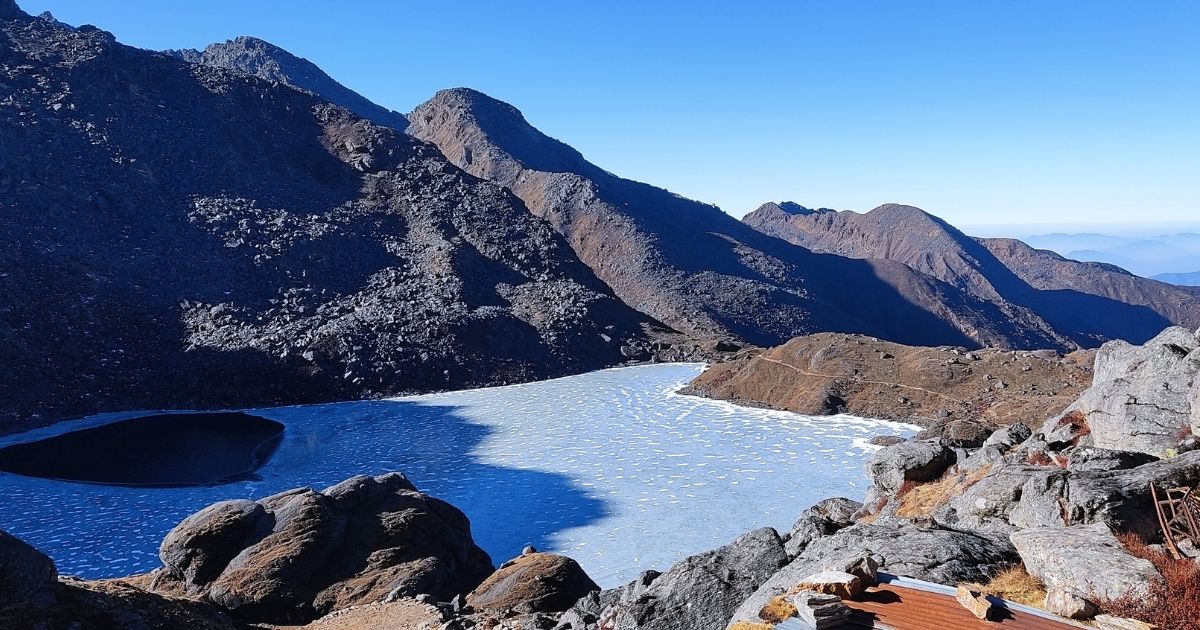
The home of Lord Shiva- Gosaikunda Lake

Gosaikunda Lake (4,380 m) holds great significance as a sacred pilgrimage site for both Hindu and Buddhist devotees. It is revered for its spiritual aura and is believed to have a black rock in its center, which is considered to be the head of Lord Shiva.

According to ancient legends, the creation of Gosaikunda Lake is attributed to Lord Shiva himself. The story goes that when Lord Shiva consumed the poison from the churning of the oceans to save the world, he felt an intense thirst. To quench his thirst, he struck a glacier with his trishul (trident), creating the pristine Gosaikunda Lake. The glacier meltwater is believed to be the purest and holiest water, carrying divine blessings.
gosaikunda lake

The religious significance of Gosaikunda Lake draws devotees from far and wide, particularly during the full moon of August. This auspicious time sees thousands of pilgrims undertaking a journey to this sacred site. Pilgrims come to worship, seek blessings, and take holy dips in the pristine waters of the lake, believing that it purifies their sins and brings them closer to divine grace.

How difficult is the Langtang Gosaikunda Helambu Trek?

The Langtang Gosaikunda Helambu Trek is a moderately challenging trek. You can expect to walk around 5–9 hours per day and cover roughly 10–15 km daily. The route reaches 4,984 m at Tserko Ri, where the air is much thinner than at lower elevations. The climb toward the pass is one of the hardest parts of the trek, with rocky areas, stone steps, forest tracks, and sharp ups and downs

The weather can also make the trek harder around Gosaikunda, Laurebina Pass, and Ghopte. Above 3,000 m, nights can become very cold and strong winds can make you feel much colder. Rain can make lower forest trails slippery while snow or ice can cover parts of the higher trail during colder months like December and January. You may also experience headache, dizziness, nausea, tiredness, or poor sleep as you gain altitude. Previous trekking experience is not required, but regular hiking experience can make the journey easier.

Note: Remember, everyone's response to altitude can vary, regardless of fitness level or previous trekking experience. It's essential to listen to your body and follow the guide's advice for a safe trek.

Is Langtang Gosaikunda Helambu Trek Suitable for Beginners?

Yes, a beginner can complete the Langtang Gosaikunda Helambu Trek with good fitness and support from an experienced local guide. The route does not need ropes, ice axes, or technical climbing skills because it is a walking trek. You will stay in teahouses on the trail and will get warm meals and a bed each night. From Syabrubesi, you follow the Langtang Khola through Lama Hotel, Langtang Village, and Kyanjin Gompa before continuing toward Gosaikunda. These settlements make it easier to rest and manage your daily walking distance compared with a camping trek.

The main challenge for a beginner is the high altitude and the long climb to Laurebina Pass. A good guide can help you maintain your speed and adjust the walking plan if you need more rest. You should also be ready for vertical stone steps and rough trails around Gosaikunda, Laurebina Pass, and Ghopte. With enough preparation and a comfortable pace, first-time trekkers can take on the route without needing previous high-altitude trekking experience.

Is Altitude Sickness Common on the Langtang Gosaikunda Helambu Trek?

Yes, mild altitude sickness can occur on the Langtang Gosaikunda Helambu Trek after you pass 3,000 m. The risk becomes higher around Kyanjin Gompa, Tserko Ri Gosaikunda, and Laurebina Pass. You may notice a headache, dizziness, nausea, tiredness, poor sleep, or a lower appetite as you gain height. The risk is greater when you climb too quickly, so you should give your body enough time to adjust. 

You should tell your guide as soon as you feel unwell because altitude sickness can become serious if you continue climbing. Drink enough water and take regular breaks because a mild headache or tiredness can improve after rest and a night at the same height. However, severe vomiting, confusion, difficulty walking, or serious breathing problems need immediate action and a descent to a lower altitude. 

Langtang Gosaikunda Helambu Trek Preparation

Engage in regular cardiovascular exercises like walking, jogging, cycling, or swimming to improve your stamina and endurance. Aim for at least 30 minutes of exercise three to four times a week. Strengthen your leg muscles and core through exercises such as squats, lunges, and planks. Building strength will help you tackle challenging terrain and carry your backpack comfortably.

Learn about the trek, its challenges, and the region's culture. This will help you mentally prepare for the journey and set realistic expectations. Develop a positive attitude and mental resilience to overcome any obstacles or discomfort you may encounter during the trek. Keep in mind that trekking can be physically demanding, but the rewards are worth it.

What Should Solo Trekkers Know Before Choosing This Trek?

Before choosing this circuit as a solo trekker, you need to look beyond standard packing lists and generic advice. This route has several important practical and legal details that most popular guides rarely mention. Let’s take a look at them:

  • Guide Required: Foreign trekkers should follow Nepal's current guide rules and arrange a licensed guide for the trek.
  • Quiet Helambu Trails: Trails around Ghopte, Tharepati, and Kutumsang can be quiet and harder to follow.
  • Private Room Costs: Solo trekkers may pay extra for private rooms at smaller teahouses.
  • Carry Cash: Keep enough Nepalese Rupees because ATMs and card payments are limited after Syabrubesi.
  • Respect Gosaikunda: Do not bathe, wash clothes, or use soap in Gosaikunda Lake because it is sacred.
  • Limited Services: Wi-Fi, electricity, hot water, and phone coverage are unstable at higher elevations.
  • Check Weather: Fog, rain, snow, and strong winds can affect Gosaikunda and Laurebina Pass.
  • Know Your Limits: Take extra care around Laurebina Pass and descend if serious altitude symptoms appear.

When is the Best Time to Trek Langtang Gosaikunda Helambu?

Autumn (September to November) and spring (March to May) are the best seasons for trekking the Langtang–Gosaikunda–Helambu Circuit. The table below provides a clear overview.

Season

Months

Temperature & Weather

Our Take & Recommendations

Autumn

Sept – Nov

Warm days in lower valleys, normal nights at high altitudes (Gosaikunda/Laurebina)

Best Overall. Perfect for photography but teahouses are highly crowded.

Spring

Mar – May

Comfortable daytime temperatures. Higher elevations are cold but manageable with fewer freezing nights than Autumn.

Highly Recommended. Best for nature and flora lovers. 

Winter

Dec – Feb 

Extreme cold. High-altitude teahouses close as water pipes freeze solid. Temperatures can drop below -10°C.

Not Recommended for Most. Only experienced trekkers with heavy winter gear should attempt this.

Monsoon

June – Aug

Heavy rainfall, high humidity, and thick fog. Mountain peaks are covered behind storm clouds.

Avoid . The exception is early August if you specifically want to see the Janai Purnima festival at Gosaikunda Lake

Have Questions About Trek?

Our experienced local team is here to help with route options, permits, accommodation, transportation, and all the trekking logistics. Send us an inquiry and let's plan your adventure together.

What Food & Accommodation are Available on the Langtang Gosaikunda Helambu Trek?

Accommodation on the Langtang Gosaikunda Helambu Trek is available in family-run teahouses and mountain lodges. At Syabrubesi, Lama Hotel, Langtang Village, and Kyanjin Gompa, you can expect basic rooms with beds, mattresses, blankets, and shared or private bathrooms depending on the lodge. Facilities become more limited around Gosaikunda, Laurebina Pass, and Ghopte. Hot showers and charging are available at many lower settlements for an extra fee but may be limited at higher elevations. 

tea house on the way to gosaikunda

Teahouses prepare food fresh and offer both Nepali and Western dishes. Dal bhat with rice, lentil soup, vegetables, and pickle is a common choice because it provides lots of energy for long days. Other options include momo, thukpa, fried rice, noodles, pasta, potatoes, eggs, pancakes, porridge, Tibetan bread, and soups. Ginger tea, lemon tea, and hot water are also available at most stops. Food choices become more limited at higher places such as Gosaikunda and Ghopte because supplies are harder to transport. 

*Note: Please inform us in advance if you have any specific dietary restrictions or allergies so that we can make appropriate arrangements for your meals during the trek.

What permits do I need for Langtang Gosaikunda and Helambu?

For the complete Langtang Gosaikunda Helambu Trek, you will need two permits: Langtang National Park Entry Permit and Shivapuri Nagarjun National Park Permit.

Permit Type

Requirement

Cost (Foreign Nationals)

Cost (SAARC Nationals)

Where it is Verified

Langtang National Park Entry Permit

Covers the entire Langtang Valley and Gosaikunda lake regions.

NPR 3,000 (USD 20)

NPR 1,500 (USD 10)

Dhunche, Syabrubesi, and Ghoda Tabela checkpoints.

Shivapuri Nagarjun National Park Permit

Only required if you choose to start or end your Helambu part via Sundarijal.

NPR 1,000 (USD 7)

NPR 600 (USD 4 )

Sundarijal / Chisapani park entrance gate.

How to Reach the Starting Point of the Langtang Gosaikunda Helambu Trek?

To reach Syabrubesi, the traditional trailhead and starting point for the Langtang Gosaikunda Helambu Trek, you must travel approximately 120 km north from Kathmandu. There are no domestic flights to the area, so the journey is made entirely by road via the Pasang Lhamu Highway. Here are the transportation options from Kathmandu:

Transport Type

Departure Point

Duration

Cost (One Way) (1 USD = NPR 150)

Local / Deluxe Bus

Machhapokhari Bus Park (Gongabu/Balaju area)

7–10 hours

NPR 1,200 to NPR 1,800 (USD 9–12)

Shared Jeep

Machhapokhari / Balaju

6–8 hours

NPR 2,000 to NPR 2,500 per seat (USD 13–16)

Private Jeep

Hotel pickup in Kathmandu

5–7 hours

NPR 15,000 to NPR 20,000 total (USD 100–150 per vehicle)

Why Combine Langtang, Gosaikunda and Helambu Instead of Trekking Them Separately?

Combining Langtang, Gosaikunda, and Helambu gives you a complete trekking experience without returning to Kathmandu between each region. You first trek inside the Langtang Valley along the Langtang Khola and reach Kyanjin Gompa before continuing toward Gosaikunda and Lauribina Pass. This route gives your body more time to adjust to higher elevations before you reach the most difficult parts. You also avoid repeating the same road journeys from Kathmandu for three separate treks.

Kyanjin Village

The combined route gives you much more variety within one journey. You'll explore Tamang villages such as Langtang Village and Thulo Syabru, the holy Gosaikunda Lake, and the Hyolmo communities of Helambu around Tharepati, Kutumsang, and Chisapani. The geography also changes from forests and river valleys to alpine lakes and rocky mountain trails before you descend into greener hills. Instead of seeing one region at a time, you get a continuous journey through three distinct parts of northern Nepal.

Choose Your Gosaikunda Trek

Not sure which trek best fits your time and budget? Choose the itinerary that suits you best, or share your preferred number of days and we'll recommend the right option for you.

Why Trek Langtang Gosaikunda Helambu with Nature Excursion?

We offer the best Langtang Gosaikunda and Helambu trek in the market. Our package covers all the necessities at a comprehensive price and is easy to customize. Apart from our genuine trek cost and attention to detail, you will get native guides and porters for the journey. We will book you the best guesthouse and help you prepare for the trek. From the moment you book a trek with us, our team will be there to assist you with all your questions.

Below are some of the perks of trekking with us at Nature Excursion in Nepal:

  • Free airport pick-up and drop-off service
  • Complimentary welcome and farewell dinner
  • Duffel bag and first aid kit to use during the trek
  • Free company t-shirt and trek certificate
  • No hidden costs and full transparency
  • Eco-friendly and sustainable treks
  • 24/7 support and 100% guaranteed departure

Langtang Gosaikunda Helambu Trek – 15 Days FAQs

  • Q1. Is it possible to cross from Kyanjin Gompa directly to Gosaikunda without backtracking to Thulo Syabru?

    No, visually it looks close on a map, but a massive, impassable wall of rock and ice (the Langtang Himal range) separates them. You must backtrack down the valley to at least Bamboo or Thulo Syabru to access the trail that climbs toward Shin Gompa.

  • Q2. Which local SIM card provider has better coverage along this combined loop?

    Ncell works better in the Langtang Valley, while Nepal Telecom (NTC) offers better coverage around Gosaikunda and remote Helambu villages. Carrying both SIMs is the safest option.

  • Q3. What is a “Heli-Rescue Authorization Letter,” and why do I need one?

    It is a document that confirms who will cover the cost of an emergency helicopter evacuation. If you become seriously ill with altitude sickness and need a rescue, the helicopter company may need payment confirmation before sending the aircraft. This can come from your insurance company or a local agency that can arrange the payment.

  • Q4. Do military checkpoints inspect my backpack?

    Yes, sometimes, because Langtang National Park is near the Tibet–China border, security checks can be strict. Officers may inspect your backpack for restricted items, unauthorized drones, or anything that violates national park and wildlife regulations

  • Q5. Should I start the trek from Syabrubesi or Sundarijal?

    Syabrubesi is the better starting point for the full Langtang–Gosaikunda–Helambu trek. It gives you direct access to the Langtang Valley and provides better acclimatization before crossing the high pass to Gosaikunda. Starting from Sundarijal is more suitable if you want to start with the Helambu area and finish toward Langtang.

  • Q6. Is it true that I can see the Everest Range from this trek?

    Yes, but only on a perfectly clear autumn morning from the top of Lauribina Pass (4,610 m) or Tserko Ri (4,984 m). The trek is mainly known for views of Langtang Lirung and Ganesh Himal, but sometimes you may also see Shisha Pangma and other Himalayan peaks toward the Everest region.

  • Q7. Can I buy genuine local handicrafts on this trail?

    Yes, for authentic handicrafts, look beyond the tourist shops in Syabrubesi and visit villages such as Sermathang and Tarkeghyang, where you can find traditional woodcarvings and hand-woven woolen blankets (Radi).

  • Q8. Who are the 'Hyolmo' people of Helambu, and how do they differ from Sherpas?

    The Yolmo (or Hyolmo) are a different, indigenous Buddhist group with their own language, dress, and a strong ancestral legacy, originating from the borderlands of Tibet. Their house designs and monastery architecture are slightly different from those of Khumbu Sherpas.

  • Q9. When is the Janai Purnima festival in Gosaikunda?

    Janai Purnima festival falls in August and is celebrated on the full moon day. In 2026, it falls on Friday, August 28 (12th of Bhadra, 2083, in the Nepali calendar).

  • Q10. Is the tap water safe if I filter it at Gosaikunda?

    No, gosaikunda is a holy pilgrimage site where thousands of devotees bathe during festival seasons (like Janai Purnima), and the surrounding soil lacks proper drainage systems. Even with a standard filter, it is safer to use water purification tablets plus a filter, or rely on boiled water provided by the lodges here.

  • Q11. Can I do the Langtang Gosaikunda Helambu trek without a guide?

    No, if you're a foreigner, you cannot trek the Langtang Gosaikunda Helambu trek without a guide. This trek needs the guidance of a native guide who will not only help you navigate the trail but also assist you in mingling with the locals.

  • Q12. Where is the best place to exchange money before starting the trek?

    The best rates are at official Money Changers in Thamel or licensed banks in Kathmandu, as exchange rates and cash availability get worse once you leave the capital city.

  • Q13. Are there ATMs or card payment options along the Langtang Gosaikunda Helambu trail?

    No, there are no ATMs or electronic payment systems past the towns like Syabrubesi, so you must carry physical Nepalese Rupees (NPR) to cover all teahouse meals, hot showers, and emergency expenses for the entire trip.

  • Q14. How do I obtain a travel visa for Nepal?

    You can get a Tourist Visa on arrival at Tribhuvan International Airport in Kathmandu or at land border crossings. Fees are USD 25-30 for 15 days, USD 40-50 for 30 days, and USD 100-110 for 90 days; bring cash in major foreign currencies since card machines often fail.

  • Q15. Can you see Everest during Langtang Gosaikunda Helambu trek?

    No, you cannot see Mount Everest during the Langtang Gosaikunda Helambu trekking. However, you will get to see the Langtang Himalayan range and many other mountains and glaciers.

  • Q16. Do I get a refund if I cancel the trek?

    Whether you will get a refund or not depends on the time you cancel the trek. You can check out our cancellation policy for more information. Usually, we have a cancellation fee deducted from your advance payment as per the remaining trek starting time.

  • Q17. Is Langtang open to trekking?

    Yes, the Langtang region is open to trekking. We are taking bookings for the Langtang Gosaikunda Helambu trek 2026/2027 departures. You can book a group or private trek as per your comfort. For more information, kindly get in touch with us.

  • Q18. Is Langtang Gosaikunda Helambu trek worth doing?

    Yes, the Langtang Gosaikunda Helambu trek is worth every penny, time, and effort you put into it. It is a fantastic trek that covers beautiful mountain villages, rich alpine flora and fauna, lovely waterfalls, terraced farms, ancient monasteries, stupas, chortens and prayer wheels, mountain and glacier views, alpine lakes, welcoming locals, and a lifetime trekking experience.

  • Q19. Is the Langtang Gosaikunda Helambu trek crowded?

    No, the Langtang Gosaikunda Helambu trekking route is not crowded like the famous Everest Base Camp trail or Annapurna circuit, even in the peak trekking season. Not many people know about this trail or do this trek, so the trekking route is relatively less crowded.

  • Q20. Do I need a sleeping bag for the Langtang Gosaikunda Helambu trek?

    Yes, you will need a sleeping bag for the Langtang Gosaikunda Helambu trek. The blankets offered in the guesthouses may not be enough to keep you warm throughout the night.