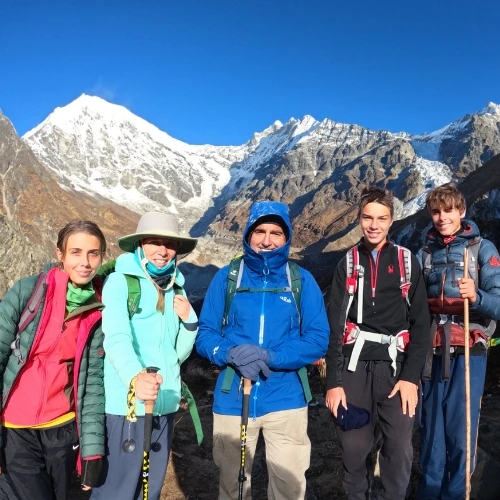
Imagine standing above the clouds while the morning light hits the highest peaks on earth. On this journey, the giants of the Himalaya surround you at every turn. The viewpoints during the Annapurna Circuit Trek offer more than just a place to rest your legs. These spots offer a front-row seat to some of Nepal's most dramatic landscapes. You will see deep valleys, high mountain passes, and the vast Tibetan plateau. Each day brings a new perspective as you move from green forests into a high-altitude desert.
You do not need to be an elite athlete to reach these famous spots. While the trek reaches high elevations, the trails are well-marked and supported by local teahouses. Our experienced guides manage your pace to help you adjust to the thin air. This trek is achievable for any beginner with a good fitness level and the right preparation. The reward for your hard work is a series of viewpoints that few people ever see in person.
Why Viewpoints Are the Highlight of the Annapurna Circuit Trek
You will find that the physical challenge of the Annapurna Circuit Trek is directly rewarded by the natural lookouts found along the route. These spots offer clear views of the Annapurna Massif and Dhaulagiri, both above 8,000 m. Standing at a high viewpoint like Poon Hill during the Annapurna Base Camp Trek or the Thorong La Pass gives you a sense of scale that you cannot get from the valley floor. These locations serve as milestones that track your progress through the changing terrain, from green sub-tropical forests to the dry, high-altitude desert of Mustang.
Plan Your Annapurna Circuit Trek
Want to experience Annapurna's best viewpoints? Talk to our trek experts for route advice, itinerary details, availability, and planning help.
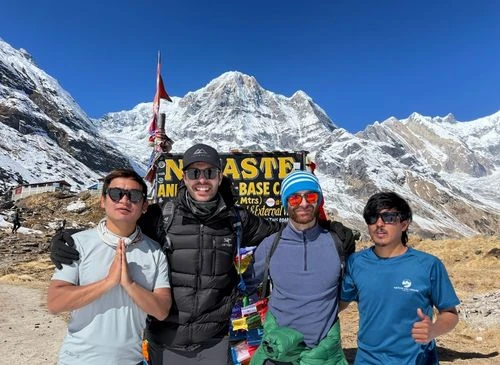
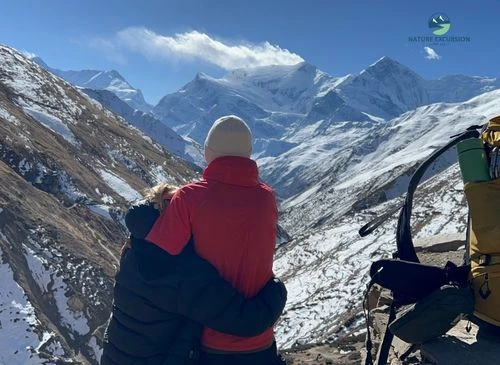
Reaching a viewpoint at sunrise is often the moment you feel most connected to the landscape. When the first light hits the snow-capped peaks, the physical strain of the steep climbs often fades away. These spots also offer a window into local culture, as you often see prayer flags and small stone shrines at the highest points. These areas prove that your hard work and steady pace pay off. You can use these moments to rest, take photos, and prepare mentally for the next stage of your journey.
While the entire trail offers constant mountain scenery, these specific locations along the Annapurna Circuit offer the best vantage points for observing the Himalayan high peaks like Annapurna South, Manaslu, Machapuchare, Dhaulagiri, Annapurna III, and Gangapurna.
Thorong La Pass
thorong la pass annapurna circuit trek
Thorong La Pass is among the highest viewpoints of the Annapurna Circuit and offers the most rewarding panorama. It marks a physical and visual divide between two massive Himalayan regions. Standing at 5,416 m, you look east toward the deep Marsyangdi Valley and west into the arid, desert-like landscape of Mustang and the Kali Gandaki Gorge. This spot offers a unique perspective on the Great Barrier and the Chulu peaks from an altitude higher than that of many mountains worldwide. The pass is marked by hundreds of fluttering prayer flags that frame views of the brown, wind-swept hills of the Tibetan Plateau. It is the only place on the trek where you can see the dramatic shift from incredible green valleys to the rain-shadow desert in a single glance.
Poon Hill
Poon Hill
Poon Hill is among the best viewpoints of the Annapurna region because it offers a wide view of two different 8,000 m mountain ranges from a single spot. Standing at 3,210 m, you can see the Dhaulagiri and Annapurna range to the north, including the distinct fishtail peak of Machhapuchhre. This location is unique because it sits at a lower altitude than the high passes, making it accessible even if you have concerns about thin air. The sunrise from this ridge is a key highlight, as the light hits the peaks of Dhaulagiri I and Annapurna I before the rest of the valley leaves the shadows.
Tilicho Lake Viewpoint: The World's Highest Large Lake
Tilicho Lake
Annapurna Circuit with Tilicho Lake trek is one of the best modern adventures in the Annapurna region. Tilicho Lake is a focal point of the Annapurna Circuit because it offers a clear, high-altitude landscape unlike any other along the route. At 4,919 m, it is one of the highest large lakes in the world, sitting directly at the base of the massive Tilicho Peak. The view from the shore offers a direct view of the "Great Barrier," a sheer wall of rock and ice that connects to the Annapurna massif. Reaching this point requires a side trip through the landslide-prone Manang district, which adds a sense of remote challenge to your trek.
Ice Lake / Kicho Tal
Ice Lake
Ice Lake, also known as Kicho Tal, is a superior viewpoint on both the classic Annapurna Circuit trek and the short Annapurna Circuit trek because it offers a full, unobstructed view of the Annapurna massif from an elevation of 4,620 m. Unlike the valley floor, where steep canyon walls block your sight, this high-altitude plateau sits directly across from the mountains. You can see the entire range from Annapurna II and IV to Gangapurna and the Great Barrier. The lake itself acts as a natural mirror, reflecting the white peaks in the water before the wind picks up in the early morning.
Chame Valley
Chame Valley serves as a vital transition point and viewpoint because it offers the first close-up view of the dramatic vertical rise of the Himalayas. Located at 2,670 m, the valley floor is deep and narrow, carved by the Marsyangdi River, which creates a framed view of Lamjung Himal and Annapurna II towering directly over the town. This spot is unique because you can see the massive change in geography: you leave the lush, green forests of the lower hills and enter the high-altitude pine forests and rocky cliffs.
Explore Annapurna Circuit Trek
Ready to see these incredible viewpoints in person? Explore the Annapurna Circuit Trek itinerary and plan your journey through the Himalayas.
The Muktinath Temple view offers a rare glimpse of a place where deep spiritual history meets a high-altitude desert. From the temple grounds at 3,760 m, you can look out across the brown, wind-swept hills of the Mustang region toward the massive, snow-covered peak of Dhaulagiri. This spot is special because it shows the contrast between the green trees of the temple oasis and the dry, barren mountains that stretch toward the Tibetan border. When you stand near the 108 stone water spouts, you see the wide Kali Gandaki Valley opening up below you, which is the deepest gorge in the world.
Swargadwari and Kagbeni Viewpoint
Swargadwari and Kagbeni Viewpoints offer a majestic view of the geological wonders and cultural gateways of Lower Mustang. When you stand at the Swargadwari viewpoint, you see a massive, curved rock wall known as the "Gateway to Heaven" that rises 1,500 m from the valley floor. It is a smooth, semicircular cliff that looks like a giant wave of stone, which locals believe is the path to the afterlife. Further down the trail, the Kagbeni viewpoint offers a clear view of the confluence of the Kali Gandaki and Jhong Rivers.
Ghyaru Viewpoint
Ghyaru Viewpoint
Ghyaru Viewpoint offers you the most expansive aerial-style perspective of the Marsyangdi Valley without needing a helicopter. Situated at 3,730 m, this ancient village sits on a high, perched terrace that forces you to look directly across at the massive North Face of the Annapurna range. You can see the entire sweep of Upper Pisang, Annapurna II, Annapurna IV, and Gangapurna as if they were at eye level. This spot is unique because you can clearly observe the transition from the green valley floor below to the blue ice of the high-altitude glaciers above.
Braga Monastery Viewpoint
Braga Monastery viewpoint offers you a look into the ancient heart of the Manang district while showcasing the raw power of the Himalayas. Located at 3,439 m, this 15th-century monastery is built directly into a craggy hillside, with white-washed stone rooms stacked like a honeycomb against the dark rock. When you stand on the monastery’s rooftop early in the morning, you first get a glimpse of a majestic sunrise or sunset in the evening. Look down over the green fields of the Marsyangdi Valley and straight across at the beautiful views of the surrounding mountains, which include Annapurna range.
Ngawal Viewpoint
Ngawal Viewpoint
Ngawal Viewpoint offers you a front-row seat to the massive scale of the Annapurna massif from an altitude of 3,660 m. When you stand on the ridge near this traditional stone village, you are positioned perfectly to see the jagged peaks of Annapurna II, III, and IV, along with the sharp pyramid of Gangapurna. This spot is special because it overlooks the wide expanse of the upper Manang Valley, offering a clear view of Annapurna above and the Marsyangdi River and the tiny airstrip at Humde far below. You can see the transition from the pine forests of the lower valley to the grey, rocky slopes that lead up to the high-altitude glaciers.
Best Time to Enjoy Clear Views on the Annapurna Circuit
Weather patterns in the Himalayas dictate when you can see the peaks clearly. During autumn, from September to November, the monsoon rains have just washed the dust from the air. This results in the sharpest visibility and best time of the year for the Annapurna and Dhaulagiri ranges. Spring, from March to May, offers slightly more haze in the lower valleys due to local dust and heat, but the views from higher elevations remain excellent.
Winter provides very clear skies, but the cold is intense, and snow often blocks the Thorong La Pass. The monsoon season from June to August brings heavy clouds and rain, which hide the mountains for days at a time. Photographers and trekkers who prioritize sightseeing usually choose October or April to ensure the horizon remains open.
Season
Visibility
Temperature
Crowd Level
Recommendation
Spring
High clarity, some haze in lower valleys
-10°C (14°F) to 20°C (68°F)
Moderate to High
Best for rhododendrons and mild weather.
Autumn
Highest clarity of the year
-15°C (5°F) to 18°C (64°F)
High
Best for photography and stable skies.
Winter
Very high, but limited by snow
-25°C (-13°F) to 10°C (50°F)
Low
Best for solitude if you can handle extreme cold.
Monsoon
Low, mountains often hidden
10°C (50°F) to 25°C (77°F)
Very Low
Not recommended for mountain views.
How Difficult Is It to Reach These Viewpoints?
You can reach most major viewpoints on the Annapurna Circuit if you maintain a steady pace. While the terrain includes steep stone stairs and narrow dirt paths, the difficulty comes mostly from the thinning air rather than technical climbing. You do not need professional mountaineering skills to stand at spots like Poon Hill or the Thorong La Pass. If you can walk for 5 to 6 hours on a treadmill with an incline, you have the basic fitness required for these trails. Your success depends on how you manage your energy during the first few days of the trek.
Way to tilicho lake
Your safety and comfort rely on a slow approach to higher elevations. We design our itineraries with specific acclimatization days to help your body adjust to the altitude. Walking with an experienced guide ensures that you do not push too hard too early. They monitor your oxygen levels and remind you to drink enough water, which are the two most important factors in preventing altitude sickness. By focusing on consistent movement rather than speed, you will find that even the highest viewpoints are within your reach.
Photography Guide: Getting the Best Shots at Each Viewpoint
Taking breathtaking photos of diverse landscapes on this trek requires more than just a good camera. You need to understand how high-altitude light works and how to protect your gear in cold weather. The light is often very harsh between 10:00 AM and 3:00 PM because the air is thin and the sun is strong. For the best results, focus on the "golden hours" during sunrise and sunset when the glow hits the peaks. If you use a smartphone, tap the brightest part of the sky on your screen to adjust the exposure so your snow photos do not look blown out or too white. Keep your spare batteries inside your sleeping bag or close to your body, as the cold drains them quickly.
Viewpoint
Best Time
Shot Type
Pro Tip
Manang Village
4:00 PM
Wide Landscape
Use the stone houses as a foreground to show the scale of the Annapurna range.
Gangapurna Lake
9:00 AM
Reflection
Arrive before the wind picks up to get a mirror effect on the turquoise water.
Thorong La Pass
8:00 AM
Action/Portrait
Frame your subject next to the colorful prayer flags to show the 5,416 m altitude marker.
Muktinath Temple
10:00 AM
Cultural Detail
Focus on the 108 water sprouts: use a fast shutter speed to freeze the water droplets.
Poon Hill
5:45 AM
360-Degree View
Set up your tripod early: pan slowly from Dhaulagiri to Machhapuchhre for a video.
Guided vs. Independent Trekking: What's Better for Viewpoints?
Choosing between a guided or independent journey depends on your comfort with mountain logistics. Independent trekking offers the freedom to change your pace, but it places the entire burden of safety and navigation on your shoulders. You must handle your own Annapurna Conservation Area permit, find open teahouses in busy seasons, and track your own health for altitude sickness. Without a local expert, you might miss hidden photography spots or the best timing for a clear view of Nilgiri because you are too focused on reading a map or carrying a heavy pack.
Way to Chhonkar
A guided trek is highly suitable for beginners because it removes the stress of getting lost or making mistakes with your trek itinerary. The expert guides know every turn of the trekking route, ensuring you reach viewpoints like Mardi Himal or the Thorong La Pass safely and on time for the best light. They also manage your rest day schedule to ensure your body recovers properly before you climb higher. Having a professional by your side means you can simply enjoy the scenery and focus on your photography while we handle the permits, meals, and emergency planning.
Have Questions About Your Trek?
Get quick answers about routes, costs, permits, difficulty, or travel dates from our trekking team before you book.
Plan Your Annapurna Circuit Trek for the Best Views
We believe that timing and preparation are the secrets to the most rewarding mountain photography. To see the sharpest peaks and clearest skies, plan your visit for October or November. During this time, visibility is best at high points like the Thorong La Pass and at the lakeside reflections at Gangapurna.
We encourage you to start your preparations today so you can book your spot with confidence. Our team is ready to handle all the logistics, from your Annapurna Conservation Area permit to your daily trek itinerary, so you can focus on the horizon. The Himalayas are waiting.
Written by
Karan GurungExecutive Director
Hello, I’m Karan Gurung, a passionate mountaineer from Nepal with over 15 years of experience exploring the majestic peaks of the Himalayas. I grew up surrounded by towering mountains; my love for adventure and the thrill of high-altitude trekking have shaped my life to the next level. For me, the mountains are more than just a place to trek, and I believe they are a source of inspiration, a connection to nature, and a way of relaxing your mind and soul with peace. I’m always here to share my experiences, travel tips, and stories from my adventures to help others appreciate the beauty of the Himalayas in Nepal through articles and blogs. Whether you're an experienced trekker or someone new to the mountains, I’m here to guide and inspire you for your first or next adventure in Nepal!
Mount Annapurna I is 8,091 m (26,545 ft) above sea level, the 10th-highest mountain in the world. Located in north-central Nepal within the Annapurna...
As of June 2026, exactly 572 climbers have successfully reached the summit of Annapurna I. This updated figure comes directly from Nepal's Department...
How far do you actually have to walk to complete the legendary Annapurna Circuit? The total Annapurna Circuit Trek distance usually spans between 160...


.webp)




.webp)
.webp)