Poon Hill Short Trek – 3 Days

Quick Facts
  • Trip Duration3 Days
  • Destination Nepal
  • Difficulty Level Easy
  • Maximum Altitude 3,210 m (Poon Hill)
  • Activity Trek
  • Starts/Ends Pokhara / Pokhara
  • Group Size 1 - 16
  • Transportation Overland (Pokhara-Nayapul & Banthanti-Pokhara)
  • Best Season Spring (March to May) & Autumn (September to November)
  • Accommodation Hotel + Teahouse/Lodge
  • Avg. hours of walk/day 4 to 6 hours
  • Comfort Basic + Comfort
  • Interest option Wildlife, nature, culture, photography, adventure, etc.

Poon Hill Short Trail Psychology

Excitement → Shock → Calmness → Joy → Pride

  • Excitement: You start the trek with high energy from Pokhara. The early dirt track feels manageable: your mind focuses purely on reaching the mountains.
  • Shock: The sudden climb up the 3,000 stone steps to Ulleri shocks your muscles. You feel frustrated as your breathing speeds up: your mind battles the repetitive movement.
  • Calmness: You enter the deep rhododendron forests before Ghorepani. The cool shade calms your heart rate.
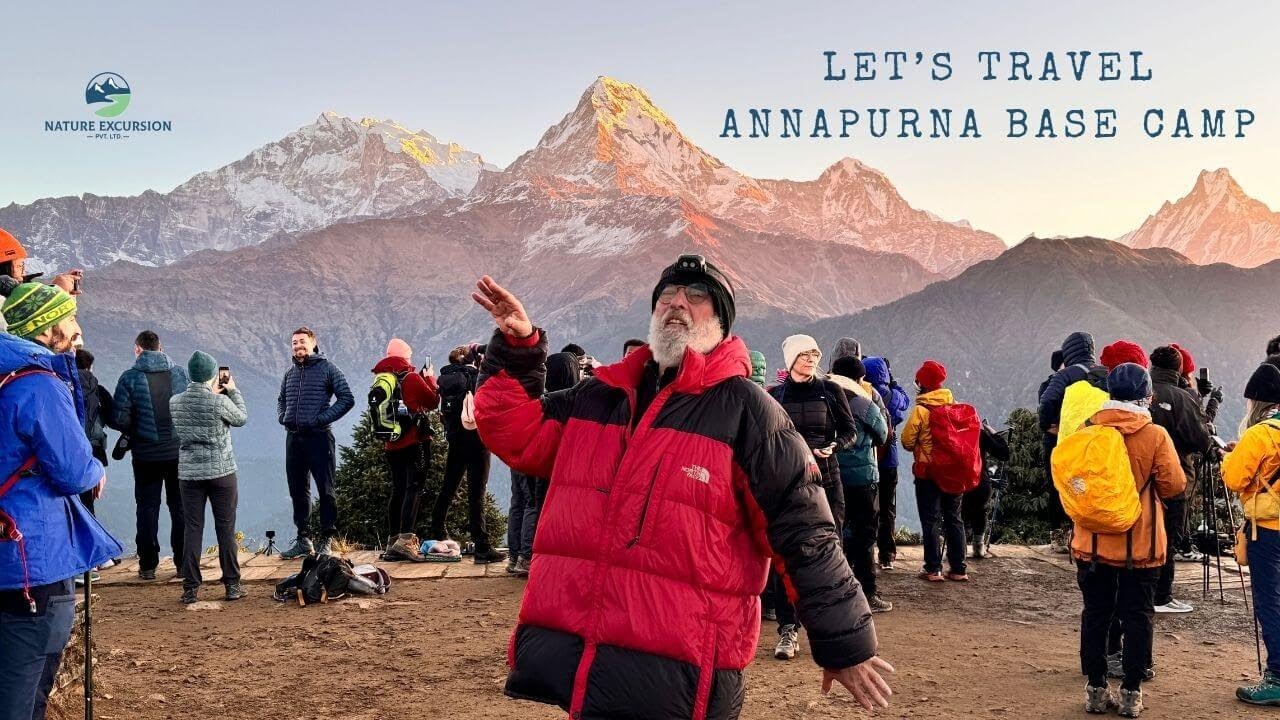
  • Joy: You stand at the Poon Hill viewpoint at 5:30 AM. The sight of the sun hitting Dhaulagiri and Annapurna replaces your exhaustion with pure relief.
  • Pride: The long downward brings a sense of calm. Your mind processes the physical challenge, and you feel great pride in your body.

Emotions You May Feel

  • Thrill
  • Peace
  • Wonder
  • Drive
  • Awe
  • Gratitude

How Does Your Mind Change?

  • Start: Excitement and anticipation dominate as you drive from Pokhara and begin the stone steps from Birethanti.
  • Middle: Determination kicks in during the steep, grueling climb up the 3,000 stone steps to Ulleri.
  • Ghorepani: A cozy sense of community takes over as you gather around the teahouse heater, anticipation building for the morning view.
  • At Poon Hill: Complete awe and stillness peak at dawn as the sun hits the Dhaulagiri and Annapurna massifs.
  • Return: Relief and nostalgia mix as you descend through the rhododendron forest toward Pokhara, letting you reflect on your capabilities.
  • Confidence Level: You feel proud of your stamina and eager to tackle longer, higher Himalayan routes.

Connection & Solitude Ratio

  • Connection Level: 75% (Tikhedhunga, Ulleri, Ghorepani)
  • Solitude Level: 25% (Pre-dawn climb, deep rhododendron forests between Ghorepani and Banthanti)

Why You'll Love This Trip

  • Watch the morning sun paint the massive Annapurna and Dhaulagiri ranges in brilliant shades of gold.
  • Enjoy a safe, altitude-sickness-free trek through the most underrated terrain in Nepal.
  • Experience the hospitality of the Gurung and Magar people in traditional mountain settlements.
  • Climb the famous stone steps of Ulleri to test your physical fitness early in the trip.
  • Start and finish your adventure near Pokhara, a peaceful lakeside city.
  • Walk past sculpted green hillside terraces growing local rice, millet, and vegetables.
  • Spot playful rhesus monkeys and diverse mountain birds active in the forest.

Poon Hill Trek Overview

Summits inspire us, but it's the climb itself that counts. – Conrad Anker

The 3-day Poon Hill Trek is one of the highly rated and recently celebrated treks in Nepal. Over the years, many trekkers have been drawn to this trek for the experience of trekking in the mountains without the grueling physical effort. You will begin your Poon Hill Trek from Pokhara and stroll through the Annapurna Conservation Area. Despite being an easy trek, the Ulleri stone steps still require a good level of physical fitness. But it does not carry the severe risks of high-altitude sickness found on longer Himalayan circuits. It serves as a practical testing ground for your gear, your endurance, and your comfort with basic lodge living.

Safety on this route is more about maintaining a steady pace and protecting your knees than dealing with altitude. You need to prepare your legs for long, relentless downhill sections, which actually strain your joints more than climbs do. Because local teahouses provide warm beds, hot meals, and clean water along the way, you can leave the heavy camping equipment behind. Ultimately, the lower elevation makes the entire journey highly accessible, making it an ideal choice for families, first-time hikers, or anyone short on time.

One of the biggest green flags of the Poon Hill Trek is its atmosphere. In these hills, local Gurung and Magar people have lived for generations. Their unique cultural heritage is visible in their simple way of life and even in the houses they built. These people provide food and places to stay, which makes the journey feel safe and secure. The Poon Hill Trek offers a first glimpse of daily mountain life in the Himalayas, which is so different from life in busy towns and cities. You will remember this for a long time.

Flow of Journey

The Poon Hill trek begins with an early-morning drive from Pokhara to the Nayapul trailhead. The road follows the Yamdi Khola valley before reaching the official Birethanti checkpoint, where our team issues your permits. The walking portion starts on a flat, dusty trail next to the riverbed. But the terrain changes into a demanding physical challenge after you cross the suspension bridge. You must climb over 3,000 stone steps to reach the village of Ulleri. This steep staircase tests your lower body stamina. Meanwhile, the view shifts from low river valleys to the traditional stone houses of the Magar community.

The second phase of the trek moves from open hillsides into dense forest. We leave Ulleri to walk through a cool canopy of oak and rhododendron trees. The trail ascends past trailside streams up to the high mountain pass at Ghorepani. This village sits on a ridge line, offering an immediate view of Annapurna South. Also, the thin air at this altitude causes the evening temperature to drop significantly. The final day requires a pre-dawn climb using headlamps to reach the Poon Hill viewpoint at 3,210 m. You then descend through the forest back to Banthanti to catch a vehicle for the return drive to Pokhara.

Itinerary

Day1
  • Meals:Lunch, Dinner
  • Accommodation:Lodge
  • Trek Distance:12 km
  • Drive Distance:40 km
  • Trek Duration:5 hours
  • Drive Duration:1.5-2 hours
  • Sleep Elevation:2,050 m
  • Overnight Place:Ulleri
  • Day's Difficulty:Moderate

You will drive from your Pokhara hotel to Nayapul early in the morning. The road winds along the scenic ridgelines of the Yamdi Khola valley. This driving section takes about 1.5 hours to cover the 40 km. Once we arrive at Nayapul, our team organizes your trekking permits at the official Birethanti checkpoint. You can stretch your legs and prepare your gear while the guide handles the paperwork.

The walking starts with a steady, dusty path alongside the Bhurungdi Khola riverbed toward Tikhedhunga. But the gentle terrain changes abruptly into a major physical challenge after you cross the suspension bridge. The final stretch requires climbing over 3,000 stone steps up a steep hillside. This continuous staircase tests your leg strength and stamina. Meanwhile, the view shifts from low-lying valleys to the traditional stone houses of the Magar community settled in Ulleri.

Included activities:

  • Begin your drive from Pokhara to Nayapul.
  • Check your permits at the Birethanti checkpoint.
  • Walk along the riverbed through Tikhedhunga village.
  • Climb the stone staircase up to Ulleri.
Day2
  • Meals:Breakfast, Lunch, Dinner
  • Accommodation:Lodge
  • Trek Distance:8 km
  • Trek Duration:5-6 hours
  • Sleep Elevation:2,874 m
  • Overnight Place:Ghorepani
  • Day's Difficulty:Moderate

We leave the stone village behind and ascend on a well-graded trail through a cool oak and rhododendron forest. The path climbs gently past small waterfalls and clear mountain streams until you reach the settlement of Banthanti. This spot is a great place to catch your breath and enjoy the fresh mountain air. But the trail continues upward from here: it winds through the deepest parts of the forest. Meanwhile, the dense tree canopy keeps the temperature cool and shaded even during the sunny midday hours.

The woodland trail finally opens up as we approach the Ghorepani settlement at the mountain pass. This village sits on a high ridge line: it offers a striking first look at the massive Annapurna South and Hiunchuli peaks. You will notice the distinctive blue roofs of the local teahouses that welcome tired trekkers. Also, the elevation jump to 2,860 m means the evening air gets quite cold here. We check into our teahouse early so you can sit by the central dining room heater and prepare for the early morning hike tomorrow.

Included activities:

  • Walk through dense rhododendron and oak forests up the mountain.
  • Rest and stop for lunch at the Banthanti trailside settlement.
  • Cross small glacial streams over wooden bridges.
  • Arrive at the high-altitude village of Ghorepani for majestic mountain views.
Day3
  • Meals:Breakfast, Lunch, Dinner
  • Accommodation:Hotel
  • Trek Distance:5 km
  • Drive Distance:48 km
  • Trek Duration:3-4 hours
  • Drive Duration:3 hours
  • Sleep Elevation:822 m
  • Overnight Place:Pokhara
  • Day's Difficulty:Moderate

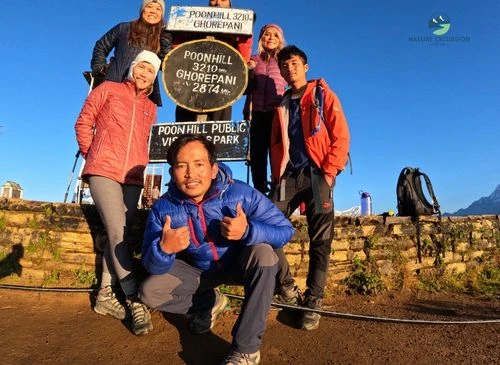
An early morning wakeup call at 4:30 AM starts your climb through the cold air to the Poon Hill viewpoint at 3,210 m. The uphill trail consists of well-maintained stone steps that wind through sparse rhododendron bushes for about 45 minutes. You will need a headlamp to navigate the dark path safely before dawn breaks. Once at the top, the morning sun hits the massive peak of Dhaulagiri I at 8,167 m and the Annapurna massif. This viewpoint highlights the vast geographical scale of the Himalayas. Also, the freezing wind requires heavy layers and thick gloves while you watch the light shift over the high ridges.

You walk back down to the Ghorepani teahouse for a warm meal before packing your gear for the final descent. The trail drops sharply through the dense oak forest toward the settlement of Banthanti. This downhill section puts significant pressure on your knees as you navigate the uneven stone stairs. We reach the dirt road head at Banthanti, where you will board a public vehicle. The rugged mountain road follows the river valley down to Nayapul before joining the smooth highway back to Pokhara.

Included activities:

  • Hike up the stone stairs to the Poon Hill viewpoint for sunrise.
  • Observe the high peaks of Dhaulagiri and Annapurna South.
  • Descend through the rhododendron forest back down to Banthanti village.
  • Drive in a private 4WD from Banthanti to your Pokhara hotel.

You can also start this trek from Kathmandu and drive to Pokhara. Starting and ending the Poon Hill trek in Kathmandu will add two more days to the itinerary and an additional cost as per that.

Download Pdf

Cost Details

Includes

  • Airport pick up and drop off services during your arrival and departure date, from and to the Tribhuvan International Airport (TIA)
  • Accommodation during the trek in the mountain (lodge)
  • All ground transport ‘From and to Pokhara.’
  • Hotel in Pokhara after the trek complete 1 night (private washroom with AC room)
  • All healthy meals during the trek
  • Government licensed, English speaking, and experienced Nature Excursions native guide with his meals, salary, transportation, insurance, and other necessary expenses
  • Porter to help trekkers’ luggage, two trekkers can share one porter
  • Purification tablets for safe drinking water
  • Annapurna Conservation Area Permit (ACAP) fee
  • All government, local taxes, and official expenses
  • First aid kit box carried by the guide
  • We provide sleeping bags and a duffel bag as per your request (has to be returned after the trek completion)
  • Assisting in any emergency evacuation or rescue operation due to uncertainty or any serious health condition (incurred charges should be covered by your travel insurance company)
  • Complimentary farewell dinner at the end of the trek

Excludes

  • International flight cost
  • Nepal entry visa fee depends on how much time you want to spend in Nepal ($25 for 15 days, $40-50 for 30 days, and $100-110 for 90 days)
  • Your meals and hotel in Kathmandu, except the complimentary farewell dinner in Kathmandu
  • Hotel and meals in Pokhara are different from our scheduled itinerary
  • Your personal clothing and gear
  • Personal nature expenses include: energy bars, hard and cold drinks, tea/coffee, hot showers, laundry, battery recharge, internet, extra porter, etc.
  • Your travel insurance, which covers your emergency evacuation
  • Extra expenses which are not listed in the include section

Clients Reviews

  • Very helpful

    One of the best group to travel with. All the guides and porters were very helpful and friendly. Emanuel was the best guide and was always there whenever you needed anything.
    Praveen, Ashish and not to forget Enil’s energy was unmatched. They were amazing people who made Nepal feel like home and made sure we don’t feel like legit tourists

    Sangathya V
    Sangathya VIndiaMay 01, 2026
    TripAdvisor
  • Beautiful scenery in Nepal is the people!

    What makes the trip so memorable was the whole team, our guide Emmanuel, very professional and patiently explained everything to us, our porters: Arjun, Pravin, and Nar who always encouraged me to move forward slowly, don’t give up!!!
    Will definitely introduce to all my friends to book this!!!!
    Beautiful scenery in Nepal is the people!

    ChihChieh L
    ChihChieh LTaiwanApr 14, 2026
    TripAdvisor

Useful Information

Poon Hill Short Trek Cost

The Poon Hill short trek costs start at USD 450 per person. This base cost covers your ground transportation between Pokhara and the trailheads via private vehicle, necessary field staff, and your daily meals. Also, the price includes your standard teahouse accommodations and the official Annapurna Conservation Area Project (ACAP) permits. But please note that your package price scales based on your total group size: a larger group lowers the per-person rate, while a solo traveler pays a premium for a private guide.

Poon Hill view point

The fixed cost requires a mandatory deposit of 10% of the total cost as an advance to secure your field team and vehicle logistics before arrival. Your package excludes the cost of your hotel stay, airport transfers, and meals in Kathmandu, which must be handled independently. Meanwhile, personal expenses such as internet use, charging fees, and hot showers at the teahouses will require extra cash. Likewise, tips for your trekking guide and porter are not included in this base amount; we recommend setting aside additional funds to thank your field crew at the end of the journey.

Weather Variation for Poon Hill Trek

The Poon Hill trek takes you through a rapid transition of landscapes and climates. It begins in the warm, low-altitude valleys around Pokhara and gradually ascends through cooler settlements like Ulleri before reaching the colder ridge of Ghorepani. The trek reaches its highest point at the Poon Hill viewpoint, a famous vantage spot situated at 3,210 m above sea level. So let’s take a detailed look at the change in weather and temperature from low altitude to high mountain range.

Low Altitudes (Pokhara-Ulleri)

  • Winter (Dec–Feb): 50°F to 32°F (10°C to 0°C)
  • Spring (Mar–May): 77°F to 50°F (25°C to 10°C)
  • Summer (Jun–Aug): 86°F to 68°F (30°C to 20°C)
  • Autumn (Sept–Nov): 73°F to 45°F (23°C to 7°C)

High Altitudes (Ghorepani-Poon Hill Viewpoint)

  • Winter (Dec–Feb): 32°F to 14°F (0°C to -10°C)
  • Spring (Mar–May): 59°F to 32°F (15°C to 0°C)
  • Summer (Jun–Aug): 68°F to 50°F (20°C to 10°C)
  • Autumn (Sept–Nov): 55°F to 28°F (13°C to -2°C)

Best Time for Poon Hill Trek

The best time for the Poon Hill trek is during the spring months from March to May and the autumn months from September to November. These periods offer stable weather, minimal rainfall, and clear skies for peak visibility. The spring trail features blooming rhododendron forests that cover the hillsides in vibrant colors. Meanwhile, the autumn season brings the crispest mountain air and the sharpest morning views of the Dhaulagiri and Annapurna ranges.

Spring

Spring is the season of flowers. Hundreds of rhododendrons and many other flowers decorate the entire Poon Hill trail, making it extremely beautiful. The mountain views are clear and beautiful in this season. Likewise, the stable weather and no rainfall make trekking excellent. The temperature ranges from 15°C to 20°C during the day and can drop to -5°C at night or in the morning.

Autumn

Autumn is another famous time to do the Poon Hill short trek. The splendor of nature and the festival vibe make trekking during this time of the year mesmerizing. The trekking route is full of travelers, the atmosphere is cheerful, and the weather is just right to enjoy trekking in the Himalayas. As it is the post-monsoon season, the air is clean and crisp. The temperature ranges between 14°C to 20°C during the daytime, while nights and mornings are a bit cold. 

What Makes the Poon Hill Short Trek Special?

The Ghorepani Poon Hill route stands out for offering some of the fastest access to deep Himalayan scenery without the risk of acute mountain sickness (AMS). Most high-altitude treks in Nepal require a week of walking just to see an 8,000-meter peak, but this trail brings you face-to-face with the massive Dhaulagiri and Annapurna massifs by day two. The maximum elevation at the viewpoint is 3,210 m, keeping you well below the typical altitude sickness threshold of 3,500 m. This makes the journey an excellent option for families, beginners, or travelers with limited time in Nepal.

Poon Hill

The trail also highlights the unique cultural heritage of the ethnic Magar and Gurung communities. You walk through deep rhododendron forests that bloom with red and pink flowers during the spring months of March and April. The local teahouses provide a comfortable mountain experience with warm communal dining halls, heavy blankets, and home-cooked mid-hills cuisine. Meanwhile, the well-maintained stone steps provide a clear, structured path that eliminates the need for advanced technical climbing skills or intense mountaineering gear.

How to Reach the Starting Point of Poon Hill Trek?

Your Ghorepani Poon Hill Trek in Nepal begins at the starting point, with a trip from Kathmandu to the lakeside city of Pokhara. Most travelers choose between a 25-minute domestic flight or a 6 to 8-hour drive along the winding Prithvi Highway. Once you arrive in Pokhara, you must arrange ground transport for the remaining 42 km to Nayapul. You can either use a private vehicle or a tourist vehicle to ensure a comfortable ride through the rough patches of the mid-hill highway. This leg of the drive from your Pokhara hotel to the trailhead takes about 1 hour and 30 minutes.

The road follows the scenic Yamdi Khola valley before it drops down into the busy market town of Nayapul. This town, at an altitude of 1,070 m, serves as the official gateway to the Annapurna region. The private vehicle drops you off right at the main trail junction where the dirt path begins. But before you can start walking, your guide must present your ACAP permits and TIMS card at the local Birethanti checkpoint. Meanwhile, you can use this final roadside stop to adjust your backpack straps, buy mineral water, and meet your porter crew.

Why Choose the Short Version of Poon Hill Trek?

The short version of the Poon Hill trek is an ideal choice if you have limited time but still want to experience the Himalayas. You skip the long, winding access routes and focus directly on the core highlights of the Annapurna region. This compressed timeline requires good physical fitness because you cover significant elevation changes in just three days. But it eliminates the need to take extended time off work or commit to a multi-week expedition. It gives you a complete mountain experience that fits perfectly into a short holiday window or a broader Nepal travel itinerary.
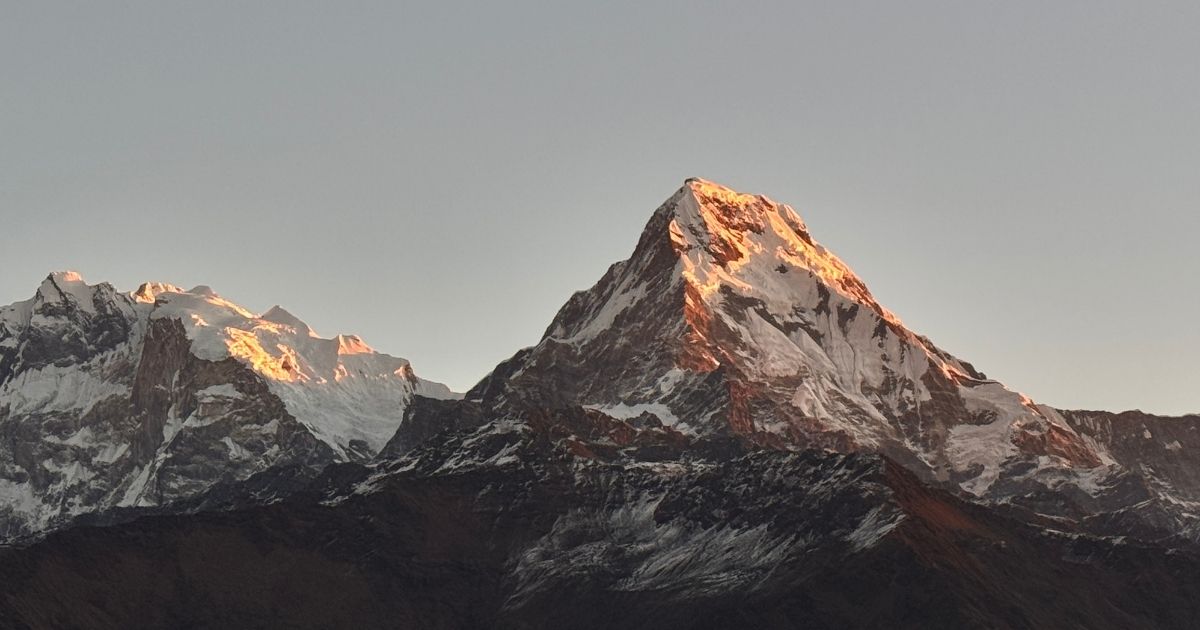
view from poon hill

This option also keeps your overall travel expenses low while delivering a classic teahouse experience. You spend fewer nights on the trail, which means you pay less for accommodation, daily meals, and porter services. Meanwhile, you still get to stand at the famous 3,210 m viewpoint and watch the sunrise over the Dhaulagiri and Annapurna massifs. It cuts out the repetitive forest walking days found in longer itineraries. Likewise, the shorter duration reduces the physical toll on your body, making it a highly efficient mountain getaway.

3 Day Poon Hill Short Trek vs. 9 Day Standard Trek

FeatureShort Poon Hill Trek (3 Days)Standard Annapurna Foothills Trek (9 Days)
Total Walking Distance25 km65 km to 75 km
Average Daily Walking5 hours to 6 hours4 hours to 5 hours
Maximum Elevation3,210 m at Poon Hill3,210 m at Poon Hill
Starting and Ending PointsNayapul / BanthantiNayapul / Phedi or Kimche
Physical Intensity LevelHigh: Steep climbs with minimal acclimatization timeModerate: Gradual ascent over multiple days
Route VarietyDirect out-and-back trail through main settlementsDeep loop through Ghandruk, Tadapani, and Jhinu hot springs
Kathmandu AccommodationExcluded from the packageExcluded from the package
Permits and Guide RequirementsACAP permit, TIMS card, and mandatory guideACAP permit, TIMS card, and mandatory guide

Accommodation & Food: What to Expect in Teahouses

The accommodation and food in Nepalese teahouses at Ghorepani Poon Hill short trek are basic, functional, and deeply tied to life in mountain communities. The Teahouses provide simple twin-sharing rooms equipped with foam mattresses, pillows, and blankets. Most rooms do not have attached bathrooms or heating systems, so you must rely on your own sleeping bag and thick layers to stay warm at night.

The walls between rooms are typically thin wooden panels that offer minimal soundproofing. Common areas like the central dining room feature a wood or yak-dung stove. This is the only heated space in the building where trekkers gather in the evening to socialize and dry their gear. Hot showers, Wi-Fi access, and charging plugs are usually available at lower and mid altitudes. But the lodge owners charge an extra fee ranging from USD 2 to USD 5 for each of these services as you climb higher.

The meals in the teahouse offer a mix of traditional Nepali dishes and basic international items that prioritize high-carbohydrate energy. Dal Bhat, a platter of lentil soup, rice, and vegetable curry, is the staple meal. It comes with free refills to ensure you get enough calories for the trail. You can also order items like garlic soup, fried noodles, eggs, potatoes, and momo dumplings.

Meat is sometimes available in the lower villages. But we recommend sticking to a vegetarian diet at high altitudes because the meat must be carried up by porters without refrigeration. Most kitchens cook meals to order on gas burners or wood stoves. Likewise, you should expect to place your dinner order a few hours in advance to avoid long wait times during the peak trekking seasons.

Poon Hill Short Trek Difficulty

The short 3 days itinerary of the Poon Hill trek is physically demanding because you compress a standard mountain route into a tight three-day window. You do not have extra days to gradually build your stamina or rest your muscles. The trail requires you to walk for 5 hours to 6 hours each day over steep terrain. This rapid pace puts a heavy, continuous strain on your lungs and legs. But the total trail length is only 25 km. This keeps the journey manageable if you possess a baseline level of cardio endurance.

way to poon hill

The main physical obstacle on the trek days is the steep change in altitude over short distances. You climb from 1,070 m at Nayapul to 3,210 m at the Poon Hill viewpoint. The trail features thousands of uneven stone steps that test your knees during both the ascent and descent. Also, the high elevation means the air turns crisp and thin as you near Ghorepani. This rapid change can cause mild shortness of breath. Likewise, the difficulty level is moderate but intense due to the lack of easy transition days.

Is Poon Hill Trek safe for solo travelers?

The Poon Hill trek route is highly safe for solo travelers because it is well-defined and runs through heavily populated mountain communities. You cannot easily lose your way on the main path. Local teahouses sit along every section of the route to offer shelter, food, and access to communication. Also, the trail sees a steady flow of local porters and fellow trekkers throughout the day. This official guide manages your safety, handles your permits at checkpoints, and coordinates your accommodation. Likewise, this support system minimizes your risks and ensures immediate medical assistance if you experience fatigue or injury.

Training and Fitness Guide for the Poon Hill Stone Stair Climb

You must prepare your lower body muscles specifically for the repetitive stress of the steep stone staircases. Leg strength and cardiovascular endurance are the two main areas you need to build. Your training should start at least four weeks before your flight to Nepal. You can prepare by climbing stairs at a local stadium or using a stairmaster at a gym for 45 minutes, three times a week.

Weighted lunges and squats will strengthen your quadriceps and calves. Also, you should add weekly hill hikes with a loaded backpack to condition your lower back. This targeted exercise builds the specific muscle endurance required to handle the 3,000 stone steps up to Ulleri without injuring your joints.

Equipments

Clothing

  • Hiking boots
  • Trekking shirts
  • Layering fleece
  • Down jacket
  • Trekking trousers
  • Warm socks

Accessories

  • Backpack with rain cover
  • Headlamp with spare batteries
  • Trekking poles
  • Water bottle or hydration bladder
  • Sun protection hat and polarized sunglasses
  • Water purification tablets
  • Basic personal first-aid kit

Poon Hill Short Trek – 3 Days FAQs

  • Q1. How long does it take to hike Poon Hill?

    You can hike to Poon Hill and return to Pokhara in 3 days. During the trek, you will cover around 40 kilometers (25 miles). From Kathmandu, you can do this trek in 5 days and extend the trek by adding villages like Ghandruk to the itinerary.

  • Q2. Is Poon Hill Trek easy?

    Compared to treks like EBC, ABC, and Annapurna Circuit, the Poon Hill trek is definitely on the easier side. People of all ages can do the Poon Hill trek for three days with us. The elevation gain is nominal, and the trail is moderate.

  • Q3. How far is Poon Hill from Pokhara?

    From Pokhara, Poon Hill is approximately 64 kilometers (40 miles) away at 3,200 m above sea level. It is located north of Pokhara, and takes three to four days to reach if pacing adequately.

  • Q4. Why is Poon Hill famous?

    Poon Hill offers a quick gateway into nature from Pokhara. You will get to enjoy tranquility, fresh air, and serene views during the hike. For a short trek like this, the views are incredible, and the trekking experience is also great.

  • Q5. Can you see Manaslu from Poon Hill?

    Yes, you can see Mt. Manaslu from Poon Hill. Other mountains such as Dhaulagiri, Bahari Shikhar, Annapurna, Nilgiri, Hiunchuli, Tukuche Peak, Machhapuchhre, etc., are also visible from here.

  • Q6. Can I do the Poon Hill trek solo?

    Yes, you can trek to Poon Hill Trek solo and without a guide. However, we still recommend hiring a guide if you are a beginner and are not experienced in the high-altitude settlements for your own safety and security.

  • Q7. Can you get altitude sickness at Poon Hill?

    The risk of Acute Mountain Sickness (AMS) at Poon Hill is very low, but it is not completely zero. Poon Hill sits at a maximum elevation of 3,210 m. While severe altitude sickness is rare because you only stay at the peak for a short time before descending to sleep at lower altitudes like Ghorepani (2,874m), mild symptoms can still happen.

  • Q8. Can you do the Poon Hill trek in 2 days?

    Yes, you can do the Poon Hill trek in 2 days from Pokhara, but it requires a fast, strenuous pace. To complete this tight itinerary, you must take a jeep directly from Pokhara to Ulleri on Day 1, then hike straight up to Ghorepani. On Day 2, you wake up early for the Poon Hill sunrise, hike all the way back down to a road head like Ulleri, and take a jeep back to Pokhara.

  • Q9. Do I need hiking boots for Poon Hill, or are trail runners okay?

    Trail runners or normal running shoes with excellent grip are perfectly fine. The Poon Hill trail consists largely of well-maintained dirt paths and thousands of stone steps rather than highly technical terrain. You do not absolutely need stiff, heavy hiking boots.

  • Q10. Is Poon Hill better than the ABC trek?

    Poon Hill is better if you are short on time (requiring only 2–5 days), traveling with children, or are a beginner hiker, whereas the Annapurna Base Camp (ABC) trek is better if you want a deep, multi-day mountain immersion (typically 7–11 days).

You may also like

Similar Packages