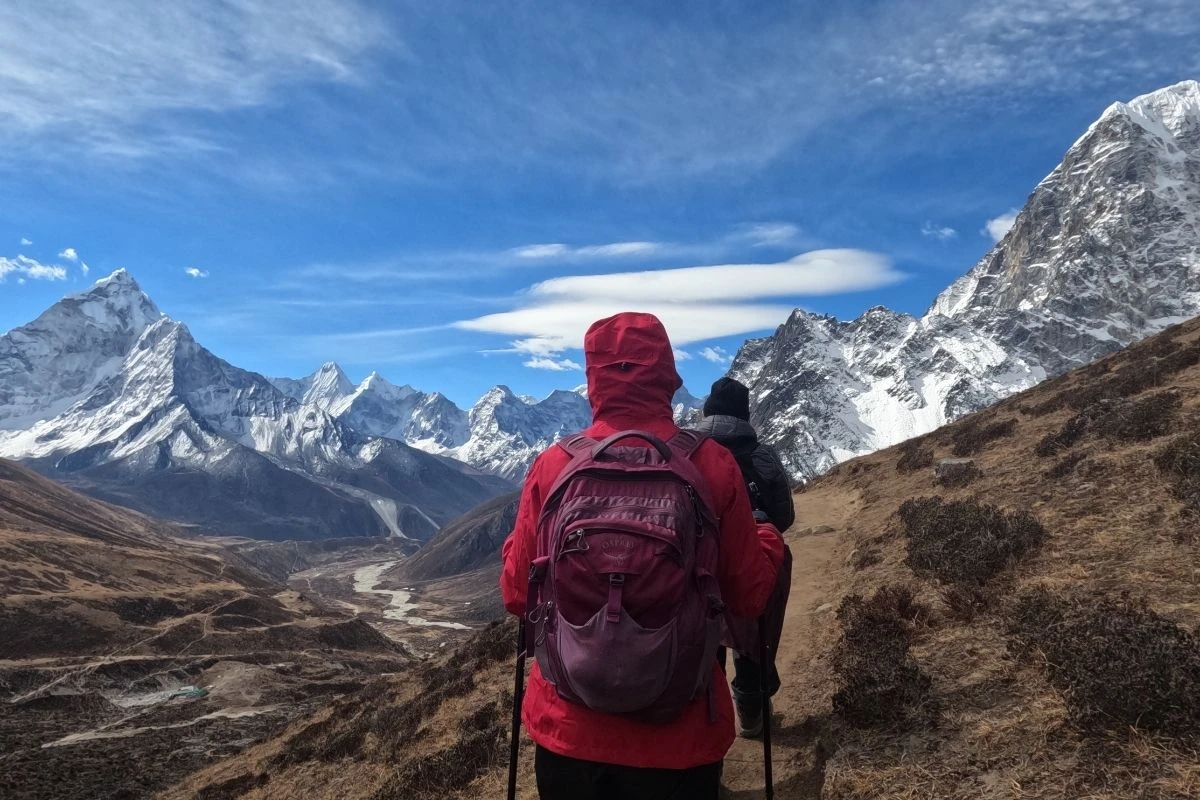
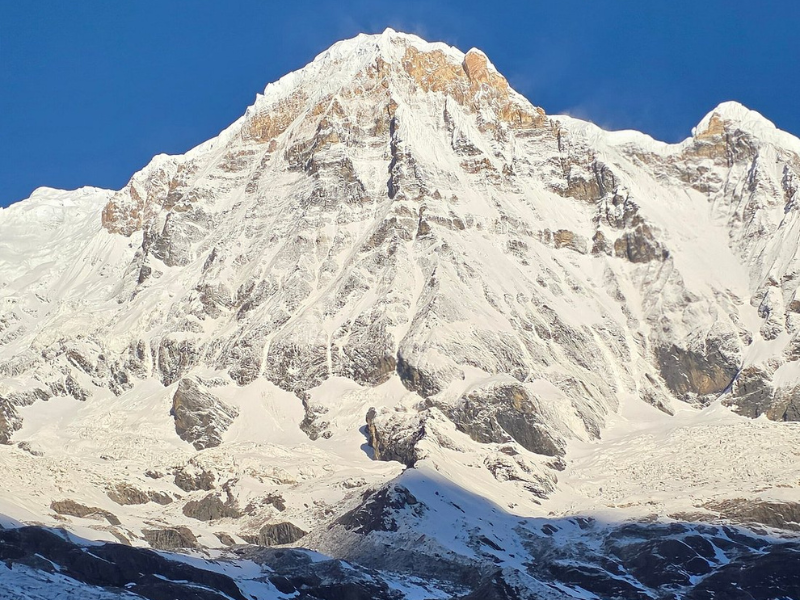
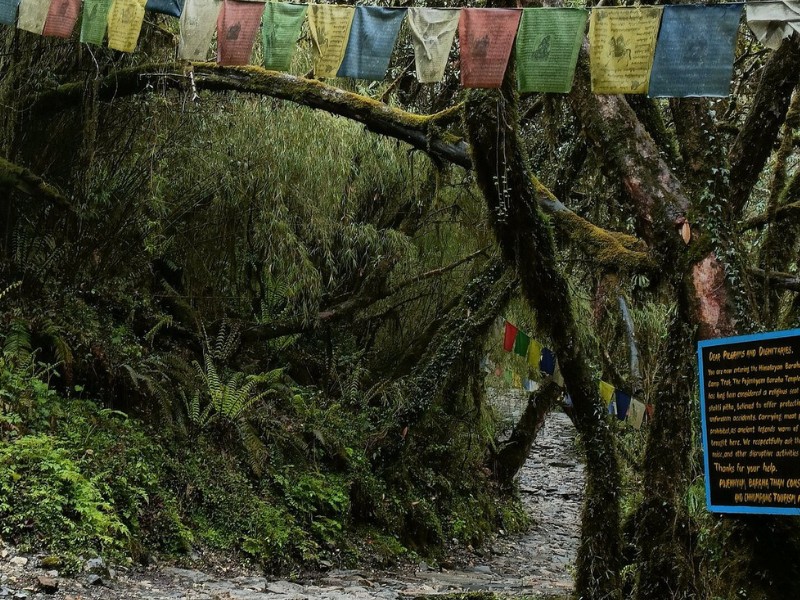
Three high passes pictures.Three high passes pictures.

Everest Three High Passes Trek 19 days

Quick Facts
  • Trip Duration19 Days
  • Destination Nepal
  • Difficulty Level Strenuous
  • Maximum Altitude 5,545 m (Kala Patthar)
  • Activity Trek
  • Starts/Ends Kathmandu/Kathmandu
  • Group Size 1 - 16
  • Transportation Flight Kathmandu–Lukla–Kathmandu
  • Best Season Spring (March to May) & Autumn (September to November)
  • Accommodation Hotel + Teahouse/Lodge
  • Avg. hours of walk/day 4 to 6 hours
  • Comfort Basic + Comfort
  • Interest option Wildlife, nature, culture, photography, adventure, etc.

How You Feel During the Trek

Calm → Curiosity → Endurance → Triumph → Awe → Reflection

  • Calm: Your trek begins with an amazing flight to Lukla, and then an easy trek to Phakding. You will get a first taste of the Khumbu atmosphere, which is calming.
  • Curiosity: Reaching Namche Bazaar introduces Sherpa culture with traders, butter tea, and ancient monasteries, reflecting the simplicity and resilience of mountain life.
  • Push: As you climb to Tengboche and Dingboche, the thin air and rugged terrain test your resolve. In this instance, you will push yourself to achieve your milestone.
  • Achievement: Crossing Cho La and Renjo La lifts your spirit. Standing on the ridges, you gaze at Ama Dablam, Cholatse, and Everest, feeling a deep sense of triumph and achievement.
  • Awe: The beautiful Himalayas you experience as you drop down leave you in awe. The quiet at this high altitude brings a sense of wonder.
  • Reflection: As you descend back to Lukla, you will reflect on the moments and details. You’ll replay the faces, laughter, and the tough journey, and reflect on how everyone helped to achieve this milestone.

Emotions You May Feel

  • Excitement
  • Calm
  • Curiosity
  • Determination
  • Awe
  • Gratitude

How Does Your Mind Change?

  • Start: You begin calm and open-minded.
  • Middle: You grow determined through fatigue.
  • At Passes: You feel mental strain, yet also focus and clarity.
  • At Summits: Your experience compelsyou to express emotional release.
  • Return: Gratefulness and reflection settle in alongside a quiet pride.
  • ConfidenceLevel: You return from the Three Passes Trail stronger, more self-aware, and deeply grounded.

Connection & Solitude Ratio

Connection Level: 65% (Lukla, Namche, Dingboche)
Solitude Level: 35% (Gokyo, Kongma La, Cho La, Renjo La)

Why You'll Love This Trip

  • Reach Everest Base Camp for a stunning sunrise at Kala Patthar.
  • Enjoy majestic views of Mount Everest during the trek.
  • Explore the beautiful Gokyo Lakes and hike to Gokyo Ri.
  • Cross three high mountain passes: Renjo La, Cho La, and Kongma La.
  • Discover hidden gems in the Everest region.
  • Trek through lush rhododendron and magnolia forests, crossing suspension bridges and streams.
  • Spend nights in charming Sherpa villages and experience the local mountain lifestyle.
  • Interact with locals and learn about Sherpa culture and traditions.
  • Visit ancient monasteries and hike to viewpoints for acclimatization.

Everest Three High Passes Trek Overview

"The best view comes after the hardest climb". This is the unspoken motto of the Everest Three Passes Trek.

Everest Three High Passes Trek is a high-altitude, challenging trek in the Khumbu region. This high pass trek links both the classic Everest Base Camp Trek and the Gokyo routes into one continuous loop. During this trek, you will climb three major Himalayan passes in the Everest region: Kongma La (about 5,535 m), Cho La (about 5,420 m), and Renjo La (about 5,360 m), making it one of the most challenging teahouse treks in the region.

Your journey usually begins with a short flight to Lukla and follows the Dudh Koshi valley up to Namche Bazaar, the main Sherpa town, before branching off towards the high passes and circling back to Lukla at the end. In this itinerary, you will reach many of the Everest region's most famous landmarks and experience Sherpa culture in its authenticity. Some of the highlights of this trek include Lukla, Namche Bazaar, Tengboche Monastery, EBC, Kala Patthar, Gokyo Valley, Gokyo Ri, and Gokyo Lakes.

Another major speciality of the Three Pass trail is the dramatic change in landscapes from rhododendron forests and river valleys to glacial moraines, high mountain passes, and exposed plateaus.​ ​Everest Three Pass trek is one of the toughest treks in Nepal, because of its repeated ascents above 5,000 m and some steep, rocky, or icy sections.

This trek is best suited for experienced or very fit trekkers capable of trekking for 17-20 days and covering roughly 140–150 km, with three acclimatization days in places like Namche Bazaar, Dingboche, and Gokyo Village to reduce the risk of altitude sickness. Hence, prior trekking experience, strong cardiovascular fitness, proper cold-weather clothing and footwear, and awareness of altitude-related risks are essential to complete this amazing Himalayan adventure safely.

Flow of the Journey

The Everest Three Pass Trek starts in Lukla, where you acclimate to the altitude while trekking through pine forests and passing Sherpa villages like Phakding and Namche Bazaar. After Namche, the adventure continues off the classic EBC trail, leading through remote valleys. You'll then head towards remote valleys that leads upto Kongma La Pass, which offers stunning views of Lhotse, Makalu, and Ama Dablam. The trail then descends toward EBC and Kala Patthar, providing a close-up view of Everest.

Later, the journey continues westward to Cho La Pass, an exhilarating crossing over rugged glacier terrain that opens into the Gokyo Valley, home to sapphire-blue lakes reflecting the surrounding giants. From Gokyo Ri’s summit, you see one of the finest panoramas in the Himalayas, with Everest, Nuptse, Makalu, and Cho Oyu dominating the skyline.

Lastly, the trek leads to Renjo La Pass, the last pass and often the most scenic one. It offers beautiful views that complete the crossing of all three passes and your journey. As you descend back to Thame and Namche, you notice the air gets thicker, the plants become greener, and the trails feel more familiar. Returning to Lukla feels both rewarding and thoughtful. It marks the end of an adventure that captures the spirit of high-altitude exploration and the stunning beauty of the Khumbu.

Itinerary

Day1
  • Accommodation:Hotel
  • Drive Distance:5.8 km (Tribhuvan International Airport to Thamel)
  • Drive Duration:20-30 minutes
  • Sleep Elevation:1,400 m
  • Overnight Place:Kathmandu
  • Day's Difficulty:Gentle (no physical demand)

The first day of the Everest Three Passes trek begins with your arrival at Kathmandu via Tribhuvan International Airport. After completing your visa and immigration formalities, our representative will greet you, help with your luggage, and escort you to your hotel in Thamel. During your drive to Thamel, you will see the daily lives of people in the busy city and even pass the iconic Pashupatinath Temple. Once you check in, this is typically a relaxed day, giving you time to rest after your flight.​

The rest of the day is for preparing for the trek and a short orientation. Your guide will go over the full Everest Three Passes itinerary, daily walking hours, the altitude profile, safety guidelines, and conditions at the high passes. They will also check your gear and suggest any last-minute rentals or purchases. In the evening, you can stroll around the city or check into your hotel for an overnight stay.

Included activities:

  • Arrive in Kathmandu and transfer to a hotel in Thamel.
  • See city life and landmarks like Pashupatinath Temple en route.
  • Check in and rest after the flight.
  • Join a trek briefing and gear check.
  • Explore Thamel before staying overnight.
Day2
  • Meals:Breakfast, Lunch, Dinner
  • Accommodation:Teahouse
  • Trek Distance:6.2 km
  • Trek Duration:3-4 hours
  • Flight Duration:35 minutes
  • Sleep Elevation:2,610 m
  • Overnight Place:Phakding
  • Day's Difficulty:Moderate

We'll begin our Everest Three Pass adventure in Kathmandu. After a delicious breakfast, our morning starts with a scenic mountain flight to Lukla, where stunning bird’s eye views of the mountains will capture our hearts. The majestic views of Langtang, Ganesh, and Gaurishankar Himalayas offer a first glimpse of adventure ahead. It takes about 35 minutes to reach the Tenzing-Hillary airport of Lukla, which is one of the first major landmarks you will arrive in. The landing on the cliffside creates a sense of drama and adventure.

Once we arrive, we’ll meet the local porters, have warm tea, and breathe in the amazing surroundings before beginning our first trek to Phakding. From Lukla, we first descend through mountainous flat trails and arrive at Chheplung. From here, we will cross many suspension bridges, encounter prayer flags and mani walls, and listen to Tibetan chants. We will get to see century-old stupas, meet local people, and learn about their day-to-day lives. The day ends peacefully in Phakding, where the sound of the Dudh Koshi River flowing beneath the village helps us sleep comfortably.

Note: The Lukla flight is the most common way to get to the gateway to the Khumbu Valley from Kathmandu. However, the flight to Lukla is greatly influenced by seasonal factors. During the peak season, including Spring (March to May) and Autumn (September to November), the flight to Lukla will be diverted from Kathmandu to Ramechhap due to high air traffic at Tribhuvan International Airport. As a result, travelers should drive 5 hours from Kathmandu to Manthali airport in Ramechhap district to board the Lukla flight. 

Included activities:

  • Start the day in Kathmandu with breakfast, then take a scenic flight to Lukla.
  • Enjoy aerial views of Langtang, Ganesh, and Gaurishankar Himal.
  • Meet the local crew in Lukla and begin the trek to Phakding.
  • Cross suspension bridges, pass mani walls, and see prayer flags along the trail.
  • Reach Phakding and rest by the Dudh Koshi River under the sky.

Optional activities:

Our Client at lukla airport
Lukla Airport
Day3
  • Meals:Breakfast, Lunch, Dinner
  • Accommodation:Teahouse
  • Trek Distance:10-12 km
  • Trek Duration:5-6 hours
  • Sleep Elevation:3,440 m
  • Overnight Place:Namche Bazaar
  • Day's Difficulty:Moderately difficult

The third day of this iconic Three Pass Trek begins in the cool town of Phakding. The early morning sounds of the Dudh Koshi River, fluttering prayer flags, and Tibetan chants will lighten your mood. After a delicious breakfast, it’s time to move on along the riverside past stone mani walls and tiny Sherpa villages. We’ll soon start counting suspension bridges, as there are several between Phakding and the next stop of Monjo. Here, our guide will help us check and verify all the permits and documents, as it is the entrance to Sagarmatha National Park. We might also see some wildlife here, such as the Himalayan Tahr. 

From Monjo, we will trek towards Jhorsale, and from here the landscape turns steeper and wilder. Now we reach the iconic Hillary Suspension Bridge, one of the highest suspension bridges in the region. From here, the path zigzags towards Top Danda, which offers the first clear glimpse of Mount Everest, along with Nuptse and Lhotse. After a few hours of trekking, we will arrive at Namche Bazaar, a major Sherpa center. Namche Bazaar is horseshoe-shaped and lively, with teahouses, small bakeries, and shops selling colorful Tibetan crafts. As night falls, we can enjoy a warm Sherpa stew and meet fellow trekkers. We’ll be surrounded by the glow of Himalayan lamps and the clear, star-filled sky above Khumbu’s cultural center.

Included activities:

  • Begin the day in Phakding with riverside views and Tibetan chants.
  • Trek past mani walls, Sherpa villages, and several suspension bridges to Monjo.
  • Complete permit checks at the Sagarmatha National Park entrance.
  • Cross the Hillary Suspension Bridge and get the first glimpse of Mount Everest.
  • Arrive at Namche Bazaar, explore its lively streets, and relax with a warm Sherpa meal.
Namche Bazaar
Nature Excursion Team at Everest
Our Group with client
Rainy Trek Day
Suspension Bridge
Day4
  • Meals:Breakfast, Lunch, Dinner
  • Accommodation:Teahouse
  • Trek Distance:3-4 km
  • Trek Duration:3-4 hours
  • Sleep Elevation:3,440 m
  • Overnight Place:Namche Bazaar
  • Day's Difficulty:Moderate

The fourth day of this trek is focused on rest and acclimatization. We wake up late and enjoy a delicious breakfast in Namche, taking in the majestic views around us. Despite being a day for acclimatizing, we don’t stay idle in bed and instead start our day with a short but steep ascent to the Syangboche airstrip (3,780 m). As we get closer to the airstrip, we can hear the sounds of cargo aircraft. This rustic airstrip is also used for emergency flights. From here, the majestic views of mountains like Ama Dablam, Kangtega, and Thamserku 

From Syangboche, we’ll then go towards another hiking destination, the Everest View Hotel (3,880 m). It is regarded as a luxury hotel located at the highest peak with majestic views of the surrounding Khumbu region. We can trek up to the hotel, rest in the corridor, and enjoy their delicious food with a 360‑degree view of Everest, Lhotse, and other Himalayan giants in the background. Early in the morning, the sunlight strikes the snowy peaks and casts gold hues across the region, making it perfect for photography and a memory to save.

In the afternoon, as we head toward Namche, visit Sagarmatha Next center, an eco-art hub that turns plastic waste into art. If you have time, take a quick trip to Khumjung to experience Sherpa culture, including the famous monastery with a Yeti scalp and Sir Edmund Hillary’s school. Back in Namche, explore the Sherpa Culture Museum and Everest Photo Gallery before enjoying a delicious dinner in the evening. Overnight stay at the Namche Bazaar teahouse.

Included activities:

  • Enjoy breakfast with beautiful mountain views in Namche.
  • Hike up to the Syangboche airstrip for stunning Himalayan scenery.
  • Trek to the Everest View Hotel and relax with food and wide views.
  • Visit Sagarmatha Next to see creative eco-art displays.
  • Explore Namche Bazaar and end the day with dinner at the teahouse.

Optional activities:

  • Visit to Khumjung Village.
Namche Bazaar
Snow Capped Mountain
Everest View Point
Trail to Everest View Point
Day5
  • Meals:Breakfast, Lunch, Dinner
  • Accommodation:Teahouse
  • Trek Distance:9.2 km
  • Trek Duration:5 hours
  • Sleep Elevation:3,860 m
  • Overnight Place:Tengboche
  • Day's Difficulty:Moderately Difficult

After a day of acclimatization, we will leave Namche Bazaar. The trail takes us along a scenic mountainside high above the Dudh Koshi valley. From this trail, we will get to see one of the most amazing views of the Khumbu mountains in Everest, Ama Dablam, Lhotse, and Thamserku. 

We will then pass through Kyangjuma village through the gentle rhododendron and juniper forests. From here, we will see Mani walls and small chortens frequently, which are filled with the Tibetan mantra  “Om Mani Padme Hum”, filling the air with spiritual soul.

From Kyangjuma, the trail descends to Phungi Tanga (3,250 m), a river junction where trekkers often stop for tea. You might spot Himalayan Thars and musk deer near the forest edges. After crossing a suspension bridge over the Dudh Koshi, a steep ascent through firs and rhododendron leads us to Tengboche.

The scent of incense and juniper signals our arrival at the Tengboche monastery. Tengboche, located at an altitude of 3,860 m, is surrounded by beautiful snowy mountains. The Tengboche monastery is the largest and among the most important for the Sherpa people in the region. Every evening, the monks of the village hold evening prayers that resonate through the valley, creating a unique experience for you. After prayers, we can enjoy our dinner in the teahouse, and get ready for overnight sleep.

Included activities:

  • Depart from Namche Bazaar after a day of acclimatization.
  • Enjoy stunning views of Everest, Ama Dablam, Lhotse, and Thamserku.
  • Walk through Kyangjuma village through rhododendron and juniper forests.
  • Stop at Phungi Tanga for tea and spot Himalayan Thars.
  • Cross a suspension bridge and climb to Tengboche to visit the monastery.
Monsastry on the way to Tenboche
Sunny Day and suspension bridge
Our Clients
Ama Dablam
Day6
  • Meals:Breakfast, Lunch, Dinner
  • Accommodation:Teahouse
  • Trek Distance:12 km
  • Trek Duration:5-6 hours
  • Sleep Elevation:4,410 m
  • Overnight Place:Dingboche
  • Day's Difficulty:Moderately Difficult

In Tengboche, the day begins with monastery bells and the sun rising over Ama Dablam. After breakfast, the trek descends through rhododendron and birch forests to Deboche, a quiet village adorned with prayer flags. The area is alive with wildlife, including Himalayan monals and musk deer. We’ll pass a nunnery where soft chants fill the air.

Crossing the Imja Khola River on a sturdy suspension bridge, the trail ascends into open landscapes with views of Ama Dablam, Taboche, and Kangtega. The village of Milingo provides a rest stop with local butter tea and friendly Sherpa hospitality. Continuing through Somare and Orsho, we'll notice icy streams and mani stones along the trail.

As we approach Dingboche (4,410 m), the Imja Valley unfolds, featuring stone-walled fields of barley and potatoes. Dingboche is a charming village with pastel-roofed teahouses and yak corrals. Here, Ama Dablam, Island Peak, and Makalu create a stunning backdrop. Overnight stop at Dingboche.

Included activities:

  • Begin the day with monastery bells and sunrise over Ama Dablam.
  • Descend through forests to Deboche with prayer flags and a quiet nunnery.
  • Cross the Imja Khola River on a suspension bridge.
  • Stop at Milingo for butter tea and Sherpa hospitality.
  • Arrive at Dingboche with views of Ama Dablam, Island Peak, and Makalu.
Dinboche and Amadablam
Exploring Dingboche
Day7
  • Meals:Breakfast, Lunch, Dinner
  • Accommodation:Teahouse
  • Trek Distance:4 km
  • Sleep Elevation:4,410 m
  • Overnight Place:Dingboche
  • Day's Difficulty:Moderate

After reaching Dingboche village, we'll take a much-needed break to acclimatize to the high altitude. During our second acclimatization break, we’ll have one hiking option. The option is to hike up to First Nagarjuna Hill, which offers stunning views of the surrounding mountains, including Everest, Lhotse, Nuptse, Island Peak, Cho Oyu, Ama Dablam, Thamserku, and Cholatse.

After the hike, you can spend the rest of the day relaxing and mingling with the friendly locals. This is a great opportunity for you to learn more about their culture and lifestyle. You can also indulge in some local cuisine and enjoy the peaceful surroundings of this quaint Himalayan village. This acclimatization break will leave us recharged and rejuvenated, ready to tackle the rest of our Everest Three Passes Trek journey.

Included activities:

  • Spend the day in Dingboche for acclimatization.
  • Hike up to Nagarjuna Hill for beautiful, wide mountain views.
  • Return to Dingboche and relax in the village.
  • Interact with locals and learn about Sherpa culture.
  • Enjoy local cuisine and rest for the next journey.
lodge at dingboche
Day8
  • Meals:Breakfast, Lunch, and Dinner
  • Accommodation:Teahouse
  • Trek Distance:4.5 km
  • Trek Duration:2-3 hours
  • Sleep Elevation:4,730 m
  • Overnight Place:Chhukung
  • Day's Difficulty:Challenging

After another acclimatization day in Dingboche, today we part ways with the classic Everest route and head towards Chhukung. The trek today is short but extremely scenic. First, the trail climbs gradually, taking about two to three hours at a comfortable pace. We will trek beside the Imja River, surrounded by dry stone walls and wide alpine meadows. Along this trail, we will get a clear view of Ama Dablam and Island Peak, surrounded by rugged cliffs and glacial valleys. We might also meet local yaks, carrying loads up the trail, or friendly Sherpa farmers.

As we climb higher, the plants become sparser, revealing striking mountain views. The fresh wind brings the smell of snow and pine, while distant glaciers sparkle in the sunlight. We arrive at Chhukung, a small village at 4,730 m, where we stop for lunch and take in the calm surroundings. In the afternoon, we can hike to Chhukung Ri for closer views of Lhotse, Makalu, and the large Amphu Laptse Pass, or we can simply relax in the lodge to prepare for the long, tough day ahead. The sunset over Island Peak casts a warm golden light across the valley, providing a beautiful end to our peaceful day in the high Himalayas.

Included activities:

  • Depart from Dingboche and trek toward Chhukung on a scenic route.
  • Walk beside the Imja River with views of Ama Dablam and Island Peak.
  • Pass yak caravans and Sherpa farmers along the stone-walled trail.
  • Arrive at Chhukung and enjoy lunch with mountain views.
  • Hike to Chhukung Ri or relax while watching the sunset over Island Peak.
Snow Capped Mountains view
Wide View of Trail
Trek Trail with view of everest
Day9
  • Meals:Breakfast, Lunch, and Dinner
  • Accommodation:Teahouse
  • Trek Distance:13 km
  • Trek Duration:8 hours
  • Sleep Elevation:4,940 m
  • Overnight Place:Lobuche
  • Day's Difficulty:Challenging

Today is both a challenging and beautiful day. We will cross Kongma La Pass, which is the highest and quietest pass on the trek, with very few people. We start early, around 4:30 AM, with our headlamp lighting the rocky trail. The path climbs steeply from the start, and it takes about five hours to reach the top of Kongma La Pass (5,535 m). As we walk higher, the world around us glows with the first light of dawn, and the air becomes crisp and thin.

From the top, we will see majestic views of Mount  Makalu, Ama Dablam, Lhotse, Nuptse, and Island  Peak. Just below the summit lies one of the region’s best-kept secrets: Kongma La Lake, a deep turquoise glacial pool that often remains frozen well into late spring. On calm mornings, its surface reflects the surrounding peaks in a mirror-like stillness. Take some time to relax, take pictures, and enjoy this hard‑earned moment surrounded by silence and snow‑covered peaks.

After enjoying the view, we will begin descending toward Lobuche. The trail drops sharply at first and takes us to the edge of the Khumbu Glacier, the highest glacier in the world. We will walk along its rocky paths for nearly two hours. Each step gives us a closer look at the glacier's icy surface, and we may even hear cracking sounds from the glacier, reminding us that the ice is always moving.

The area feels wild and powerful. The last part of the trail has a small but steady climb before we reach Lobuche (4,940 m), a cozy stop nestled among tall mountains. As we settle in, the feeling of accomplishment from crossing our first high pass makes dinner taste even better.

Helpful tips for today: Winds are stronger in the afternoon, so starting before sunrise makes the crossing safer and easier. Pack enough snacks, energy bars, and water, as there are no tea houses on the way today. Further, water can freeze at high altitudes, so keep bottles inside your bag and wrap them in warm clothes.

Included activities:

  • Start early before dawn and climb steeply toward Kongma La Pass.
  • Reach the top for sunrise views of Makalu, Ama Dablam, Lhotse, and Island Peak.
  • Rest near the shimmering lake and take photos.
  • Descend along rocky paths beside the Khumbu Glacier.
  • Arrive at Lobuche and relax after the rewarding climb.
Client posing with mountain
Nature Excursion Team
Trek Trail
Beautiful View of Mountain
Day10
  • Meals:Breakfast, Lunch, Dinner
  • Accommodation:Teahouse
  • Trek Distance:15 km
  • Trek Duration:7 hours
  • Sleep Elevation:5,164 m
  • Overnight Place:Gorak Shep
  • Day's Difficulty:Challenging

Today is an exciting day on the Everest Three Passes Trek as we reach Everest Base Camp (5,364 m). We will start the morning with a hearty breakfast before heading out from Lobuche (4,940 m) along the rocky trail beside the Khumbu Glacier, enjoying stunning views of ice fields and peaks. We'll pass the Pyramid Research Center (4,970 m) before arriving at Gorak Shep (5,164 m) for lunch. Leave your heavy gear behind and prepare for the final trek to Base Camp.

From Gorak Shep, we start a steady climb over the rough surface of the Khumbu Glacier moraine. We will cross small glacial streams and walk between boulders shaped by years of ice movement. The air is thin, but we feel a sense of achievement with each step. 

When we reach Everest Base Camp, we will see stunning views of the Khumbu Icefall, with its ice towers and deep crevasses that mark the start of Everest expeditions. The brightly colored tents of climbers look like jewels against the white background. This moment brings pride and reflection; all the challenges from the past days feel worthwhile. Don’t forget to take a photo at the famous Everest Base Camp rock, which will be a memory for life.

After enjoying the views, we will return to Gorak Shep for the night. Some trekkers choose to hike to Kala Patthar that evening to see the sunset over Everest, which glows golden in the fading light. Others prefer to rest and plan to wake early for a sunrise view, where the highest peak on Earth shines in orange and pink. Either choice offers an unforgettable ending to a milestone day of your Everest Three Passes adventure.

Included activities:

  • Start from Lobuche after breakfast toward Gorak Shep.
  • Reach Gorak Shep, leave gear, and walk to Everest Base Camp.
  • Enjoy views of the Khumbu Icefall and colorful tents at Base Camp.
  • Return to Gorak Shep for the night.

Optional activities:

  • Hike to Kala Patthar.
Everest Mountain
Everest base camp
EBC Stone
Owner at EBC Stone
EBC Camp
Day11
  • Meals:Breakfast, Lunch, and Dinner
  • Accommodation:Teahouse
  • Trek Distance:10.5 km
  • Trek Duration:7-8 hours
  • Sleep Elevation:4,830 m
  • Overnight Place:Dzongla
  • Day's Difficulty:Challenging

Today, we’ll reach the highest point of our Everest Three Pass Trek. Early in the morning, we’ll hike to Kala Patthar, a viewpoint offering beautiful views of Mount Everest, Ama Dablam, Nuptse, Pumori, Cholatse, Lulu, Lingtren, and many more mountains. We’ll also experience one of the most stunning sunrises of our lives from Kala Patthar.

After our morning hike to Kala Patthar, we will return to Gorak Shep and enjoy a warm breakfast with stunning views. After refueling, we will start our trek back toward Lobuche, following the same route for a while. The trail feels peaceful as we walk beside the icy Khumbu Glacier, surrounded by towering Himalayan peaks.

After reaching Lobuche, we will walk another 20 minutes until the path splits toward the Three High Passes route. The narrow trail offers incredible views of Ama Dablam, Cholatse, Tabuche, and Lobuche, each mountain shining differently under the sunlight. The air feels crisp and fresh, adding a sense of adventure as you move higher.

Continue onward to Dzongla, a smaller, warmer stop than Lobuche and Gorak Shep. Once we arrive, check in at the teahouse and take time to rest and re-energize for tomorrow’s big challenge over Kongma La Pass. The sunset here paints the mountain peaks in golden light, a calm and beautiful end to our day.

Included activities:

  • Start early and hike to Kala Patthar for sunrise views.
  • Return to Gorak Shep for breakfast.
  • Trek back toward Lobuche along the glacier.
  • Arrive in Dzongla, rest, and enjoy the sunset.
Kalapathhar
Beautiful Scene of Mountain
Kalapathhar trail
Day12
  • Meals:Breakfast, Lunch, and Dinner
  • Accommodation:Teahouse
  • Trek Distance:9 km
  • Trek Duration:7 hours
  • Sleep Elevation:4,356 m
  • Overnight Place:Thaknak
  • Day's Difficulty:Challenging

We start very early today, around 4:30 AM, to make the most of calm weather before the wind picks up. The trail begins with a flat walk for about 40 minutes and then turns uphill. It will take us around 3 to 4 hours to reach the top of Cho La Pass (5,420 m). The climb is steep and demanding, but every step brings incredible mountain views. 

Just before the top, we will walk over frozen ice for about 40 minutes, so be sure to wear warm gear and keep your crampons accessible. From the top, we can see Ama Dablam, Makalu, Lhotse, and Island Peak. Take pictures, rest for a moment, and enjoy the feeling of standing on your second high pass of the trek.

After spending some time at the pass, we will start our steep downhill journey. The trail is rocky, with loose pebbles that can slip under your boots, so be careful with each step. The path mostly goes downhill, but we will encounter a few short uphill sections. There are no teahouses between Chhukung and Thaknak, so pack snacks, energy bars, and enough water to keep warm and prevent freezing. 

The scenery changes from icy ridges to glacial moraine, and we might see frozen ponds shining in the sun. Once we reach Thaknak, we will check in at our teahouse, enjoy a warm lunch, and rest after this big effort. This day is one of the most challenging but memorable parts of our Everest Three Passes Trek. Crossing Cho La Pass offers stunning views and a strong sense of accomplishment that we will remember long after we descend into the valley.

Included activities:

  • Start very early from Dzongla around 4:30 AM and walk on a flat trail before climbing.
  • Ascend steeply for 3–4 hours to reach Cho La Pass.
  • Cross a frozen section near the top and enjoy wide mountain views.
  • Descend carefully on rocky, slippery paths with no teahouses on the way.
  • Arrive at Thaknak, eat a warm meal, and rest after the long, challenging day.
Our Clients at chaula Top
Chaula Pass
Chaula Top
Descending from chaula pass
Day13
  • Meals:Breakfast, Lunch, and Dinner
  • Accommodation:Teahouse
  • Trek Distance:4-5 km
  • Trek Duration:4 hours
  • Sleep Elevation:4,790 m
  • Overnight Place:Gokyo Village
  • Day's Difficulty:Challenging

After a challenging day yesterday, today is much easier as the days trek is quite short. We will have breakfast and begin our trek to the beautiful Gokyo Valley, surrounded by stunning Gokyo Lakes. The trail follows the iconic Ngozumpa Glacier, Nepal's longest glacier. In this section, walk carefully, as some sections have unstable ground and loose rocks. We will occasionally hear sounds of cracking ice and shifting stones.

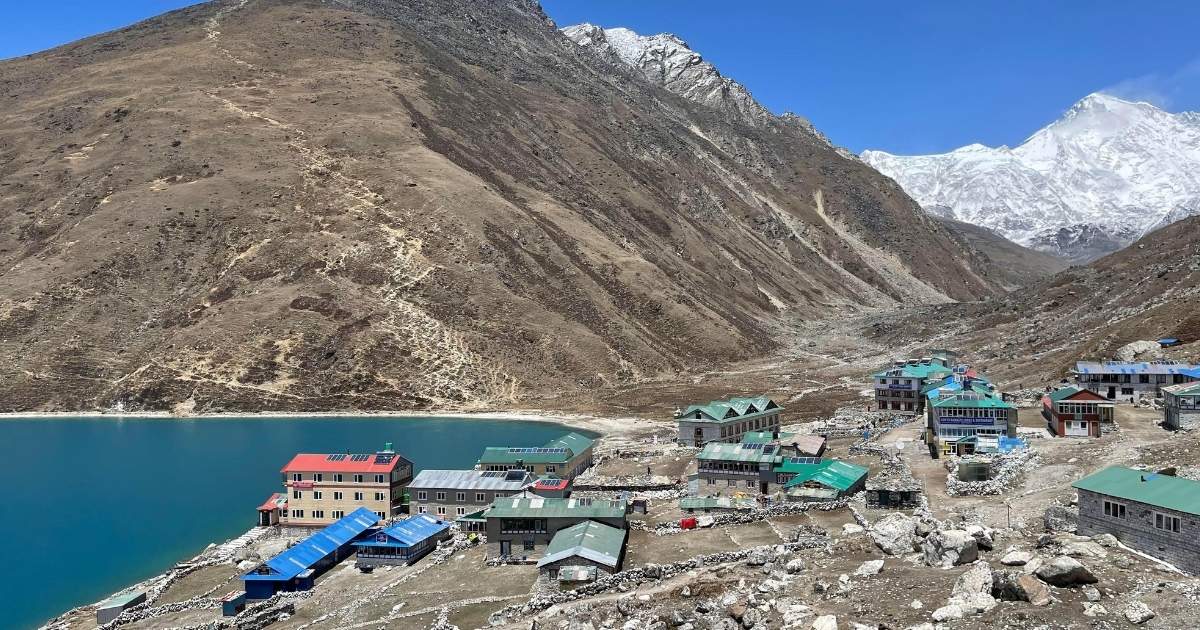
Just before we reach Gokyo, we’ll climb a steep, narrow path for about 15 to 20 minutes. The effort is worth it when we arrive. Gokyo’s deep blue lake sits at about 4,700 m, surrounded by snowy peaks. The teahouses by the lake provide amazing reflections of the mountains. It’s a perfect spot to relax after lunch and explore the peaceful surroundings.

Included activities:

  • Start the day with breakfast, then trek to Gokyo Valley.
  • Follow the Ngozumpa Glacier carefully over loose rocks and unstable ground.
  • Climb a short, steep path just before reaching Gokyo.
  • Arrive at Gokyo’s deep blue lake surrounded by snowy peaks.
  • Relax by the lakeside teahouses and explore the peaceful surroundings.
Gokyo Lake
Our Client clicking gokyo lake image
Gokyo Village
Day14
  • Meals:Breakfast, Lunch, and Dinner
  • Accommodation:Teahouse
  • Trek Distance:1.5 km
  • Trek Duration:2 hours
  • Sleep Elevation:4,790 m
  • Overnight Place:Gokyo Village
  • Day's Difficulty:Challenging

Today is among the most beautiful and important days on our Everest Three Passes trek. We will start early hiking in the dark (around 4:30 AM) with our headlamps to reach the iconic Gokyo Ri. The trail is steep and hard, especially at this altitude, but it offers amazing views of the mountains. Dress warmly with thermals, a down jacket, a hat, gloves, and thick socks. Bring enough warm water, as there are no teahouses along the way.

The cold morning air is sharp and clear. As we climb higher, the Gokyo Valley lights up behind us with the first light of dawn. The hike takes about 2 to 2.5 hours. Although it’s tough, every turn reveals a stunning view of Mount Everest, Lhotse, Cho Oyu, Nuptse, and Taboche, with the turquoise Gokyo Lake shimmering below.

Reaching the top of Gokyo Ri offers unforgettable 360-degree views of the world’s highest peaks, including Everest. If the weather cooperates, an amazing sunrise paints the mountains in warm gold and orange tones. The scenery, with the glowing peaks, Ngozumpa Glacier, and Gokyo Lakes, is truly magical.

Afterward, we'll hike back down to Gokyo for breakfast or lunch. We can spend the day exploring Gokyo Lake, walking along its calm waters, visiting the lakeside stupa, or watching yak caravans. Many trekkers enjoy relaxing by the lake, journaling, or chatting with locals while taking in the views of the Ngozumpa Glacier. It’s a peaceful day that supports acclimatization and lets you soak in the beauty of the mountains.

Included activities:

  • Hike up to Gokyo Ri early in the dark.
  • Enjoy sunrise and 360-degree views of Everest and surrounding peaks.
  • Descend back to Gokyo for breakfast or lunch.
  • Spend the day exploring Gokyo Lake and the lakeside stupa.
  • Relax by the water, watch yak caravans, and acclimatize.
Clients at Gokyo Lake
Gokyo Ri
Day15
  • Meals:Breakfast, Lunch, and Dinner
  • Accommodation:Teahouse
  • Trek Distance:10–12 km
  • Trek Duration:6–8 hours
  • Sleep Elevation:4,400 m
  • Overnight Place:Lungden
  • Day's Difficulty:Challenging

Today, we cross our final pass, Renjo La (5,360 m), and enjoy one of the most beautiful viewpoints of the Everest region. As usual, we start early at 4:30 AM to take advantage of the best weather, using headlamps to hike in the quiet morning. The trail  to Renjo La Pass first follows the side of Gokyo Lake, giving a peaceful start to the day. After leaving the lake, the path steeply ascends, testing our stamina. Along the way, we will see amazing views of the Himalayan peaks, including Mount Everest, Cho Oyu, Lhotse, Makalu, and Nuptse.

Reaching Renjo La Pass is a true highlight. From the top of the Renjo La Pass, we’ll get one of the best views of the entire Gokyo region. The wide views of the mountains, glaciers, and lakes are among the best sights, so we might want to bring our camera. We will be in complete awe, capture some amazing photos, and feel proud of our achievement. All the tough treks through the Everest region were worth it. On clear days, we might even spot tiny settlements or yak caravans moving along distant paths.

Now it’s time to descend from Renjo La Pass and begin our downward climb towards Lungden. We have to be careful on this steep, rocky, rough downhill trail; move slowly and carefully. As we descend, we will notice the landscape change from snowy highlands to quiet valleys with prayer flags and stone walls. After reaching Lungden, we will check into a teahouse and rest well.

Included activities:

  • Hike up to Renjo La Pass.
  • Enjoy wide views of Gokyo’s lakes, glaciers, and surrounding peaks.
  • Take photos and appreciate the achievement at the pass.
  • Descend slowly on the steep, rocky trail toward Lungden.
  • Reach Lungden, check into a teahouse, and rest.
Renjo La Trek Trail
Group Photo at Gokyo Village
Sun set at renjo la pass
Day16
  • Meals:Breakfast, Lunch, and Dinner
  • Accommodation:Teahouse
  • Trek Distance:15 km
  • Trek Duration:6 hours
  • Sleep Elevation:3,440 m
  • Overnight Place:Namche
  • Day's Difficulty:Moderate

The descent from the Everest Three Passes Trek continues today as well, and we start our journey from Lungden after breakfast. First, the trail begins with a gentle descent through open farmland, where we will see yaks grazing quietly. As we continue, the landscape changes to pine and juniper forests, making the area more colorful than the high passes. Here, we might notice prayer flags fluttering above small stone houses as you walk downhill. 

As we trek, we'll pass through traditional Sherpa villages like Marulung, Thame, Thamo, Phurte, and Samde. Each village has its own charm, and the locals greet trekkers with friendly smiles. Thame is especially notable for its ancient monastery, one of the oldest in the Khumbu region. This peaceful place reflects deep Buddhist traditions. Many famous climbers, including those who have summited Everest, come from these areas, and you can feel their spirit of endurance and strength in the community.

As we get closer to Namche, the trail becomes more lively and crowded. We will start seeing more people, shops, and cafes. After arriving in Namche, we can relax in the teahouse or stroll around the town by visiting pubs, cafes, and restaurants, or enjoy shopping in local markets. Overnight stop at Namche Bazaar.

Included activities:

  • Have breakfast and descend through open farmland with grazing yaks.
  • Walk into pine and juniper forests with prayer flags and stone houses.
  • Pass Sherpa villages like Marulung, Thame, Thamo, Phurte, and Samde.
  • Continue toward Namche as the trail becomes busier with shops and trekkers.
  • Arrive in Namche Bazaar to relax, eat out, or shop before overnight stay.

Optional activities:

  • Stroll around Namche Bazaar.
Mountain View from Hike
Group Picture while descending
Thame trek trail
Day17
  • Meals:Breakfast, Lunch, Dinner
  • Accommodation:Teahouse
  • Trek Distance:16 km
  • Trek Duration:7-8 hours
  • Sleep Elevation:2,840 m
  • Overnight Place:Lukla
  • Day's Difficulty:Moderate

Today is the last trekking day of our Everest Three Passes Trek as we head back to Lukla, where our adventure started. The trail begins with a steep downhill walk from Namche Bazaar. It winds through green forests filled with pine, rhododendron, and magnolia trees. We will hear the Dudh Koshi River rushing below as we cross several suspension bridges covered in colorful prayer flags. Small chortens and mani walls line the path, reminding us of Sherpa culture and the spirit of the Khumbu region. As we pass through familiar villages, we might see children heading to school or farmers carrying baskets of potatoes, creating a peaceful scene that contrasts with the wild trails of days past.

After reaching Phakding, we’ll gradually climb to Lukla, passing through Ghat village and crossing the Dudh Koshi River several times. The lower altitude brings warmer air and blooming greenery. Enjoy short breaks at tea shops for local butter tea and conversations with fellow trekkers. The sight of prayer wheels and stone paths offers a comforting sense of completion.

Upon arriving in Lukla, we’ll feel proud of crossing three high passes and being near the world’s highest peaks. Spend the evening relaxing, sharing stories, and celebrating with your trekking team. Enjoy one last Himalayan sunset before flying back to Kathmandu the next morning, cherishing the memories of this unforgettable journey.

Included activities:

  • Leave Namche Bazaar and descend steeply through green forests.
  • Cross suspension bridges over the Dudh Koshi River, passing chortens and mani walls.
  • Walk through familiar villages and continue gently uphill from Phakding to Lukla.
  • Take short breaks in tea shops and enjoy warmer air and greenery.
  • Arrive in Lukla, relax, and celebrate the end of your Everest Three Passes Trek.
Namche to Lukla
namche bazaar
Day18
  • Meals:Breakfast and Farewell dinner
  • Accommodation:Hotel
  • Drive Distance:134 km (Drive)
  • Flight Duration:35 minutes to Kathmandu / 25 minutes to Manthali
  • Sleep Elevation:1,400 m
  • Overnight Place:Kathmandu
  • Day's Difficulty:Gentle

After our exciting adventure in the Everest region, it's time to return to Kathmandu. Start the day with an early morning flight from Lukla, enjoying stunning views of the Himalayas one last time. Upon arrival, our team will transfer you to your hotel.

You can spend the day resting or exploring Kathmandu, shopping for souvenirs in local markets. Consider picking up handicrafts, pashmina shawls, or tea to take home. As the day concludes, we'll gather for a farewell dinner at a hotel, sharing memories of the trek and the friendships formed. It's a perfect way to wrap up our journey together.

Included activities:

  • Take an early morning flight from Lukla to Kathmandu, enjoying the final Himalayan views.
  • Transfer to your hotel and settle in.
  • Rest or explore Kathmandu and shop for souvenirs.
  • Join a farewell dinner at the hotel to share trek memories.
Day19
  • Meals:Breakfast
  • Drive Distance:5.8 km
  • Drive Duration:20-30 minutes

Today, you will leave your second home, Nepal, after spending so much time here, and fly back to your home. Based on your flight departure time, our airport team will take you to the international terminal. Please pack your belongings carefully and double-check that you have everything. Nature Excursion will provide a private vehicle for your ride to Kathmandu International Airport. Our staff will manage all details to make your departure easy and stress-free. We hope you enjoyed trekking with us and look forward to seeing you again. Have a safe journey. 

Cross the High Passes with Confidence. From managing the 4:30 AM start at Kongma La, Renjo, and Cho La Pass to navigating the Khumbu Glacier, our expert team ensures your safety and success on the world's most epic circuit. Get all the details you need to start planning your 2026 adventure today.

Download Pdf

Route Map

Everest Three High Passes Trek 19 days map

Cost Details

Includes

  • Airport pick-up and drop-off services during the arrival and departure dates
  • Both-way domestic flight cost, including guide, KTM-Lukla-KTM
  • Both-way ground-floor transportation for domestic airport pick-up and drop-off  before and after the trek (hotel-airport-hotel)
  • 2 nights at a hotel in Kathmandu, including complimentary breakfast
  • Mountain standard room during the three high passes trek
  • All fresh food (breakfast, lunch, and dinner—the main course from the menu) during the trek
  • Pasang Lhyamu Municipality entrance fees: Rs. 3000.
  • Sagarmatha National Park Permit Fees: Rs. 3000
  • Government-licensed, English-speaking Nature Excursion’s experienced trek guide (you will get an assistant guide group of 6 or more trekkers)
  • Strong sherpa or porter to help your luggage (luggage weight limit is10 kg per trekker), 1 porter for two trekkers
  • Guide and porter cost: their meals, accommodation, insurance, salary, and other necessary equipment covered by the company
  • Basic first aid kit carried by the guide, an oximeter to check your oxygen level, and Paul's
  • Water purification tablets for safe drinking water
  • Snacks (cookies) and seasonal fresh fruit every evening after dinner, as per availability
  • Certificate of successful trek completion
  • Souvenir: company t-shirt and cap
  • Either a welcome or farewell dinner in Kathmandu at the Nepali cultural restaurant (complimentary dinner)
  • Arrangement for the rescue operation in case of health-condition emergencies (incurring charges should be covered by your travel insurance)

Excludes

  • International flight costs
  • Nepal entry visa fees at Tribhuvan International Airport (TIA)
  • Excess luggage charge (limit is 10 kg per trekker)
  • Extra meals and accommodation in Kathmandu due to early arrival, late departure, or, in case of an early return from the trek, than schedule itinerary
  • Personal expenses: shopping, hot and cold drinks, mineral water, wifi, hot shower, battery recharge, laundry, donations, extra porter, etc
  • Personal clothing gear
  • Travel insurance, which has to cover emergencies involving high-altitude rescue and evacuation (compulsory),
  • Additional costs due to delays caused by circumstances beyond our control, like landslides, itinerary modifications due to safety concerns, weather conditions, illness, changes in government policies, and strikes
  • Tips for guides and porters

Everest Three High Passes Trek 19 days pictures and video

2 High Passes Trek Including Everest Base Camp || With Nature Excursion

Clients Reviews

  • The best Trekking Company

    We had an awesome experience with Nature Excursion. Karan did a perfect job, so many explanetions and a lot of fun during the hike. In the evening we sat togehter, had some ginger tea and he tough us a local cardgame.
    If we come back we will go on an other trek with Karan and Nature Excursion.

    Andre B
    Andre BNetherlandsMay 03, 2023
    TripAdvisor
  • Fantastic moment in Nepal with Karan

    Really nice experience with Karan as my guide we hiked through the everest region. We did the three high peaks in the Everest region. He knows the mountains and is a people person so listens very well to the needs of the group. There was a really good vibe like hiking with friends through the mountains. Highly recommend taking Karan as a guide. Thanks for this really unforgettable experience Karan! 🙏

    M
    Maarten VanstappenNew ZealandApr 28, 2023
    Google

Useful Information

Crossing Kongma La, Cho La & Renjo La

The Three Passes trek is among the ultimate Everest challenges because it combines three high-altitude alpine crossings, above 5,000 m, and constant judgment calls that demand more than just fitness.

Kongma La (5,535 m)

Kongma La is the highest and most remote of the three passes. It connects the Chhukung valley to Lobuche, crossing rough moraine and boulder fields. This pass feels wild, with no lodges on it. You must carry everything you need for a long and challenging day.

Cho La (5,420 m)

Cho La links Dzongla and Gokyo. It is known for its steep approach and icy upper section. Cho La Pass involves basic technical skills, icy terrain, possible rockfall, and often frozen slopes. You need to pay attention to your footing and pick the right time to cross.

Renjo La (5,360 m)
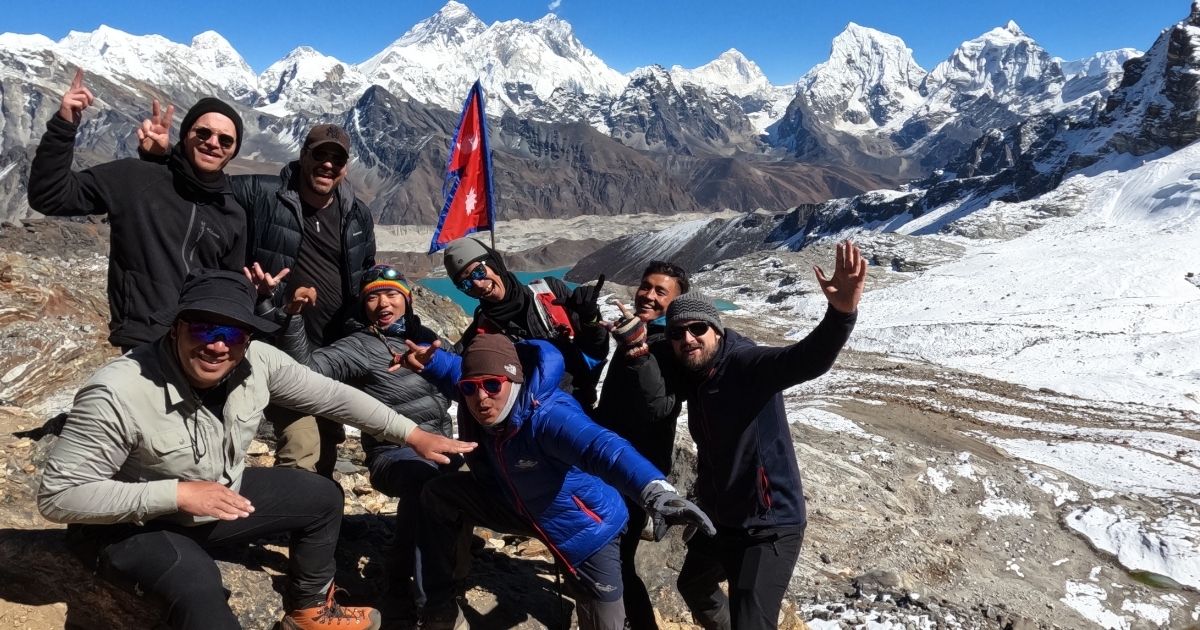
Renjo La connects Gokyo with the Thame valley and offers stunning views of Everest, Lhotse, and the surrounding peaks. Although it is slightly lower and easier to navigate, it comes later in the trek when you may be tired, making it feel like a serious challenge.

What Makes It the Ultimate Everest Challenge?

The Everest Three Pass challenge is ultimate not just because of altitude. However, it involves layers of physical, mental, and logistical challenges you will face over many days. You will spend extended time above 4500 - 5,000 m, manage three distinct high passes with different risks, and often move through long, committing different sections without exit options. Success depends on aligning energy, weather, acclimatization, and route choices, requiring good judgment and self-awareness alongside strength and stamina.

What to Expect During the Everest Three High Passes Trek

You can expect the Everest Three High Passes Trek to feel more mentally and physically demanding than a standard EBC trek, especially on “normal” days above 4,500 m and during the second half of the circuit. So let’s get into some of the things you can expect during the Everest Three High Pass trek.

1. "Easy Days” Often Feel Harder Than "Pass" Days

You might think that the Pass days, when you cross three passes, are tougher; however, easy days are tougher in context. The long trekking duration between villages creates a slow, cumulative fatigue. Spending hours on similar moraine, hills, and glacial terrain in thin air, with a lowered appetite, can drain your energy, even when the trail seems easy.

2. Constant Small Route Decisions

The Three Passes hike requires more commitment and is less straightforward than the classic EBC route. You will need to make frequent small decisions about when to start, how to change your route, and whether to continue in bad weather. These choices accumulate over several days and can affect your safety, recovery, and your ability to reach passes safely.

3. Faster, Local Weather Shifts

All three passes you will reach are above 5,300 m, where wind, snow, and cloud can change within hours regardless of the weather forecasts. Clear mornings can turn into strong winds, drifting clouds, or snow flurries near the mountain passes. Expect colder and windier conditions on the way down in the afternoon.

4. Late Altitude-Sickness Symptoms

Even if you feel fine up to EBC or Gokyo, the symptoms of altitude sickness, such as headache, poor sleep, and loss of appetite, can appear or worsen at any time after multiple days above 5,000 m. The fatigue from long days can hide early warning signs of altitude sickness, making it easier to ignore until it becomes serious.

5. Mental Swings Outpace Physical Changes

The Three Passes trek is known for being very challenging due to its remoteness and long days. It's common to experience mood swings, such as irritability or sudden excitement at scenic spots, largely due to altitude and fatigue.

Everest Three High Passes Trek Failure Points: Where Most Turn Back and Why

The Everest Three High Pass trek is among the challenging treks in Nepal. Among all the sections, the portion of crossing the three passes themselves, especially around Kongma La and Cho La, where altitude, exposure, and terrain combine to overwhelm, acts as a turning point for less prepared trekkers. The second wave of turn points may occur earlier, around the Dingboche/Chhukung and Gokyo sections, when people decide not to commit to the full circuit after experiencing the reality of sustained days above 5,000 m.

Kongma La is often the first major hurdle, because it is the highest, longest, and most remote among the three passes. It doesn’t have teahouses, but it has rocky trails that feel extremely tough right after the classic EBC route. From there, many turned back due to early symptoms of altitude sickness and fear of being caught in the bad weather with no quick escape options.

Cho La (5,420 m) is a common "hard stop" after EBC due to its steep, icy access ramps and a crevassed glacier crossing, which challenge those lacking microspikes, balance, or experience on frozen terrain. Many trekkers turn back in Dzongla or Dragnag upon hearing of fresh snow or other hazards.

Renjo La (5,360 m) sees fewer failures as trekkers reaching Gokyo are usually well acclimatized. However, fatigue and weather can still lead some to turn back on the climb out of Gokyo valley. Common reasons for failure across all passes include rushed acclimatization, inflexible itineraries, underestimated physical demands, and inadequate gear for high-pass conditions. 

Everest Three Pass Trek Weather Variation

On tough treks like the Everest Three High Pass trek, understanding the weather is extremely important. In these treks, conditions change depending on the season, altitude, and the specific pass you are crossing. This trek takes you through different altitudes, from forests to glaciers, and over high passes above 5,000 m. The weather can change quickly. Here are the general weather patterns you can expect throughout the year:

Low Altitudes (Lukla to Namche Bazaar):

  • Winter (Dec-Feb): 23°F to 19°F
  • Summer (Mar-May): 45°F to 32°F
  • Autumn (Sept-Nov): 50°F to 41°F
  • Spring (Mar–May): 32°F to 50°F

Mid Altitudes (Dingboche to Chhukung and Gokyo):

  • Winter (Dec-Feb): 10°F to 24°F
  • Summer (Mar-May): 40°F to 32°F
  • Autumn (Sept-Nov): 48°F to 34°F
  • Spring (Mar–May): 32°F to 45°F

High Altitudes (Kongma La, Cho La, and Renjo La Passes):

  • Winter (Dec-Feb): -10°F to 10°F
  • Summer (Mar-May): 20°F to 28°F
  • Autumn (Sept-Nov): 15°F to 5°F
  • Spring (Mar–May): 14°F to 28°F

Best Seasons for trek to Everest Three Passes Trek

The best time to cross the three high passes of the Everest region is during the spring and autumn seasons. These two seasons attract hundreds of travelers to the region due to stable weather and a mild climate.

Spring (March to May):

Spring has mild and stable weather, which is important for spending several days above 5,000 m on open passes. Clear skies and good visibility make for safer high crossings. Lower areas are blanketed in rhododendron forests, adding to the scenic beauty of the high valleys.

Autumn (September to November):

Autumn is the best time for high-altitude treks in the Everest region. The monsoon season has cleared dust and haze, providing clear mountain views. The trails are dry, the temperatures are cool but comfortable, and the weather is usually stable. This makes it a great time to hike all three passes and increases the chances of completing the full circuit safely and comfortably.

How’s the Accommodation and Food During The Three Passes Differ From The Classic EBC Trek?

Accommodation and food on both treks are somewhat similar since they are in the same Everest region. For accommodation, on both treks you sleep mainly in lodges at lower altitudes, such as Lukla, Phakding, and Namche, and in teahouses or homestays at higher altitudes, such as Tengboche, Dingboche, Thaknak, Chhukung, and Lobuche. The classic EBC route is more modern, with slightly better rooms and consistent access to electricity and Wi-Fi. Initially, the Three Pass trek follows the same route, but later branches into remote valleys with small teahouses featuring shared, unheated rooms and simpler common areas.
Food is similar on both the EBC trail and the Three Passes trek. You can find dal bhat, soups, noodles, rice, potatoes, pasta, momos, and basic Western foods like pizza and pancakes. However, the EBC trail has larger menus, more fresh items, and extras like bakeries and coffee shops in busy places like Namche and Dingboche. On the Three Passes, you will still get hot, high-carb meals, but the choices are limited in the high, isolated areas. The food relies more on long-lasting products, and both food and drinking water generally cost more than on the EBC trail, as everything has to be carried in from farther away.

Everest Three High Passes Trek 19 days FAQs

  • The three passes trek in Nepal is challenging and risky, so hiring a knowledgeable guide is highly recommended for safety. If you decide to trek solo, be well-prepared with maps, navigation tools, permits, and prior high-altitude experience. Ensure you are physically fit and understand the route, including passes and acclimatization points.

  • The three high passes trek typically covers 140-150 km over 17–20 days, including acclimatization and rest days. Daily distances usually range from 10 to 20 km (6–12 miles), with varying elevations.

  • The Three High Passes trek is challenging and requires good fitness. Regular cardio exercises like hiking, running, or cycling will help build stamina. Invest in quality trekking gear, including sturdy hiking boots, layered clothing, a waterproof jacket, a warm sleeping bag, a backpack, and trekking poles.

  • The three passes trek is an adventurous and challenging journey in the Everest region that takes you to the Everest base camp and Gokyo Lakes while crossing the three high passes- Cho La, Renjo La, and Kongma La.

  • The Everest Three Pass trek can get very cold at high altitude, especially during winter. The mornings and nights can get quite cold even in the spring and autumn, the peak trekking seasons. The temperature varies from 18°C to -12°C at higher elevations.

  • The Everest Three High Passes trek is not ideal for beginner trekkers unless they are physically fit and able to endure all the challenges. If you have never trekked before and want to do three high passes, it's important that you have amazing physical strength and cardio level. Moreover, you need to learn about acclimatization and follow your guide's instructions.

  • No, there is no age limit for the Everest Three Pass trek. However, if you are underage or a senior citizen, it will be extremely tough unless you have prior trekking experience on tough terrain and are extremely fit.

  • The toilet facility is decent along the trekking route. Most of the old lodges and tea houses have squat toilets, whereas recently built ones have Western-style toilets. Carry your own toilet paper and other toiletries. Hot showers are available at an additional cost, ranging from USD 4 to USD 15, depending on the elevation.

  • Yes, female travelers can join the three-passes trek without any worries. Solo female trekkers are given their own room and extra facilities and are always under the guide's supervision, so they are safe throughout.

  • The key difference is that the Everest Three Pass Trek is a longer, more challenging high-altitude circuit that crosses three steep passes above 5,300 m, while the Everest Base Camp Trek is a shorter, more straightforward out-and-back route to Everest Base Camp without technical high-pass crossings, making it more suitable for less experienced trekkers.

You may also like

SimilarPackages