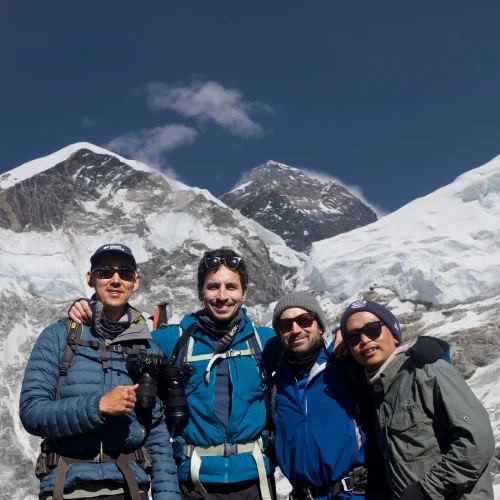
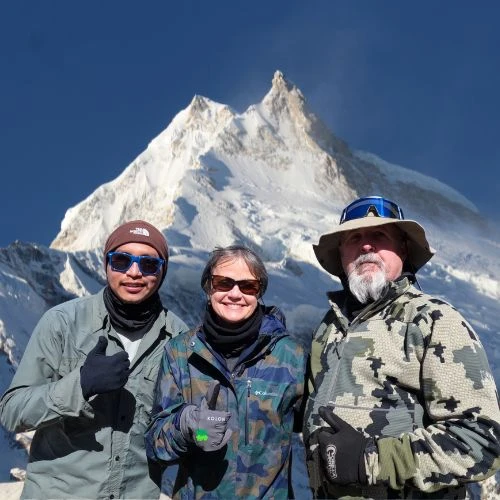
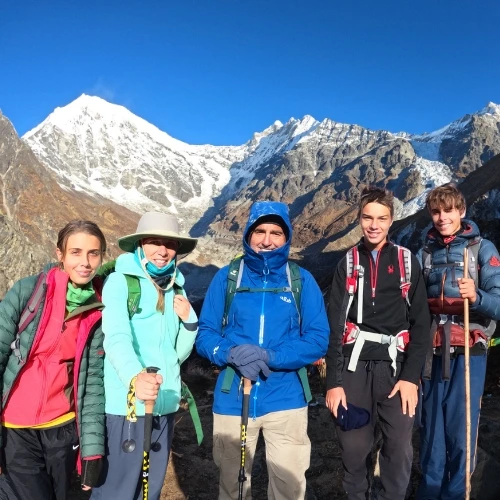
The Everest Three Passes Trek is one of the hardest teahouse treks in Nepal. The trek crosses three passes above 5,300 m in one loop through the Everest region of Nepal: Kongma La (5,535 m), Cho La (5,420 m), and Renjo La (5,360 m). Our itinerary takes 19 days and covers roughly 140 to 150 km, with many nights above 4,500 m.
The Everest Three Pass Trek difficulty comes from the sum of altitude, rough ground, long days, and fast-changing weather, repeated over nearly three weeks. It is a challenging trek, and among the trekking routes in Nepal, it sits near the top for difficulty level. A fit trekker with some high-altitude experience, a consistent pace, and a good guide can confidently do it.
Factors That Make the 3 Passes Trek So Demanding
The difficulties of the Everest Three Passes trek do not come from a single day. Four things stack up, and each one makes the others worse.
Extreme Altitude & Extended Oxygen Deprivation
At around 5,500 m, each breath holds about half the oxygen it does at sea level. Your body works harder for everything: walking, sleeping, staying warm.
On the Everest Base Camp trek, you spend a few days at this height. On this high-altitude trek, you sleep above 4,300 m for ten nights in a row, from Dingboche to Lungden. That long exposure, more than any one day, is what wears trekkers down.
Technical Terrain & Glacial Crossings
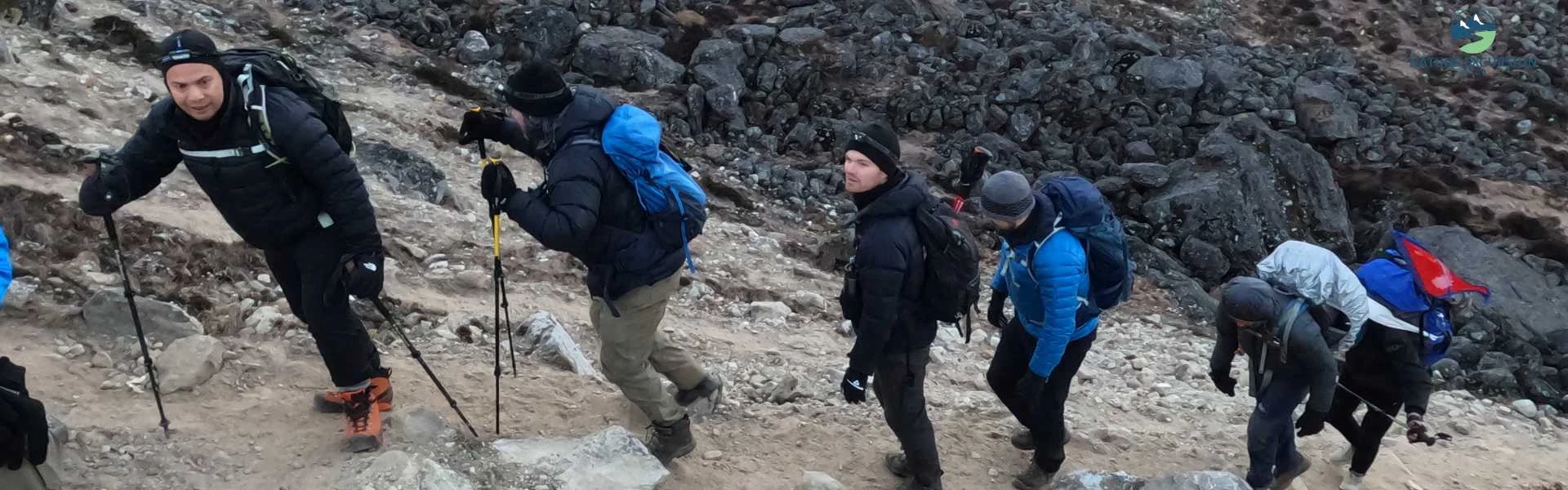
The trail is not a climb with ropes, but it is rough. You walk over moraine and rocky fields, on the edge of the Khumbu Glacier, and across the Ngozumpa Glacier (the longest glacier of Nepal), where rock shifts underfoot.
Near the top of the Cho La Pass, you walk on ice for about 40 minutes, and crampons or microspikes may be needed depending on recent snow conditions.
Long Walking Days Under Load
Most days take 4 to 6 hours of walking. Pass days take longer: the Kongma La day from Chhukung to Lobuche takes about 8 hours, and Cho La and Renjo La take 6 to 8 hours each.
Pass days start at about 4:30 in the morning, in the dark and the cold. Even with a porter, you carry a daypack with water, layers, and snacks, and the fatigue never fully clears between days.
Variable Himalayan Weather & Sub-Zero Cold
Above 5,300 m, wind, cloud and snow can arrive within hours of a clear morning, whatever the forecast said. That is why pass days start so early because the calmest weather usually comes first.
Nights are below freezing at the higher lodges even in spring and autumn. Cold drains energy, so warm clothes and a good sleeping bag are part of managing the difficulty.
The Three High Mountain Passes That Make This Trek Challenging
For most trekkers, Kongma La and Cho La are the most challenging passes, and Cho La becomes the hardest of all after fresh snow. Each pass connects two valleys of the Everest region, and each one is hard in its own way. Kongma La is the highest and most remote, Cho La is the steepest and iciest; Renjo La is the lowest, but it comes last, when you are most tired.
Crossing the passes is more than a climb uphill. Everyone has a long descent on the far side on unstable rock, with less energy left than you started with. Snow or ice can cover any of them, and the weather can turn while you are on top. Conditions also change with the season and recent snowfall. A pass that is hard but safe one week can be unsafe the next. Here is what to expect on each in normal conditions.
Kongma La Pass: A Long Climb at Extreme Altitude
The Kongma La Pass (5,535 m) is the highest of the three and the hardest single day for many trekkers. You leave Chhukung (4,730 m) at around 4:30 a.m. and start a five-hour ascent towards the summit. The climb traverses rocky fields, and near the top you pass a glacial lake that is frozen into late spring. Breathing is hard, and your speed drops to a few steps at a time, which is normal at this height.
After the top, the trail drops and then follows the edge of the Khumbu Glacier for nearly two hours to Lobuche (4,940 m). Your guide decides on the morning and may wait a day or take the main trail from Dingboche to Lobuche instead. You miss the pass, but you stay on the trek. Strength alone does not get you over Kongma La. A good acclimatization, an early start, and an experienced guide who reads the conditions do.
Cho La Pass: Snow, Ice, and Cautious Steps
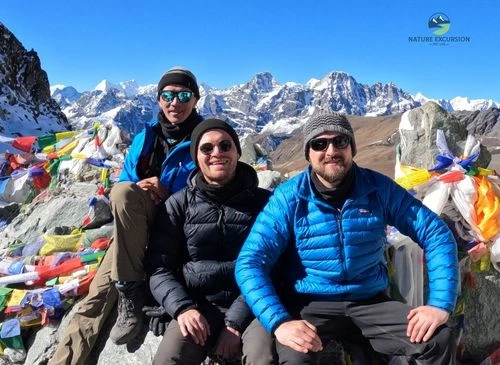
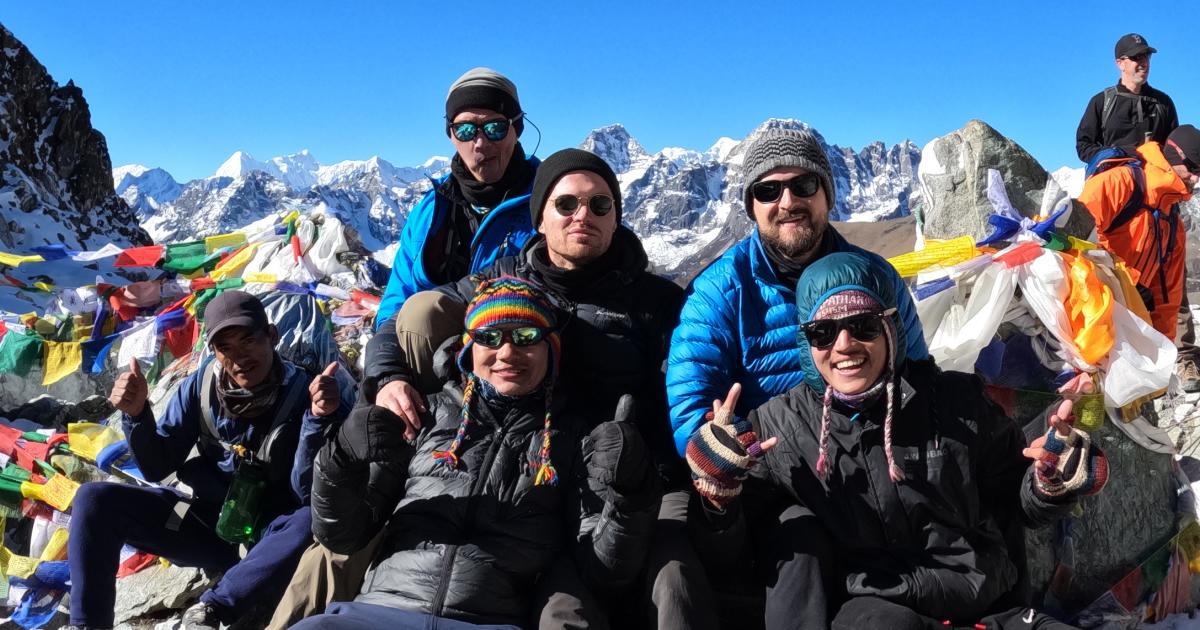
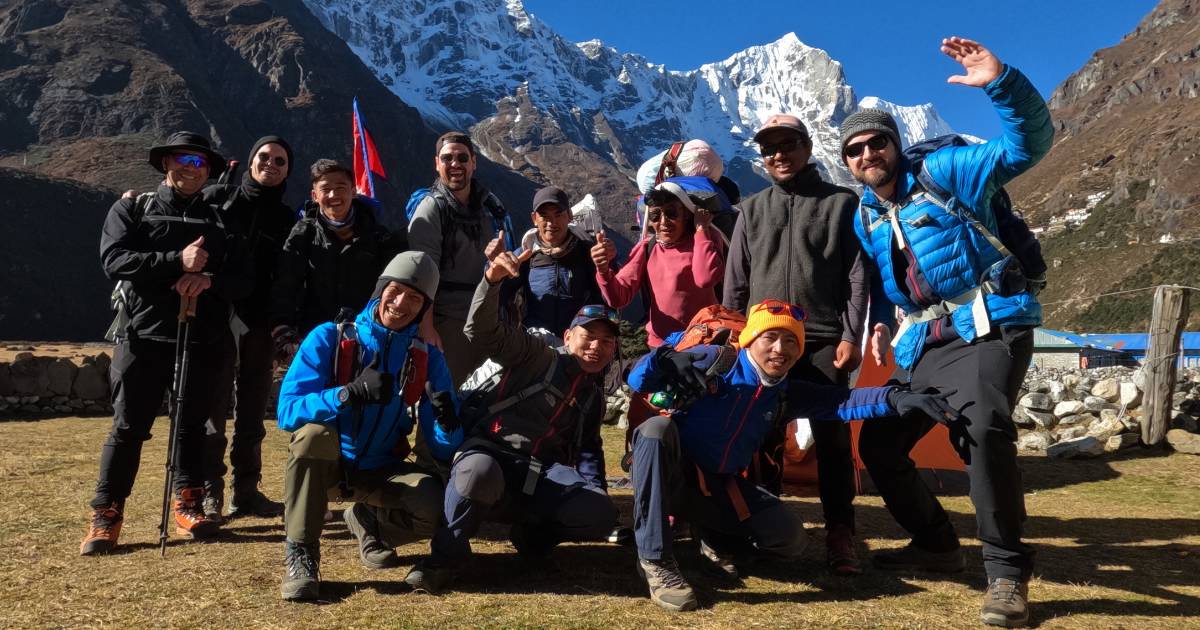
Trekkers at the Cho La Pass Top
The Cho La Pass (5,420 m) connects Dzongla on the Everest Base Camp side with Thaknak and the Gokyo Valley. Just below the top, you cross frozen ground, and the upper hill can hold snow, ice, and rock. This is where balance and footwear matter most. Keep crampons or microspikes within reach, and follow your guide's line exactly.
The descent toward Thaknak crosses glacial moraine and frozen ponds. It is long, and your legs are already tired, so the day takes about 7 hours. Fresh snow is the most common reason trekkers turn back at Dzongla. Your guide may wait for the trail to firm up, or take you around to Gokyo by the lower trails instead. Waiting is not lost time; it is the safest way across.
Renjo La Pass: The Final High Crossing and Its Demands
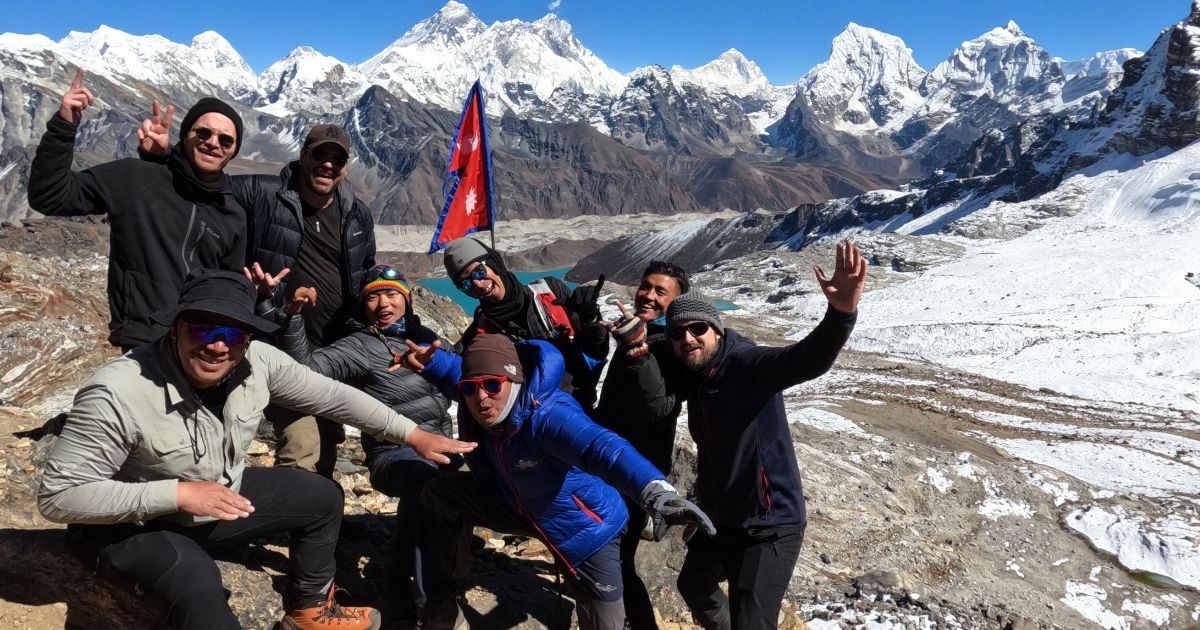
View of Everest and Gokyo Lakes from Renjo La Pass
The Renjo La Pass (5,360 m) is the lowest of the three, and many trekkers find it the most beautiful, with views of Mount Everest, Cho Oyu, Lhotse and Makalu. You start from Gokyo (4,790 m) in the morning, walk beside the frozen lake, then climb to the top.
By this point, you will have crossed two high passes and spent nearly two weeks on the trail. Fatigue, rather than altitude, is likely to be your biggest challenge. The descent to Lungden (4,400 m) is steep, rocky and rough, and asks for slow, careful steps.
What happens if snow or ice makes the pass unsafe? Trekkers reaching Gokyo are usually well acclimatized, so fewer turn back here. If the pass is not safe, the route back to Namche runs down the Gokyo Valley instead.
Trek Route Direction & Difficulty: Clockwise vs. Counter-Clockwise
Counter-clockwise is easier for most trekkers. That means Kongma La first, then the Cho La Pass and Renjo La Pass, as our Everest Three High Passes Trek runs.
This direction on the Three High Passes route climbs from Namche Bazaar, Tengboche and Dingboche, with two acclimatization days, before the first pass. You reach the highest pass while still feeling fresh, crossing Cho La after Everest Base Camp, when your body is already well acclimatized. Renjo La, the lowest of the three passes, is saved for last.
Clockwise goes the other way, from Namche through Thame to Renjo La first. It gains height faster, so you need extra rest days on the way up to stay safe. Then the highest and most remote pass, Kongma La, comes at the end, when you are most tired.
Build Your Ideal Trek
Design a custom trek that route matched to your fitness level, preferred pace, and travel dates.
Many trekkers decide to turn back at the high mountain passes of Kongma La and Cho La, where high altitude, open areas, and tough ground make the crossing difficult. Some decide earlier, before reaching the passes, at Dingboche, Chhukung, or Gokyo, after a few days of how it feels to live above 4,500 m. The reasons are almost always the same:
Rushed acclimatization: skipping rest days to save time.
Early signs of altitude sickness on the first pass.
Fresh snow or ice on Cho La, which stops trekkers without microspikes or experience on frozen ground.
Fatigue that builds over many days and is underestimated at home.
A plan with no spare day for bad weather.
Gear that is not warm or sturdy enough for the high passes.
Is the Everest Three Passes Trek Suitable for Beginners?
No, attempting the three high passes is not a good first trek for most people. It suits fit trekkers who have already walked several days at altitude and know how their body reacts.
A first-time trekker who is very fit can attempt it, but only with a guide, a slow schedule, and a willingness to skip a pass if needed. For most beginners, and for anyone new to Nepal trekking, the classic Everest Base Camp Trek is the better start: the same mountains, fewer days above 5,000 m, and no high pass crossings.
What Experience Should You Have Before Attempting the Trek?
At least one multi-day trek, one that reached 4,000 m or higher. That teaches you how your body handles altitude, cold, and many days of walking in a row. Good preparation includes:
A trek such as Everest Base Camp, Gokyo Lakes or the Annapurna Circuit.
Experience walking on steep, rocky, or icy ground.
Some time on snow, and a first try with microspikes before you need them on Cho La.
Knowing the signs of altitude sickness in yourself.
Fitness Requirements: How Fit Do You Need to Be?
Fit enough to walk 6 to 8 hours with a daypack, up and down, and then do it again the next day. Strong stamina matters more than speed or muscle.
A useful test of your fitness level: can you hike uphill for several hours on two days in a row and wake up ready for a third? Then you have the base.
How to Train for the Everest Three Passes Trek in 8 to 12 Weeks?
Start two to three months before the trek. Build stamina first, then strength, then practice with the gear you will use. Here is a simple plan for Everest Three Passes fitness preparation:
Weeks 1 to 4: Three or four cardio sessions a week, such as brisk walking, running, cycling, or swimming, building up to an hour each.
Weeks 5 to 8: Add a long hike every weekend on hills or stairs, with a daypack. Add leg and core work: squats, lunges and step-ups.
Weeks 9 to 12: Hike two days back to back, with longer climbs and sharper descents. Wear the boots you will trek in, and practice with trekking poles.
Last week: Ease off and rest, so you start the trek fresh.
Note: If you have a health condition, talk to a doctor before you start, and ask about trekking at high altitude.
How to Know If You Are Ready for the Everest Three Passes Trek?
You are ready if you can say yes to most of these:
You have trekked several days in a row before above 4,000 m.
You can hike 6 to 8 hours with a daypack and recover overnight.
You are comfortable on steep, rocky, and icy ground.
You have warm clothes, sturdy boots, and a sleeping bag rated for below freezing.
You have 19 days or more, with room for a spare day.
You will turn back if your guide or your body says so.
Secure Your 3 Pass Adventure
Ready to conquer the high passes and emerald lakes? Reserve your slot with guaranteed departure and expert guides.
What to Do If You Find the Trek Too Difficult During the Journey
Tell your guide early. Most problems are easier to fix on the first bad day than on the third. The loop has options. You can add a rest day, slow the pace, or skip a pass and take the lower trail around it, and still see Everest Base Camp or Gokyo.
If you need to end your trek early, your guide will arrange your descent. In an emergency, a rescue flight can also be arranged, provided it is covered by your travel insurance.
Why Acclimatization Days Make the Trek More Manageable?
An acclimatization day gives your body time to adapt before you go higher. Our itinerary has three: Namche Bazaar (3,440 m), Dingboche (4,410 m), and Gokyo (4,790 m). You hike up to a higher point, such as the Everest View Hotel above Namche or Nagarjuna Hill (5,085 m) above Dingboche, then come back down to sleep.
Trekkers at Thame village in the Everest region
Climbing high and sleeping lower adjusts your body to the altitude. The rest of the route also gains height slowly, a few hundred meters a night at a time. Skipping these days to save time is the most common way trekkers get into trouble.
Safety on the Three Passes: What Happens If the Weather Turns Bad?
You wait, or you change the route. If snow, wind, or cloud makes a pass unsafe, your guide may hold you for a day or take you around by a lower trail. Safety comes before crossing a pass, every time.
When Should You Stop, Turn Back, or Descend?
Stop or change plans when any of these happen:
Altitude symptoms get worse, not better, with rest.
Heavy snow, strong wind, or a storm reaches the pass.
Snow or ice makes the trail unsafe.
Exhaustion means you can no longer walk safely.
Cloud or fog hides the trail.
If your body shows signs such as breathlessness at rest, confusion, a bad cough, loss of balance, and extreme drowsiness. Go down at once, with your guide. Turning back is a good decision, not a failure. The mountains will still be there next season.
Have Questions About The Trek
Got questions about altitude or preparation? Chat directly with our local trekking specialists on WhatsApp right now for instant answers.
Yes, a lot. The best time to trek the Everest Three Passes is spring (March to May) or autumn (September to November). The weather in the Everest region is most stable then, and the passes are clearest.
Autumn: Dry trails, clear views after the monsoon, cool days. Usually the best chance of crossing the three passes.
Spring: Mild, stable weather and rhododendron forests lower down. Kongma La's lake may still be frozen.
Winter: A trek in winter means severe cold on the passes and a higher chance of snow closing them, especially Cho La.
Monsoon: Rain, cloud, and slippery trails lower down, with poor views and unreliable Lukla flights.
How Difficult Is the Everest Three Passes Trek Compared with Other Everest Treks?
The Three High Passes trek difficulty is a step above the other classic Everest teahouse treks, and it is one of the hardest treks in the Everest region.
Is the Everest Three High Passes Trek Harder Than the Everest Base Camp Trek?
Sherpa guide on a high trail in the Everest region
Yes, the standard Everest Base Camp Trek takes 14 days and reaches the same high point, Kala Patthar (5,545 m), but it follows one valley up and back, with no high pass. The EBC trek is a standard trek to Everest; the Everest 3 Passes trek lasts 19 days, includes Everest Base Camp, and adds three crossings above 5,300 m, a more remote trail, and more days at height.
Everest Three Passes vs Gokyo Lakes: Which Is More Difficult?
The Everest Three Passes Trek, clearly. The Gokyo Lake Trek takes 13 days and tops out on Gokyo Ri (5,357 m) with no pass. The Gokyo Chola Pass Trek sits in between: one pass, Cho La, in 17 days.
The Everest Three Passes Trek is hard because it asks for everything at once: altitude, rough ground, cold and long days, for nearly three weeks. None of that calls for climbing skills. It calls for fitness, patience, and good decisions.
Train for stamina, keep the acclimatization days, start early, and turn back when the mountain says so. Do that, and crossing three high passes, Kongma La, Cho La and Renjo La, becomes the best part of your trek in the Himalayas. See the full day-by-day plan on our Everest Three High Passes Trek page.
FAQs
What is the success rate of the Everest Three Passes trek?
The overall success rate for the Everest Three Passes Trek is approximately 85% to 95%. Your chance of crossing all three depends mostly on acclimatization, the season and weather, and a spare day in the plan.
Is altitude sickness preventable on this trek?
Not completely. However, climbing slowly, taking enough time to acclimatize, and maintaining a slow speed can lower the risk. Anyone can experience altitude sickness, regardless of age or fitness level.
Who is best suited for this trek?
Fit trekkers who have already walked several days at altitude above 4,000 m, and who will turn back when their guide or their body says so.
How many hours do you walk each day on this trek?
Around 4 to 6 hours. Pass days take longer, about 6 to 8 hours, and start at around 4:30 in the morning.
How much does the Everest Three Passes trek cost?
The Three High Passes trek costs USD 1,432 to USD 1,792, depending on the itinerary, group size, season, and the services you choose.
Do I need a guide for this trek?
A guide is strongly recommended. The passes are remote, the trail is hard to follow in snow or cloud, and the safe call on a pass day depends on reading conditions.
Can you complete the Three Passes trek without mountaineering experience?
Yes, the trek involves no ropes or climbing skills. You do need good fitness, some trekking experience, and care on ice near the top of Cho La.
Why do pass-crossing days require more planning?
Because they are long, remote, and exposed. There is no lodge on Kongma La; the weather can change within hours, so you need an early start, food, water, warm layers, and a plan for turning back.
Why can descending be as difficult as climbing?
The far side of each pass is steep and unstable, and you face it tired and short of oxygen. Descents pressure your knees and test your balance. Trekking poles and slow steps help.
Is the Everest Three Passes trek harder than the Annapurna Circuit?
Yes, the Annapurna Circuit, another classic of Nepal trekking, crosses one high pass, Thorong La (5,416 m), on a well-used trail. The Everest trek has three, on rougher and more remote ground, with more nights at high altitude.
Has anyone done the Everest Three Passes trek without prior trekking experience?
Some very fit first-time trekkers do attempt it, but it is not the trek we would choose as anyone's first. Without experience, you do not yet know how your body reacts to altitude, which this trek demands most of.
Written by
Raju GurungMD
Gurung is the founder and managing director of ‘Nature Excursion Pvt. Ltd.’ The mountains and hills from his village, Rubi Valley, always had him wondering, and he became one of the travel enthusiasts from his early childhood.
The Everest Base Camp helicopter tour price in 2026 starts at USD 1,250 per person on a shared group flight. A private charter starts at USD 5,100 for...
What is the Everest Base Camp Trek Distance from Lukla? The actual distance from Lukla to the EBC Trek is 65 km one-way and 130 km round-trip. A stand...
It is a dream of every trekker to see the majestic sight of Everest from Kala Patthar. Kala Patthar is the highest elevation you can reach in any Ever...