How to Travel from Kathmandu to Pokhara?
Traveling from Kathmandu to Pokhara is the first step of the Ghorepani Poon Hill Trek journey from Kathmandu. Pokhara is famous as a tourist hub and the gateway to the Annapurna region. I chose to get to Pokhara by tourist bus. You can choose either the sky or the open road to travel between the two major cities. Each route offers a different perspective on the beauty of Nepal’s diverse landscapes. Let me break it down so that it is easier to understand the pros and cons of each transport mode:
Kathmandu to Pokhara by Air
The fastest and most convenient way to travel from Kathmandu to Pokhara is by air. There are regular flights between Tribhuvan International Airport and Pokhara Airport. Various airlines, such as Yeti Airlines, Buddha Air, and Shree Airlines, operate flights that take 25 to 30 minutes. In addition to its quick travel time, flying offers a unique bird’s-eye view of the Himalayas and surrounding landscapes. From the window, you can marvel at the snow-capped peaks, spertine rivers, villages, and terrace farms.
The cost of flights from Kathmandu to Pokhara is generally between USD 87 and USD 104 per person for a one-way flight. Please note that prices can fluctuate with the season and demand. To secure a better rate, book the flight at least 3 to 6 weeks in advance.
Kathmandu to Pokhara by Ground Transportation
The most local way of traveling from Kathmandu to Pokhara is by road. The distance between the two cities is approximately 200 km. Depending on the vehicle type, the journey to Pokhara can take 6 to 8 hours. Although longer, ground transportation is the best way to experience an authentic, slow-paced journey. The winding Prithvi Highway runs along rolling green hills, scenic river valleys, small towns, and settlements. Using this travel corridor offers you the first glimpse at Nepal’s rural countryside.
The cost of ground transportation from Kathmandu to Pokhara differs according to the vehicle type and season. The different types of vehicles and the cost are as follows:
Local Bus: USD 4 to USD 6 per person
Tourist Bus: USD 9 to USD 12 per person
Sofa/ Luxury Bus: USD 15 to USD 23 per person
Jeep/ Hiace microvan (Group/ private): USD 135 to USD 188 per trip
Private car/ jeep: USD 68 to USD 110 per trip
Planning Your Kathmandu to Poon Hill Journey?
Have questions about flights or buses to Pokhara, starting points, trekking days, route options, or transportation costs? Talk to our team for practical advice and trip planning.
Which one suits you?
I recommend choosing the airway if you have limited time and a flexible budget. It is best for saving time, and the aerial view will make the Kathmandu to Poon Hill Trek experience more memorable.
On the other hand, if you want a more immersive experience but on a budget, ground transportation is perfect. It is the best way to experience the charm of Nepal’s countryside and travel like a local.
Whether you fly or drive from Kathmandu to Pokhara sets the tone for the Poon Hill Trek. It will leave you excited and curious for the journey ahead.
Duration:9 DaysStart fromUSD 850USD 745based on 3 reviews
How to Get to Poon Hill from Pokhara?
From Pokhara, my Poon Hill trek truly began. I needed to drive to the starting point, Nayapul, which is the most popular gateway, though there are a few other options. I will share those options later on. I chose Nayapul and decided to take a local shared jeep, though private jeeps are also available. That said, you can take either a local shared jeep or a private jeep to get to Nayapul. Here is how you will get to Poon Hill from Pokhara:
Pokhara to Nayapul
The drive from Pokhara to Nayapul was a journey in itself. The short drive of 1.5 hours soon turns into a scenic ride, passing by small villages, terrace hills, and dense rhododendron forests. The road is smooth and winds along the Seti and Modi Rivers. Along the way, there are small and traditional bazaars.
During the drive, the scenery changes quickly. Within a short time, the city life slowly gives way to the peaceful rural countryside. I caught glimpses of locals working in the fields, carrying baskets of fresh goods, and children walking to school. I even saw Annapurna and Machhapuchhre peaks rising in the distance, a stunning preview of the mountains that awaited me.
When I arrived in Nayapul, sitting at 1,070m, I immediately felt the energy of this traditional gateway to Poon Hill. The name Nayapul means “New Bridge.” It is named after the bridge over the Modi Khola River. As the most common starting point, it is also the busiest trekking trailhead in the Annapurna region. The Gurung and Magar communities reside in the Nayapul area. Therefore, it offers the first glimpse at the local culture and lifestyle.
Nayapul to Ulleri
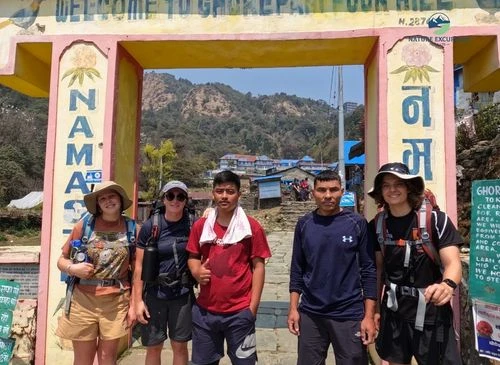
From Nayapul, I finally stepped onto the Poon Hill Trek trail. The first destination is Ulleri, and it begins with a gentle uphill trek that gradually becomes more challenging. The trail at the beginning passes through notable villages like Birethanti and Tikhedhunga. Along the way, I spotted small shops and teahouses, and locals greeted me with warm smiles as I passed by.

Remember the grueling stone staircases I mentioned in the beginning? Yes, you will encounter them after Tikhedhunga, so brace yourself. After Tikhedhunga, the trail became steeper, and thousands of stone steps challenged my legs as I climbed through forested hillsides. I passed small houses, teahouses, and terraced fields, surrounded by the fresh scent of pine and rhododendron, towards Ulleri.
I learned that these stone staircases were constructed to provide safe passage for villagers and mule caravans between settlements. Even though these stone staircases were challenging, I felt a strong sense of accomplishment with every step I overcame. After about 5 to 6 hours of trekking, I finally reached Ulleri.
The cool mountain air instantly refreshed me, and I couldn’t stop admiring the spectacular views of the Annapurna and Dhaulagiri ranges. Ulleri, a beautiful Magar village at 2,070m, welcomed me with its quiet charm. I ended the day at a cozy teahouse, savoring a hot meal and soaking in the authentic local culture, feeling proud of the day’s journey and ready for the adventures ahead.
Ulleri to Ghorepani
The next day, I headed to Ghorepani from Ulleri. It was a 10 km walk and took me 5.5 hours. The trail enters dense rhododendron and oak forests as it gradually ascends. As I walked, I listened to birds chirping, leaves rustling in the breeze, and, occasionally, the gentle sound of nearby rivers and waterfalls. During spring, the entire forest comes alive with blooming rhododendrons. The sight is straight out of an enchanting fairy tale, almost unreal.
This day trek was steady rather than steep, which made the walk feel calm and enjoyable with occasional openings. Every now and then, the forest opened up, revealing stunning views of Annapurna South and Hiunchuli. Beautiful villages such as Banthanti and Nangethanti offer convenient spots for a short break or lunch. The view of the distant mountains, moss-covered stone steps, and lush forest along the trek route kept the journey exciting. As elevation increases gradually, the air becomes crisper, and the weather feels cooler, reminding me that I was climbing deeper into the Himalayas.
Ghorepani village is located at an altitude of 2,860 m and is surrounded by vibrant rhododendron forests. It is one of the largest Magar settlements in the Annapurna region. The village was once an important rest stop for traders traveling by horse or mule along ancient trade routes between Mustang and lower Nepal.
Ghorepani’s name literally translates to “horse water.” The name itself reflects the village’s rich history as an important stop on the Himalayan trade corridors. It also serves as a strategic acclimatization stop for popular treks like the Annapurna Base Camp Trek. Ghorepani is a perfect rest spot before the final ascent to Poon Hill Viewpoint.
Ghorepani to Poon Hill
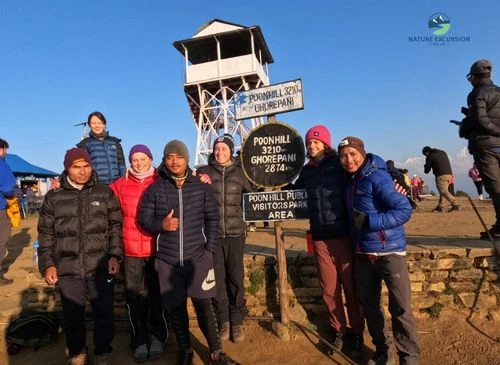
Finally, the moment I had been waiting for arrived, which was my hike to the iconic Poon Hill Viewpoint at 3,210 m. I woke up early, long before sunrise, while the surroundings were still wrapped in darkness. With my headlamp switched on, I began climbing the stone steps, moving quietly through the silent forest. The ascent takes 45 minutes to 1 hour on a moderate trail. Every step filled me with anticipation and motivated me to walk faster.

As I climbed higher, I could feel my heartbeat quicken, partly from the effort, but mostly from the thrill of what awaited me at the top. When I finally reached the viewpoint, I stood there in awe. The first rays of sunlight hit the vistas of Annapurna South, Machhapuchhre, Dhaulagiri, and Hiunchuli. It painted the white, snow-capped peaks in the shades of gold, orange, and pink. Similarly, the light colors the sky, casting a warm glow over the horizon. Slightly lower and safer than other high-altitude viewpoints in the Annapurna region, Poon Hill is accessible to all trekkers, including beginners.
Ready to Trek from Kathmandu to Poon Hill?
Experience the journey from Kathmandu to Pokhara and into the Annapurna foothills. Explore the Poon Hill Trek itinerary, route, duration, transportation, and essential trip details.
Common Starting Points for the Poon Hill Trek and How Far They are from Pokhara
While Nayapul is the most popular starting point for the Poon Hill Trek, there are other options. You might wonder whether the starting point actually matters if the final destination is the same. Absolutely! It affects your trek duration, pace, scenery, and even the cultural experience along the route. The different starting points for the Kathmandu to Poon Hill Trek are as follows:
Classic Trailhead: Nayapul
Distance from Pokhara: 42 km
Drive time: 1.5 to 2 hours
Why start here: Most popular and traditional starting point
Nayapul is the most common and traditional starting point for the Ghorepani Poon Hill Trek. At an elevation of 1,070 m, it is located beside the Modi Khola River. Starting from Nayapul, the Poon Hill Trek trail gradually ascends through Birethanti, Tikhedhunga, Ulleri, and Ghorepani.
Nayapul is the best starting point for first-timer trekkers. It allows for gradual ascension and natural acclimatization. Similarly, the area is a hub for fellow trekkers, porters, and local traders. It offers an authentic introduction to the rich culture of the Annapurna region.
Scenic Riverside Start: Birethanti
Distance from Pokhara: 40 km
Drive time: 1.5 to 2 hours
Why start here: Scenic entry and quieter trail
Starting your trek adventure from Birethanti gives you a head start over Nayapul. The village is located along the banks of the Modi Khola at an elevation of 1,030 m. It gives a scenic riverside start to the Poon Hill Trek. You will cross suspension bridges and traverse small villages, farms, and waterfalls.
There is a permit-checking post for the Annapurna Conservation Area at Birethanti. The lush greenery and rushing river make the trailhead one of the most photographic sections of the Poon Hill Trekking route. Likewise, Birethanti offers a peaceful trailhead, a perfect start to the journey.
Steeper Alternate Trail Start: Tikhedhunga
If you want to shorten your Kathmandu to Poon Hill Trek itinerary, you can start from Tikhedhunga. The village lies at a higher altitude than Nayapul or Birethanti, which is 1,540 m. Starting from here means you will come face-to-face with the legendary Ulleri staircase right away.
Although starting here shortens the trek slightly, you will gain altitude more quickly. Beginners may find it more challenging due to the immediate steep trail. Tikhedhunga is suitable for more physically fit trekkers or those who enjoy challenges. The sense of achievement after the climb is immensely rewarding.
High-Altitude Starting Point: Ulleri
Distance from Pokhara: 65 km
Drive time: 3.5 to 5 hours
Why start here: Shorter trek duration and easier ascent
For those who prefer not to climb the steep stone staircases, it is also possible to start the Poon Hill Trek from Ulleri. You can drive from Pokhara to Ulleri. It not only reduces the trek duration, but also reduces the overall physical challenge of the journey.
Ulleri was once a major trading stop on the ancient salt routes between lower Nepal and Tibet. The village is situated at an elevation of 2,070 m. Hence, you will start the trek at a slightly higher altitude. It is ideal for trekkers who want to reduce physical strain while maximizing views.
Cultural Gateway: Ghandruk
Another common starting point for the Poon Hill Trek is the beautiful Gurung village of Ghandruk. Situated at an elevation of 1,940 m, the village has well-established teahouses and lodges. Ghandruk is famous for its rich culture, so you can immerse yourself in the culture, tradition, and customs right from the start.
Starting in Ghandruk, you will pass through traditional villages such as Landruk, Sinuwa, and Banthanti. Similarly, you can get close-up views of Mount Annapurna South, Machhapuchhre, and Hiunchuli right from the beginning of the journey. It is an ideal trailhead for cultural lovers and photographers.
From City Chaos to Himalayan Sunrise
The spectacular sunrises over towering mountains are not the only view that will leave me awestruck during the Kathmandu to Poon Hill Trek. What truly made the Kathmandu to Poon Hill trek special was the constant change in landscapes. From the moment I left Kathmandu, the scenery kept transforming in ways that made the trip feel exciting and fresh.
In Kathmandu, I was surrounded by a busy city filled with life. The streets were crowded, temples stood at almost every corner, and the air carried the sounds of vehicles and people. Beyond the city, I could see green hills and, on clear days, distant mountain views like Langtang and Ganesh Himal.
.jpg)
The landscape change becomes more evident upon reaching Pokhara. I saw more of the lush valleys and terraced farms. Similarly, I came across rushing rivers. The view of the snow-capped mountains also looks closer from Pokhara. The drive toward Nayapul took me past rolling hills, small villages, and peaceful countryside views.
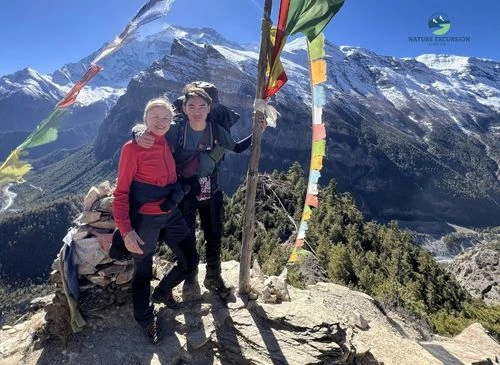
From Nayapul, the trail follows the Modi Khola. The landscape changes into riverside trails with lush subtropical forests, small villages, and paddy fields. It remains the same until Birethanti, and then from Tikhedhunga, the landscape changes into steep hills, stone staircases, and terraced farms. There are more dense rhododendron and oak forests, with occasional waterfalls. Throughout the trek, glimpses of snowy peaks kept appearing between the trees.
As I get closer to Ghorepani, the landscape shifts once more. I walked through beautiful coniferous and rhododendron forests, with mountain valleys and stone villages adding to the charm. By the time I reached Poon Hill, the scenery felt completely different. The thick forests faded into sparse alpine vegetation, open ridges, grasslands, and rocky terrain. The panoramic mountain views made the climb feel incredibly rewarding.
Looking back, the landscape changes during the Kathmandu and Poon Hill Trek make the journey fascinating and refreshing. I experienced everything from a lively urban city to peaceful valleys, lush forests, traditional villages, and high mountain ridges. It makes the trek to Poon Hill one of the most scenically diverse short treks in Nepal.
Duration:3 DaysStart fromUSD 550USD 450based on 3 reviews
Kathmandu to Poon Hill Trek vs Other Short Treks
There are many short treks in Nepal other than Poon Hill, but what makes it one of the most popular short treks? Here is a quick comparison with other well-known short treks like Everest View Trek, Langtang Short Trek, and Mardi Himal Trek:
Features | Poon Hill Trek | Everest View Trek | Langtang Short Trek | Mardi Himal Trek |
Duration | 3-6 days | 7-9 days | 5-7 days | 5-7 days |
Difficulty | Easy to moderate | Moderate to challenging | Moderate | Moderate to challenging |
Max elevation | 3,210 m (Poon Hill Viewpoint) | 3,880 m (Everest View Hotel) | 4,773 m (Kyanjin Ri) | 4,500 m (Mardi Himal Base Camp) |
Crowds | High | Medium | Medium | Low |
Mountain views | Annapurna and Dhaulagiri ranges | Mount Everest, Ama Dablam, Lhotse, Nuptse, Thamserku, and other surrounding peaks | Langtang Lirung, Langshisa Ri, Dorje Lakpa, and Ganja La Peaks | Annapurna I, Annapurna South, Machhapuchhre, Hiunchuli, Gangapurna, and Mardi Himal Peak |
Cultural highlights | Gurung and Magar | Sherpa and Buddhist | Tamang and Tibetan Buddhism | Limited cultural interactions |
Among the other short treks, Poon Hill stands out for its accessibility and spectacular sunrise over the Annapurna and Dhaulagiri ranges.It is also beginner- and family-friendly, and suitable for trekkers with limited time. Despite the short itinerary, Poon Hill is a rewarding and culturally enriching trek in the Annapurna region.
The Everest View Trek is suitable for those who want to experience a classic Everest adventure but without the risk of high altitude. The Langtang Short Trek is for those seeking a more culturally rich Himalayan trek experience. Meanwhile, the Mardi Himal Trek is suitable for solitude seekers and raw wilderness adventurers.
Plan Your Kathmandu to Poon Hill Trek
Want to choose the best transportation, starting point, trek duration, and pace? Get a Poon Hill trek plan tailored to your travel dates and trekking preferences.
Final Say
In the quiet moment when the morning breeze brushed my face, and the majestic view lay bare before me, I realized the Kathmandu to Poon Hill Trek was more than just a physical journey. It was a story of patience, discovery, and immersion. The trek is a passage through Nepal’s changing landscapes, snow-capped Himalayas, and vibrant culture.
With the information above, I hope you too can now plan your own adventure to the Poon Hill Trek and walk the scenic trail with confidence and better preparation. Thank you for reading, see you in the next blog!