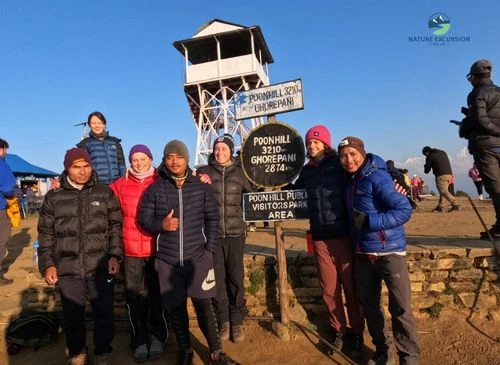
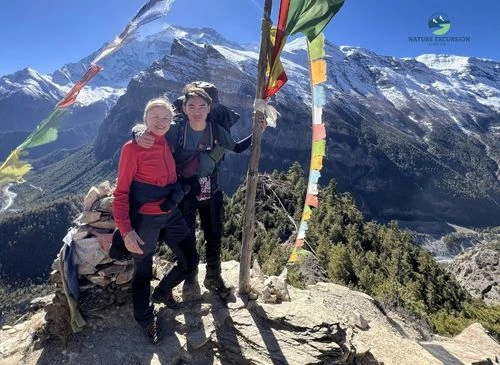
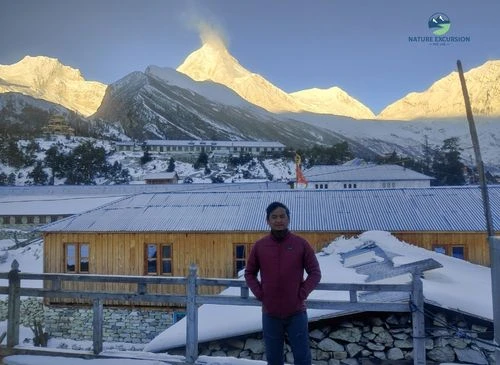
Thinking about the trek to Poon Hill and wondering if it is too hard for you? The good news is that the Poon Hill Trek is not very difficult, but it is not a simple walk either. Known for its jaw-dropping sunrise views over the Annapurna and Dhaulagiri ranges, the Poon Hill Trek is a great choice for trekkers of different fitness levels. While the trail doesn’t involve technical climbing or extreme altitudes, it does include steady uphill walks and long stone staircases that can be difficult if you aren’t prepared well.
One of the special aspects of the Poon Hill Trek is that it is suitable for first-time trekkers, students, families, and travelers with normal fitness. Short trekking days, well-marked paths, and numerous teahouses on the route help to reduce physical and mental strain. However, factors such as weather conditions, walking pace, backpack weight, and personal stamina can determine how difficult the trek feels.
In reality, the Poon Hill trek is best described as moderate for beginners and easy for experienced trekkers. It challenges the legs more than the lungs, rewards a slow, steady pace, and is perfect for travelers who want to get a taste of Himalayan trekking without the extreme altitude. In addition, the Poon Hill Trek proves that a trek doesn’t have to be extreme to feel meaningful and memorable.
How Difficult is the Poon Hill Trek?
| Feature | Details |
| Difficulty Level | Easy to Moderate |
| Max Elevation | 3,210 m / 10,531 ft |
| Trek Duration | 5-9 days (depends on chosen itinerary) |
| Trail Condition | Well-marked but stone steps |
| Biggest challenge | long uphill stair sections (especially Ulleri) |
Wondering If You Can Handle the Poon Hill Trek?
Have questions about fitness, the Ulleri stone steps, walking hours, altitude, or preparation? Talk to our team for practical advice and help planning your Poon Hill adventure.
The Poon Hill Trek is an easy-to-moderate trek in Nepal’s Annapurna region. The trek doesn’t involve any tough days, nor does it include a technical walking section. Thus, the trek to Poon Hill is an ideal choice for beginners to the Himalayas. Likewise, the trek emphasizes steady walking over physical strength. So, to join the trek, you don’t need to be in excellent fitness.

The trek to Poon Hill can be completed in 4-5 days from Pokhara and offers a gentle walk. Most people in good health and basic fitness can complete the Poon Hill Trek comfortably. Thus, it is suitable for people who want to experience trekking without facing serious physical or technical challenges. Also, with simple preparation and a positive mindset, the trek feels achievable and enjoyable for most trekkers.
Duration:9 DaysStart fromUSD 850USD 745based on 3 reviews
What makes the trek to Poon Hill difficult?
As mentioned, the Poon Hill trek is easy to moderate in difficulty. However, no trek in the Himalayas comes without certain difficulties. Similarly, the Poon Hill trek presents some challenges. These challenges are not extreme, but they can surprise trekkers who assume the route will be effortless. Below are the factors that make the trek to Poon Hill quite difficult than everyone assumes:
Stone Steps (Over 3,000 Steps to Ulleri)
The stone steps leading to Ulleri are a major factor making the trek to Poon Hill difficult. Likewise, it is also one of the most tiring parts of the walk. The steps are steep, uneven, and continuous, which puts repeated pressure on the legs both in uphill and downhill walking.
- Constant walking puts stress on the knees and thighs, especially when climbing and descending.
- The stone steps feel harder than walking at high altitude because they place more direct pressure on the joints and muscles than breathing.
- Due to the repetitive movement, each trekker, even a fit trekker, feels fatigue on this section.
Altitude & Potential for AMS
The highest elevation on the Poon Hill trek is at 3,210 m. On the elevation, the risk of Acute Mountain Sickness (AMS) is low but not zero. However, compared with other high-altitude treks such as Everest Base Camp (5,364 m) and Annapurna Base Camp (4,130 m), Poon Hill does not reach extreme altitudes. Still, the trek takes you from an elevation of 1,070 m to 3,210 m in a short time, which might be challenging for someone not used to changing temperatures. In addition, these can cause a headache, mild nausea, dizziness, or shortness of breath, especially during the cold early-morning climb to the viewpoint.
Weather of the Annapurna Region
Weather plays a major role in how difficult the Poon Hill Trek feels. The weather of the Annapurna region changes quickly and without warning. The higher you go, the more you experience weather fluctuation. Also, the region’s weather varies by month, so check the conditions for the time of your trek and pack accordingly.
| Months | Min Temp (°C) | Max Temp (°C) |
| January | -5 | 10 |
| Februray | -3 | 12 |
| March | 0 | 15 |
| April | 5 | 18 |
| May | 8 | 20 |
| June | 10 | 22 |
| July | 12 | 22 |
| August | 12 | 22 |
| September | 10 | 20 |
| October | 5 | 18 |
| November | 0 | 15 |
| December | -3 | 12 |
Note: This is the approximate temperature around Poon Hill in the Annapurna region; as you move higher, the temperature drops and changes accordingly.
Terrain and Trail Conditions
Although we mention that the trail to Poon Hill is well-marked, don’t expect a flat or uniform section. Instead, expect the trail mix of steep stone staircases, forest paths, and village trails, with constant ups and downs. Likewise, the route condition changes: the section becomes muddy and extremely slippery in the monsoon and icy in winter. Thus, these changing conditions require careful walking and extra energy.
Load-Carry Stress on a “Short” Trek
Many assume the Poon Hill Trek is easy and think they can carry as much weight as they want. That’s what adds to the trek’s difficulty, as constant ascents and descents increase every extra kilogram you have in your bag. Days with fewer walking hours can also feel tiring because the effort depends on elevation and the weight you’re carrying rather than on distance. Carrying a heavy backpack while climbing increases shoulder fatigue and increases knee pressure on long downhill sections, especially on stone stairs.
Psychological Fatigue from Forested, Repetitive Terrain
Another difficulty trekkers face on the way to Poon Hill is psychological fatigue. A large section of the walk passes through dense rhododendron and oak forests, with limited views along the way. Fog or clouds often obstruct the mountain view until dawn breaks on the summit, which can be mentally depressing. In addition, the repetition of steps, trees, and narrow paths can create mental monotony, adding a psychological fatigue to the hike’s difficulty.
Cold Pre-Dawn Viewpoint Walk
At last, the most difficult part of the trek to Poon Hill is cold-pre dawn viewpoint walk. You have to leave for Poon Hill early in the morning, around 4-5 AM in the dark, with headlamps on, in near-freezing temperatures. Morning’s cold makes it hard to breathe and stiffens the muscles, which makes the walk feel more difficult than it does later in the day.
How to Minimize the Poon Hill Trek Difficulty?

Although the Poin Hill Trek is extremely challenging, a few trek habits can make a big difference in how your body and mind feel on the trail. Rather than preparing more physically, this trek demands smart pacing, simple planning, and small adjustments. The tips below are the way to minimize the Poon Hill Trek difficulty and complete the journey with ease:
- Plan your Ulleri day carefully: Start early on the day you climb toward Ulleri so you avoid the heat and crowds. The stone steps heat up fast after 10 AM.
- Pack lighter than you think you need: The journey is short, so you don’t need heavy backpacks. A lighter backpack reduces knee pressure, especially on the steep downhill sections after Ghorepani.
- Break the Ulleri stone steps strategically: Instead of going straight from Tikhedhunga to Ulleri, stop at the small tea shops between the steps. Frequent stops and a long rest at the end will reduce the chance of your knees burning.
- Use trekking poles: Trekking Poles are your lifesaver, especially on stone steps (up and down) and on the Poon Hill climb.
- Sleep in Ghorepani, not in the higher villages: Ghorepani offers better rest before the Poon Hill sunrise hike. Staying higher reduces sleep quality and makes the 4 AM climb feel harder.
- Descend immediately after Poon Hill sunrise: The return path becomes crowded and slippery as frost melts. Early descent reduces stress on knees and avoids congestion on narrow stone paths.
- Choose hiking shoes with a strong toe grip: The trail to Poon Hill involves many large stones, so shoes with a firm toe grip reduce slipping on early-morning frost and downhill sections.
- Train specifically for stairs, not altitude: Poon Hill’s difficulty comes from the continuous steps, not the height. So, stair climbing practice prepares your legs better than general cardio workouts.
Ready to Take on the Poon Hill Trek?
Experience stunning Annapurna and Dhaulagiri views without extreme altitude. Explore the Poon Hill Trek itinerary, difficulty, route, duration, and essential trip details before you begin.
Daily Poon Hill Trek Difficulty Breakdown
The Poon Hill Trek is short, but each day feels different on the body. Some days challenge leg strength, while others feel longer because of descents or early starts. Understanding daily difficulty helps you prepare mentally and manage your energy better, rather than expecting every day to feel the same.
| Day | Route | Difficulty Level | Key Feature |
| 1 | Drive to Nayapul & Trek to Ulleri via Tikhedhunga | Moderate | Long continuous ascent with heavy leg effort |
| 2 | Ulleri to Ghorepani | Easy to Moderate | Gradual climb through forests with steady pacing |
| 3 | Poon Hill hike & descend to Tadapani | Moderate | Early-morning climb followed by long downhill sections |
| 4 | Tadapani to Ghandruk | Easy | Short walking day with mixed landscape and village trails |
| 5 | Ghandruk to Birethanti & Drive to Pokhara | Easy | Mostly a downhill walk with a relaxed drive |
Who Is the Poon Hill Trek Suitable For?
Honestly, the Poon Hill trek is suitable for most of the trekkers. Whether you are a first-time trekker, solo traveler, student, or working professional, the trek suits everyone. Likewise, if you are planning a family trip with children and active seniors, you can go on the Poon Hill trek. Moreover, the trek is a great choice for people who enjoy nature, village life, and peaceful walking rather than extreme adventure.
Beginners & First-Time Trekkers
- Short
- No technical section
- Manageable daily walking hours
Travelers Short on Time
Families & Older Trekkers
Gradual ascents (yes, there are stairs, but they’re steady)
Comfortable family-friendly tea house accommodation
- Friendly environment
Who enjoy nature, village life, and peaceful walking
Solo Travelers
Very safe and social route with lots of trekkers around
Easy to meet people in teahouses
Clear paths and a low chance of getting lost
Students
Budget-friendly compared to longer Himalayan treks
Short duration, that’s why it fits semester breaks or holidays
High reward without expensive logistics
Working professionals
Final Say
When all factors are considered, the Poon Hill Trek is manageable, balanced, and beginner-friendly, but not effortless. It is a trek that challenges stability rather than strength and is worthy for those who walk patiently and plan smartly. Also, from daily trail variations and early-morning hikes to changing weather and repetitive forest paths, the trek requires both physical readiness and mental flexibility. In the end, the Poon Hill Trek is not about how hard it is, but about how well you prepare and adjust.