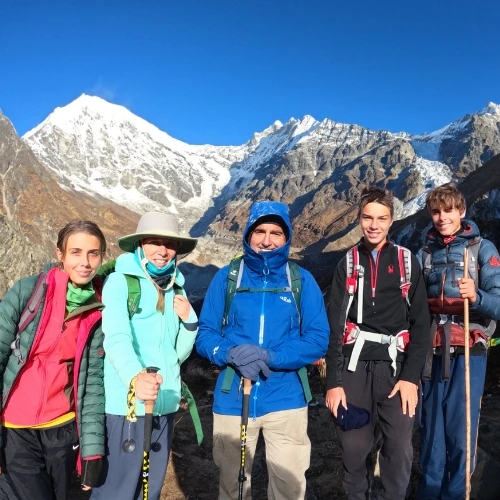
The Pangboche to Ama Dablam Base Camp Trek is a notable side route from the main Everest Base Camp trek. Over the years, the route has become increasingly popular among trekkers exploring the Khumbu region.
The trek from Pangboche to Ama Dablam follows the classic EBC route till Pangboche. Then, from Pangboche, trekkers reach Ama Dablam Base Camp the next day. It can be added without changing your main itinerary. The gradual climb also helps with acclimatization while adding variety to the overall trekking experience.
Trekkers choosing to trek Ama Dablam from Pangboche, rather than EBC, are rewarded with a close-up view of Ama Dablam. They will notice the unique pyramid shape and dramatic ridgeline, which are extremely popular among mountain climbers worldwide. This route is also quieter, allowing trekkers to experience the Khumbu region without disturbance from crowds.
As they approach base camp, they might even meet climbers preparing for their expeditions during the climbing season, which is also a unique experience. The Pangboche to Ama Dablam trek is ideal for seasoned trekkers who are not yet ready for the difficulty of the Everest Base Camp Trek.
Where is Pangboche Located?
Pangboche is located within Sagarmatha National Parkat an elevation of approximately 3,980 m. The village sits above the Dudh Koshi River valley, between Tengboche and Dingboche. It is a traditional Sherpa village in the Everest region of eastern Nepal. From Pangboche, you can see Ama Dablam rising directly above the other villages, making it a major viewpoint along the route.
Pangboche plays an important role in the Everest Base Camp Trek route. It is one of the last permanent Sherpa settlements before trekkers reach the higher-altitude areas (Dingboche, Gorakshep) around Mount Everest. Many trekkers stop here for lunch, tea, or an overnight stay while acclimating to the altitude. Pangboche is also known for its old Pangboche Monastery. It is believed to be the oldest in the Khumbu region, adding cultural value to trekkers’ journey.
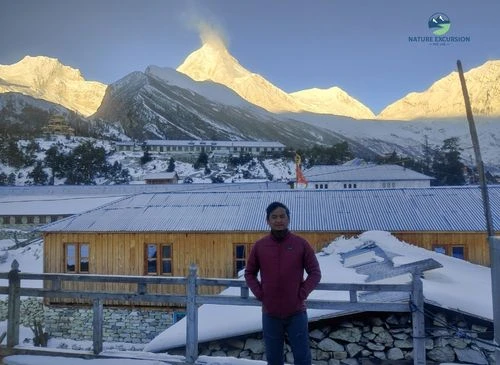
Pangboche village
Pangboche village has two parts:Upper Pangboche and Lower Pangboche. The village has stone houses, narrow paths, and small lodges for trekkers. The locals farm to some extent, primarily growing potatoes and barley. They also keep yaks for milk and transport. Since Pangboche is above the tree line, the land is more open and dry. Trekkers can see that they are entering the high Himalayan zone. Overall, Pangboche offers both natural beauty and local culture, making it an important and memorable stop on the Everest trail.
Planning the Pangboche to Ama Dablam Base Camp Route?
Have questions about hiking time, trail conditions, altitude, route difficulty, or what to expect along the way? Talk to our team for practical trekking advice.
According to the standard itinerary, the trek to Ama Dablam Base Camp from Pangboche is about 7-10 km round-trip. However, it may vary depending on the exact route taken and seasonal trail conditions. From Pangboche (3,930 m), the trail steadily climbs to Ama Dablam Base Camp (4,600 m) on the sixth day of the trek, with an elevation gain of 670 m.
The distance is shorter than the previous day’s 13.7 km from Namche Bazaar to Pangboche, but the climb is steeper and more challenging. This route takes a less busy local path, crosses the Imja Khola via a suspension bridge, and climbs through alpine pastures and rocky terrain.
Way to Ama Dablam Base Camp
On average, the distance from Pangboche to Ama Dablam takes about 8 hours, with the uphill section of the base camp trek route taking approximately 5-6 hours, depending on pace and acclimatization. The descent back to Pangboche takes about 3-4 hours. The steep terrain makes this day physically demanding.
Proper pacing is crucial because the thinner air above 4,500 m causes fatigue to set in quickly and increases the risk of altitude sickness. But when you stand at the base camp, you get a close-up view of Ama Dablam at the Base Camp. And with this memory, you will return to Pangboche village.
Ama Dablam is widely recognized as one of the most recognizable mountains in the Himalayas. Even though it is not among the tallest peaks, it stands out for its perfect pyramid shape, strong cultural significance, and technical climbing challenge. Located in Nepal’s Khumbu region, it attracts both trekkers and serious climbers, especially during a trek in the Everest region.
Unique Recognizable Shape
One of the main reasons this mountain is special is its unique shape. Its sharp ridges, steep faces, and hanging glacier create a dramatic silhouette that is easy to recognize from far away. The hanging glacier forms the “dablam,” which looks like a traditional Sherpa pendant, while the ridges resemble a mother’s arms. When trekkers first glimpse Ama Dablam, they are often left in awe of its distinctive, dramatic form.
Cultural and Spiritual Importance
The name translates to “Mother’s Necklace” in Sherpa, reflecting both its shape and cultural symbolism. Local Sherpa communities see the mountain as protective and sacred. Religious ceremonies and prayers are often performed before climbing seasons, showing their strong connection to local traditions.
Popular Landmark in Khumbu
Ama Dablam dominates the Khumbu region’s skyline and is especially visible along the Everest trekking route. It is located within Sagarmatha National Park, a UNESCO World Heritage Site, which enhances its global recognition. For many trekkers, it becomes the most photographed and memorable peak they see during their journey.
Popularity Among Technical Climbers
Ama Dablam is technically challenging to climb, even though it is not as tall as many other Himalayan peaks. Routes like the Southwest Ridge require skills in rock, ice, and mixed terrain climbing. Because of these challenges, experienced climbers respect it as a true mountaineer’s mountain, not just a high-altitude trekking peak.
Easily Accessible
Another reason why Ama Dablam is special is that it is relatively easy to access. Compared to many high Himalayan peaks, Ama Dablam is accessible to trekkers without prior experience, allowing them to practice their expedition beginnings or hone their mountain climbing skills. Even the base camp lies within the Everest corridor, so trekkers can use well-established trails, teahouses, and regular logistics. Therefore, climbers can join a close-up Himalayan mountain expedition within a few days of planning.
Can You Visit Ama Dablam Base Camp as a Side Trip from EBC?
Yes, you can visit Ama Dablam Base Camp as a side trip from the Everest Base Camp trek. First, you will take a flight from Kathmandu to Lukla, then trek to Pangboche before heading towards Ama Dablam Base Camp. This option is gaining popularity among trekkers seeking quieter, more scenic views, especially those with prior trekking experience. The trek starts near Pangboche, where trekkers leave the main trail and head to the base of Ama Dablam. This route is well-known but less crowded, offering a quieter option that remains logistically simple.
Mount Ama Dablam
The side trip usually takes one long day or can be split into two days with an overnight stay at base camp, depending on your pace and how well you acclimatize. The trail climbs steadily through alpine terrain and offers great views of Everest and the other surrounding peaks and valleys, which gives you another reason to trek in the Everest region. Since this route is at a higher altitude and has limited facilities, you should carry snacks, water, and basic trekking gear for changing weather conditions. It is common to hire a guide for help with navigation and safety.
This side trip is perfect for hikers who want to add variety to their journey without doing technical climbing. Pangboche to Ama Dablam Base Camp Trek offers stunning mountain scenery, a sense of isolation compared to the main route, and the chance to experience a classic Himalayan base camp. With proper acclimatization and weather planning, it fits well into most trekking schedules in the Everest region.
Why is Ama Dablam Called the “Matterhorn of the Himalayas”?
Ama Dablam is often referred to as "the Matterhorn of the Himalayas." The comparison is based on Ama Dablam's visual and technical resemblance to Mount Matterhorn, located in the European Alps on the border of Switzerland and Italy. Both mountains have pyramid-like summits, steep rock faces, and ice-covered ridges that create a near-perfect silhouette from a distance. Furthermore, most peaks in Nepal are massive due to heavy glacial influence, but Ama Dablam stands out as a sculpted peak, which is common in the classic alpine mountains of the Swiss Alps.
The comparison also extends to climbing style and reputation. Like the famous “Matterhorn, Ama Dablam requires advanced rock, ice, and mixed climbing skills rather than only high-altitude endurance. Climbers encounter difficult sections on Ama Dablam, including exposed traverses, narrow ridgelines, and sections requiring fixed ropes. These challenges are typical of elite alpine climbing. Because of this, many consider Ama Dablam to be the most “alpine-style” major peak in Nepal. It combines high altitude with the technical expertise of the classic Swiss Alps.
Need an Ama Dablam Base Camp Trek Plan?
Want to explore Ama Dablam Base Camp from Pangboche? Get a trek plan tailored to your travel dates, preferred pace, available time, and trekking goals.
Accommodation and Facilities along the Pangboche to Ama Dablam Base Camp
Accommodation along the Pangboche to Ama Dablam trail is simple. Pangboche has long-established teahouses run by local families, which provide basic facilities, such as simple twin-sharing rooms, basic beds, and common dining areas. Pangboche is the last established settlement before you reach the Ama Dablam Base Camp. As you move from Pangboche towards the base camp, permanent accommodation becomes scarce, and there are no standard hotels along the upper section of the trail.
The common accommodations at base camp are mostly seasonal teahouses or temporary camps set up during climbing seasons. You can either return to Pangboche for an overnight stay or camp near the base camp if properly equipped. However, please note that comfort levels decline significantly beyond Pangboche, and services such as hot showers, charging stations, and Wi-Fi are either unavailable or unreliable.
In terms of facilities, it is designed for basic survival rather than comfort. You will find local cuisines, but there is a limited Western variety. Bottled water is available but becomes increasingly expensive due to transportation challenges at higher elevations. Soft drinks, packaged snacks, and specialty beverages are rare. Medical facilities, ATMs, and advanced services are nonexistent on this stretch, so you must carry essential supplies, cash, and personal necessities from Pangboche before ascending toward Ama Dablam Base Camp.
Best Time to Visit Ama Dablam Base Camp
Ama Dablam Base Camp trekking in Nepal is most rewarding when the weather is clear, and the mountain views are at their best. The base camp is located at approximately 4,600 m above Pangboche, directly below the striking peak of Ama Dablam. Because of the high altitude, weather conditions vary by season, and choosing the right time can significantly affect comfort and visibility. The two best seasons to experience the Ama Dablam Base Camp are spring and autumn.
Spring (March to May)
Spring is undoubtedly one of the best seasons for trekking to Ama Dablam Base Camp. The weather is consistently stable, with temperatures around 10°C to 20°C during the day. This creates ideal conditions for a long walk. Plus, the trails are dry and easy to navigate, which allows trekkers to fully enjoy the stunning views of Ama Dablam and other majestic peaks under clear skies and low humidity.
Spring also showcases the vibrant blooms of rhododendrons and other wildflowers, that adds spectacular color to the landscape. Trekking through green forests with fresh air without insects or leeches, like in the monsoon, is quite refreshing.
Autumn (September to November)
Autumn is considered one of the best seasons for trekking to Ama Dablam Base Camp, particularly for its exceptionally clear mountain views and stable weather conditions.After the monsoon rains wash dust and pollutants from the atmosphere, the skies turn a deep blue with outstanding visibility that often lasts throughout the day, offering sharp, uninterrupted views of Ama Dablam and surrounding Himalayan peaks.
Daytime temperatures typically range between 12°C and 5°C from September to November, while near base camp can drop to -5°C or lower, especially late in the season. The trails are generally dry, firm, and well-defined as water levels recede after the monsoon, which makes river crossings manageable and reduces muddy or slippery sections.
Less Ideal Season
In addition to the best season for trekking, there are a few less ideal seasons. Although trekkers are discouraged from trekking during these seasons, the sense of remoteness and lower costs compels them to proceed. The two least ideal seasons are winter and monsoon.
Winter (December to February) brings colder temperatures and occasional snowfall at the base camp level. The trail is quieter, and the views remain very clear on stable days. However, freezing nights and icy sections on the path can make the side trip more challenging.
During the monsoon (June to August), heavy rain at lower elevations and frequent cloud cover reduce visibility. Flights to Lukla may also face delays. While the landscape below becomes greener, mountain views are often obscured by clouds, making this the least favorable season for visiting Ama Dablam Base Camp.
Snow Conditions in Winter Ama Dablam Base Camp Trek
Winter snow conditions at Ama Dablam Base Camp can be harsh and unpredictable. Heavy snowfall often occurs in the high alpine zone of the Khumbu. Trails may be completely covered in snow, and ice can form in shaded areas. While clear mornings are possible, the weather can quickly turn into a snowstorm.
Walking on trails becomes slower and more difficult in winter. Deep snow makes it hard to find the right path, especially above Pangboche, as footprints may disappear after fresh snowfall. Trekkers usually need microspikes or crampons for icy sections. Strong cold winds can create wind-packed snow, which is hard and slippery.
Access to the base camp can also be tough after heavy storms. Teahouses may close because of low winter traffic. Water sources can freeze, and temperatures often drop far below freezing at night. Good winter gear and flexible planning are essential for safety.
Explore Ama Dablam Base Camp
Ready to experience the spectacular Ama Dablam views? Explore the route, itinerary, altitude, and essential details for your Everest region adventure.
The trek from Pangboche to Ama Dablam Base Camp is a short but rewarding side trip. It offers strong mountain views, cultural insights, and real high-altitude trekking conditions. The route is physically demanding but manageable with proper acclimatization and planning.
This side trek inside Sagarmatha National Park adds variety to the Everest Base Camp journey. You should expect basic facilities, changing weather, and remote trail conditions. Choosing the right season and carrying essential supplies will make your trek safer and more enjoyable.
Written by
Karan GurungExecutive Director
Hello, I’m Karan Gurung, a passionate mountaineer from Nepal with over 15 years of experience exploring the majestic peaks of the Himalayas. I grew up surrounded by towering mountains; my love for adventure and the thrill of high-altitude trekking have shaped my life to the next level. For me, the mountains are more than just a place to trek, and I believe they are a source of inspiration, a connection to nature, and a way of relaxing your mind and soul with peace. I’m always here to share my experiences, travel tips, and stories from my adventures to help others appreciate the beauty of the Himalayas in Nepal through articles and blogs. Whether you're an experienced trekker or someone new to the mountains, I’m here to guide and inspire you for your first or next adventure in Nepal!
The main autumn treks in Nepal are Everest Base Camp, the Annapurna Circuit, Annapurna Base Camp, the Manaslu Circuit, Langtang Valley, and Mardi Hima...
To choose the best trekking company in Nepal, you must verify that the agency holds official registration with the Nepal Ministry of Culture, Tourism...
Sagarmatha National Park is one of Nepal’s most famous protected areas and the core of the Everest region. Located in the high Himalayas of Solukhumbu...


.jpg)



.webp)
.webp)