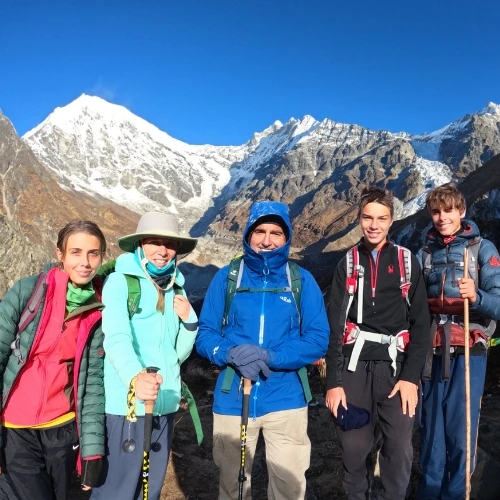
The Annapurna Base Camp trek is a moderate-level trek in which you move from tea house to tea house. This journey will take you to the heart of the Annapurna Conservation Area, offering majestic views of Annapurna I, Fishtail, Annapurna South, and Hiunchuli. The Annapurna Base Camp trek is ideal for beginners. However, they must be physically fit, have a decent level of cardio, and have realistic expectations for the trek’s toughness and difficulty.
In this beginner’s guide to trek to Annapurna Base Camp, we will share essential tips and strategies. We will discuss where the trek starts and ends, trek difficulty, best time for the ABC trek, packing checklist, and much more. With the right mindset and preparation, the ABC trek is achievable for anyone with decent fitness. It’s an ideal introduction to high-altitude trekking for beginners.
Why ABC Trek Is Beginner-Friendly?
The Annapurna Base Camp Trek takes you closer to the tenth-highest mountain in the world, Mt. Annapurna. Despite the high altitude, this trek is perfect for beginners looking to explore the Himalayas. Here are a few reasons that explain why ABC Trek is beginner-friendly:
Well-Marked Trails
One reason the ABC trek is ideal for beginners is the clearly marked trails. The trail is well defined, with several signs and directions along the way to guide trekkers. For beginners, the well-marked trails reduce the chance of getting lost. The newcomers, who know the path and direction, will discover newfound confidence as they walk across Nepal's diverse terrain in the Annapurna region.
Comfortable Teahouses
Someone who hasn't trekked before may not know what meals and accommodations are like during a trek. Fortunately, during the ABC trek, most of the trekking trail is lined with comfortable teahouses where they can enjoy delicious meals and spend the night. These teahouses are all over the trails, with easy access; trekkers don’t have to worry about carrying heavy camping gear. Waking up in these teahouses, with tea in hand and majestic mountain views, is one of the highlights of the trek.
Annapurna base camp teahouse
No Technical Climbing
The ABC Trek is also beginner-friendly because it does not require technical climbing skills. The trek mainly involves walking on well-marked paths. There are no sections that require rock climbing or navigating rugged terrain. This makes it an excellent choice for people who want to explore the Himalayas without needing advanced mountaineering skills.
Short Duration
Another reason ABC trek is beginner-friendly is its relatively short duration. The ABC trek usually lasts 7 to 13 days, making it manageable for those new to trekking. Despite its short duration, the trek passes through varied landscapes, making it ideal for beginners seeking a short yet equally rewarding adventure.
Steady Elevation Gain
The ABC trek involves a slow, steady climb, which reduces the risk of altitude sickness for beginners. The route allows trekkers to acclimatize gradually, with rest days built into the schedule to help the body adapt. This slower pace makes the trek more comfortable for new hikers, ensuring a safer, more enjoyable experience to the base camp without the difficulties often encountered on steeper climbs.
The Annapurna Base Camp Trek starts with a drive from Pokhara to Nayapul, which is a small village at 1,070 m. From here, the trek begins towards Ulleri (1,960 m), passing through Tikedhunga along the way. The starting point of the trek is quite calming with sub-tropical vegetation around. In the first part of the trek, we will trek through rural landscapes and terraced fields in the foothills of the Annapurna range.
Starts and Ends Route of ABC
We will then gradually ascend through dense forests, small villages, a narrow trekking route, and tall mountains, including Fishtail. Although the initial portion of the trek is not extremely difficult, we will gain some altitude and need to adjust to it as we go along. The Annapurna Base Camp concludes by descending to Ghandruk Phedi or ascending to Sinuwa (1,150 m). From here, we will drive back to Pokhara via Nayapul. The return route offers beautiful views of the countryside, mountains, and waterfalls. This also provides an opportunity to reflect on the fantastic experience you had during the trek.
Need an ABC Trek Plan for Beginners?
Get an Annapurna Base Camp trek plan tailored to your experience, available time, preferred pace, and trekking goals.
Day 1: Arrival in Kathmandu and transfer to the hotel.
Day 2: Drive from Kathmandu to Pokhara.
Day 3: Drive from Pokhara to Nayapul and trek to Ulleri via Tikhedhunga.
Day 4: Trek from Ulleri to Ghorepani.
Day 5: Early morning hike to Poon Hill viewpoint, then trek to Tadapani.
Day 6: Trek from Tadapani to Chomrong.
Day 7: Trek from Chomrong to the Himalaya Hotel.
Day 8: Trek from the Himalaya to the Annapurna Base Camp via the Machapuchare Base Camp.
Day 9: Trek from Annapurna Base Camp to Bamboo.
Day 10: Trek from Bamboo to Jhinu Danda.
Day 11: Trek to Sinuwa/Ghandruk Phedi.
Day 12: Drive from Pokhara to Kathmandu.
Day 13: Final Departure
Understanding Altitude on the ABC Route
As you reach Annapurna Base Camp from Pokhara, the altitude rises step by step, approximately 1,000 m in the early stages, and 500 to 600 m in the later days. The trail passes through settlements such as Nayapul, Ulleri, Chhomrong, and Himalaya, following the Modi Khola Valley. The trekkers clearly feel the change in landscape when each major stop along the route sits higher than the last.
The shift from warm subtropical trails to cooler forests and then to high-altitude alpine areas makes it feel like you enter a new region each day. However, this gradual rise is essential for acclimatization, allowing you to adjust to altitude changes naturally. The altitude increase is gradual between 1,500 m and 3,000 m. The trail gently rises to Chhomrong (2,170 m), then to Himalaya (3,230 m), before reaching the MBC (3,700 m). The last section of the trek involves a significant climb from MBC to ABC at 4,130 m. But by this time, you will have spent the necessary days at high altitude, allowing your body to adjust to the surroundings.
Due to this natural, gradual elevation pattern, the ABC trek is among the most beginner-friendly for acclimatization. Your body will gradually adapt to lower oxygen levels, and the overnight stops are in ideal locations for acclimating to the altitude. Most trekkers reach ABC comfortably without needing altitude medication; however, some may need Diamox if their symptoms worsen. Due to a steady pace, proper hydration, and frequent rest breaks, you don’t need advanced climbing skills to reach ABC.
Guide, Porter, or Solo? What Beginners Should Choose
If you are a beginner planning your first ABC trek, an early decision is whether to go solo, trek with a guide, or use porters. These options offer different types of experiences. Choosing guides and porters provides safety, navigation, and physical assistance, while going solo gives you control over your trek experience. These are not rigid categories; instead, they are the kind of help you need the most. Altitude safety, route navigation, and load management are common problems you will encounter on these routes.
If you are a first-time trekker, hiring a licensed guide is very valuable. Guides are trained in route conditions, navigating, cultural interpretation, and altitude management. They can adjust the speed of the trek, handle essential logistics, and recommend safer routes, especially in the off-season. There are a few restricted regions in Nepal, where hiring a guide during the trek is compulsory.
Porters also help you during your trekking adventure. They carry your main loads, typically up to 20kg. This significantly reduces fatigue and allows your body to acclimatize, lowering the risk of altitude sickness. Even if you are an independent trekker, you may hire a porter to ease the physical burden. Hiring porters also increases the employment rate in the remote region and improves their standard of living.
How Difficult Is the ABC Trek?
The Annapurna Base Camp (ABC) trek is moderately challenging for beginners. It is suitable for trekkers with a decent level of cardiovascular fitness and adequate leg strength. However, some sections are physically demanding, particularly due to variable terrain and sustained climbs. While the altitude is not as extreme as on the EBC or Annapurna Circuit treks, many trekkers will start feeling the effects of thin air above 3,000 m. The stretch, particularly from the Himalaya village to MBC, is challenging for trekkers due to reduced oxygen levels and steep climbing.
Trekking days typically range from 5 to 7 hours of hiking, depending on the individual's pace and where you stay overnight. The trail conditions vary consistently throughout the route. In the early part of the trek, you have to climb a steep stone staircase between Tikedhunga and Ulleri, which is extremely difficult for beginners. In contrast, the hike through rhododendron forests, when you reach near Chhomrong and Bamboo, is relatively more straightforward. From Bamboo onwards, the trails become more rugged and narrow.
If you decide to trek in early Spring or late Autumn, you will most likely encounter snow at higher altitudes. After Deurali, the path goes into a valley with ice. You will walk uphill to reach Machapuchare Base Camp, then to Annapurna Base Camp. The air at higher altitudes has less oxygen, which can make you tired and slow you down. But if you take breaks and get ready before you start, even beginners can finish the hike safely.
Plan Your Annapurna Base Camp Trek
Ready to start your first Himalayan adventure? Explore the Annapurna Base Camp Trek itinerary, route, duration, difficulty, altitude, and essential trip details.
If you’re a beginner planning the Annapurna Base Camp trek, it’s essential to choose the ideal season, such as spring (March to May) or autumn (September to November). Spring offers stable conditions, mild weather, and blooming rhododendron forests around Chhomrong. The spring season arrives before monsoon, so the trails are dry, making it easier to navigate the stone paths leading towards higher stops like Deurali.
Best Season for ABC
Likewise, the autumn season is favoured for its clear blue skies and cool post-monsoon air. The views of sunrise from MBC during this season are spectacular, with Annapurna I glowing in the distance. Like Spring, Autumn also brings dry conditions, helping avoid slippery trails, poor visibility, and weather disruptions. This season also occurs at a similar time as Nepali national festivals, Dashain and Tihar. The opportunity provides a chance to witness a traditional celebration and deepen your understanding of the local culture.
For beginners, packing the right gear is one of the best ways to make your first trek more comfortable and enjoyable. You don’t need expensive equipment, just reliable clothing that keeps you warm, and gear that helps you navigate the routes will do. The checklist below highlights essential items you don’t want to miss during your trek to Annapurna Base Camp.
Clothing
Trekking Boots
Socks (3-4 pairs)
Trekking Pants
Base Layer
Fleece Jacket/Down Jacket
Rain Jacket
Insulated Jacket
Gloves and Hat
Buff or Scarf
Backpack & Storage
30–40L Daypack (with rain cover)
Dry Bags / Ziplock Bags
Waist Pouch
Sleeping Bag (3-season recommended)
Sleeping Bag Liner
Travel Pillow (optional)
Navigation & Essentials
Map / Route Printout
Compass (optional for beginners)
Permits & Identification
Notebook & Pen
Hydration & Nutrition
Water Bottles (1–2 liters)
Water Purification Tablets / Filter
Electrolyte Powder
Energy Bars / Snacks
Personal Care & Toiletries
Toothbrush & Toothpaste
Biodegradable Soap
Quick-Dry Towel
Sunscreen (SPF 30+ recommended)
Lip Balm with SPF
Wet Wipes
Hand Sanitizer
Health & First Aid
Basic First Aid Kit
Personal Medications
Blister Plasters / Tape
Pain Relief Balm
ORS (Oral Rehydration Salts)
Trekking Accessories
Trekking Poles
Sunglasses (UV-protective)
Headlamp (with extra batteries)
Multi-tool or Small Knife
Camera / Smartphone
Electronics
Power Bank
Charging Cables
Travel Adapter
Extra Memory Card (if using camera)
Optional but Useful
Gaiters
Sit Pad
Lightweight Camp Shoes
Small Thermos
Have Questions About the ABC Trek?
Not sure about the difficulty, preparation, packing, accommodation, or daily walking hours? Get practical advice from our trekking team before you begin.
The Annapurna Base Camp Trek remains one of the most accessible high-altitude adventures of Nepal. This is the perfect destination for first-time trekkers seeking a balanced introduction to the Himalayas. The ABC is at an elevation of 4,130 m, and daily gradual ascents allow for slow acclimatization, minimizing the risk of altitude sickness, while still providing majestic views of the skies and mountains. Well-maintained trails and a reliable network of teahouses make trekking easier and more comfortable, even for those with little experience in remote areas.
Other than its physical appeal, the ABC trek offers unique cultural engagement. Different villages, such as Chhomrong, Ghandruk, Ghorepani, and Ulleri, offer opportunities to interact with Gurung communities and observe their culture and traditions firsthand. The trail passes through terraced farmlands, dense rhododendron and fir forests, and high-altitude glacial basins, highlighting the biodiversity that is protected within the Annapurna Conservation Area. For many beginners, reaching Annapurna Base Camp is a major milestone and significant achievement.
Written by
Karan GurungExecutive Director
Hello, I’m Karan Gurung, a passionate mountaineer from Nepal with over 15 years of experience exploring the majestic peaks of the Himalayas. I grew up surrounded by towering mountains; my love for adventure and the thrill of high-altitude trekking have shaped my life to the next level. For me, the mountains are more than just a place to trek, and I believe they are a source of inspiration, a connection to nature, and a way of relaxing your mind and soul with peace. I’m always here to share my experiences, travel tips, and stories from my adventures to help others appreciate the beauty of the Himalayas in Nepal through articles and blogs. Whether you're an experienced trekker or someone new to the mountains, I’m here to guide and inspire you for your first or next adventure in Nepal!
Mount Annapurna I is 8,091 m (26,545 ft) above sea level, the 10th-highest mountain in the world. Located in north-central Nepal within the Annapurna...
As of June 2026, exactly 572 climbers have successfully reached the summit of Annapurna I. This updated figure comes directly from Nepal's Department...
How far do you actually have to walk to complete the legendary Annapurna Circuit? The total Annapurna Circuit Trek distance usually spans between 160...




.webp)
.webp)


.webp)
.webp)