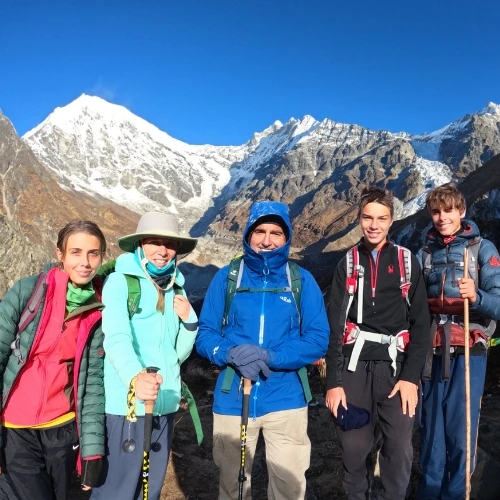
When is the best time to climb Mera Peak? The best time to climb Mera Peak is from March to May and September to November. These spring and autumn windows offer stable weather, low winds, and the highest summit success rates. Choosing the right month determines if you reach the summit or turn back early. Mera Peak stands at 6,476 m and ranks as the highest permitted trekking peak in Nepal. It is beginner-friendly because the slopes do not require advanced technical skills. But the high altitude and cold winds require respect. Selecting the peak seasons ensures clear skies and safer climbing conditions.
The Mera Peak climbing windows align with the pre-monsoon and post-monsoon periods. Spring and autumn offer the most reliable conditions for a safe ascent. You will find the trails busier during these times, but the companionship of other climbers adds to the experience. Meanwhile, winter and summer bring deep snow or heavy rain that make the high passes dangerous. We recommend planning your trip well in advance to secure the best teahouses.
Mera Peak Climbing Route Overview
The Mera Peak trek starts with a flight to Lukla. The route we take follows the Hinku Valley to help your body acclimate to the altitude. You begin with a flight to Lukla and trek south toward Paiya and Panggom. This route avoids the immediate steep climb of the Zatrwa La, helping you stay healthy and strong for the summit. You will walk through remote bamboo forests and pass through villages like Ningsow. Meanwhile, the trail offers a quiet experience away from the crowded main Everest tracks.
way to mera peak
As you reach Kothe, you enter the high alpine zone where the trees disappear, and the peaks come into view. You will visit the ancient Lungsumgba Gompa and trek alongside the Dig Glacier toward your base in Khare. Here, you spend time practicing your technical skills with our guides. Likewise, your move to High Camp involves a steady walk across the Mera Glacier to reach your tent at 5,780 m. This gradual ascent is designed to give you the best chance of reaching the 6,476 m summit safely.
Route Section
Duration
Altitude
Difficulty
Key Highlights
Lukla to Paiya
1 day
2,730 m
Moderate
Scenic flight to Lukla and trek through rhododendron forests.
Paiya to Panggom
1 day
2,846 m
Moderate
Crossing the Chutok La and views of the Dudh Koshi Valley.
Panggom to Ningsow
1 day
2,863 m
Moderate
Crossing Panggom La and entering remote bamboo forests.
Ningsow to Chhatra Khola
1 day
2,800 m
Strenuous
Walking the Pasang Lhamu trail with views of Mera Peak.
Chhatra Khola to Kothe
1 day
3,691 m
Moderate
Trekking alongside the Hinku Khola into the Hinku Valley.
Kothe to Thaknak
1 day
4,358 m
Easy
Seeing the 200-year-old Lungsumgba Gompa with the route carved in rock.
Thaknak to Khare
1 day
5,045 m
Moderate
Lateral moraine of Dig Glacier and first views of the North Face.
Khare to High Camp
1 day
5,780 m
Strenuous
Glacier walking and sleeping on the snow at Mera High Camp.
High Camp to Summit
1 day
6,476 m
Challenging
Views of Everest, Lhotse, Makalu, Cho Oyu, and Kanchenjunga.
What Makes Mera Peak Different from Other Peaks?
You will find that Mera Peak is the highest trekking peak in Nepal. It reaches 6,476 m. Despite its height, it is famous for being non-technical. You do not need to climb vertical rock walls or use ladders to cross deep cracks in the ice. The route is mostly a steady walk up snow slopes. This makes it the best entry point for you if you want to start mountaineering. You will learn how to use an ice axe and wear crampons on a gentle glacier. It is a test of your stamina and lung power rather than your technical climbing skills.
Mera Peak is equally special for its incredible views. From the summit, you can see five of the world's fourteen peaks that rise above 8,000 m. These include Mount Everest, Lhotse, Makalu, Cho Oyu, and Kanchenjunga. Island Peak is tucked inside the Chukung Valley, offering close-up views of the Lhotse wall, whereas Mera Peak provides a more open, panoramic perspective of the range. It is a rewarding experience that feels like a true expedition without the extreme risks of technical climbing.
Not Sure When to Climb Mera Peak?
Spring and autumn offer the most favorable climbing conditions, but the best dates can depend on your schedule and experience. Talk to our team for advice on choosing the right climbing window.
Why Timing Matters for Mera Peak Climbing Success?
You must understand that the weather at 6,476 m is the biggest factor in reaching the top. The "window" for a safe summit is narrow. During peak seasons, wind speeds drop, and temperatures are manageable. High winds can cause frostbite in minutes. Additionally, heavy snow hides dangerous cracks in the glacier. If you choose the right time, you get firm snow that makes walking easier. But if you arrive too late or too early, deep powder can double your travel time and exhaust your energy before you reach the summit pyramid.
Your safety and comfort depend on clear visibility. In the right season, the mornings are crisp, and the clouds stay low in the valleys. This allows you to navigate the glacier safely and enjoy the views of the 8,000 m peaks. Bad timing often leads to "whiteout" conditions, where you cannot see your own feet. This is dangerous and high-risk. We see much higher success rates in the spring and autumn because the weather patterns are stable. Choosing a prime window ensures you spend your energy on the climb rather than fighting the elements.
Timing your climb is the most important decision for your safety and success. You need stable weather and clear visibility to reach the summit at 6,476 m. While the best times to climb Mera Peak are Spring and Autumn, each season offers a different experience for climbers. We track weather patterns closely to ensure our groups avoid high winds and deep snow.
Spring (March to May)
Spring is the best season to climb Mera Peak. This season provides stable weather for high-altitude climbing in the Hinkhu Valley. You will see vibrant rhododendron forests at lower elevations during March. But the real advantage is the warming trend in April and May. By late spring, the snow settles, which makes the glacier's travel toward the summit much safer. You should expect more climbers on the trail during the Spring season compared to other seasons in Nepal.
Autumn (September to November)
The autumn season is another extremely popular season for Mera Peak. This time arrives after the end of the monsoon season. When the monsoon rains wash the dust from the air by late September. This results in the sharpest views of Everest, Lhotse, and Makalu from the summit. Also, the weather remains very predictable throughout October. You will face colder temperatures than in spring, but the dry trails make the approach much easier.
Winter (December to February)
montain covered with snow
Winter season climb on Mera Peak is only for experienced mountaineers who can handle extreme cold. Temperatures at High Camp often drop below -20°C (-4°F). But the trails are completely empty, and the skies stay very clear. You must be prepared for deep snow that can hide crevasses on the glacier. Most teahouses in the upper Hinkhu Valley close during this period, so we often use tented camps.
Monsoon (June to August)
Climbing Mera Peak during the monsoon is dangerous and not recommended. Heavy rain makes the forest trails below Thangnak very slippery and brings out leeches. Clouds usually hide the peaks, so you will miss the views that make this trek famous. Likewise, the risk of landslides increases on the steep sections leading up to Khare. The summit glacier becomes unstable and dangerous due to constant moisture and warmth.
Spring vs Autumn for Mera Peak: Full Comparison
Feature
Spring (March - May)
Autumn (September - November)
Air Clarity
Moderate; some afternoon clouds.
Excellent; sharpest views of 8,000 m peaks.
Temperature
Best Weather. Warmer temperatures rise each day.
Optimal Weather. Colder temperatures drop as winter nears.
Snow Conditions
Soft snow; higher risk of post-holing.
Hard, stable snow; better for cramponing.
Crowds
Busy; many climbers targeting Everest.
Most popular; trails and teahouses are full.
Daylight
Longer days; more time for descent.
Shorter days require earlier summit starts.
Flora
Ideal time for Rhododendrons to bloom in the lower valleys.
Dry landscapes; golden alpine grass.
Summit Success
High; weather windows are wide.
Very High; weather is most predictable.
Month-by-Month Temperature Breakdown for Mera Peak Climbing
The temperature on Mera Peak changes drastically with every 1,000 m of ascent. You will experience mild, spring-like weather in the lower Hinkhu Valley. But conditions turn arctic once you cross the Mera La at 5,400 m. Wind chill on the summit ridge can make -15°C (5°F) feel like -30°C (-22°F). You must use a layering system that handles both sweating during the climb and extreme cold while resting.
Month
Day Temp (Lower trails)
Night Temp (High Camp)
Summit Conditions
January
5°C (41°F)
-25°C (-13°F)
Extreme wind; heavy ice.
February
6°C (43°F)
-25°C (-13°F)
Very cold; deep winter snow.
March
10°C (50°F)
-15°C (5°F)
Cold start; improving daily.
April
12°C (54°F)
-12°C (10°F)
Stable; ideal climbing air.
May
15°C (59°F)
-10°C (14°F)
Warmest; occasional clouds.
June
18°C (64°F)
-8°C (18°F)
Wet; poor visibility.
July
20°C (68°F)
-5°C (23°F)
Peak monsoon; high risk.
August
19°C (66°F)
-5°C (23°F)
Rainy; slippery trails.
September
14°C (57°F)
-10°C (14°F)
Clearing skies; crisp air.
October
12°C (54°F)
-15°C (5°F)
Cold nights; perfect views.
November
8°C (46°F)
-25°C (-13°F)
Freezing; very dry and clear.
December
5°C (41°F)
-30°C (-22°F)
Arctic; high wind speeds.
Difficulty Level of Mera Peak by Season
You must understand that Mera Peak is a physical test rather than a technical one. It is the highest trekking peak in Nepal. You do not need expert mountaineering skills to climb it. But you do need high levels of stamina and cardiovascular fitness. The climb involves walking on a glacier with crampons and an ice axe while tied to a rope. Most of the route is a steady uphill slog. The final section of the summit is the steepest part. You will feel the thin air above 6,000 m, so your success depends on how well you acclimatize during the trek through the Hinku Valley.
Choosing the right season is the best way to minimize the difficulty of the Mera Peak Climb. Autumn and spring offer the most stable conditions for your climb. September to November provides clear skies, dry weather, and firm snow. The trails are busy, but the weather is predictable. Furthermore, March to May brings warmer temperatures and blooming rhododendrons at lower elevations. Spring often brings deeper snow on the high pass. This makes the trail physically harder for your legs. But the warmer air makes the summit night more tolerable than the biting cold of late November.
The winter and monsoon seasons pose extreme challenges that you should avoid as a beginner. From December to February, weather conditions are challenging, especially when temperatures drop below -20°C (-4°F) at high camp. Heavy snow can bury the trail and hide dangerous crevasses. Likewise, the summer monsoon from June to August brings heavy rain and leeches in the forest. Clouds usually hide the peaks during this time. This makes navigation difficult and increases the risk of landslides. You should always choose the best time to ensure your Mera Peak expedition is completed successfully.
Plan Your Mera Peak Trip Your Way
Choose your travel dates, preferred season, and trip duration to create a Mera Peak itinerary that fits your schedule.
You might consider climbing Mera Peak alone to save money or seek total solitude. Independent climbing gives you full control over your pace and schedule. But you must handle every detail yourself. You have to carry your own heavy gear, cook your own meals at high camp, and navigate the glacier without professional help. Most importantly, you are responsible for your own rescue if something goes wrong. Finding the route in a whiteout or identifying hidden crevasses is extremely difficult without years of mountain experience.]
trekker on mera peak
We strongly recommend a guided climb for your safety and success. A professional guide knows the terrain and monitors your health for altitude sickness every day. They manage all logistics, including permits, flights, and teahouse bookings. Our team sets up the high camp tents and prepares hot meals while you rest. Furthermore, a local guide provides a safety rope during the summit push to prevent falls. For beginners, a guided expedition reduces the risk of getting lost or becoming exhausted due to logistical stress.
Factor
Guided Climbing
Independent Climbing
Safety
High (Rescue and First Aid)
Low (Self-reliance)
Navigation
Expert route finding
Map and GPS required
Logistics
All managed by the agency
You book everything
Physical Load
Porters carry the main gear
You carry all the equipment
Permits
Arranged for you
You visit government offices
Success Rate
High due to support
Lower due to fatigue
How Weather Impacts Your Summit Experience?
Selecting the right time for climbing Mera Peak is the most critical decision for your safety and success. Weather dictates every move on the glacier. If you choose the wrongtime, you face high winds that can freeze exposed skin in minutes. Also, heavy snow hides dangerous crevasses and makes the trail physically exhausting. Meanwhile, poor visibility can turn a clear path into a disorienting whiteout. You must wait for stable trekking season windows to ensure a safe summit push.
Clear summit windows are essential for viewing the massive Himalayan peaks. From the top, you can see five of the world's fourteen highest mountains. But these mountain views only appear when the air is dry and the wind is calm. We recommend the spring or autumn months for the most stable conditions. Likewise, snow and ice remain firm during these periods, making it much easier to use crampons. Choosing a stable season reduces risk and increases your chances of reaching the 6,476 m summit.
Mera Peak vs. Island Peak vs. Lobuche Peak
Choosing the right peak depends on your technical skills and comfort with steep terrain. Mera Peak is the highest, but technically the easiest, while Island Peak and Lobuche Peak require more technical rope work. Each peak offers a different view of the Everest region. Meanwhile, the approach routes differ in length and physical demand. Likewise, the equipment you need stays the same, but the way you use it changes between these three options.
Feature
Mera Peak
Island Peak
Lobuche East
Elevation
6,476 m
6,189 m
6,119 m
Technical Level
Non-technical (Glacier walk)
Semi-technical (Headwall/Ladders)
Moderate (Technical rock/ice)
Fitness Needed
High (Endurance)
High (Agility)
High (Strength)
Best For
Beginners & Viewers
Technical training
Aspiring Everest climbers
8,000 m Views
5 Peaks (Panoramic)
3 Peaks (Close-up)
4 Peaks (Valley View)
Ready to Choose Your Mera Peak Climbing Dates?
Share your preferred travel dates, group size, and climbing experience with us, and we'll help you choose the most suitable season and plan your ascent.
Choosing the right window ensures you face manageable winds and stable snow conditions. The peak months of spring and autumn offer the most reliable weather for a successful summit push. Most climbers consider the period from late September to November the best time because the air is exceptionally clear after the monsoon. But your safety depends on staying flexible and following the guidance of expert local leads.
Are you ready to stand at 6,476 m and see five of the world's highest mountains? Reach out to our team to start planning your 2026 expedition.
Written by
Karan GurungExecutive Director
Hello, I’m Karan Gurung, a passionate mountaineer from Nepal with over 15 years of experience exploring the majestic peaks of the Himalayas. I grew up surrounded by towering mountains; my love for adventure and the thrill of high-altitude trekking have shaped my life to the next level. For me, the mountains are more than just a place to trek, and I believe they are a source of inspiration, a connection to nature, and a way of relaxing your mind and soul with peace. I’m always here to share my experiences, travel tips, and stories from my adventures to help others appreciate the beauty of the Himalayas in Nepal through articles and blogs. Whether you're an experienced trekker or someone new to the mountains, I’m here to guide and inspire you for your first or next adventure in Nepal!
The main autumn treks in Nepal are Everest Base Camp, the Annapurna Circuit, Annapurna Base Camp, the Manaslu Circuit, Langtang Valley, and Mardi Hima...
To choose the best trekking company in Nepal, you must verify that the agency holds official registration with the Nepal Ministry of Culture, Tourism...
Sagarmatha National Park is one of Nepal’s most famous protected areas and the core of the Everest region. Located in the high Himalayas of Solukhumbu...




.webp)

.webp)
.webp)