Why Understanding the Mardi Himal Trek Cost is Important
It is important to understand the Mardi Homal trek cost because understanding your total budget before you set foot on the trail helps you plan your budget and avoid unnecessary stress during the journey. Since remote trekking areas often have no ATMs, knowing how much cash to carry ensures you can pay for food, accommodation, and other daily expenses without worry.

Proper budgeting also helps you prepare for extra costs that are not always included in trek packages. These may include hot showers, battery charging, Wi-Fi, gear rentals in Pokhara, private transport to the trailhead, and tips for guides and porters, which can cost between USD 3 and USD 6 each (USD 50 to 100 in tips is recommended).
By estimating these expenses in advance, you can focus on enjoying the forest trails, ridge walks, and mountain views instead of worrying about unexpected costs.
Mardi Himal Trek Cost Quick Summary
The price you pay for the Mardi Himal Trek changes significantly depending on when you choose to go. If you visit during the peak seasons of spring (March to May) or autumn (September to November), you will find that tea houses are full, and prices for food and rooms remain firm at their highest rates.
During the off-season winter or monsoon months, you can often negotiate lower rates for accommodation, though some high-altitude lodges may close. Please note that all costs listed below are per person and assume a standard 5-day trek unless otherwise stated.
| Expense Category | Budget (USD) | Mid-range (USD) | Luxury (USD) |
| Permits (ACAP & TIMS) | USD 38 | USD 38 | USD 38 |
| Accommodation | USD 25 | USD 50 | USD 150 |
| Meals | USD 100 | USD 150 | USD 225 |
| Licensed Guide | USD 0 (Self-guided) | USD 150 | USD 250 |
| Professional Porter | USD 0 | USD 100 | USD 125 |
| Transport (from Pokhara) | USD 10 | USD 30 | USD 210 (with flights) |
| Gear/Miscellaneous | USD 40 | USD 75 | USD 150 |
| Total Estimate | USD 213 | USD 593 | USD 1,148 |
Still Confused About What You'll Actually Pay?
From permits and accommodation to meals, guides, transport, and extras, we can break down your expected trekking budget.
Mardi Himal Trek Cost Breakdown
To ensure a successful trek in the Annapurna region, it is vital to clearly outline all cost components. Each expense contributes to the overall safety and quality of your experience.
Permit Costs for Mardi Himal Trek (2026/27)
To enter the Annapurna region of Nepal, you must obtain an Annapurna Conservation Area permit (ACAP). Getting a TIMS card (Trekkers' Information Management System) is also not mandatory. It’s costs is as follows:
| Nationality | ACAP Permit Cost | TIMS Card Cost |
| Foreigner | Approx. USD 23 | Approx. USD 15 |
| SAARC | Approx. NPR 1,000 | Approx. NPR 600 |
| Nepali | Approx. NPR 100 | Approx. NPR 200 |
Accommodation Costs on the Mardi Himal Trek
As you gain altitude, the cost of lodging increases due to the difficulty of transporting supplies. While lower sections offer more amenities, high-altitude lodges are basic but provide spectacular views of the Annapurna range.
| Region | Budget per Night |
| Lower Region (Phedi to Forest Camp) | USD 5 - USD 8 |
| Higher Region (Low camp to High Camp) | USD 10 - USD 15 |
Food & Drink Costs on the Trek
Food is one of the most significant daily expenses. Because everything is carried up by porters or mules, a plate of Dal Bhat at Mardi Himal Base Camp will cost more than it does in Pokhara.
| Region | Cost per Full Meal | Bottle of Water |
| Lower Region | USD 5 - USD 7 | USD 1 - USD 2 |
| Higher Region | USD 8 - USD 12 | USD 3 - USD 4 |
Guide & Porter Costs
A licensed guide usually charges USD 25 to USD 35 per day, while a porter costs USD 20 to USD 25 per day. These fees cover their salary, food, and insurance. Hiring local staff provides jobs for the community and ensures you stay on the correct path during thick fog or snow.
Transport Costs to and from the Trek
A shared jeep from Pokhara to the trailhead costs about USD 10, while a private jeep can cost USD 60-90. Shared jeeps leave when full, which can cause delays of an hour or more. Private transport offers more room for your bags and lets you start your walk earlier in the morning.
Gear, Insurance & Miscellaneous Costs
Rental gear (sleeping bags/jackets) in Pokhara costs USD 2-4 per day. Travel insurance is mandatory and should cover high-altitude trekking. Make sure your policy specifically includes helicopter evacuation up to 5,000 m, as many standard plans stop coverage at 3,000 m.
Need a Guide or Porter for Mardi Himal?
Travel with an experienced local team and let us take care of the permits, accommodation, transport, and trekking logistics.
Mardi Himal Trek Cost by Duration: 5-Day vs. 9-Day Itinerary
The length of your trip determines your total budget, as each extra day adds to the costs of meals, lodging, and guide wages. While a 5-day Short Mardi Himal trek is more affordable, a 9-day itinerary provides a much better experience by including your travel days from Kathmandu and allowing for a slower pace.
We find that the 9-day version is popular for those who want to see the sights in Kathmandu and Pokhara before and after the mountain section. A longer duration reduces daily physical strain, making the climb to High Camp feel less demanding on your muscles. You will find that a longer itinerary also acts as a safety net for your health.

By spreading the ascent over more days, you give your body better "acclimatization" time to adjust to the thinner air above 3,000 m. Although a 9-day trip costs more in total, it offers you the flexibility to wait out bad weather or take a rest day if you feel tired. This extra time ensures you are not rushing through the forest trails, allowing you to actually see the local wildlife and mountain views rather than just focusing on the path at your feet.
At Nature Excursion, the cost of a 5-days Mardi Himal Trek ranges from USD 399 to USD 695, and the 9-days Mardi Himal Trek package costs range from USD 496 to USD 856, depending on your group size.
5 Days or 9 Days-Which Mardi Himal Trek Is Right for You?
Not sure which itinerary fits your time and budget? Tell us how many days you have, and we'll recommend the best option.
Combining the Mardi Himal Trek with Annapurna Base Camp
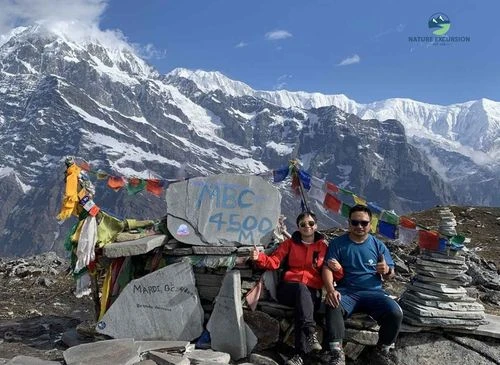
Combining the Mardi Trek with an additional hike to Annapurna Base Camp (ABC) is a smart way to see two different sides of the Himalayas in one trip. You begin by walking the quiet, narrow ridgeline of Mardi Himal to reach the high viewpoint at 4,500 m. After you descend back through the rhododendron forests, you do not return to Pokhara. Instead, you head west toward the village of Chhomrong to join the main trail that leads into the heart of the Annapurna Sanctuary.
This combined Mardi Himal with Annapurna Base Camp trekking route adds about 5 to 7 days to your trip, but saves you money on transport and permits since you only pay for your ACAP entry once. You should plan for a higher total budget when you merge these two treks. While your permit costs remain the same, you will spend more on daily meals and lodging for the extended duration.
The trail to ABC is more developed than Mardi Himal, so you will find more "luxury" options like bakeries and pizza, which can tempt you to spend more than your basic daily budget. However, we find that combining these routes is the most cost-effective way to reach the base of 8,000 m peaks while still enjoying the peaceful, off-the-beaten-path feel of the Mardi Himal ridge.
Mardi Himal Trek Package Cost vs. Independent Trekking
Choosing between a fixed package and a self-organized trek to Mardi Himal involves balancing your budget with your comfort and safety. In 2026, the most important factor to consider is that the Nepal Tourism Board now requires all foreign trekkers to hire a licensed guide for the Mardi Himal route. This means you can no longer trek completely alone; "independent" trekking now refers to hiring your own guide and paying for your food and rooms as you go, rather than buying a pre-planned bundle from an agency.
A trekking package offers you maximum convenience and financial certainty. When you book a package, we handle all your permits, transport, and teahouse bookings, which protects you from price hikes or "sold out" signs during the busy spring and autumn seasons. Independent trekking, however, gives you the flexibility to change your daily distance or stay an extra night in a village you like. While you might save money by managing your own food and room choices, you will spend more time bargaining with local lodge owners and managing the logistics of your guide's daily needs.
| Feature | Agency Package | Independent (Trek Guide Only) |
| Logistics | We manage all permits and bookings | You must secure permits and rooms |
| Cost Predictability | Single upfront price | Daily costs vary by elevation |
| Safety | Professional guide and backup included | You must hire a licensed guide |
| Flexibility | Set itinerary and pace | You decide your daily distance |
| Transport | Private jeep transfers included | You take local buses or arrange jeeps |
| Food & Rooms | Included in total price (Excluding stay in Kathmandu) | You pay cash at every teahouse |
| Equipment | Often includes sleeping bags/poles | You must buy or rent all gear |
Want a Hassle-Free Mardi Himal Trek?
Our local team can arrange your guide, permits, transport, accommodation, and meals in one package.
Best Time to Trek Mardi Himal and How the Season Affects Cost
The time of year you choose for your trek has the largest impact on your total expenses. Peak seasons in the Himalayas are spring (March to May) and autumn (September to November), when the weather is stable, and the views are clear. During these months, teahouses along the Mardi Himal ridge operate at full capacity, and you should expect to pay standard or premium rates for rooms and services. Flight prices from Kathmandu to Pokhara also rise by 20% to 35% during these high-demand windows.

Smart seasonal planning can help you reduce the cost of the Mardi Himal trek and save money if you are willing to face more challenging conditions. In the off-season months of winter (December to February) and the monsoon (June to August), many lodge owners offer discounts of 10% to 30% to attract hikers. While you can save significantly on accommodation and even some guide fees, you must weigh these savings against the risk of flight cancellations, blocked views, or snowy trails. Choosing the "shoulder" weeks at the very start or end of a peak season often provides the best balance of fair weather and lower costs.
Money-Saving Tips: How to Trek Mardi Himal on a Budget
You do not need a big budget to trek through the Annapurna region if you make smart choices before you leave Pokhara. By focusing on local options and group savings, you can keep your total expenses low while still enjoying the full Himalayan experience.
Group Trekking
The easiest way to lower your 2026/27 trek price is to travel with others. When you trek in a group of four or more, you split the cost of your licensed guide and private transport, which can save you up to USD 150 per person. Many agencies in Pokhara offer "group joins" options where you can meet fellow hikers and share the daily wage of a professional porter.
Off-Season Trek
If you are willing to trek in the winter (December to February) or during the monsoon (June to August), you can find the lowest rates for rooms and food. During these months, teahouses are nearly empty, and owners often offer "free" rooms if you agree to buy all your meals at their establishment. You can also negotiate lower daily rates with guides who have less work during these quiet months.
Rent Gears Instead of Buying
Buying new high-quality gear like down jackets or sleeping bags can cost hundreds of dollars, but you can rent them in Pokhara for just USD 2 to USD 4 per day. This is a great way to save money if you are not a regular hiker and do not want to invest in expensive equipment. Make sure to check the zippers and cleanliness of the gear before you leave the shop.
Carry your own snacks and water
Prices for bottled water and chocolate bars increase by 200% once you climb above Forest Camp. You can save at least USD 10 per day by bringing a reusable bottle and water purification tablets to treat tap water for free. Packing your own high-energy snacks from a supermarket in Pokhara also prevents you from paying high prices at the small teahouse shops along the ridge.
Plan Your Trek Without Budget Worries
Your budget should never be a barrier to seeing the high Himalayas, as the Mardi Himal Trek offers some of the best flexibility for your wallet. You have the power to control your spending by choosing between a full-service package and a guide-only trek, and by selecting the season that aligns with your financial goals.
Whether you opt for the comfort of a private jeep and high-end hotels or save money by using local buses and purification tablets, the ridge-top views and mountain air remain the same. By planning your expenses for permits, meals, and gear in advance, you can step onto the trail with total peace of mind.
Book your 2026/27 Mardi Himal Trek adventure today and secure your spot for one of the most underrated Mardi Himal Treks in Nepal.
Ready to See Mardi Himal for Yourself?
Let us know your dates, your group size, and we'll help you plan a Mardi Himal adventure that fits your budget.