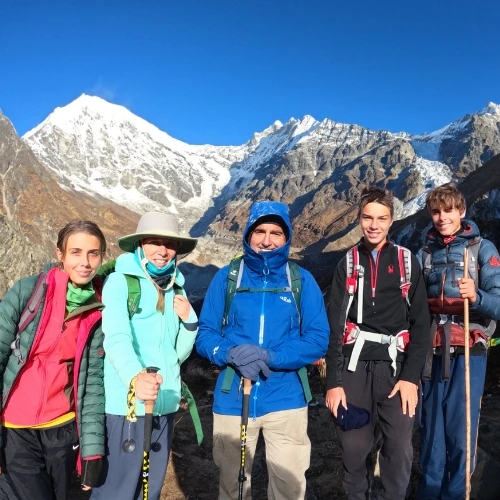
Climbing Mera Peak is a dream for many who want to stand above 6,000 m without needing elite technical skills. We help you reach this summit by organizing every detail of the trek and the climb. The Mera Peak climbing cost usually depends on your choice of service, but it offers a grand view of five of the world's tallest mountains for a fair price.
Quick Cost Summary
| Cost Category | Budget (USD) | Mid-Range (USD) | Guided Package |
| Permit Fees | USD 250 - USD 350 | USD 400 - USD 500 | Included |
| Flights (Round Trip) | USD 370 - USD 440 | USD 440 - USD 500 | Included |
| Accommodation | USD 5 - USD 10/night | USD 10 - USD 15/night | Included |
| Meals & Water | USD 25 - USD 35/day | USD 35 - USD 45/day | Included |
| Guide & Porter | USD 50 - USD 60/day | USD 70 - USD 90/day | Included |
| Total Estimate | USD 1,800 - USD 2,200 | USD 2,300 - USD 3,000 | USD 2,500 - USD 3,500 |
Planning Your Mera Peak Climbing Budget?
Want to know the total cost of climbing Mera Peak? Talk to our team for cost details, permits, equipment, accommodation, guide fees, and help planning your climb.
Permit and Entry Fees
For the iconic Mera Peak Climbing, every climber must hold the correct legal documents before entering the Hinku Valley for their expedition. The trekking agency handles these applications for you, but the fees are set by the Nepal Mountaineering Association (NMA) and local authorities. These costs change based on the season you choose to climb.
Mera Peak Climbing Permit
During March, April, and May, the Mera Peak Climbing permit costs USD 350 per person. In the autumn months of September, October, and November, the price is USD 175. If you climb during the winter or summer, the cost is only USD 175. The NMA issues this permit, and the price drops significantly outside of the peak spring season. Skipping this permit is illegal and can lead to heavy fines or being turned back by mountain patrols.
Makalu Barun National Park Entry Permit
Most of the trail stays within the Makalu Barun National Park. You must pay an entry fee of NPR 3,000 (roughly USD 25) at the park gate or in Kathmandu. This money supports protecting local wildlife and forests. We ensure this is paid so you do not face delays at the Lukla or Bung checkpoints.
TIMS and Local Rural Municipality Fee
The Trekkers’ Information Management System (TIMS) card is a mandatory safety tracking document that costs NPR 1,000 to 2,000 (USD 8-15). Additionally, the local government in the Khumbu and Hinku regions charges a local entry fee of NPR 2,000 (about USD 17). These fees fund local trail maintenance and emergency services for all trekkers in the area.
Note: Lately, the TIMS Card is being replaced by a local municipality entry permit.
How and Where to get Permits?
You can obtain these permits through your trekking agency in Kathmandu. One can issue them at the National Tourism Board or at the Sagarmatha National Park entry points. You have to submit your passport and photos, and pay the required fee.
Attempting to climb Mera Peak without the proper legal documents leads to serious trouble. Local authorities and park rangers actively check permits at various checkpoints in Lukla and along the trail to Khare. If you are caught without them, you face heavy fines that often double the original permit cost. In many cases, officials will cancel your trek immediately and escort you off the mountain.
Beyond the legal risks, climbing without a permit means you are not registered with the Himalayan Rescue Association. If an emergency happens at high altitude, coordinating a helicopter evacuation becomes nearly impossible because you lack the official tracking required by rescue services. Most travel insurance policies also become void if you are participating in an illegal climb.
![Mera Peak Climbing]() Most popular
Most popular - Length: 17 days
- Highest point: 6,476 m
- Grade: Strenuous
View detailed itinerary of Mera Peak Climbing - 17 DaysFrom US$2,419
Group price per person
1 pax US$2,419 2 pax US$2,269 3 - 5 pax US$2,169 6 - 10 pax US$2,099 11 - 16 pax US$2,060
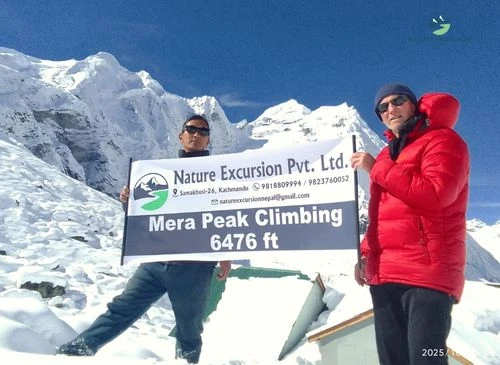
Getting to the Trail for Mera Peak Climb
Reaching the starting point of your climb involves choosing between a quick mountain flight or a rugged road journey. Most climbers prefer flying to Lukla or Phaplu to save time, but these flights depend entirely on clear weather. If clouds or high winds move in, planes cannot land on the short mountain runways. We recommend adding two cushion days to your schedule to handle these potential delays, especially during the busy spring and autumn months.
.jpg)
Similarly, choosing the overland route offers a more stable schedule and helps your body adjust to the elevation. While the drive from Kathmandu is long and bumpy, it removes the stress of flight cancellations. You will travel through terraced hills and small trailside towns that most tourists never see. This path is often the best choice if you want to ensure your expedition starts on time, regardless of the weather on the mountain. These are the options of transportation.
- Kathmandu to Phaplu overland: This drive covers about 270 km and typically takes 9 to 11 hours depending on road conditions.
- Phaplu flight Option: A 35-minute flight from Kathmandu is a shorter, quieter alternative to the Lukla route.
- Salleri or Lukla alternatives: Salleri is the main terminus for jeeps from the capital. During peak seasons, flights to Lukla often shift to Ramechhap airport to avoid traffic.
Accommodation Costs on the Mera Peak Trail
During the Mera Peak Expedition, your housing changes from village lodges to high-altitude tents. We ensure you have a comfortable place to rest each night. Understanding these costs helps you plan your budget for the Hinku Valley.
Accommodation Cost by Altitude
The cost for a bed in a teahouse starts low but rises as you climb higher. In lower villages like Phaplu or Paiya, a basic room costs between USD 5 and USD 10 per night. Once we reach Kothe at 3,600 m and Thaknak at 4,350 m, prices increase to around USD 10-15.
.jpg)
At Khare, which sits at 5,045 m, you should budget between USD 15 and USD 20 for a night. These prices usually stay low because the owners expect you to buy all your meals at their lodge. If you choose to eat elsewhere, the room rate might increase.
Accommodation Cost by Luxury
Most teahouses along the Mera Peak trail offer twin-sharing rooms with two separate beds. If you prefer a single room for more privacy, it usually costs an extra USD 3-5 per night in the lower regions. However, above 4,000 m, space becomes very limited.
During the busy spring and autumn seasons, teahouse owners may not offer single rooms at all. You might also need to prepare to share a room with a teammate in places like Thaknak and Khare to ensure everyone has a warm place to sleep.
Accommodation Cost at Camps
When you move from Khare to the Mera Peak Base Camp and then to High Camp at 5,780 m, you will switch from wooden lodges to insulated mountain tents. This part of the trip usually involves camping. The cost for the high camp stay is often included in the climbing package, covering the tent, foam mattresses, and all meals prepared by our kitchen crew.
Extra costs on the trail include hot showers, which are USD 3 to USD 7, and charging your phone or camera, which costs USD 2 to USD 5 per hour. We also suggest budgeting USD 5-10 per day for boiled drinking water or snacks.
Customize Your Mera Peak Climbing Plan
Have a specific budget, travel date, or climbing preference? Get a Mera Peak climbing plan tailored to your schedule, experience, preferred services, and budget.
Food and Water Costs During Mera Peak
Staying hydrated and well-fed is vital for a successful climb on this trekking peak. As you move higher into the Hinku Valley, the logistics of supplying become more difficult, which drives prices higher. We recommend budgeting USD 25-40 per day for meals and drinks to ensure you have enough energy for the summit.
Every lodge along your itinerary offers a variety of local and international dishes. The most reliable meal for your peak in Nepal is dal bhat, a traditional platter of lentil soup, rice, and vegetable curry. It’s the most budget-friendly option because it usually includes free refills of rice and lentils. In lower villages like Kothe, a plate of dal bhat costs around USD 6 to USD 9, while at higher elevations like Khare, it can reach USD 12 to USD 15. While western options such as pasta, pancakes, or pizza are available, they tend to be more expensive and harder for your body to digest as the altitude increases.
Staying hydrated is key to preventing altitude sickness during your long itinerary. Keep in mind that buying bottled water can be quite pricey and not very eco-friendly, with costs starting around USD 1 in Lukla and rising to USD 4 or USD 5 per liter in Khare. Instead, consider bringing a reusable bottle along with water purification tablets or a filter to save money. Many teahouses will offer a liter of boiled water for USD 2-4, a cozy way to warm up in the evenings.
Guide and Porter Costs
You will have a professional and experienced guide to lead you from Lukla through the remote Hinku Valley. Your guide holds a valid government license and has deep knowledge of high-altitude terrain. They manage all your logistics, including tea house bookings and park permits, so you can focus on the trail. Their expertise is vital for spotting early signs of altitude sickness and ensuring your safety during the long approach to Khare.
The daily rate for your licensed trekking guide in 2026 typically ranges from USD 30 to 50. This fee covers their salary, food, and accommodation. At Nature Excursion, we include these costs in your package price to ensure you have a smooth experience. Your climbing guide also acts as a bridge to the local Sherpa culture, helping you learn about the traditions of the mountain people you meet along the way.
Your porters are the backbone of every successful climbing expedition. They carry your heavy duffel bags and group gear, so you can trek with only a light daypack. We follow strict welfare guidelines to ensure your porters are well-equipped, insured, and carry safe weight limits. A porter's daily rate for your trip is usually between USD 20 and 35. We follow the industry standard of one porter for every two trekkers. This rule means your porter carries a maximum of 25 kg, with 12 kg allocated to your personal gear.
Gear and Equipment
Preparing for a trek and climb at 6,476 m involves a mix of standard trekking gear and technical climbing equipment. You can expect to spend between USD 100 and USD 200 on rentals if you choose to hire everything in Kathmandu or Khare.
If you prefer to buy new, high-quality gear, your budget should be closer to USD 500 or more for items like boots and layers. Since Mera Peak requires specialized safety equipment for glacier travel, your trekking agency can cover these costs by including the necessary equipment in our package. The gear and equipment you can choose also depend on the best time to climb Mera Peak.
Using the right climbing gear ensures your safety and comfort during the summit push. Proper climbing equipment, such as double-insulated boots and sharp crampons, is vital for your experience on the icy slopes. We recommend investing in high-quality personal clothing, such as thermal base layers and moisture-wicking socks. These items stay close to your skin and are better to own than rent for hygiene and fit.
What Nature Excursion provides
We want to make your journey easier and more affordable. Our package includes the most expensive and heavy items, so you do not have to carry them from home or pay high rental fees. This can save you over USD 150 in total gear costs.
Travel Insurance
Travel insurance is a non-negotiable part of your preparation for climbing the highest trekking peak in Nepal. Since the summit of Mera Peak reaches 6,476 m, standard travel policies will not provide enough coverage. Most basic plans stop at 3,000 m or 4,000 m, which is far below the elevation of our base camps. We require you to have a specialized policy that explicitly covers mountaineering and activities up to 6,500 m. This ensures you are protected during the final push to the summit, where the air is thin, and the risk of altitude sickness is higher.
.jpg)
Your policy must also include mandatory helicopter evacuation. In the remote Hinku Valley, there are no roads, and the only way to reach a hospital in Kathmandu during a medical emergency is by helicopter. The cost of these policies varies based on your age, trip length, and home country. Usually, the cost depends on the level of medical coverage you choose, but you should look for a plan that covers at least USD 100,000 in medical expenses. Having the right insurance lets you focus on reaching the summit of Mera.
Have Questions About Your Trek?
Get quick answers about routes, costs, permits, difficulty, or travel dates from our trekking team before you book.
Conclusion
Climbing Mera Peak is a significant investment of time and money, but it offers an accessible route to a 6,476 m summit. By understanding the costs for permits, transport, and mountain logistics, you can budget effectively for your 2026 expedition. If you found our guide helpful, you can download your Mera Peak Climb itinerary for better planning.


.webp)

.webp)
.webp)