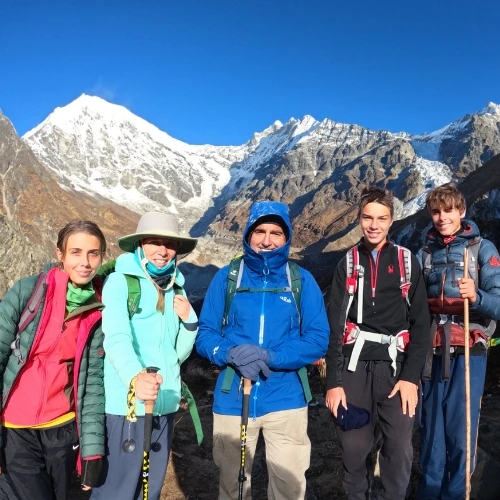
The Nar Phu Valley Trek cost is the full price of getting into a restricted Himalayan valley, walking it, and getting out again. For travelers in 2026, that means a guided package in the USD 1,000 to 1,800 range for 9 to 15 days, or a self-built budget of roughly USD 80 to 140 per walking day once you add the restricted-area permit, a licensed guide (required), food, rooms, and jeeps.
A standard 15-day guided itinerary that also crosses Thorong La often sits around USD 1,500 to 1,600 with one operator. A shorter 9-day valley-only itinerary is often advertised under USD 1,100. Those are package prices, not the only way to count the cost. This article explains the cost in general, then puts a number on each factor.
Nar Phu Valley Trek cost at a glance (2026)
These are typical ranges, not a quote. Season, group size, and whether you add Thorong La all affect the total.
Style
Days on the trail
What you usually pay
What that number includes
Short guided Nar Phu trek
9 days
About USD 850 to 1,100
Guide, RAP, ACAP, lodges, meals, jeep in and out
Standard guided Nar Phu Valley trek with Thorong La
14 to 16 days
About USD 1,400 to 1,800
The above plus extra days, High Camp, and the Jomsom flight or jeep out
Private / luxury Nar Phu Valley Trek
12 to 16 days
About USD 1,800 to 2,500+
Private jeep, better rooms where they exist, extra staff
Independent-style daily spend
per walking day
About USD 80 to 140
RAP share, guide, food, room, local jeeps. You still cannot enter without a guide and RAP.
At Nature Excursion, the cost of the 15 days Nar Phu Valley Trek that crosses Thorong La Pass is USD 1,150 per person for a group of 11-16 people and costs USD 1,572 for 1 person in a group. Likewise, the short 9 days Nar Phu Valley trek package costs USD 834 per person for a group of 11-16 people and costs USD 1,404 for a group of 1 person.
Have Questions About Nar Phu Trek Cost?
Not sure about permits, guide fees, transportation, accommodation, meals, or extra expenses? Talk to our team for a clear cost estimate and help planning your Nar Phu Valley adventure.
It is mandatory to obtain Nar Phu Valley Trek permits. Nar Phu is a restricted area, so trekkers cannot enter independently or purchase the permit at the trailhead. A registered trekking agency must arrange the Restricted Area Permit (RAP) through the Department of Immigration. The trek also requires an Annapurna Conservation Area Permit (ACAP) because part of the route lies inside the Annapurna Conservation Area.
Restricted Area Permit (RAP)
This is the special permit for the Nar Phu Valley Trek. The Nar Phu Restricted Area Permit is charged per person according to the number of days spent inside the restricted valley.
The commonly published 2026 Restricted Area Permit cost is:
Season
First 7 days (per person)
Each extra day
September to November (peak season)
USD 100
USD 15
December to August (off-season)
USD 75
USD 10
The permit period does not necessarily match the full length of your trek. RAP covers the days you are inside the restricted valley (Koto to Kang La Pass), not the Kathmandu hotel night or the Thorong La exit days after you rejoin the Annapurna Circuit Trek trail.
For example, a 15-day itinerary may include only 7 to 10 days inside the restricted Nar Phu section. The cost will be:
8 RAP days: USD 100 + USD 15 = USD 115
10 RAP days: USD 100 + 3 × USD 15 = USD 145
Annapurna Conservation Area Permit (ACAP)
ACAP is issued for the Annapurna Conservation Area. Foreign nationals pay NPR 3,000 for ACAP per person per entry. SAARC nationals generally pay a lower fee: NPR 1,000 per person per entry. ACAP is checked at posts such as Dharapani and later along the circuit. On a packaged trek, the agency buys it for you. It is the lowest official permit on this trip.
Is a TIMS card required for Nar Phu Valley Trek?
Trekkers' Information Management System (TIMS) card isn't necessary for the Nar Phu Valley route. RAP replaces TIMS for this valley. However, the TIMS requirements can change and may depend on the current rules for the route and the way your agency registers the trek. Some current trekking guidance says Nar Phu trekkers need RAP and ACAP without a separate TIMS charge, while other Annapurna guidance lists TIMS separately.
What the two Nar Phu Valley permits cost together
Item
Typical 2026 figure
Notes
RAP, 8 days during peak season
USD 115
Highest official paper
RAP, 8 days during off season
USD 85
Same route, cheaper calendar
ACAP
NPR 3,000 (~USD 25)
Lowest official paper
Permits total (peak, 8 RAP days)
About USD 140 to 145
Agency usually includes this in the package
Transportation cost
Transportation is another major part of the Nar Phu Valley Trek cost. The trail does not begin in Kathmandu, and most itineraries require road transport at the beginning and either a flight or jeep journey after reaching the Kali Gandaki Valley.
Transport section
Typical 2026 cost
What changes the price
Kathmandu airport pickup/drop
USD 15 to 30 one way if booked alone; often included
Hotel location, night arrival
Tourist bus Kathmandu to Besisahar
About USD 10 to 20
Cheap, slower, extra local jeep after Besisahar
Shared jeep Kathmandu toward Koto
About USD 25 to 40 per seat
The usual packaged option
Private jeep Kathmandu to Koto
About USD 200 to 300 per vehicle
Fastest way to raise the transport bill
Local jeep Besisahar to Chamje or Koto
About USD 15 to 25 per seat
Dusty road, landslides in monsoon
Jomsom to Pokhara flight
About USD 180 to 200 one way
Weather cancels; excess luggage is extra
Jeep Jomsom to Pokhara
About USD 25 to 40 per seat
Longer day, useful when flights stop
Pokhara to Kathmandu tourist bus
About USD 10 to 20
Night bus is cheaper and worse sleep
A private jeep quickly increases the transportation bill. The Jomsom to Pokhara flight can also represent a significant part of the package price. When comparing Nar Phu Trek packages, check whether the quotation includes Kathmandu to Chamje transport, the Jomsom to Pokhara flight or jeep, and Pokhara to Kathmandu transport. A lower package price may exclude one or more of these services.
Guide and porter cost
A licensed guide is not optional in Nar Phu. Immigration issues RAP only through an agency, and the guide carries the papers. A porter is also recommended because the trek includes long days, remote settlements, and high mountain passes. A guide and porter are two plans to consider for Nar Phu Valley Trek.
Staff
Typical daily rate (2026)
What that rate should cover
Licensed English-speaking guide
USD 25 to 35 per day
Salary, food, insurance, gear. Confirm this, not only the trekker-facing fee.
Porter
USD 20 to 25 per day
Two trekkers share one porter. About 10 kg per person.
Assistant guide
Added for groups of 6 or more
Same agency rule as most Nepal operators
Two trekkers commonly share one porter, with the porter carrying approximately 10 kg per person. For two trekkers on a 15-day Nar Phu Valley itinerary, a simple planning example would be:
Guide: 15 × USD 30 = USD 450
Porter: 15 × USD 22 = USD 330
Total staff cost: USD 780
Approximate share per trekker: USD 390
These costs are normally included in the trekking package rather than paid separately each day. Tipping is generally separate. A common range is USD 8 to 12 per day for the guide and USD 6 to 10 per day for the porter, paid at the end, as a thank-you, not as a hidden fee. Budget USD 150 to 250 per person if you tip on a 15-day trip.
Accommodation and food cost
accommodation on nar phu
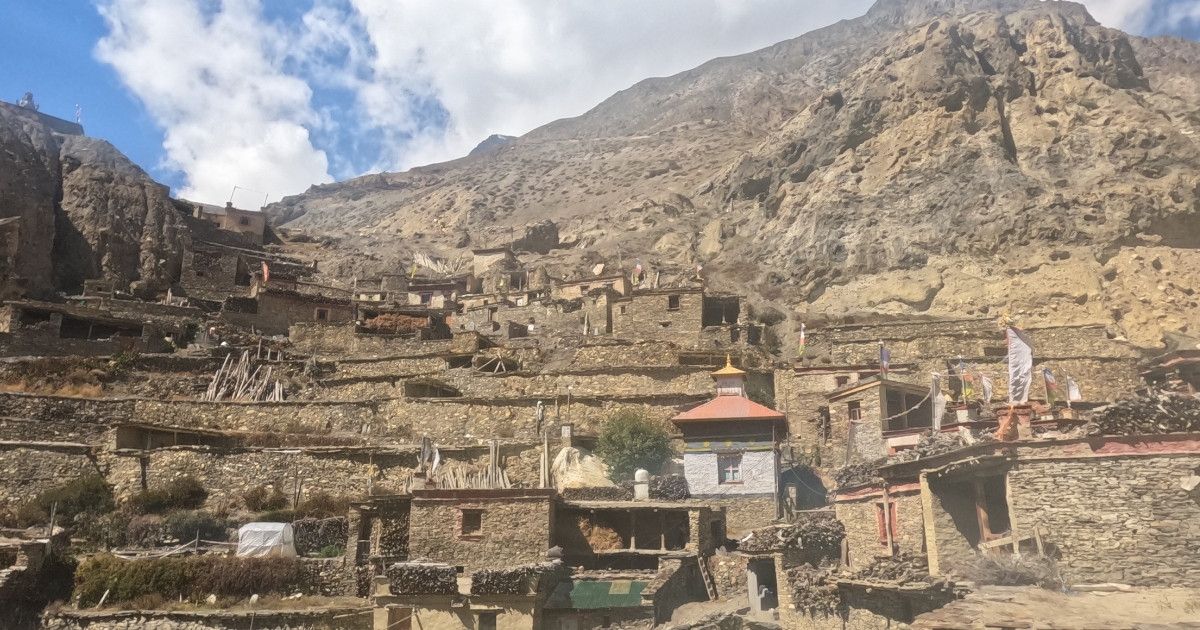
Accommodation and food in Nar Phu Valley are another cost factor. Nar and Phu are small villages. You get a teahouse room and simple meals, not a hotel menu. Facilities become limited and more expensive as you go higher.
Item
Lower trail (Chamje, Dharapani, Koto)
Nar / Phu / High Camp
Twin room
About USD 5 to 12 (sometimes “free” with meals)
About USD 8 to 20
Breakfast
About USD 4 to 7
About USD 5 to 8
Lunch or dinner (dal bhat)
About USD 5 to 8
About USD 6 to 10
Bottled water (avoid if you can treat water)
About USD 1 to 2
About USD 2 to 4
Hot shower
About USD 3 to 5
Often unavailable or USD 5+
Device charging
About USD 2 to 4
About USD 3 to 5
Wi-Fi (where it exists)
About USD 2 to 4
Slow or none
Worked example, 14 trek nights, mid-range meals, no bottled water:
Room + three meals ≈ USD 28 to 40 per day. Fourteen days ≈ USD 390 to 560 per person.
That is why lodges and meals sit in the highest bucket with staff. The room itself is cheap. The three plates a day are not.
Tea, chocolate, and beer are the quiet extras. A beer in Manang can be USD 5 to 7. Ten “small” snacks can add USD 40.
Other Nar Phu Valley Trek costs people forget
Some expenses are often excluded from trekking packages. These include:
Travel insurance with helicopter rescue to 5,500 m
USD 80 to 150 for two weeks
Kang La is about 5,320 m. Thorong La is 5,416 m. A policy that stops at 4,000 m is the wrong policy.
Kathmandu hotel before and after
USD 20 to 80 per night
Not included in most trek packages.
Sleeping bag / down jacket hire
Often free from the agency, or USD 20 to 40 for the trip
Return them.
Personal gear you still need
USD 50 to 200 if you arrive under-equipped
Boots, warm layers, headlamp.
Emergency evacuation excess
Depends on the policy
The agency helps. Your insurer pays.
Because the Nar Phu route crosses high passes, your travel insurance should cover trekking at the maximum elevation on your itinerary and emergency helicopter evacuation. Kang La is approximately 5,320 m, while Thorong La is approximately 5,416 m. Check the policy wording carefully rather than relying only on the phrase “helicopter rescue.”
Season has a major effect on the Nar Phu Valley Trek cost. Permit rates, lodge availability, transport conditions, guide demand, and weather-related delays can all change the final price.
Autumn: September to November
September to November is one of the best times for Nar Phu Valley trekking. The weather is generally stable, but this is also the higher RAP season. The permit costs USD 100 per person for the first seven days, followed by USD 15 for each additional day.
Lodges and transport may be busier during this period, especially around the Annapurna Circuit section. Booking your guide, accommodation, and flights early can help you avoid last-minute price increases.
Spring: March to May
March to May is another popular trekking season. The weather is usually suitable for trekking, and demand for guides, accommodation, and transport can be high.
Although March to May falls under the lower December to August RAP schedule, the total trek may still be expensive because of strong seasonal demand. Compare the full package price rather than looking only at the permit fee.
Winter: December to February
Winter uses the lower RAP rate: USD 75 per person for the first seven days and USD 10 for each additional day.
However, a lower permit does not always mean a cheaper trek overall. Some lodges in Nar and Phu may close or operate with limited menus. Snow, freezing temperatures, and difficult pass conditions can also cause delays or itinerary changes.
Winter increases the difficulty of the Nar Phu Valley trek, so this season suits experienced trekkers who are prepared for cold conditions, but it is not always the best option for travelers seeking the lowest predictable total cost.
Monsoon: June to August
June to August also falls under the lower RAP schedule, but the approach roads can be affected by heavy rain, landslides, and road closures. Delays may require an additional night in Besisahar, Dharapani, or another roadside settlement.
The permit may be cheaper during this period, but extra jeep charges, delays, and accommodation can reduce or eliminate the savings. Travelers choosing a monsoon departure should keep a flexible itinerary and emergency budget.
Group size and per-person cost of Nar Phu Valley trek
Group size strongly affects the per-person price. The RAP and ACAP charges remain the same, but guide, porter, and private transport costs are divided among the trekkers.
Group size
What happens to the per-person price
1 trekker
You pay the whole guide and the whole jeep. This is the most expensive way.
2 trekkers
You share one porter and one jeep seat pattern. This is the usual sweet spot.
4 to 8 trekkers
Guide, porter, and transport costs are spread across more people. Per-person package often drops by USD 100 to 250.
8+
An assistant guide may be required, reducing part of the group saving
15-day vs 9-day Nar Phu trek itinerary cost
A 9-day Nar Phu itinerary and a 15-day Nar Phu itinerary are different products, not simply cheaper and more expensive versions of the same trek.
The 15-day itinerary route continues over Kang La into Ngawal and Manang, then over Thorong La to Muktinath and Jomsom. You pay more days of food, more guide and porter days, more RAP days, a High Camp night, and transport from Jomsom, often including a Jomsom flight to Pokhara.
On the other hand, the 9-day route stays in the valley and returns the way you came, or exits earlier. You pay fewer lodge nights, and you skip the Jomsom to Pokhara flight. That is why a 9-day page can sit under USD 1,050 while a 15-day page sits near USD 1,572.
Neither number is “the” Nar Phu Valley Trek cost. If you want to visit only the Nar Phu region, compare shorter valley itineraries. If you want to combine Nar Phu with Thorong La and the Annapurna Circuit, compare 15-day packages.
A full 15-day cost walkthrough
The following is a general planning example for two trekkers traveling in the middle of the popular season. It assumes a shared porter, shared transport, simple teahouse accommodation, regular meals, and treated drinking water.
Factor
Per person
Rank
RAP (8 days, peak)
USD 115
Highest official paper
ACAP
~USD 25
Lowest official paper
Guide share (15 days at USD 30, split by 2)
USD 225
Part of the largest bucket
Porter share (15 days at USD 22, split by 2)
USD 165
Part of the largest bucket
Lodges and meals (14 nights)
USD 450
Part of the largest bucket
Shared jeeps + Jomsom flight + buses
USD 180
Second bucket
Insurance
USD 100
Your own cost
Nepal visa (30 days)
USD 50
Your own cost
Tips
USD 180
Your own cost
Field extras (shower, charge, snacks)
USD 50
Lowest daily extras
Total
About USD 1,540
Matches a mid-range 15-day package
This is a planning estimate rather than a fixed package price. It includes expenses that many agencies exclude, such as visa fees, insurance, tips, and personal extras. A package price may appear lower because some of these costs are paid separately.
Plan Your Nar Phu Trek Within Your Budget
Have a specific budget or travel style in mind? Get a Nar Phu Valley trek plan tailored to your group size, travel dates, preferred comfort, and trekking needs.
The following example assumes two trekkers traveling during the lower RAP season, sharing one porter and transport, staying in basic teahouses, and eating standard local meals. It includes common trekking costs but excludes international flights and Kathmandu hotel nights.
Factor
Per-person estimate
Rank
RAP, peak season
USD 100
Highest official permit
ACAP
~ USD 25
Lowest major permit
Guide share, 9 days at USD 30 split by 2
USD 135
Part of the largest bucket
Porter share, 9 days at USD 22 split by 2
USD 99
Part of the largest bucket
Lodges and meals, 7 nights
About USD 225
Part of the largest bucket
Shared jeeps and buses
About USD 120
Main transport cost
Travel insurance
USD 100
Your own cost
Nepal visa, 30 days
USD 50
Your own cost
Tips
USD 110
Your own cost
Field extras: showers, charging, and snacks
USD 40
Personal spending
Estimated total
About USD 1,004
General planning estimate
This is a planning example rather than a fixed agency quotation. The total can increase if you use private transport, stay in more expensive lodges, add an acclimatization day, or travel during a period of road or weather disruption.
How to keep the Nar Phu Valley Trek cost down
Travel with at least one other trekker so you can share guide, porter, and transport costs.
Compare fixed-group departures with private treks.
Walk in December to March or June to August only if you accept cold or rain. RAP is cheaper then.
Use a tourist bus on the main road sections and reserve jeeps for rougher sections.
Eat local dal bhat instead of ordering imported or Western meals frequently.
Treat drinking water instead of buying bottled water at every stop.
Limit beer, snacks, hot showers, Wi-Fi, and device charging.
Hire a sleeping bag or down jacket from the agency if you do not trek regularly.
Do not reduce costs by traveling without the required guide, permits, or appropriate high-altitude insurance. Those three are the difference between a remote valley and a rescue bill.
Frequently asked questions
How much does the Nar Phu Valley Trek cost in 2026?
A guided Nar Phu trek costs USD 1,000 to 1,800 for 9 to 15 days. A short valley trek is often near USD 1,000. A 15-day trek that adds Thorong La is often near USD 1,500 to 1,600. Independent-style daily spend is about USD 80 to 140, and you still need a guide and RAP.
How much is the permit for Nar Phu?
The Restricted Area Permit is USD 100 for the first 7 days in September to November, then USD 15 per extra day. From December to August, it is USD 75, then USD 10 per day. ACAP is NPR 3,000 for foreign nationals and NPR 1,000 for SAARC nationals.
Which factor makes the Nar Phu Valley Trek cost the most?
Guide and porter services, accommodation, meals, and transportation usually form the largest combined expense. Among individual official permits, the RAP is the most expensive.
Which factor makes the Nar Phu Valley Trek cost the least?
ACAP is the lowest official permit, about NPR 3,000 and NPR 1,000. Among daily extras, treated water and skipping bottled drinks are the cheapest habits. A tourist-bus seat on the sealed road is the cheapest transfer.
Is a guide required?
Absolutely. Nar Phu is a restricted area, and the RAP must be arranged through a registered trekking agency. A licensed guide is therefore a required part of the trek rather than an optional budget service.
How much do a guide and porter cost?
A licensed guide is about USD 25 to 35 per day. A porter is about USD 20 to 25 per day, usually shared by two people. On a 15-day trip, that is roughly USD 390 per person before tips.
How much are lodges and food per day?
Plan USD 25 to 40 per day on the lower trail and USD 30 to 50 in Nar, Phu, and High Camp if you eat three meals and take a simple room. The room is cheap. The meals are the cost.
How much is transport?
Shared jeep seats are about USD 25 to 40. A private jeep from Kathmandu can be USD 150 to 250 for the vehicle. The Jomsom to Pokhara flight is about USD 100 to 150. This is the second-largest bucket after staff and lodges.
Why is a 15-day trip more expensive than a 9-day trip?
A 15-day trek includes more guide days, porter days, meals, lodge nights, RAP days, and transport. It may also include Kang La, Thorong La, Muktinath, and a Jomsom-Pokhara flight.
Does season change the price?
Yes. September to November has the highest RAP rate. Winter and monsoon have a lower RAP rate, but cold weather, lodge closures, landslides, and transport delays can create additional costs.
What extras sit outside a package?
Common exclusions include Nepal visa fees, travel insurance, Kathmandu accommodation, personal drinks, laundry, hot showers, charging, Wi-Fi, tips, personal gear, and extra accommodation caused by transport delays.
How much should I budget for tips?
For a 15-day trek, many travelers budget approximately USD 150 to 250 per person for guide and porter tips. The amount depends on service quality, group size, and personal preference.
Can I do Nar Phu on a tight budget?
You can reduce the cost by joining a group, choosing a shorter itinerary, traveling in a less expensive season, sharing a porter, eating local meals, and limiting personal extras. You should not remove the required guide, permits, or suitable high-altitude insurance. An honest floor for a short guided trip is still near USD 850 to 1,000, plus visa and insurance.
Is Nar Phu more expensive than Annapurna Base Camp?
Nar Phu is often more expensive per day than the Annapurna Base Camp trek in the Annapurna region because Nar Phu requires a Restricted Area Permit, registered-agency arrangements, and a guide. The final difference depends on the length, group size, transport, and inclusions of each package.
Written by
Karan GurungExecutive Director
Hello, I’m Karan Gurung, a passionate mountaineer from Nepal with over 15 years of experience exploring the majestic peaks of the Himalayas. I grew up surrounded by towering mountains; my love for adventure and the thrill of high-altitude trekking have shaped my life to the next level. For me, the mountains are more than just a place to trek, and I believe they are a source of inspiration, a connection to nature, and a way of relaxing your mind and soul with peace. I’m always here to share my experiences, travel tips, and stories from my adventures to help others appreciate the beauty of the Himalayas in Nepal through articles and blogs. Whether you're an experienced trekker or someone new to the mountains, I’m here to guide and inspire you for your first or next adventure in Nepal!
The main autumn treks in Nepal are Everest Base Camp, the Annapurna Circuit, Annapurna Base Camp, the Manaslu Circuit, Langtang Valley, and Mardi Hima...
To choose the best trekking company in Nepal, you must verify that the agency holds official registration with the Nepal Ministry of Culture, Tourism...
Sagarmatha National Park is one of Nepal’s most famous protected areas and the core of the Everest region. Located in the high Himalayas of Solukhumbu...







.webp)
.webp)