About Mera Peak Climb
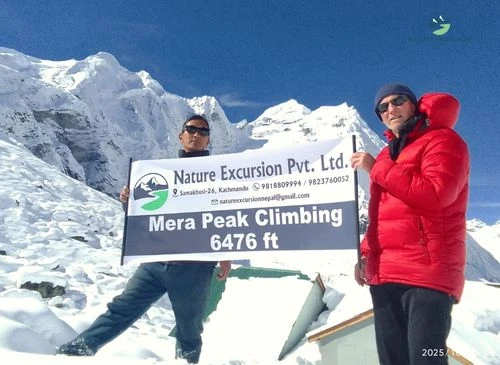
Mera Peak Climb is one of Nepal's highest trekking peaks, at 6,476 m. It is one of the most popular adventures for mountaineers and trekkers seeking a summit-climbing experience. This peak is located in the Mahalangur Himalaya, in Nepal's Solukhumbu district. Mera Peak is an ideal choice for trekkers who are looking for their first climbing adventure in the Himalayas.

Mera Peak has three summits: Mera South at 6,065 m, Mera Central at 6,461 m, and Mera North at 6,467 m. You will climb the highest summit at 6,476 m above sea level. The route follows broad snow slopes and open glacier terrain rather than steep technical faces. However, you need to be careful in areas with crevasses, and the climb can be more challenging after recent snowfall.
From the summit, you get one of the widest Himalayan views visible from any trekking peak, including Mount Everest (8,848.86 m), Kangchenjunga (8,586 m), Lhotse (8,516 m), Makalu (8,485 m), and Cho Oyu (8,201 m), along with many surrounding peaks in the Khumbu Himal Area. Success on Mera depends on how well you manage fatigue, altitude exposure, and multi-day energy output.
Before beginning your climbing journey, you must spend considerable time building leg strength, cardio, and overall physical stamina. Other than reaching the summit and majestic views of the surrounding mountains, you will also venture through Makalu-Barun National Park, which makes the Mera Peak climb quite special.
Duration:17 DaysStart fromUSD 2600USD 2419
About Island Peak Climb
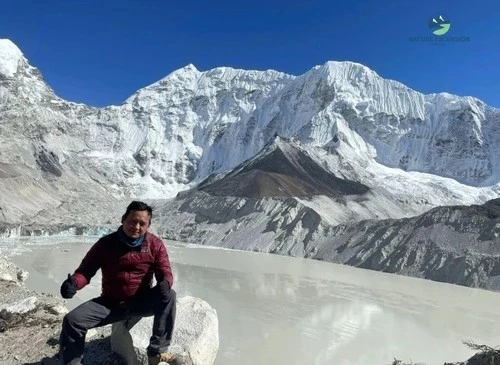
Island Peak Climb is a popular trekking and climbing adventure in Nepal. It combines the classic Everest Base Camp trek to Dingboche, then branches off with a climb of Island Peak (Imja Tse) at the end. This peak stands at 6,189 m and is located in the Sagarmatha National Park. It is surrounded by tall mountains and was named for its resemblance to an island in a sea of ice when seen from Dingboche.
Island Peak is often chosen by trekkers who want structured exposure to glacier rope systems and fixed-line climbing. While the trekking portion follows well-established Everest Base Camp trails through Sherpa villages, monasteries, and alpine landscapes, the final summit push requires glacier travel, fixed ropes, and basic climbing techniques.
The Mera Peak climbing route becomes more exposed and equipment-dependent near the headwall and summit ridge. That makes it slightly more technical than other beginner trekking peaks. That said, it is important to have previous trekking experience and to be in good physical shape for a safe and enjoyable experience.
Beyond technical climbing experience, the Island Peak climb also offers another major highlight. The route consistently places you beneath iconic Khumbu giants, keeping morale high on long climbing days. You are rewarded with views of Mount Everest, Lhotse, Nuptse, Ama Dablam, and Makalu. Beyond the summit experience, the climb offers cultural immersion in the Khumbu region, passing through iconic locations such as Namche Bazaar, Tengboche Monastery, and Dingboche.
Need Help Choosing Between Mera and Island Peak?
Not sure which peak matches your fitness, experience, and climbing goals? Talk to our team about altitude, technical difficulty, permits, preparation, cost, and the right peak for you.
Mera Peak Vs Island Peak – Comparison Table
Aspect | Island Peak | Mera Peak |
Location | Khumbu Region | Hinku Valley |
Elevation | 6,189 m | 6,476 m |
Duration | 17 days | 16 days |
Difficulty | Moderate. Need to use crampons, an ice axe, and some rope sections | Less technical. Involves trekking with glacier crossings |
Challenges | Glacier crossing with crevasses, headwall | high-altitude, rugged terrains |
Base Camp Accessibility | Island Peak Base Camp via Lobuche, Dingboche | Khare Base Camp via Hinku Valley |
Popularity | More popular and busier | Less crowded, remote |
| Best For | Climbers who want to gain technical experience | Summit-seeking trekkers at high elevations |
Mera Peak vs Island Peak: Difficulty & Technical Differences
Mera Peak challenges you more with altitude and endurance than with technical climbing skills. Much of the challenge comes from sustained exposure above 5,500 m, where oxygen levels drop to nearly half of those at sea level. Furthermore, the summit push, which is long and exhausting, further complicates the challenge. You must cross glaciers and stay alert for hidden crevasses. To handle cold, wind, and fatigue, you also need strong mental focus. Basic knowledge of crampon use and glacier travel is usually enough for most climbers. The climb demands strong physical endurance, often more than many trekking peaks, but the technical difficulty remains low.

Island Peak is a technical peak that requires more than your ability to survive at high altitude. Efficient movement on fixed lines and secure front-point crampon technique are key to summit success. Furthermore, knowing how to use a jumar with fixed ropes will help you move safely on steep snow and slippery ice slopes. The summit day of the Island Peak climb is quite long and demanding, especially the hardest part of the headwall. Here, you have to climb fixed ropes on slopes that are 45 to 50 degrees steep. These steep sections need focus and good technique. Experienced climbers usually handle them well, but first-time climbers often find them difficult.
Which is Easier to Climb, Island Peak or Mera Peak?
Both Mera Peak and Island Peak are achievable and do not require advanced mountaineering skills. They are commonly used as progression climbs. Mera Peak is generally easier to climb than Island Peak. What makes Mera Peak slightly easier is that the route to the summit generally follows predictable glacier terrain with fewer technical obstacles until you reach the summit.
Conversely, although Mera Peak's summit is slightly higher than Island Peak's, Island Peak's climb is much more difficult. You will face more rocky ridges and an icy path to the top during the Island Peak climb, and there is a risk of icefalls along the way as well, which makes the Imja Tse climb quite tough compared to Mera Peak. Furthermore, there are steeper ice climbs and many challenging sections, such as the headwall. There are a few crevasses, and you may need equipment such as trekking poles, ropes, and, in some cases, crampons.
Nonetheless, climbing both of these trekking peaks can be misleadingly seen as easy, but they actually require hard work and determination.
Route and Trekking Experience Comparison
The Mera Peak climb follows the Everest Trail at first, but you leave it early from Lukla and follow the Hinku Valley route. You will pass through forests, remote villages, and reach the section of Makalu Barun National Park. The Hinku Valley approach gives a true expedition approach feel compared to busier Everest corridors, exploring the wilder side of Khumbu. Before reaching the summit, you will cross high passes like Zatrwa La and walk long stretches beside rivers and glaciers. The trek experience is calm and peaceful, with fewer trekkers and simple teahouses.
Island Peak lies along the classic EBC trail, passing through Sherpa villages like Namche and Tengboche. You trek in Sagarmatha National Park, crossing suspension bridges over the Dudh Koshi River while enjoying views of mountains like Ama Dablam and Lhotse. You stay in teahouses and meet other trekkers. It provides frequent access to established trekking infrastructure and Sherpa heritage sites, with monasteries, cafes, and museums along the way. The final segment leads into the Imja Valley, transitioning from trekking to climbing near Chhukung and base camp.
Island Peak offers a mix of social trekking and technical climbing, making it great for those seeking both teamwork and challenge. Meanwhile, Mera Peak offers quietness and endurance, appealing to climbers who prefer fewer crowds and longer journeys in rugged terrain. The key difference lies in the trekking experience: Island Peak is busier and more technical, while Mera Peak is more remote and physically demanding.
Not Sure Whether to Climb Mera Peak or Island Peak?
Choosing between Mera Peak and Island Peak? Get a climbing plan tailored to your fitness level, climbing experience, preferred difficulty, available time, and summit goals.
Fitness, Training, and Experience Required
Mera Peak is physically demanding, whereas Island Peak is technically challenging. For Mera Peak, you need the capacity to sustain steady effort for 6–10 hours at high altitude. In order to handle these tough trek days, along with even tougher summit days, you need proper training and preparation. First, you should complete long hikes with a full backpack. You can train your body by climbing stairs, doing steady aerobic workouts, and building stamina.
When it comes to Mera Peak, physical strength is essential rather than technical climbing. However, you need a basic understanding of crampon use and how to hike on icy glaciers to ensure your Mera Peak experience goes smoothly. Although prior trekking experience is helpful, you can still successfully trek Mera Peak with good physical fitness.
On the other hand, regarding Island Peak, you need to be both physically fit and know how to use climbing gear. You must be confident using an ice axe, crampons, and a harness. The best way to improve technically in climbing is to gain experience or practice. Along the Island Peak summit trail, you will trek daily for a few hours. Hence, not only do you need technical know-how for climbing and the use of climbing gear, but you must also be physically fit and have good stamina.
You should train to improve your core stability, strength, and rope techniques before beginning your Island Peak climb. You can either practice on smaller peaks or can also take a basic mountaineering course if you don’t have the required experience. For Island Peak, good stamina is important, but technical confidence is essential.
Duration:16 DaysStart fromUSD 2500USD 2295based on 1 review
Conclusion: Which One Should You Choose?
Both Mera and Island Peak are excellent first Himalayan climbing peaks and suit different types of climbers.
Choose Mera Peak:
If you're fit and prefer a steady climb without technical challenges, choose Mera Peak. It offers a simple glacier trek with stunning views of major peaks and is located in the less crowded Hinku Valley.
Choose Island Peak:
If you're looking to develop mountaineering skills for future climbs, Island Peak is the better option. It includes fixed ropes, steep sections, and hands-on training in a scenic Everest environment.