Quick Overview of the Upper Mustang Permit
The Upper Mustang region of Nepal (north of Kagbeni, including Lo Manthang, Chhoser, Tsarang, and Dhakmar) is designated as a restricted border region by Nepal’s Department of Immigration.
To enter, every non‑Nepali traveler needs different permits and must follow rules, which include:
- Upper Mustang Restricted Area Permit (RAP): It’s a special permit for the controlled zone.
- Annapurna Conservation Area Permit (ACAP): Required because the trekking route passes through the Annapurna Conservation Area.
- Licensed trekking guide: Mandatory for all foreign trekkers; you cannot enter the restricted area without a registered guide. What changed in 2026 is that one foreign trekker can now hold the RAP alone, instead of the old minimum of 2 trekkers per permit rule.
- Application: Only a registered Nepal trekking agency can apply for the Restricted Area Permit.
Need Help With Your Permit?
Not sure which permits you need for Upper Mustang? Talk to our trekking team for clear permit requirements, costs, and booking guidance.
Why is Upper Mustang Classified as a Restricted Area
Upper Mustang is classified as a restricted area because it borders the Tibet Autonomous Region via the high Korala Pass and preserves a former Himalayan kingdom with sensitive religious sites and strategic terrain. Also, the region is a high-altitude desert with limited water resources and a fragile ecosystem that cannot handle mass tourism.
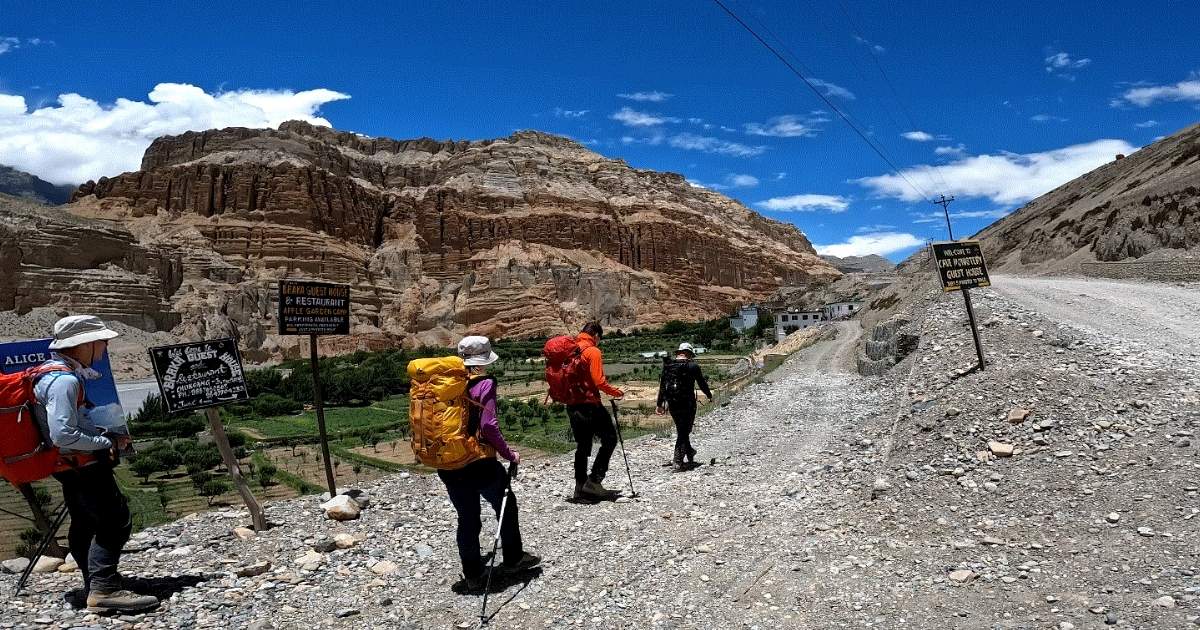
The Upper Mustang region was closed to foreign trekkers until 1992, but later opened under a special permit system. Today, the government of Nepal continues to control access through permits and checkpoints rather than a single border post to protect culture, environment, and security. Permit income supports monastery maintenance, heritage restoration, and local cultural projects, so the living culture you see on the trail can survive and adapt instead of being damaged by uncontrolled tourism.
The RAP boundary begins just north of Kagbeni village. The restricted area covers Baragung Mukti Chetra Rural Municipality and Lo‑Gekar Damodar Kunda Rural Municipality, including the Lo Manthang walled city and surrounding valleys. This includes places like Lo Manthang, Chhoser, Tsarang, and Dhakmar.
Lower Mustang area, like Jomsom, Marpha, Kagbeni, Tatopani, and the standard Annapurna Circuit route south of Kagbeni, does not require a Restricted Area Permit. In these areas, you only need the standard Annapurna Conservation Area Permit (ACAP), which removes the common confusion between the Mustang district and the Upper Mustang restricted zone.
What Permits are Required for the Upper Mustang Trek?
The permits required for Upper Mustang trek are Upper Mustang Restricted Area Permit (RAP) and the Annapurna Conservation Area Permit (ACAP). RAP controls entry into the sensitive border zone, while ACAP covers your travel inside the wider Annapurna Conservation Area, including Lower Mustang.
Upper Mustang Restricted Area Permit (RAP)
The Upper Mustang Restricted Area permit allows you to enter the restricted zone north of Kagbeni, which includes Chele, Ghami, Tsarang, Lo Manthang, Chhoser, Dhakmar, and nearby villages. Without RAP, you cannot legally enter Upper Mustang or cross the checkpoint at Kagbeni, even if you already hold ACAP.
The permit is issued only through a registered Nepali trekking agency at the Department of Immigration in Kathmandu (Kalikasthan) or Pokhara. It is linked to your guide and the exact number of days inside Upper Mustang. The RAP helps authorities know who is entering the zone, which route they follow, and when they exit, which is important for both security and rescue if something goes wrong.
Annapurna Conservation Area Permit (ACAP)
Upper Mustang lies within the Annapurna Conservation Area, so ACAP is compulsory in addition to the RAP. This permit is a one‑time fee for your whole trip in Annapurna and is checked in the Lower Mustang areas, such as Jomsom, Marpha, Kagbeni, and Muktinath.
Its purpose is to fund conservation work, trail repair, and local projects across Annapurna, not just in Mustang. Your agency will usually arrange ACAP for you together with the RAP, so you don’t have to visit offices yourself. The National Trust for Nature Conservation (NTNC) and the Nepal Tourism Board (NTB) offices in Kathmandu or Pokhara distribute this permit.
Are TIMS Cards Required for Upper Mustang?
TIMS (Trekkers Information Management System) registration in 2026 is generally included in your Upper Mustang permit package and is still required in the system for foreigners. But you do not apply for it separately if you trek through a registered agency. In other words, most Upper Mustang trekkers never personally fill out any TIMS form.
For restricted areas like Upper Mustang, TIMS works as a supporting registration layer behind the scenes. It helps maintain a record of trekkers for safety and statistical purposes, and for search‑and‑rescue if needed, while the RAP serves as the main legal permit to enter the zone. Your agency usually includes any TIMS‑related registration in its service. You may see a small amount listed under “TIMS/registration”, or it may simply be bundled into the permit handling fee.
Duration:15 DaysStart fromUSD 1950USD 1750based on 1 review
Do Jeep and Motorcycle Tours Need the Same Permits?
Yes, Jeep and motorcycle tours need exactly the same permits as trekkers: the Upper Mustang Restricted Area Permit (RAP) plus ACAP. The rules focus on where you go and how long you stay in the restricted zone, not on whether you walk or ride.
The RAP fee is always charged per person, per day you spend north of Kagbeni inside the restricted area. Thus, if you join a 4‑day jeep tour to Lo Manthang, you pay RAP for 4 days, just like a trekker spending the same number of days there. Your guide accompanies you in the vehicle, and you still pass through the same checkpoints.
The ACAP permit remains mandatory for all visitors crossing the Annapurna Conservation Area, including overland jeep and motorbike travelers. Even if you only trek a little and drive most of the way, you still use the same roads, trails, and village services in Lower Mustang, so you need ACAP as part of your trip.
How Much Does the Upper Mustang Permit Cost in 2026?
In 2026, the Upper Mustang Restricted Area Permit costs USD 50 per person, per day inside the restricted zone. You are charged only for the number of days you spend north of Kagbeni, not for the entire length of your Nepal trip. This means if you spend 5 days in Upper Mustang, you will pay 5 × 50 = USD 250 per person for RAP. And if you spend 7 days in Upper Mustang, you pay 7 × 50 = USD 350 per person. Similarly, if you spend 10 days in Upper Mustang, the cost of Upper Mustang RAP will be 10 × 50 = USD 500 per person (same total as the old flat 10‑day fee).
Likewise, the cost of the Annapurna Conservation Area Permit fee is NPR 3,000 (~USD 20) for non-SAARC nationals and NPR 1,000 (~USD 7) for SAARC nationals, including Indians. TIMS is NPR 2,000 (~USD 14), where enforced, and is often bundled by your agency as part of permit handling.
Planning Your Trek Budget?
Explore the complete Upper Mustang Trek cost, including permits, accommodation, transportation, guides, meals, and other expenses.
Latest Upper Mustang Permit Rules and Updates for 2026
Here are the most important permit rules and updates for trekking in Upper Mustang in 2026:
- New daily restricted area permit Fee: The old rule, “USD 500 for the first 10 days, then USD 50 per extra day", has been reshaped into a simple daily rate of USD 50 per person inside the restricted area. The day is counted from when you cross Kagbeni. A 10-day stay still costs USD 500, but shorter trips are now more affordable because you only pay for the days you spend in the restricted area.
- Solo trekking is now allowed: Since 22 March 2026, a single traveler can hold an Upper Mustang RAP. The old rule requiring at least 2 trekkers per group has been removed.
- A licensed guide is still required: Although a solo trekker can now trek as a single client with their own guide (solo permit), every trekker must still be accompanied by a licensed Nepali trekking guide while trekking inside the restricted area.
- ACAP is still compulsory: In addition to the Restricted Area Permit, all trekkers must obtain an Annapurna Conservation Area Permit (ACAP) once per trip.
- Permits must be arranged through a registered trekking agency: The Department of Immigration issues the Restricted Area Permit in Kathmandu or Pokhara, but individual trekkers cannot apply directly. A registered, authorized trekking agency must submit the application on your behalf.
- Permit validity is based on your itinerary: Your Restricted Area Permit is valid only for the number of days shown on your approved Upper Mustang itinerary. If you want to stay longer in places like Lo Manthang or visit additional side valleys, you must pay for those days in advance or officially extend through your agency. Extra days mean additional fees.
What Documents Are Needed to Apply for the Upper Mustang Permit?
To apply for the Upper Mustang permit, you need to provide a few basic documents to your registered trekking agency in Nepal, such as a valid passport (or voter ID for Indians), Nepal visa, passport photos, travel insurance, etc. The agency will use these documents to apply for both the Upper Mustang Restricted Area Permit (RAP) and the Annapurna Conservation Area Permit (ACAP) on your behalf.
- Valid passport: Your passport should be valid for at least 6 months from your date of entry into Nepal. Indian citizens can use either a valid passport or an original voter ID card.
- Nepal tourist visa: Foreign nationals must have a valid Nepal tourist visa, which can be obtained on arrival at Tribhuvan International Airport or other entry points. Indian citizens do not need a Nepal tourist visa.
- Passport-size photos: You need to provide 2-6 recent passport-size color photos for RAP and ACAP. Note: Some agencies may only accept digital copies.
- Trekking itinerary: You need a confirmed itinerary showing your entry and exit dates from Upper Mustang, the number of trekking days, and your planned overnight stops.
- Travel insurance: Travel insurance is strongly recommended, and your agency may check this. Your policy should cover high-altitude trekking and emergency helicopter evacuation.
- Agency and guide details: Your registered trekking agency will include its registration details and your licensed guide's information when submitting the permit application.
Your trekking company will complete the required permit application forms and submit them to the appropriate government offices (Nepal Tourism Board office and Department of Immigration office). In most cases, you only need to provide your documents, photos, payment, and signature where required. If all your documents are complete, the permit is processed within 1 to 3 working days. However, processing times may be slightly longer during the peak trekking seasons.
Upper Mustang Permit Rules You Must Know
Here are the key rules you should understand before starting an Upper Mustang trek:
- Restricted zone entry point: The restricted area officially begins at Kagbeni. Your RAP days are counted from the day you cross north of Kagbeni into Upper Mustang, not from Kathmandu or Pokhara.
- Carry your permits at all times: Keep your original RAP and ACAP permits with you throughout the trek. Officers will check them at multiple checkpoints and will record your details for safety and statistics.
- Follow the approved itinerary: You must follow the route and dates listed on your permit. If you want to add extra days or side trips, you should coordinate with your agency and guide so they can extend your permit if needed. Not to mention, big changes without permission can cause trouble at checkpoints.
- A licensed guide is compulsory: Foreigners must trek with a registered guide inside Upper Mustang. Walking alone without a guide is not allowed in the restricted area, even if you hold a valid RAP.
- Respect local customs and regulations: Many villages, caves, and monasteries have strict rules about where you can go, how to dress, and when you can take photos. If you ignore these rules, it can lead to complaints, conflict, or even being refused entry to religious sites.
- Checkpoints are strict: There will be permit checks at Kagbeni, Chhusang/Chele, Samar, Ghiling, Ghami, Tsarang, Lo Manthang, and sometimes other posts. Thus, keep your documents easy to reach so checks are quick and smooth.
- No off‑itinerary border wandering: You cannot roam off towards the Tibet border or into closed side valleys that are not part of your approved route. The border is sensitive and patrolled by the army and police. Both your guide and you are responsible for respecting those limits.
Who Can Apply for an Upper Mustang Permit?
In practice, only registered Nepali trekking agencies can apply for and obtain Upper Mustang permits on behalf of foreign trekkers. This means, as a trekker, you do not visit the Immigration Office or fill in the official RAP form yourself. Your agency’s staff handles this with your documents, itinerary, and guide details.
You just have to provide the essential documents mentioned above to your trek company, and the rest, your trek company will handle. So when we say “who can apply for a permit for Upper Mustang,” it really means: licensed trekking companies based in Nepal apply for the permits, on behalf of foreign and SAARC clients who meet the entry requirements.
Can You Get an Upper Mustang Permit Without a Guide?
No, you cannot get an Upper Mustang permit without a licensed guide. The Department of Immigration issues an RAP only when a registered trek agency submits the form with guide details. Your guide's name and license number, along with your trekking agency's registration details, are included in the permit application. During the trek, officials at permit checkpoints may verify that you are trekking with the guide listed on your permit.
What Happens if I Stay Longer Than My Permit Allows?
If you stay or trek in the Upper Mustang beyond the permitted duration of your permit, you are liable for fines and additional charges at Immigration.
Possible outcomes:
- You may need to pay extra for each additional day spent in the restricted area, plus penalties.
- You may face delays and more paperwork when your agency reports the overstay or when you exit the area.
- In serious cases, Immigration could question you about the route and dates.
To avoid this, your agency will build a realistic itinerary with some buffer days. If you already know you want extra rest days in Lo Manthang or side valleys, ask them to include those days in the first application or extend the permit before you overstay.
Plan an Upper Mustang Trip That Fits You
Want more flexibility? Adjust your Upper Mustang itinerary, trekking days, stops, and activities to match your travel preferences.
Step‑by‑Step Upper Mustang Permit Application Process
As already mentioned, you do not apply for the Upper Mustang region permit. Your trekking agency applies for RAP and ACAP at Immigration and NTB offices in Kathmandu or Pokhara, and this usually takes about 1-3 working days.
Here’s how the Upper Mustang permit application process looks, from your side as a trekker:
Step 1: Choose a registered trekking agency:
Pick a Nepal‑based trekking company licensed to handle restricted area permits. Check reviews, communication, and itinerary options.
Step 2: Confirm itinerary and dates:
Decide how many days you want inside Upper Mustang and your rough route (for example, Kagbeni–Chele–Ghami–Lo Manthang and back).
Step 3: Share your documents and itinerary:
Send your passport copy (or voter ID for Indians), visa details or arrival plan, passport photos, preferred travel dates, and rough route to your agency.
Step 4: Agency prepares and submits forms:
The agency fills out the RAP and ACAP forms, adds your guide’s license details, attaches all required documents, and submits everything to the Department of Immigration in Kathmandu or Pokhara and the relevant ACAP/NTB office.
Step 5: Payment and processing time:
You pay permit fees and the agency service charge. Processing normally takes 1-3 working days in the normal season and can be longer (up to 3-5 days) in busy months or if any documents are missing.
Step 6: Permits issued and handover:
The agency collects the printed permits and gives them to your guide, who travels with you to Jomsom/Kagbeni and beyond.
Can You Apply for an Upper Mustang Permit Online?
You cannot apply for the Upper Mustang Restricted Area Permit fully online as an independent foreign trekker. What you can do is book the Upper Mustang Trek package online with a trekking agency and send them all your documents and payments by email or form. After that, your agency will handle the entire permit application on your behalf. They will go to the offices in person and submit the form. Also, there is no self‑service web portal where you log in as a tourist and print your own RAP.
Why Foreign Trekkers Must Apply Through a Registered Agency
Nepal requires foreign trekkers to use a registered agency for Upper Mustang for several practical reasons. These include:
- Permit compliance and record‑keeping: Agencies make sure forms are filled correctly, itineraries are realistic, and rules are followed. This reduces mistakes and workload at Immigration and checkpoints.
- Security in a border zone: A regulated agency and guide system makes it easier for authorities to know who is in the restricted area and where they are going. Plus, authorities can respond quickly if something goes wrong.
- Safety and emergency support: Upper Mustang is remote, windy, and high. A trained guide and a reliable agency help with route decisions, altitude issues, and arranging rescue or evacuation if needed.
- Local employment and fair tourism: The policy provides job opportunities to local guides, porters, lodges, and drivers. Also, permit revenue and trek revenue flow back into Mustang communities instead of leaving the country.
How Upper Mustang Trek Packages Handle Permits
Most Upper Mustang trek packages in 2026 bundle all permit handling into the total trip price, so you don’t need to deal with offices or forms yourself.
A standard package includes:
- Upper Mustang Restricted Area Permit (calculated on your days inside the restricted zone)
- ACAP fee
- TIMS/registration where applicable
- Licensed guide and porter(s)
- Domestic flights or jeep transport to and from the trailhead
- Accommodation and meals during the trek
- All government taxes and agency services for paperwork
Note: Be sure to check what’s included and not included in your Upper Mustang Trek package.
Can Indian Citizens Obtain an Upper Mustang Permit?
Yes. Indian citizens can obtain an Upper Mustang permit through a registered Nepali trekking agency, just like other foreigners. RAP fees for Indians and other foreigners are currently the same: USD 50 per person per day. ACAP is cheaper for SAARC nationals (including Indians): NPR 1,000 instead of NPR 3,000. Another thing is that Indians do not need a Nepal visa, but must show a valid passport or voter ID as official ID.
Where are Upper Mustang Permit Checkpoints?
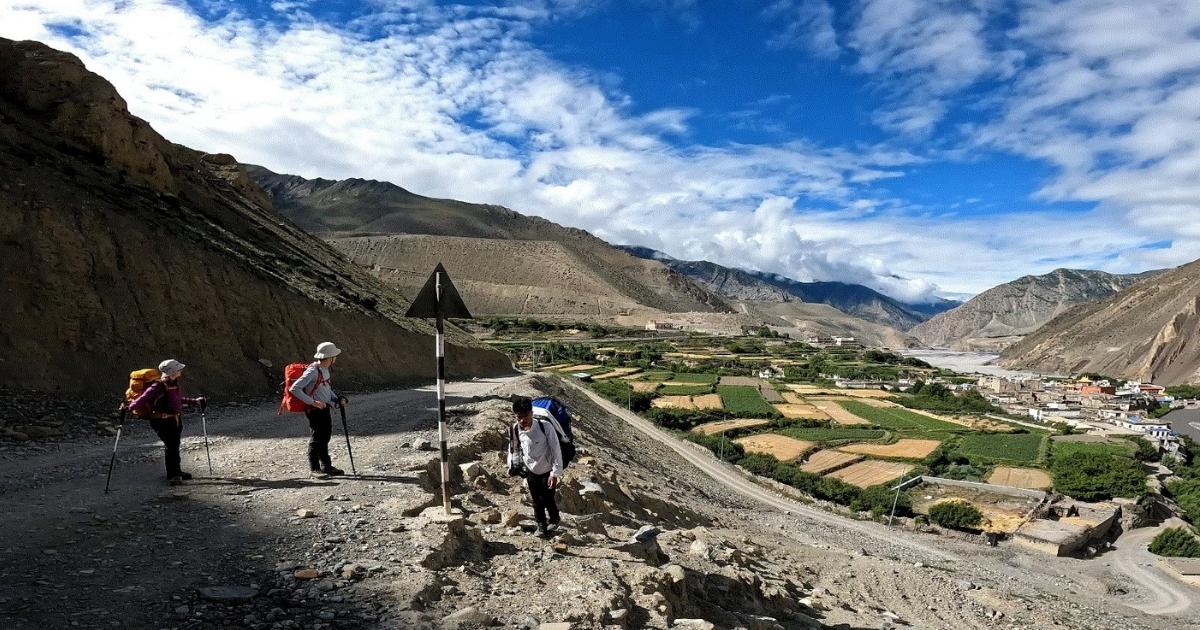
Your Upper Mustang permits will be checked at several points along the route, so you should always keep them handy and dry.
Important checkpoints include:
- Kagbeni: It is an official entry gate into the Upper Mustang restricted area.
- Chhusang / Chele: It is an early Upper Mustang village.
- Samar, Ghiling, Ghami: These are mid‑route checkpoints.
- Tsarang (Charang): It’s an important historical village with a checkpost.
- Lo Manthang: It’s the main administrative and security center in Upper Mustang.
Extra: There may also be smaller police or conservation posts on side routes. At each point, your guide will usually present the permits, while officers may confirm your names and note your movement for safety and record‑keeping.
Is Upper Mustang Open Throughout the Year?
Yes, Upper Mustang is open throughout the year for trekkers with valid permits. Also, the trek permit is distributed year-round with no change in permit fees. If you notice price differences between trekking packages, they are usually due to variations in agency services and package inclusions rather than permit costs.
That said, as with other trekking regions, different trekking seasons and trek times affect the overall experience of the journey.
- Spring (March to May): Spring is one of the best times to visit Upper Mustang. You will get stable weather, clear skies, and comfortable trekking and photography temperatures. Also, you get a chance to celebrate the Tiji Festival in Lo Manthang, which usually falls in May according to the Tibetan Lunar Calendar.
- Summer/Monsoon (June to August): Upper Mustang is located in the rainshadow area of the Annapurna region, so it receives much less rainfall than most parts of Nepal. This makes it one of the few places where trekking during the monsoon season is still enjoyable.
- Autumn (September to November): Autumn is the most popular trekking season in Nepal, including Lo Manthang area. This season offers clear mountain views, pleasant weather, and the opportunity to experience local festivals like Dashain and Tihar.
- Winter (December to February): Upper Mustang remains open, but temperatures are much colder, and there is a high chance of strong winds. Also, some tea houses and lodges may close during this time, so winter trekking is recommended only for well-prepared and experienced trekkers.
Have Questions About Your Trek?
Get quick answers about routes, costs, permits, difficulty, or travel dates from our trekking team before you book.
Conclusion
Upper Mustang is one of Nepal’s most special trekking regions, and its permit system reflects that. In 2026, you need a Restricted Area Permit and an Annapurna Conservation Area Permit (ACAP), must trek with a licensed guide, and must apply through a registered agency.
The new daily fee system makes short visits more flexible, while still protecting a fragile culture and landscape. And if Upper Mustang is on your bucket list, understanding these permit rules now will save you time, stress, and surprise costs later.
FAQs
Is solo trekking allowed in Upper Mustang?
Solo trekking is allowed in the Upper Mustang in 2026 in the sense that a single foreign traveler can obtain a permit, but you must trek with a licensed guide. You cannot walk completely alone without a guide inside the restricted area.
Can I trek Upper Mustang solo without a group in 2026?
Yes, you can trek Upper Mustang as a solo traveler in 2026, but you still need to hire your own licensed guide through a registered agency; independent, guide‑free trekking is not permitted.
How long is the Upper Mustang permit valid?
The Upper Mustang permit is valid only for the exact number of days approved in your itinerary inside the restricted area (counted from Kagbeni). For example, if you plan 7 days in Upper Mustang, the permit covers those 7 days.
Do I need a guide for Upper Mustang trek?
Yes, a licensed trekking guide is mandatory for all foreign trekkers in Upper Mustang in 2026.
How do I get an Upper Mustang restricted area permit?
You get the permit by booking your trek with a registered Nepali trekking agency, providing them with your passport, visa details, photos, itinerary, and payment. Your trek agency then applies for the RAP at the Department of Immigration in Kathmandu or Pokhara on your behalf.
Is ACAP required along with the Upper Mustang permit?
Yes. ACAP is compulsory in addition to the Upper Mustang Restricted Area Permit because Upper Mustang lies inside the Annapurna Conservation Area.
Where can I apply for the Upper Mustang permit, Kathmandu or Pokhara?
Your agency can apply for the Upper Mustang RAP at the Department of Immigration in Kathmandu or its office in Pokhara. You yourself do not have to go there in person.
How do I apply for an Upper Mustang permit?
You choose a registered trekking agency, send them your documents and desired dates, and they complete and submit the application to Immigration and ACAP offices. You cannot apply directly as an individual foreigner.
Can foreigners trek Upper Mustang without an agency?
No. Foreigners cannot trek in Upper Mustang without an agency. A registered Nepali trekking agency and a licensed guide are mandatory to obtain the RAP.
Is the Upper Mustang trek permit refundable if I cancel?
In practice, Upper Mustang permits are not refundable once issued, because the fees are paid directly to the government; if you cancel before the agency submits the application, you may recover part of your package cost, but not after the permit is processed.
Upper Mustang vs Lower Mustang permit cost: what’s the difference?
Upper Mustang requires an expensive Restricted Area Permit plus ACAP, while Lower Mustang (e.g., Jomsom, Muktinath) usually only needs ACAP and, in some cases, TIMS. This makes Lower Mustang much cheaper than Upper Mustang.
Can I extend my Upper Mustang permit if I want to stay longer?
Yes, you can extend your stay by arranging an extension through your trekking agency, but it must be done before you overstay. Extra days cost the same daily rate as your original RAP (around USD 50 per person per day).
How much does a 10-day Upper Mustang trek cost, including permits?
A typical 10‑day Upper Mustang trek cost in 2026, including the RAP (about USD 500), ACAP, guide, basic accommodation, meals, and domestic transport, usually falls in the USD 1,400 to 1,800+ range for mid‑range packages.
Is the Upper Mustang trek worth it in 2026 with the new permit rules?
Yes, Upper Mustang is worth it even with the strict rules and high fees, because the daily pricing has made shorter trips more flexible, and the region still offers rare culture, landscapes, and low crowds.
Can I book the Upper Mustang permit online, or does it require an in-person application?
You can start the process online by booking with a trekking agency and emailing your documents, but the actual permit application at Immigration is done in person by the agency in Nepal, not by you.
What is the best time to trek Upper Mustang, considering permit validity and weather?
The best time for the Upper Mustang trek in Nepal is spring (April to May) and autumn (September to October), when the weather is stable and dry. The region is also popular in the monsoon (June–early September) because the rain shadow keeps trails relatively dry, and your permit validity simply needs to match the exact days you plan to be in the restricted zone.