Why Understanding Sherpa Culture Helps You Trek Better
Sherpa culture is the foundation of mountain safety and trail communication. When you learn about their traditions, you gain a deeper respect for the people who manage the routes and lead the way. Knowing the local customs of the Sherpa communities makes your high-altitude adventure, such as the Everest Base Camp Trek, safer and more meaningful. Sherpas view Mount Everest as a sacred mother goddess, not just a mountain to climb.

This knowledge helps you interact with your guides and porters in a way that builds trust. Good communication is vital at high altitudes, as it allows you to discuss your health and pace more openly. Understanding local customs, such as walking to the left of prayer walls, shows that you value their heritage. This mutual respect creates a safer environment where everyone works together to reach the goal.
Furthermore, cultural immersion turns a simple walk into a meaningful adventure. Instead of just focusing on the mountain peaks, you learn to appreciate the history of the villages you visit. This preparation helps you manage your expectations and stay positive when the trail gets difficult. Seeing the resilience and friendliness of the Sherpa people can inspire you to keep going. When you see the trek as a chance to learn rather than just a physical challenge, you become a more grounded traveler.
Want to Experience Authentic Sherpa Culture?
Discover the traditions, Buddhist practices, hospitality, villages, and mountain lifestyle that make Sherpa culture unique. Talk to our local team to experience the culture beyond the trekking trail.
Who Are the Sherpas?
The Sherpa people are an ethnic group from the high mountainous region of Nepal. Their name comes from the Tibetan words "Shar" and "Pa," which mean "people from the east." Most historians believe they migrated from eastern Tibet to the Everest region about 500 years ago. Living at high altitudes for centuries has changed their bodies. Their blood uses oxygen more efficiently than people who live at sea level. This natural adaptation allows them to work and move easily in thin air where others might feel sick or tired.

Today, Sherpas are renowned for their unmatched mountaineering skills. They are the backbone of every trek and climb in the Himalayas. Beyond their physical strength, they are known for their warm hearts and deep Buddhist faith. We work closely with Sherpa guides because they prioritize your safety and treat every guest like family. Their expert knowledge of the trails and weather makes them the best companions for a high-altitude journey. You can feel confident knowing you are walking alongside the most experienced mountain experts in the world.
Daily Life in Sherpa Villages
Daily life in Sherpa villages follows the seasons and the rising sun. Most families spend their mornings tending to small fields of potatoes, buckwheat, and barley. These are the few crops that grow well in the cold, thin air. You will often see yaks and dzo (a cross between a cow and a yak), grazing on the steep hillsides. These animals are vital because they provide milk, wool, and transportation for heavy goods. Children often walk long distances to reach local schools, carrying their books across stone bridges and dusty trails.
When you walk through a village, you will see residents spinning prayer wheels or hanging colorful flags. The sound of bells on livestock is a constant part of the mountain air. We recommend that you observe these routines from a polite distance to avoid blocking paths or work areas. Always ask for permission before you take a photo of a person or their home. Walking to the left of the mani walls and stupas is a great way to show respect for local Buddhist traditions. By staying quiet and observant, you can see the true heart of the Himalayas without disturbing the community's peace.
How Sherpas Became Mountain Guides
The transition from high-altitude farmers to world-famous mountain guides began in the early 20th century. When British expeditions first arrived to explore the Himalayas around the Everest region, they noticed the incredible strength and natural adaptation of the Nepali people living in the Khumbu region. While many Sherpas initially worked as high-altitude porters carrying heavy loads, their technical skills and bravery quickly made them indispensable.
The world took notice in 1953 when Tenzing Norgay Sherpa stood alongside Sir Edmund Hillary on the summit of Everest. This historic moment proved that no major Himalayan climb could succeed without their expert guidance and deep connection to the mountains. As the trekking industry grew, the role of Sherpas evolved from support staff to lead expedition leaders and business owners.
This progress also opened doors for Sherpa women to break traditional barriers and seek their own mountaineering glory. A pivotal moment for equality occurred in 1993 when Pasang Lhamu Sherpa became the first Nepali woman to reach the top of Mount Everest. Today, we see the legacy of the Sherpa people of Nepal in every safe mountain hike. Their global recognition as the masters of the peaks ensures that your trek is guided by a culture of excellence and a deep-rooted passion for the high hills.
Sherpa Religion and Spiritual Practices
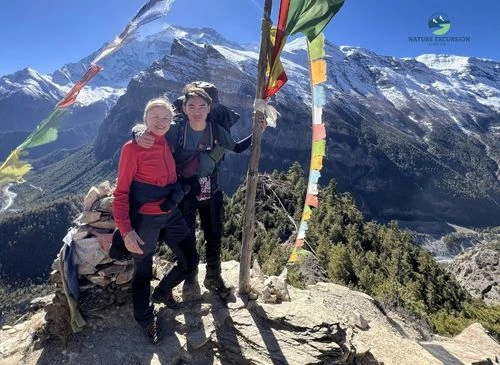
The Sherpa people follow the Nyingma school of Tibetan Buddhism: the oldest of the four major branches. Faith is woven into every part of daily life rather than being saved for special occasions. You will see colorful prayer flags: known as Lung Ta or "Wind Horses": hanging from houses and high mountain passes. These flags carry printed mantras that the wind blows across the world to spread peace and protection. Families also build stone structures called mani walls along the trails. These walls are carved with the sacred chant "Om Mani Padme Hum" to honor the spirit of the mountains.
Monasteries serve as the heart of Sherpa culture and community. These sacred buildings act as schools, event centers, and places for quiet prayer. Inside, you will find large statues of Buddha and Guru Rinpoche surrounded by butter lamps and detailed wall paintings. High-ranking monks called Rinpoches lead rituals that involve chanting and the use of bells or drums. We encourage you to visit these sites during your trek to witness the deep connection between the people and their land. Always walk to the left of mani walls and spin the prayer wheels clockwise to show respect for local traditions.
Sherpa Mountaineering Legacy
For centuries, Sherpa people lived as high-altitude traders and farmers rather than mountain climbers. They moved salt, wool, and grains across dangerous passes like Nangpa La, which used yaks as transport. This lifestyle at high elevations caused their bodies to adapt to thin air over many generations. To the early Sherpas, the Great peaks were not objects to be conquered but the homes of powerful gods.
.jpg)
They treated the mountains with deep respect and only entered the high snows when necessary for trade or spiritual reasons. In recent days, modern Sherpas are balancing their rich history with new opportunities in the global world. Kami Rita Sherpa became a mountaineering legend by reaching the summit of Mount Everest more than anyone else. Another inspiring example of this modern spirit is Lhakpa Sherpa, often called the "Mountain Queen." She holds the world record for the most successful summits of Mount Everest by a woman, having reached the top ten times.
However, mountaineering isn't the only option for the Sherpa people in recent times. Many young people from the Khumbu region now pursue careers as doctors, pilots, and business leaders while maintaining their mountain roots. Education has become a top priority, with schools founded by the Himalayan Trust helping the new generation reach their potential both on and off the peaks.
Experience Everest Through Sherpa Culture
The Everest region is more than mountains. Combine your trek with meaningful cultural experiences, monastery visits, Sherpa villages, and opportunities to learn about the communities of Khumbu.
How to Respect Sherpa Culture as a Trekker
Respecting Sherpa culture starts with understanding that the mountains are sacred spaces, not just climbing goals. You should always walk to the left of mani walls, chortens, and prayer wheels, keeping these religious structures on your right side. This movement follows the direction of the universe in Buddhist tradition. It is also important to ask for permission before taking photos of people or the inside of monasteries. Small gestures, such as removing your shoes before entering a home or temple, show that you value local customs and spiritual beliefs.
Your interactions with the community should be based on kindness and modesty. Dress conservatively by keeping your shoulders and knees covered, even when the weather is warm. When you receive a gift or a meal, use both hands to show gratitude. You should also avoid public displays of affection, as they are considered disrespectful in traditional Sherpa villages. By learning a few phrases in the local language and showing interest in their history, you build a genuine connection with the people who make your journey through the Himalayas possible.
Sherpa Language & Food
While trekking through the Everest region, visitors are introduced to the Sherpa people and their unique culture. The Sherpa language, which derives from ancient Tibetan roots, sounds quite different from the Nepali spoken in Kathmandu. Most Sherpas are bilingual, and they genuinely appreciate it when guests use their local greetings.
Travelers will notice that traditional Sherpa food is carefully crafted to keep individuals warm and energized at high altitudes. Typical meals often feature barley, potatoes, and yak dairy, as these ingredients thrive in the thin mountain air. Sharing a bowl of hot stew or a cup of salty tea in a cozy teahouse offers an authentic way to connect with the local lifestyle.
| Phrase / Dish | Meaning / Description | Where to Try | Tips |
| Tashi Delek | This is a classic greeting that means "blessings" or "good fortune." | Trail or in lodges. | Say this instead of "Namaste" to see a bigger smile from the local Sherpa guides. |
| Thuche | This word means "thank you" in Sherpa. | Say this after your guide helps you or when a host serves your meal. | It is a simple way to show respect for the local culture. |
| Momo | These are steamed or fried dumplings filled with vegetables, buffalo meat, or yak meat. | You can find these on the menu at every teahouse in Namche Bazaar. | Order them fried if you want an extra crunch after a long day of walking. |
| Thukpa | This is a hearty noodle soup made with vegetables and local spices. | Most lodges in Tengboche and Dingboche serve this hot dish. | It is excellent for hydration and for warming your body on cold evenings. |
| Shyakpa | Also known as Sherpa Stew, this thick soup contains hand-pulled dough, meat, and potatoes. | Look for this in smaller, authentic guesthouses in Khumjung or Pangboche. | This is a favorite among porters for its high energy content. |
| Su-Chya | This is traditional butter tea made with tea leaves, yak butter, and salt. | You will often be offered this as a welcome drink in local homes. | Sip it slowly: the salt and fat help prevent cracked lips in the dry mountain air. |
| Riki Kur | These are Sherpa potato pancakes served with a side of spicy tomato or yak cheese sauce. | Try these for breakfast in Phakding or Lukla before you start your walk. | "Riki" means potato, and "Kur" means bread in the local dialect. |
Curious About Sherpa Traditions?
Have questions about Sherpa culture, local customs, monasteries, festivals, or cultural experiences during your trek? Our local team can help you plan your journey with cultural respect.
Trek the Khumbu and See It for Yourself
You will find that the Khumbu is much more than a path to the world's highest peak. It is the heart of Sherpa culture, where ancient monasteries sit tucked away in villages like Khumjung and Pangboche. These communities carry a proud mountaineering legacy that you can feel in every stone-walled field and tea house. You will eat hearty local food like Sherpa stew and dal bhat that keeps you warm and energized for the trail.
Trekking here is a safe and deeply moving experience because the local people treat every visitor like a guest in their own home. You deserve to walk among these giants and witness the spirit of the Himalayas firsthand. Contact us today to plan your journey into the Khumbu.


.webp)