How Dangerous Is Annapurna Trekking?
For trekkers, “dangerous” means something different from what it does for climbers. You are not climbing steep ice or using ropes, but you are walking for many days at high altitude in a remote mountain environment where weather and trails can change quickly. The Annapurna region has drawn backpackers, photographers, and casual hikers for decades because its trails combine big‑mountain views with relatively easy logistics and teahouse accommodation. That popularity alone can make the treks feel safe and routine.
But it is important not to treat it like a simple walk in the countryside. The mountains are still powerful, and problems can happen if you are not careful. Trekkers don’t face the same risks as climbers on Annapurna I, but they still need to understand the dangers of altitude, weather, and terrain.
Now, let’s look at the main risks on the Annapurna Circuit and Annapurna Base Camp routes.
Have Questions About Annapurna?
Unsure about Annapurna's risks, safety, or preparation? Talk with our trekking team and get practical answers before you decide.
Annapurna Circuit Trek
The Annapurna Circuit Trek is a long journey that loops around the Annapurna massif and crosses the high Thorong La Pass at 5,416 m. Most of the trail follows well-trodden paths. You walk through villages, forests, and river valleys. But the high pass brings real risks, especially if you go too fast or face bad weather.

The main danger on the Annapurna Circuit Trek is altitude sickness. If you rush and don’t give your body time to adjust, you can face serious trouble as oxygen levels drop. Furthermore, in winter and shoulder seasons, snow and ice can make the approach to the pass slippery and exposed, and sudden storms have stranded people in whiteout conditions in the past.
There are also sections prone to landslides or rockfall, especially after heavy rain. For most people, though, the Circuit is safe when tackled in the right season, with a gradual ascent, rest days for acclimatization, and a willingness to delay or turn back if conditions look wrong.
Annapurna Base Camp Trek
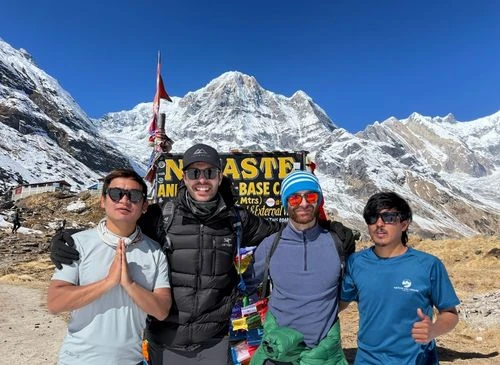
The Annapurna Base Camp Trek takes you into a high, bowl-shaped valley surrounded by towering peaks, including the south face of Annapurna I. This amphitheater setting is spectacular, but it also has some risks. Since the area is like a natural bowl, snow and avalanches can slide down into certain parts of the trail. The sections between Deurali, Machhapuchhre Base Camp, and Annapurna Base Camp are known for past avalanche incidents, especially after heavy snowfall or unstable weather.
.jpg)
Trail closures and reroutes sometimes happen here for safety reasons, and local guides pay close attention to recent snow and temperature changes. Apart from avalanches, trekkers have to manage slippery stone paths, cold temperatures, and the usual altitude‑related issues as they approach base camp. The good news is that this trek is still safe and very rewarding if you travel in the right season for ABC, listen to local advice, and follow safety notices. Most problems happen when people ignore warnings or take unnecessary risks.
Death Rate in Annapurna
If you search for “Annapurna death rate,” you’ll see some terrifying numbers online, but they are usually shown without proper explanation. Most of these statistics refer specifically to Annapurna I summit expeditions, not to the thousands of trekkers who visit the Annapurna Circuit or the Annapurna Base Camp every year.
.jpg)
Annapurna I has historically been one of the most dangerous 8,000 m peaks in the world. It had the highest fatality-to-summit ratios with roughly one death for every few successful summits in its early decade. Between 1950 and 2006, there were about 150 successful summits and 58 deaths, which gives a fatality-to-summit ratio of about 38.7%. This is why Annapurna got such a feared reputation. Even in more recent years, the risk remained high for a long time. By 2012, the cumulative numbers were around 191 summits and 61 deaths, which still meant a fatality rate of about 31.9%.
But things have slowly improved over time. With better logistics, weather forecasting, climbing experience, and rescue support, the risk has come down in modern expeditions. By 2022 (365 summits and 72 deaths), the fatality rate was 19.7%, by 2024 (about 476 summits and 73 deaths), fatality rate was 15.3%, and by Febuary 2026 (about 559 summits and 75 deaths) ~13.4% fatality rate. So yes, the numbers are still serious, but they are much lower than they were in the early decades.

Death Rate in Annapurna vs Other 8,000 m Peaks
Now, let’s compare the Annapurna death rate with other 8,000 m peaks in Nepal:
| Peak | Fatality Rate | Deaths/Summits |
| Annapurna I | 13.4% | 75 / 559 |
| Dhaulagiri | 13.0% | 92 / 707 |
| Kangchenjunga | 7.8% | 54 / 690 |
| Makalu | 5.7% | 51 / 891 |
| Everest | 2.5% | 344 / 13,752 |
| Manaslu | 2.4% | 90 / 3,750 |
| Cho Oyu | 1.3% | 52 / 4,081 |
| Lhotse | 1.7% | 25 / 1,473 |
From above table it's clear that compared with other 8,000 m peaks in Nepal, Annapurna I still sits at the top of the risk table at around 13.4%, slightly higher than Dhaulagiri (13%), and clearly above Manaslu (2.4%) and Mount Everest (2.5%), where far more people have summited but proportionally fewer have died.
K2 is often grouped with Annapurna in discussions of high-risk 8,000ers, but Annapurna’s current ratio remains among the very highest fatality rate when you look only at Nepal’s giants like Annapurna I, Dhaulagiri, and Kangchenjunga.
Is Annapurna Right for You?
Understand Annapurna trekking difficulty, altitude, terrain, walking hours, and fitness requirements before choosing your route.
Why Annapurna Is So Deadly for Climbers?
Main reasons Annapurna is so dangerous for climbers are:
- Extremely avalanche‑prone slopes
- Steep, technical, and committing terrain
- Unpredictable, fast‑changing high‑altitude weather
- Long exposure in the death zone
- Limited rescue options and thin infrastructure
- Complex route‑finding and objective hazards stacked together
Avalanche‑Prone Slopes
Avalanches are the biggest reason why Annapurna I is known as one of the most dangerous mountains in the world. The mountain is covered with deep snow, large ice blocks (seracs), and steep slopes where snow can easily slide. Climbers often have to walk for hours through these risky areas, knowing that an avalanche could occur at any time.
Even today, with better weather forecasts and more knowledge about snow conditions, this danger cannot be fully avoided. Further, compared to many other 8,000 m peaks, Annapurna exposes climbers to avalanche risk for a longer time. This is a big reason why so many accidents have happened there.
Steep, Technical, and Committing Terrain
Annapurna I is also very steep and hard to climb, in addition to its high height. Much of the climbing involves 45 to 50 degree (or steeper) snow and ice, rocky sections, and narrow ridges where it is hard to stay safe and mistakes are hard to correct. Even in good weather, this kind of climbing is tiring. At high altitude, it becomes even harder due to low oxygen levels, cold temperatures, and heavy gear.
Another problem is that the climb is very committing. After a certain point, turning back is almost as serious as going on because down‑climbing steep ground while exhausted is risky. Thus, only very experienced climbers should attempt Annapurna I, and even they have a small margin for error.
Unpredictable High‑Altitude Weather
It’s a known fact of the Himalayas. The weather on Annapurna I can change very quickly and without warning in a matter of minutes. Clear skies can suddenly turn into storms with heavy snow, strong winds, and whiteout conditions where you can’t see anything. On an 8,000 m peak, losing visibility is very dangerous as it makes navigation tricky, increases avalanche risk, and can trap teams high on the mountain with no safe way to descend.
Similarly, while the weather forecasts are better these days, it is still hard to predict exact conditions on such a high peak. There is also a situation where teams move forward during marginal weather gaps, given their limited time. This often leads to them getting caught in a massive storm right when they are in the most dangerous and exposed spots.
Long Exposure in the Death Zone
The summit of Annapurna I lies fully in the death zone, where the air is too thin for the human body to survive for long. Up there, your body starts to struggle, thinking becomes fuzzy, movements feel heavy and clumsy, and recovery from effort is almost impossible.
Climbers are more vulnerable to high altitude serious illnesses like High-Altitude Cerebral Edema (HACE) and High-Altitude Pulmonary Edema (HAPE), along with frostbite and extreme exhaustion.
On Annapurna, climbers often spend a long time in this zone while moving on steep terrain. The longer you stay there, the weaker you get and the harder it becomes to cope with surprises like sudden weather changes, broken gear, or a partner in trouble.
Limited Rescue Options and Thin Infrastructure
Unlike Everest’s standard routes, Annapurna I has much less support, fewer fixed ropes, fewer climbing teams, and far less organized high camps and limited helicopter rescue options.
If something goes wrong high on Annapurna, you mostly have to depend on your own team and your own strength. Even rescue at a very high altitude (7,000-8,000 m) is extremely difficult and sometimes not possible. This isolation makes every risk more serious. Even a small problem can become life-threatening when help is a long way off.
Multiple Objective Hazards Stacked Together
What makes Annapurna so deadly is not just one risk, but many risks happening at the same time. During Annapurna mountain climbing, climbers face avalanches, steep and technical climbing, crevasses and seracs, rockfall, unpredictable weather, and death‑zone altitude.
On some other 8,000 m mountains, climbers may deal with one or two of these challenges. On Annapurna, you face several at once. That stacked hazard profile means even small mistakes like starting too late, misjudging snow conditions, or moving too slowly can have serious consequences. Annapurna still remains a very unforgiving mountain.
Human Mistakes That Turn Risk into Disaster
Mountains are naturally dangerous, but human decisions often decide whether a trip ends in a good story or a rescue. In the Annapurna region, many accidents occur because people underestimate the risks, given the area's popularity. Another mistake people make is that some trekkers keep going even when they feel sick at altitude, thinking headaches or nausea are normal. Further, others stick to their schedule even when the weather is bad or local advice says to wait. Some even choose the wrong season just to save money, book the cheapest trip without checking safety standards, or don’t prepare properly with fitness, gear, or planning.
Let’s look at these mistakes more closely:
Underestimating Annapurna Because It’s Popular
Because the Annapurna region is famous and full of teahouses throughout the trekking trail, people often think it is very safe and easy. Trekkers see photos of busy trails and believe it’s just a long walk. Some climbers think Annapurna I is just another step after easier peak climbs.
But the truth is very different. The same region that has popular trekking routes also has one of the deadliest mountains to climb in the world. Those who treat Annapurna as a simple or routine trip often don’t prepare properly, ignore risks such as avalanches and altitude, and take the mountain too lightly. And in the mountains, this kind of thinking can quickly lead to serious trouble.
Rushing Acclimatization and Ignoring Warning Signs
Altitude sickness usually does not come suddenly. It builds slowly, with clear warning signs. A common mistake people make in the Annapurna is going too high too fast just to follow a schedule or keep up with a group. Many people ignore symptoms like headache, nausea, or tiredness, thinking they are normal or just a simple headache.
On routes like the Annapurna Circuit, Annapurna Base Camp, and even on Annapurna I, people get into trouble when they keep ascending despite feeling worse. Once serious altitude illness sets in, no view, pass, or summit is worth the risk. But many people continue because they don’t want to waste their trip. This stubbornness is what turns a small problem into a life‑threatening emergency.
Sticking to the Plan When Conditions Change
Mountains do not care about your plans, flights, or goals. Problems start when people feel they must follow a fixed plan, like reaching a pass on a certain day or returning by a set date. If fresh snow is falling, avalanche signs are visible, and the weather forecast is getting worse, the safest choice is to wait or turn back.
But some people continue because they think, “We’ve come this far” or “We must finish on time.” In the Annapurna region, where avalanches and storms are real dangers, not changing your plan when needed can be very risky.
Choosing Unsafe Seasons or the Cheapest Trip
Budget and timing do matter, but pushing both too far has a cost. Trekking in the wrong time, like deep winter, heavy monsoon, or very late seasons, exposes you to more snow and higher avalanche risk, landslides, and closed trails or passes.
Further, on the guiding side, very cheap offers sometimes cut corners like poor equipment, inexperienced staff, rushed schedules, weak safety planning, or no emergency backup. Most accidents don’t happen because of one big mistake. They happen because of many small, poor choices made over time, often starting when someone chooses price or convenience over safety.
Poor Gear Choices and No Backup Plan
Finally, many problems on Annapurna come down to choosing wrong clothing, worn‑out boots, no spare gloves, no headlamp, and no way to contact help. Cold, wet, or exhausted people make worse decisions and move more slowly, which is dangerous on exposed trails or steep slopes.
Without proper insurance or an agreed evacuation plan, even a relatively small incident can spiral into a full rescue drama. Having the right gear, a realistic emergency plan, and the mindset that turning back is okay turns Annapurna from a gamble into a demanding but manageable goal.
Duration:7 DaysStart fromUSD 1050USD 890based on 21 reviews
How to Stay Safe on Annapurna?
To stay safe in the Annapurna region, one has to make smart decisions before and during the trip. If you are a climber considering Annapurna I, treat it as a serious goal, not a beginner’s challenge. You should already have experience with other 7,000-8,000 m peaks and know how to handle steep ice, mixed climbing, and avalanche danger. It also really helps to go with a strong, experienced team that takes safety seriously. Good teams are open about risks, are not afraid to turn back if things don’t look safe, and include extra days for bad weather. You should avoid any Annapurna expedition that promises guaranteed summits or follows a very tight schedule, because mountains do not work on fixed plans.
.jpg)
Likewise, if you are trekking, like on the Annapurna Circuit or Annapurna Base Camp, the main thing is to go slow and give your body time to adjust. Don’t rush uphill. Take rest days, drink enough water, and listen to your body. If you start feeling sick from altitude, don’t ignore it. That’s your body asking you to slow down. Also, always listen to your guide, check the weather conditions, and respect any trail warnings or closures. It might feel annoying in the moment, but it can keep you safe.
Also, choose the best season to trek, which is Spring (March to May) and Autumn (September to November). These seasons avoid heavy monsoon rains and harsh winter conditions. Another thing is to make sure you are also prepared with basic things like good trekking boots, warm clothes, a headlamp, a small first-aid kit, and travel insurance that covers high-altitude emergencies.
Plan Your Trek Your Way
Choose your preferred route, duration, travel dates, and trekking style to create an Annapurna experience that fits you.
Conclusion
Annapurna is known as a very dangerous mountain for climbers, especially Annapurna I. But at the same time, it is also one of the most popular and beautiful trekking areas in Nepal.
For climbers, Annapurna demands extreme skill, experience, and respect because the risks are real and serious. But for trekkers walking the Annapurna Circuit or visiting Annapurna Base Camp, the journey is much more about preparation, awareness, and responsible decision.


.webp)
.webp)