Annapurna Circuit Trek Distance: Quick Facts
The classic Annapurna Circuit Trek distance ranges from 160 km to 230 km. The trek distance depends on whether you choose to walk every trail along the Annapurna circuit or use local jeeps on the modern road sections. Most travelers spend 12 to 16 days on the move. You should expect to walk between five and eight hours daily. The ACT reaches its highest point at Thorong La Pass. This mountain pass sits at 5,416 m and requires a slow, steady climb to cross safely. While the total distance sounds long, we break it into manageable stages. This allows your body to adjust to the thin air while you enjoy the shifting scenery from green forests to high-altitude deserts.
| Route version | Trekking distance | Duration |
| Classic Full Circuit | 230 km | 18 - 21 Days |
| Standard (With Jeeps) | 160 km - 185 km | 12 - 15 Days |
| With Tilicho Lake | 190 km - 210 km | 15 - 17 Days |
| Short Circuit | 60 km - 70 km | 8 - 10 Days |
Questions About the Distance?
Still unsure about the Annapurna Circuit distance, daily walking hours, or route? Talk to our trekking experts for quick, practical answers.
Why Understanding Annapurna Circuit Trek Distance Matters Before You Start
Knowing the total trek distance breakdown keeps your ego in check and your lungs happy. Most people look at the total length of the Annapurna Circuit and feel overwhelmed. But you do not walk the entire distance in one afternoon. Breaking the route into small chunks helps you plan your daily energy spend. It also allows you to set a realistic training schedule before you leave home. When you know exactly how many kilometers you must cover, you stop rushing. Rushing leads to altitude sickness, which will halt your progress.

Confidence comes from data, not just willpower. Understanding the distance helps you visualize the trail: where it climbs steeply and where it levels out. Beginners often worry about their fitness levels. However, most daily distances are manageable if you maintain a steady pace. Mapping out the kilometers helps you realize that you have plenty of time to reach each teahouse. This mental preparation reduces stress. You can then focus on the terrain rather than worry about the unknown. Using a reliable Annapurna circuit trek distance guide ensures you stay on track and prepared.
Total Annapurna Circuit Trek Distance Explained
The Annapurna Circuit trek is one of the most interesting treks because it does not have a fixed distance, as the trail constantly changes. In 2026, your GPS might show 160 km while another trekker records 230 km. This gap exists because of modern jeep roads that now reach deep into the Marsyangdi and Kali Gandaki valleys. You can choose to walk the dusty road or take the Natural Annapurna Trekking Trails (NATT), which bypasses the traffic. Your starting point, like Bhulbhule or Dharapani, and your exit point, like Jomsom or Nayapul, will also affect the total trek distance.
Classic Full Annapurna Circuit Route Distance
The classic full Annapurna circuit Trek route covers approximately 230 km along the Marshyangdi River corridor. You will follow the classic horseshoe route, starting with a drive from Kathmandu to Besisahar and ending in Nayapul. This version is for those who want the most adventurous and complete trekking experience possible. You will walk through every climate zone, from the subtropical lowlands to the arctic environment of the pass. It requires about 18 to 21days but offers total cultural immersion.
Choosing the full route means you skip the jeeps and rely entirely on your own feet. You will pass through ancient villages like Chame, Ghorepani, and Marpha, which many modern travelers miss by driving past them. But you must be prepared for longer days and varied terrain. The reward is a deep sense of accomplishment that only comes from finishing the entire loop. This is the ultimate way to see the Annapurna massif from every possible angle.
Shortened Annapurna Circuit
The short Annapurna Circuit trek itinerary covers 100 km to 160 km. We use local jeeps to bypass the lower sections of the trail where road construction is most active. You can start your walk in Dharapani or Chame and end the trek in Jomsom, then take a scenic drive to Pokhara or a short flight. This version is perfect if you have limited time but still want to reach Yak Kharka and cross the Thorong Phedi. You get all the high-altitude highlights without the three-week commitment.
Even with a shorter distance, the physical challenge remains high. You still need to climb to 5,416 m, which requires proper acclimatization in Manang. We focus on the most scenic sections where the mountains feel close enough to touch. But you should know that the pace can feel faster because we skip the gradual approach. It is an efficient way to experience the heart of the Himalayas in 10-12 days.
Side Trips That Add Distance
Adding optional side trips can push your total trekking distance past 260 km. These detours are highly rewarding because they take you away from the main transit routes and deeper into pristine alpine terrain. On the upper trail, the distance between Ngawal and Manang via the high route adds incredible panoramic views and crucial acclimatization mileage. The most famous trek is the Annapurna Circuit Trek with Tilicho Lake, where you will get the chance to see one of the highest lakes in the world at 4,919 m. If you decide to branch off from the main distance between Manang and the Thorong La trail, this side trip adds about 30 km and three days to your travel.

Likewise, you can extend your trek on the western side of the circuit by adding the Tatopani to Ghorepani Poon Hill loop or an Ice Lake trek. Instead of taking a vehicle down from Muktinath, you walk through the ancient rhododendron forests of Ghorepani. This adds 35 km to your route and rewards you with a classic sunrise view over the Dhaulagiri range. Meanwhile, if you prefer an excursion earlier in the trek, the steep day hike from Manang to Ice Lake (Kicho Tal) at 4,620 m adds 14 km to your total. These side trips require extra energy, but they speed up your acclimatization and reveal hidden pockets of the conservation area that most standard tourists completely miss.
Annapurna Circuit Trek Itinerary Comparison by Route Option
| Day | Classic Annapurna Circuit (14 Days) | Short Annapurna Circuit (9 Days) | Extended Circuit with Tilicho Lake (18 Days) |
| Day 1 | Drive from Kathmandu to Jagat via Besisahar | Drive from Kathmandu to Besisahar, then rough jeep drive to Chame | Scenic drive from Kathmandu to Jagat via Besisahar |
| Day 2 | Trek from Jagat to Dharapani | Trek from Chame to Upper Pisang | Trek from Jagat to Dharapani |
| Day 3 | Trek from Dharapani to Chame | Trek from Upper Pisang to Manang | Trek from Dharapani to Chame |
| Day 4 | Trek from Chame to Pisang | Acclimatization and rest day in Manang (Side hikes) | Trek from Chame to Upper Pisang |
| Day 5 | Trek from Pisang to Manang | Trek from Manang to Ledar | Semi-arid trek from Upper Pisang to Ngawal via Ghyaru |
| Day 6 | Acclimatization and Rest Day in Manang | Trek from Ledar to Thorong High Camp | Trek from Ngawal to Manang via Brakha Monastery |
| Day 7 | Trek from Manang to Yak Kharka | Cross Thorong La Pass (5,416m); descend to Muktinath | Acclimatization Day at Manang (Side hike to Gangapurna Lake or Ice Lake) |
| Day 8 | Trek from Yak Kharka to Thorong Phedi | Drive from Muktinath to Pokhara | Trek from Manang to Siri Kharka |
| Day 9 | Cross Thorong La Pass (5,416m); descend to Muktinath | Drive from Pokhara back to Kathmandu (End of tour) | Trek from Siri Kharka to Tilicho Base Camp |
| Day 10 | Trek from Muktinath to Jomsom | Completed | Hike to Tilicho Lake (4,919m); return to Siri Kharka |
| Day 11 | Drive/Travel from Jomsom to Tatopani (Hot springs) | Completed | Trek from Siri Kharka to Yak Kharka |
| Day 12 | Trek/Drive from Tatopani to Ghorepani | Completed | Trek from Yak Kharka to Thorong Phedi |
| Day 13 | Hike to Poon Hill; descend to Nayapul and drive to Pokhara | Completed | Cross Thorong La Pass (5,416m); descend to Muktinath |
| Day 14 | Drive from Pokhara back to Kathmandu (End of tour) | Completed | Trek/Drive from Muktinath to Jomsom |
| Day 15 | Completed | Completed | Travel from Jomsom to Tatopani (Natural hot springs) |
| Day 16 | Completed | Completed | Trek from Tatopani to Ghorepani |
| Day 17 | Completed | Completed | Early morning Poon Hill hike; trek down to Ulleri and drive to Pokhara |
| Day 18 | Completed | Completed | Drive from Pokhara back to Kathmandu (End of tour) |
Plan Your Trek Your Way
Choose your preferred route, duration, travel dates, and trekking style to create an Annapurna Circuit experience that fits you.
Daily Trekking Distance on the Annapurna Circuit
The typical daily trekking distance on the Annapurna Circuit is between 10 km and 15 km, requiring roughly 4 to 6 hours of walking at a steady, measured pace. You do not need to be an elite marathon runner to complete this adventure. While the total walking distance of the Annapurna Circuit Trek itinerary sounds daunting, the trail is broken into highly manageable daily sections. Most days require only a few hours of movement from your morning starting point to your afternoon teahouse destination, gradually leading you toward the trek's highest point.

Your guide will deliberately slow the group down to a rhythmic, relaxed pace to help your body safely adapt to the rising altitude of the Himalayan terrain. There is zero pressure to rush, and you will have plenty of time to stop for photographs, chat with locals, see different varieties of flora and fauna in Annapurna Conservation Area, or enjoy a hot cup of tea at roadside settlements.
The daily routine is designed for recovery and scenic enjoyment, not exhaustion. You will generally finish your walking distance by early or mid-afternoon, so you can rest your feet and refuel during the evening. This gradual pacing ensures that you build stamina as you move through the diverse ecosystems of the Annapurna region. Every ascent is paired with strategic rest days and shorter trekking days before you reach the highest point of the Annapurna Circuit in Thorong La Pass. This complete guide emphasizes that patience on the trail is your greatest asset, which turns what is a massive physical challenge into an achievable and rewarding foot trek.
Acclimatization Days and Short Distance Walks
Acclimatization days are the secret weapon for a safe and comfortable crossing of the Thorong La Pass. Many trekkers assume that a rest day means sitting in a teahouse, doing nothing, but active recovery is far more effective. You can use these days for short altitude gain, like a hike to Poon Hill. It will help your lungs and blood vessels adapt to the high altitude without causing physical exhaustion. The golden rule of high-altitude travel is to climb high and sleep low. By taking a brief day excursion, you expose your body to a higher elevation gain before returning to a lower altitude to rest for the night.
These lighter days significantly reduce muscle fatigue, giving your body the time it needs to rebuild stamina. A typical acclimatization walk lasts about 4 hours, which leaves you with plenty of time in the afternoon to relax and hydrate. Instead of feeling drained, you will find these short hikes highly rewarding as they offer some of the most striking mountain views of the Annapurna range. Taking these deliberate breaks ensures you stay healthy, keeps your energy levels high, and prepares you mentally for the demanding terrain that lies ahead.
Duration:9 DaysStart fromUSD 1200USD 999based on 11 reviews
Factors That Change Your Total Distance
Your GPS track on the Annapurna Circuit will rarely match the distance printed on a standard map. This variation happens because the trail is dynamic, not a fixed line carved into the rock. Several physical, environmental, and personal choices will alter the literal number of kilometers you will cover. Understanding these variables allows you to plan your daily pace and energy reserves with accurate data.
Road Construction & Transportation
The expansion of jeep roads has fundamentally altered the walking distance of the Annapurna Circuit. Modern dirt roads now stretch deep into the valleys on both sides of the Thorong La Pass, reaching past Chame on the east and down to Tatopani (Home of natural hot springs) on the west. You can choose to drive these dusty sections, which instantly cuts your total walking distance by over 60 km. However, if you prefer a pure foot hike, you will use the Natural Annapurna Trekking Trails (NATT). These marked bypasses keep you off the road, but they often add extra kilometers and steep climbs to your itinerary.
Side Trips
Choosing to explore valleys off the main path will significantly increase your final distance calculation. Popular detours to Tilicho Lake, Ice Lake, or the villages of Upper Pisang are excellent for acclimatization, but they require extra days and physical effort. For example, adding the trek to Tilicho Lake expands your route by roughly 30 km of rugged walking. Likewise, choosing to walk through Ghorepani to see the sunrise at Poon Hill instead of driving from Tatopani adds another 35 km to your legs. These side trips change the trek from a standard pass-crossing into a much larger Himalayan exploration.
Weather Conditions
Annapurna Circuit Trek weather can be unpredictable at high elevations, sometimes forcing sudden and unexpected changes to your planned route and distance. Heavy snowfall, high winds, or landslide risks can close specific trail sections or delay your crossing of the Thorong La Pass entirely. If a path is blocked by debris or ice, your guide will divert you onto longer alternative trails to ensure your safety. In severe cases, you may have to turn back or hike an extra kilometer or two to reach a different transport hub. These weather-induced detours mean you must always maintain a flexible schedule and possess extra physical stamina.
Route Variations (Start/End Points)
Your exact starting and ending points dictate the baseline distance of your entire itinerary. Some trekkers begin walking from the lower elevations of Bhulbhule or Besisahar, while others take a jeep directly to Dharapani to skip the lower river valley. At the tail end of the trek, you face a similar choice upon reaching a sacred pilgrimage site of Muktinath or Jomsom. You can catch a flight from the Jomsom airstrip, or you can choose to continue walking down through the deep gorge of the Kali Gandaki valley toward Marpha and Tatopani. Your choice of trailheads can change your total trek from a compact 100 km trip to a massive 230 km expedition.
Annapurna Circuit Trek Distance vs Altitude Challenge
On the Annapurna Circuit, the numbers on your altimeter matter much more than the numbers on your pedometer. Walking fifteen kilometers at sea level is a casual afternoon stroll, but doing the same distance above 4,000 m is a completely different physical challenge. As you climb higher, the atmospheric pressure drops, which means there are fewer oxygen molecules in each breath you take. Your muscles must work twice as hard to perform the exact same movements, and you will find yourself breathing heavily even on flat sections of the trail. The real difficulty of this trek is not the length of the path, but how your body copes with this thinning air.

This reality should reassure you rather than cause fear. You do not need to train like an Olympic athlete to overcome the altitude; you simply need to respect the pacing rules and let your biology do the work. Proper acclimatization is the ultimate equalizer, making high-altitude terrain manageable for ordinary trekkers. By ascending slowly, taking mandatory rest days in villages like Manang, and drinking plenty of fluids, your body naturally produces more red blood cells to handle the altitude gain, like from Manang to Yak Kharka to Thorong Phedi.
Understanding this balance alters how you manage your daily energy on the trail. You will quickly learn that a slow, steady, rhythmic pace is far superior to rushing to the next teahouse. Your guide will continuously remind you to slow down, even if you feel like you have the stamina to push faster. By keeping your heart rate low and preventing early exhaustion, you save your strength for the final push over the Thorong La Pass, which is 5,416 meters above sea level. Pacing yourself correctly transforms the high-altitude sections from an exhausting struggle into a steady, achievable trek.
The Thorong La Pass Crossing: Longest and Hardest Day
Your climb over the Thorong La Pass is the physical and mental adventure of your entire trip. You will wake up at 4:00 AM into the freezing, dark alpine air to begin your grueling, relentless ascent. Your trail climbs steeply from the base of the Thorong La Pass at Thorong Phedi, where every step you take requires intense focus and deep breathing due to the extreme altitude. Depending on the route and snow conditions, you will face sub-zero temperatures that can drop to -15°C (5°F).

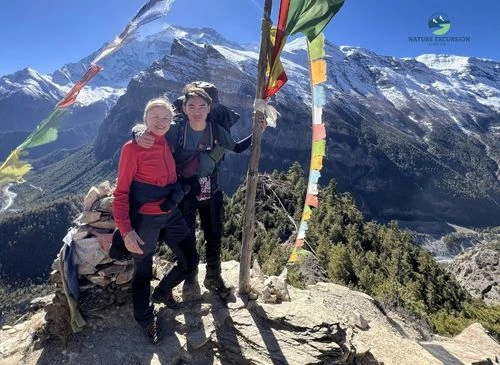
Your reward for this grit is standing at the highest point of your trek at 5,416 m, where you are surrounded by prayer flags and immense Himalayan peaks. But reaching the top is only half your battle, as your descent down to Muktinath is incredibly steep and brutal on your knees. You will drop over 1,600 m in a single afternoon, watching your surroundings shift from stark arctic ice to the arid, orange landscape of the Mustang region.
You will pass by the ancient Jharkot monastery and catch distant glimpses of the mountains, though peaks like Dhaulagiri and Nilgiri, whereas Annapurna II and Annapurna South are quite far. This long day pushes your endurance to its absolute limit, but your arrival at the teahouses of Muktinath signals that you have reached practically the toughest end of the Annapurna Circuit.
Best Time For Annapurna Circuit Trek and How It Affects Your Route Distance
The best time for the Annapurna Circuit is during spring (March to May) and autumn (September to November). The season you choose directly affects your trekking pace, trail accessibility, and the final distance of your route. During winter or early spring, heavy snow can completely block the Thorong La Pass or the high-altitude trail to Tilicho Lake. If you encounter blocked paths, you will be forced to turn back or take longer alternative routes, which adds unexpected kilometers to your itinerary. Meanwhile, the summer monsoon brings heavy rain that causes landslides in the lower valleys, often wiping out sections of the NATT trails.
Choosing your trekking season wisely helps you stay on schedule and avoid unnecessary physical exhaustion. The peak autumn months offer dry trails and clear conditions, which allow you to maintain a steady pace and stick to the shortest, safest paths. By matching your fitness level to the seasonal trail conditions, you turn a highly unpredictable mountain adventure into a manageable one.
| Season | Trek Condition | Visibility | Difficulty |
| Spring (Mar - May) | Clear lower trails, snow on high passes | High in the morning, afternoon clouds | Moderate |
| Summer/Monsoon (Jun - Aug) | Muddy trails, landslide risks, leeches | Low, heavy cloud cover | High |
| Autumn (Sep - Nov) | Dry, stable trails, optimal path conditions | Excellent, cloudless skies | Manageable |
| Winter (Dec - Feb) | Deep snow, ice on trails, pass closures likely | Clear but short daylight hours | Very High |
Learn when to trek the Annapurna Circuit for better trail conditions, mountain views, weather, and a more enjoyable experience.
Annapurna Circuit vs Other Nepal Treks
Choosing your Himalayan adventure depends on what you want out of the trail. The Everest Base Camp trek offers iconic, massive peaks, but it forces you to walk up and down the exact same path. Meanwhile, the Manaslu Circuit provides a wilder, more remote environment, but its starting point of the trek requires strict group permits and a mandatory local guide from day one. Likewise, the Langtang Valley trek is short and steep, but it lacks the grand scale and the high-altitude pass challenge that experienced walkers look for.

The Annapurna Circuit feels more balanced and accessible than these alternatives, thanks to its incredible variety. Your journey takes you through a complete loop, so you never see the same view twice. You will travel from lush subtropical terraced fields to the arctic high country via Thorong La Pass. You will then descend into the deepest gorge in the world along the Kali Gandaki River. This changing landscape keeps your mind engaged and your legs moving. The availability of well-established accommodation and flexible transport options means you can easily adjust your daily distance to suit your personal comfort and fitness levels.
| Trek Name | Total Distance | Highest Point | Key Character |
| Annapurna Circuit | 100 km to 230 km | 5,416 m | Greatest landscape and cultural variety |
| Everest Base Camp | 130 km (Return) | 5,364 m | Highest peaks, crowded, linear route |
| Manaslu Circuit | 180 km | 5,106 m | Remote, restricted area, rugged trails |
| Langtang Valley | 77 km (Return) | 3,870 m | Short, culturally rich, steep valleys |
Have Questions About Your Trek?
Get quick answers about routes, costs, permits, difficulty, or travel dates from our trekking team before you book.
Preparing for the Long Annapurna Circuit Trek Distance
Mastering the actual distances and altitude changes of the Annapurna Circuit is the best way to ensure your safety and success on the trail. You do not need to feel overwhelmed by the total kilometers; you can break your trek into manageable daily steps that match your personal fitness level. Planning with accurate data helps you avoid exhaustion, manage your energy, and truly focus on the spectacular Himalayan terrain.
To help you plan your next steps, you can download our complete, detailed PDF itinerary guide for offline access on your smartphone.


.webp)
.webp)