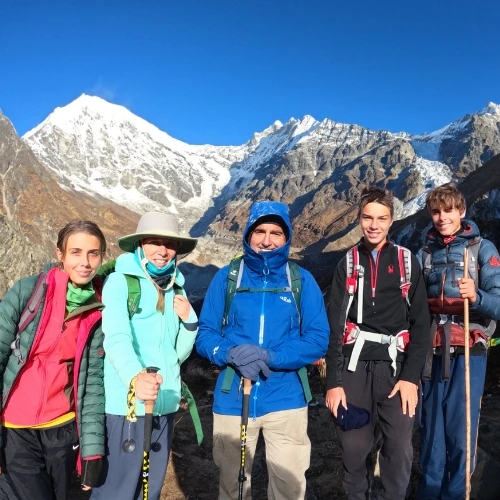
It is wise for trekkers to ask how difficult the Mera Peak Climb is before actually experiencing it. Climbing this peak is a serious physical challenge, but it is entirely achievable for determined trekkers. Standing at 6,476 m, Mera Peak is the highest trekking or climbing peak in Nepal. You do not need advanced mountaineering skills, such as vertical ice climbing or rope ascending, to reach the top. Instead, the real difficulty comes from the extreme altitude, thin air, and the sheer endurance required to walk for hours in deep snow. The main factors affecting your success are the pacing of your itinerary, the cold winter weather, and your physical stamina.
You can successfully summit Mera Peak even if you have never worn crampons before. Our team conducts a full technical training day at Khare to teach you how to use an ice axe, walk on ropes, and manage your gear. Every year, many first-time climbers reach this summit by preparing their bodies months in advance and following a slow acclimatization schedule. With the right physical training, a professional guide, and a patient mindset, you can handle the steep slopes and stand safely on the peak.
Quick Facts About Mera Peak Climbing
Feature
Details
Peak Elevation
6,476 m (Highest trekking peak in Nepal)
Climbing Difficulty
Technical Challenging (Alpine Grade: PD)
Total Duration
15 to 18 days (Depending on flight itinerary and rest days)
Best Climbing Seasons
Spring (March to May) and Autumn (September to November)
Mera Peak (6,476 m) stands as the highest official trekking peak in Nepal. Mera Peak climbing routes originate from Lukla, but they split into distinct geographical approaches: the wild, untamed Hinku Valley Circuit (Paiya / Panggom Route) and the direct, physically punishing Zatrwa La Pass Route.
way to mera peak
While the Zatrwa La Route offers the shortest distance, crossing a massive 4,610 m pass on only the second day introduces an extreme risk of Acute Mountain Sickness (AMS). In contrast, the classic Hinku Valley Circuit, chosen by navigators, heads south through Paiya and Panggom, steadily climbing through diverse eco-zones. This deliberate path bypasses early high-altitude obstacles, giving the human body ample time to naturally adapt to the thinning air before entering the upper glacial environment.
Feature / Aspect
Classic Hinku Valley Circuit (Paiya/Panggom Route)
Lukla → Chutanga → Zatrwa La Pass (4,610 m) → Thuli Kharka → Kothe → Khare → Summit
Acclimatization Profile
Excellent. A gradual ascent over several days below 4,000 m supports natural red blood cell production.
Poor / High Risk. Forces a crossing of 4,610 m on Day 2, significantly increasing the risk of early altitude sickness.
Physical Intensity
Moderate endurance trekking early on, building up to strenuous alpine climbing.
Shock-intensity from Day 1; extremely taxing on joints and knees immediately.
Scenic Experience
High variety: Bamboo/rhododendron forests, remote Sherpa villages, rivers, and untouched sub-tropical wilderness.
Alpine scree, rocky passes, and direct high-altitude tundra valleys; less ecological diversity.
Crowd Levels
Very quiet, pristine, and remote; it offers an authentic expedition atmosphere.
High traffic; used by quick-ascent groups and returning climbers.
Summit Success Rate
Significantly Higher. Climbers reach the base camp at Khare (5,045 m) strong and properly acclimated.
Lower. Many climbers are forced to abort or experience fatigue early due to poor initial
altitude adaptation.
Why is a longer itinerary often recommended for climbing Mera Peak?
The 17-Day Classic Hinku Valley Circuit via Paiya and Panggom is the best itinerary for safe acclimatization. A longer itinerary is recommended for climbing Mera Peak because it gives your body the necessary time to acclimatize to extreme altitudes and drastically reduces the risk of acute mountain sickness. The traditional short route forces you to cross the Zatrwa La Pass at 4,600 m on just the second day of your trip.
Pushing your body to that altitude immediately after leaving Lukla can cause severe altitude sickness for most trekkers. But a longer route takes you through the lower valleys of Panggom and Ramailo Dada first. This path ensures you gain elevation slowly, sleeping at manageable altitudes before you enter the upper Hinku Valley.
By taking 9 to 10 days to reach the base camp at Khare, your body produces more red blood cells to help your body handle the thin air. This gradual approach keeps your energy levels high and prevents early exhaustion. Also, a longer itinerary builds extra contingency days into your schedule. If the mountain weather turns bad or you need an extra day to rest, these cushion days save your summit bid without forcing you to abandon the climb.
When evaluating how difficult is Mera Peak Climbing, the challenge lies not in technical rock climbing or steep vertical ice walls, but in severe high-altitude endurance and erratic mountain weather. Standing at an imposing 6,476 m, the extreme altitude means you will be operating in an environment with nearly half the oxygen available at sea level, making every step forward a grueling physical effort.
High Altitude and Thin Air Above 6,000 Meters
Altitude sickness on Mera Peak can be severe and life-threatening if you ignore early symptoms while pushing past the 5,000-meter mark. The atmospheric pressure drops, and oxygen availability is reduced by nearly 50% compared to sea level. At this extreme elevation, even basic movements require immense physical effort, and the risk of acute mountain sickness (AMS), high-altitude pulmonary edema (HAPE), and high-altitude cerebral edema (HACE) increases significantly. You do not strictly need Diamox to climb Mera Peak, but we highly recommend carrying it as a preventative measure or emergency treatment. The climb from Khare to Mera High Camp (5,780 m) and onwards to the 6,476 m summit forces climbers to spend extended periods in the "thin air" zone, where proper breathing techniques, a disciplined, slow pace, and pre-established acclimatization days are absolutely critical.
Long Walking Hours and Summit Day Challenge
You need excellent cardiovascular endurance and strong leg conditioning to successfully climb Mera Peak. The sheer physical endurance required for Mera Peak is highlighted by the long, grueling trekking hours, culminating in an exceptionally punishing summit day. Leading up to the peak, standard trekking days involve walking 5 to 7 hours over rugged, undulating terrain with a weighted daypack, which gradually depletes physical reserves. Summit day elevates this challenge to an entirely new level, typically beginning around 2:00 AM in pitch-black darkness and freezing conditions, requiring 4 to 6 hours of continuous, steep uphill climbing to reach the top, followed by another 4 to 5 hours of intensive descent back down to Khare.
Glacier Crossing and Snow Terrain
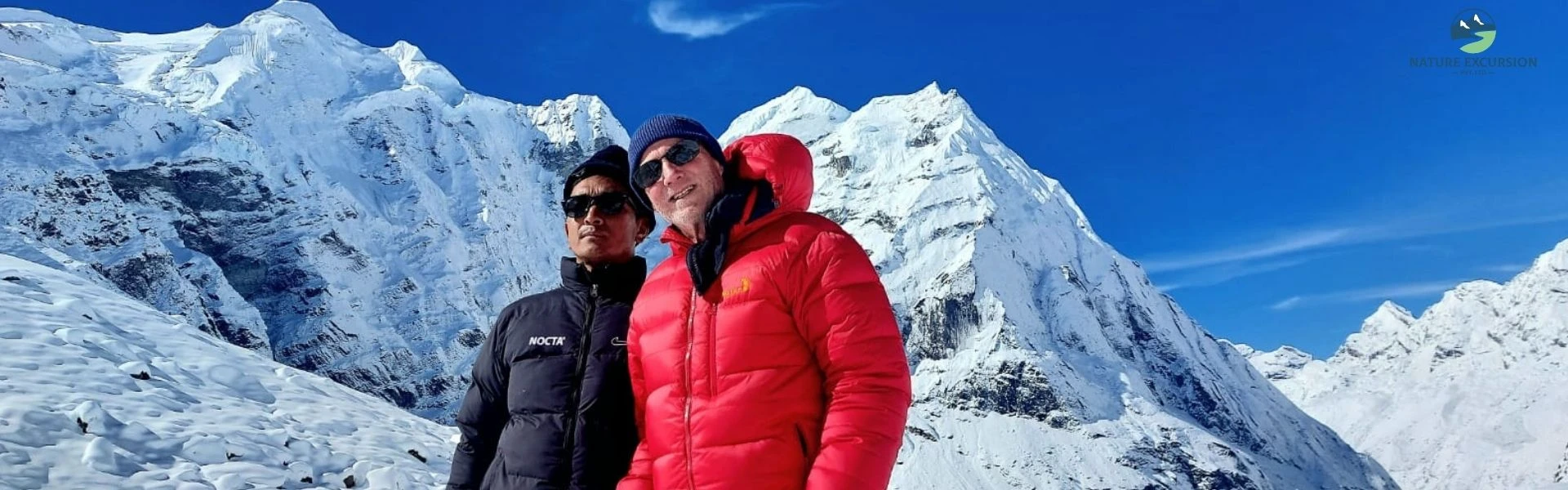
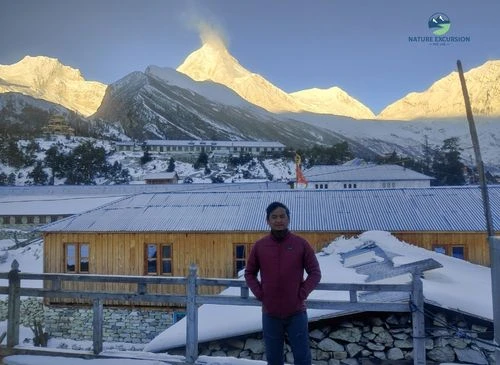
montain covered with snow
While Mera Peak is primarily classified as a non-technical trekking peak, it requires navigating an active, high-altitude glacial environment that presents genuine alpine hazards. The route past Mera La involves traversing sprawling snowfields and heavily crevassed glaciers, which require climbers to walk securely in rope teams to prevent falls. Moving across this terrain means managing loose rock moraines, navigating icy slopes, and wearing heavy mountaineering boots equipped with crampons for hours at a time. The physical strain of lifting heavy footwear on snow, maintaining balance on uneven ice, and using an ascender (jumar) on fixed ropes during the final 30-degree snow dome push adds a layer of terrain-specific difficulty that can quickly exhaust unprepared trekkers.
Cold and weather on summit day
The unpredictable Himalayan weather and extreme sub-zero temperatures present a formidable barrier to reaching the summit of Mera Peak. On summit morning, temperatures at Mera High Camp and along the glacier frequently plummet between -15°C and -25°C, with biting alpine winds making the real-feel temperature significantly colder. These freezing conditions pose a constant risk of frostbite to fingers and toes, hypothermia, and frozen drinking water supplies if equipment is inadequate. Furthermore, high-altitude weather can shift rapidly from clear skies to blinding whiteouts, heavy snowstorms, or fierce gale-force winds, turning an otherwise straightforward glacier walk into a highly challenging navigational struggle that demands high-quality layering and rapid decision-making from your guides.
Climbing Skills and Experience
Though advanced technical mountaineering skills such as vertical ice climbing or mixed rock climbing are not required, a successful ascent still relies on basic alpine proficiency and comfort with specialized gear. Climbers must be familiar with, or thoroughly trained in, the proper use of an ice axe for stabilization, walking with crampons on steep snow, tying into a glacial rope team, and managing safety lines with a jumar and carabiners. Arriving on the mountain without prior high-altitude trekking experience or the basic core strength required to manage alpine equipment can lead to poor footing, inefficient movement, and increased anxiety on exposed sections, making prior trekking experience above 4,000 m highly recommended for a safe and confident climb.
Build your Own Trek That Fits You
Choose your preferred destination, itinerary, travel dates, and trip style to create a trek that fits your plans.
Mera Peak is not a technical climb. It is classified as a "trekking peak" by the Nepal Mountaineering Association (NMA) and is graded PD (Peu Difficile / Slightly Difficult) on the Alpine Grading System. This means it is primarily a high-altitude, glaciated walk rather than a steep vertical climb. However, "non-technical" should never be confused with "easy."
To understand where Mera Peak stands, it helps to clarify what alpine guides mean by "technical climbing." A truly technical peak involves navigating vertical or near-vertical terrain that requires specialized mountaineering disciplines:
Rock Climbing: Negotiating exposed, vertical rock faces using hands, climbing shoes, and placing traditional protection (nuts, cams) into cracks.
Ice & Mixed Climbing: Ascending steep, vertical water ice or a combination of bare rock and ice using dual-frontpoint crampons, technical ice tools (leashes/ergo axes), and ice screws.
Complex Rope Dynamics: Setting up multi-pitch rappels, lead climbing, and managing highly complex crevasse rescue systems on jagged, unstable terrain.
Mera Peak requires none of these advanced disciplines. You will not be hanging from vertical rock walls, nor will you be swinging technical ice tools into vertical ice pillars.
Feature
Mera Peak (6,476 m)
Island Peak (6,189 m)
Lobuche Peak (6,119 m)
Ama Dablam (6,812 m)
Technical Level
Non-Technical
Semi-Technical
Semi-Technical
Highly Technical
Terrain Type
Gradual snow slopes, open glacier fields.
Rock scrambling, exposed ridges, vertical headwall.
Steep rock slabs, sharp snow/ice ridges.
Vertical rock, sheer ice faces, mixed terrain.
Key Challenge
Altitude and extreme physical endurance.
Passing a vertical 45-degree to 60-degree snow/ice wall.
Navigating a sharp, exposed summit ridge.
True multi-pitch rock and ice climbing.
Rope Skills
Basic glacier travel rope team; fixed-line jumar on the final dome.
Advanced jumar ascending on vertical lines; rappelling with a descender.
Fixed-line ascending and descending on steep slopes.
Master-level rope management, rappelling, and anchor safety.
Is Mera Peak Suitable for Beginners?
Yes, Mera Peak is highly suitable for beginners, provided they possess excellent physical fitness, strong cardiovascular endurance, and prior high-altitude trekking experience. While its towering altitude of 6,476 m makes it a serious mountain undertaking, the lack of technical rock or ice climbing means motivated first-time climbers can still reach the summit. It serves as the ideal gateway peak for trekkers looking to transition from standard trekking trails into the world of high-altitude alpine mountaineering.
The primary reasons first-time climbers succeed on Mera Peak are the structured guide support, on-site training, and the gradual ascent design of the route. Throughout the journey, elite climbing Sherpas manage all logistics, trail navigation, and safety rope installations, ensuring you are never left to make complex mountain decisions alone. Before you step onto the glacier, your guides will host a comprehensive, hands-on training day at Khare (5,045 m), where you will master basic skills like walking in crampons, using a walking ice axe, and ascending fixed ropes with a Jumar. Furthermore, by opting for a gradual route through the Hinku Valley rather than rushing over high passes early on, your body has ample time to naturally acclimatize, drastically boosting your comfort, safety, and the likelihood of standing on the summit.
Success rate and why climbers turn back
The estimated summit success rate for Mera Peak ranges from 60% to 70%. This highlights both its accessibility as a trekking peak and its formidable nature as a high-altitude expedition. While the route is non-technical, the primary reasons climbers fail to reach the 6,476 m summit include acute mountain sickness (AMS) from rapid ascent, physical exhaustion due to inadequate cardiovascular fitness, and sudden, severe Himalayan weather shifts that create unsafe conditions on the upper glacier. Additionally, many climbers turn back due to cold-related injuries or simple gear failures, such as ill-fitting mountaineering boots that cause debilitating blisters or inadequate layering that leads to early hypothermia. However, undertaking thorough physical training months in advance, focusing heavily on leg strength and aerobic endurance, coupled with choosing a gradual itinerary that prioritizes a slow acclimatization schedule, dramatically lowers these risks and pushes individual success rates well above the average.
Fitness required and how to train for Mera Peak Climbing
Preparing your body for the physical demands of a Mera Peak expedition requires a dedicated focus on building elite cardiovascular endurance and specific leg strength. While prior climbing experience involving technical rope work is not mandatory, you must train to endure the immense physical strain of walking 6 to 8 hours daily over rugged terrain, culminating in a grueling 12-hour summit day up Mera Central6,461 m or the main Mera Peak summit 6,476 m. To systematically overcome the Mera Peak difficulty. Your training regimen should begin at least 4 to 6 months before departure, focusing heavily on zone 2 aerobic conditioning. This involves long, slow-paced activities like cycling, rowing, running, and swimming to maximize your lung capacity and heart efficiency, which are crucial for performing when oxygen levels drop by nearly half.
In addition to aerobic conditioning, your training must incorporate targeted strength endurance and real-world trekking simulation. You should dedicate 2 to 3 days a week to lower-body strength training, focusing on squats, lunges, step-ups, and calf raises, to prepare your joints and muscles for carrying a 10 kg to 15 kg daypack up steep mountain slopes. The most effective way to prepare for the specific challenges of this climb is to perform weekly simulation hikes on local trails, gradually increasing your pack weight and elevation gain. Spending consecutive hours on your feet trains your mind and muscles to handle the sustained pacing required on the glacier, ensuring you arrive in Nepal
Best Time for Mera Peak Climb for Easier Conditions
The best time to climb Mera Peak is during the post-monsoon autumn (late September to November) and pre-monsoon spring (late March to May). During these seasons, your climbing journey becomes milder, safer, and more predictable. October is generally better than May for first-time climbers because it offers the most stable weather and clearest mountain views.
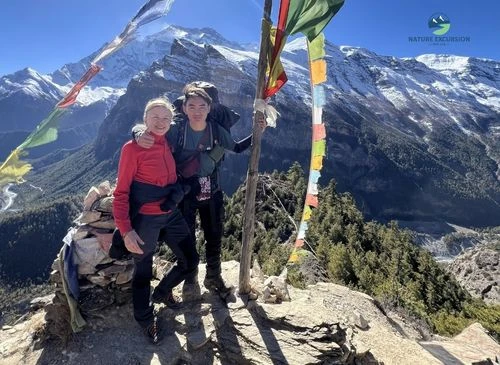
trekker on mera peak
Autumn is widely considered the gold standard for first-time mountaineers aiming to reach Mera Peak, as the summer monsoon rains completely wash away atmospheric dust and pollution, leaving behind crystal-clear blue skies and unparalleled visibility. During October, the weather patterns over the Hinku Valley stabilize significantly, drastically reducing the threat of sudden blizzards or high-altitude gale winds.
While nighttime temperatures at high camp can plummet to below -15°C, daytime trekking conditions are exceptionally pleasant, with crisp, dry air that helps prevent premature fatigue. If your goal is to experience warmer climbing windows and vibrant natural scenery, scheduling your trek to Mera during the spring months of April or May is an excellent alternative. Spring brings longer daylight hours, warmer temperatures, high-altitude climbing, and trails lined with blooming rhododendron forests through the lower valleys. This seasonal warmth softens the biting alpine freeze during your midnight summit push, making the extreme environment above 6,000 m much more manageable for your body.
What does it cost to climb Mera Peak?
The total cost to climb Mera Peak typically ranges from USD 1,800 to USD 4,500 per person, depending on whether you join a group outfitter, choose a premium private package, or opt for a spring or autumn departure. For the vast majority of mountaineers, the best value is achieved by booking an all-inclusive guided expedition, as agencies seamlessly bundle your regulatory permits, high-altitude support team, internal logistics, and base camp catering into a single, upfront, predictable price.
Planning this journey independently rarely cuts costs significantly, as lone travelers face high premiums when purchasing individual climbing permits from the Nepal Mountaineering Association (NMA), securing required entry visas, renting safety gear, and hiring specialized high-altitude guides and porters. By opting for a fully managed package, you bypass the headache of hidden mountain charges and ensure you are backed by an elite field team that handles everything from kitchen tent set-ups at freezing elevations to professional safety rope tracking.
Expense Category
Estimated Cost (USD)
What is Typically Covered / Notes
Full Service Package
USD 1,800 – USD 4,500
Full group or private outfitter itinerary. Includes flights, meals, accommodations, staff, and permits.
Mera Peak Climbing Permit
USD 175 – USD 350
Paid directly to the NMA. Spring season costs USD 350 per climber; autumn and winter are discounted to USD 175.
Local & National Park Fees
USD 50
Includes the Makalu Barun National Park entry pass and the Khumbu Pasang Lhamu local area permit.
Internal Flights (Round-Trip)
USD 400 – USD 500
Return flights from Kathmandu (or Ramechhap during peak times) to Lukla Airport.
Guiding & Porter Team
USD 500 – USD 900
Daily wages, food, insurance, and equipment allowances for a licensed climbing Sherpa and field porters.
Teahouse Lodging & Food
USD 400 – USD 600
Standard twin-share mountain lodges along the Hinku Valley trail and three hot meals daily.
On-site rental fee in Khare for double boots, crampons, a harness, an ice axe, and a Jumar.
Mandatory Travel Insurance
USD 200 – USD 300
Specialized mountaineering policy covering high-altitude tracking and emergency helicopter evacuation up to 6,000 m.
Tipping & Gratuities
USD 250 – USD 400
Customary mountain bonus pool distributed among guides, kitchen crew, and local porters upon a successful finish.
Mera Peak vs Island Peak: Which is harder?
Choosing between a Mera Peak expedition and an Island Peak climb is one of the most common dilemmas for trekkers looking to step into the world of Himalayan mountaineering. While both offer an incredible trek and climb experience in Nepal, they present entirely different challenges. The honest comparison comes down to a trade-off between altitude and technical skill. Mera Peak is significantly higher, meaning the primary battle is against thin air and pure physical endurance. Island Peak is lower, but it features steep, vertical ice walls and highly exposed ridges that require actual mountaineering maneuvers.
Difference
Mera Peak is technically easier than Island Peak, but it requires much more physical endurance due to its higher altitude. If you decide to attempt Mera Peak climbing in Nepal, you are signing up for a test of pure physical endurance. The routes up Mera Central,Mera North, and Mera South do not require you to hang off rock faces or pull yourself up vertical cliffs. Instead, you face a long, cold, and steep walk on snow. The challenge is that you are doing this walk at an extreme altitude where every single breath provides only half the oxygen found at sea level. It is a slow, rhythmic, and exhausting journey, making it a highly challenging climb for your heart, lungs, and legs.
Island Peak, on the other hand, demands that you put technical climbing skills into practice. Even though it sits nearly 300 m lower than Mera Peak, the final push to the summit is far more intimidating. You must navigate a narrow, airy rock ridge, cross deep crevasses using horizontal aluminum ladders while wearing crampons, and use a Jumar to haul yourself up a nearly vertical 100 m headwall of ice and hard snow. Coming down requires you to rappel independently down that same steep face.
Have Questions About Your Trek?
Get quick answers about routes, costs, permits, difficulty, or travel dates from our trekking team before you book.
Experiencing your Mera Peak journey is an extraordinary way to push your boundaries and experience the raw, majestic beauty of the Himalayas without technical mountaineering skills. By choosing a route that prioritizes gradual acclimatization through the pristine Hinku Valley, committing to a solid physical training routine, and partnering with an experienced guiding team, you can confidently overcome the challenges of high-altitude endurance. This expedition balances the thrill of high-alpine mountaineering with the rich cultural experience of traditional climbing and trekking in Nepal, making it the perfect gateway for anyone dreaming of standing atop a 6,000-meter peak.
Contact our expert team today to secure your permits, customize your itinerary, and take your first step toward Mera Peak summit
Written by
Karan GurungExecutive Director
Hello, I’m Karan Gurung, a passionate mountaineer from Nepal with over 15 years of experience exploring the majestic peaks of the Himalayas. I grew up surrounded by towering mountains; my love for adventure and the thrill of high-altitude trekking have shaped my life to the next level. For me, the mountains are more than just a place to trek, and I believe they are a source of inspiration, a connection to nature, and a way of relaxing your mind and soul with peace. I’m always here to share my experiences, travel tips, and stories from my adventures to help others appreciate the beauty of the Himalayas in Nepal through articles and blogs. Whether you're an experienced trekker or someone new to the mountains, I’m here to guide and inspire you for your first or next adventure in Nepal!
The main autumn treks in Nepal are Everest Base Camp, the Annapurna Circuit, Annapurna Base Camp, the Manaslu Circuit, Langtang Valley, and Mardi Hima...
To choose the best trekking company in Nepal, you must verify that the agency holds official registration with the Nepal Ministry of Culture, Tourism...
Sagarmatha National Park is one of Nepal’s most famous protected areas and the core of the Everest region. Located in the high Himalayas of Solukhumbu...




.webp)

.webp)
.webp)